
Humanoid robot-PCB til ledcontrollere, perception, AI-beregning og strømforsyning
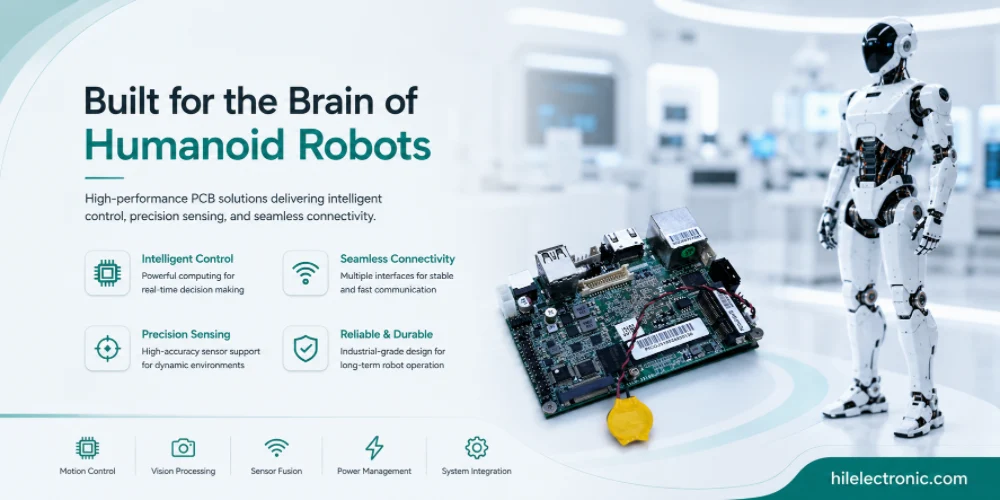
Humanoide robot-printkort er blandt de mest elektroniktætte printkort inden for robotteknologi. Et humanoid kan indeholde snesevis af ledcontrollere, højstrømsmotordrev, kraft- og momentsensorer, perceptionskameraer, mikrofoner, taktile sensorer, central AI-beregning, batteristyring og kompakte forbindelser i en menneskelig mekanisk skala.
Denne guide forklarer humanoide robot-printkort fra et ingeniør- og produktionsperspektiv. Den dækker distribueret ledelektronik, central beregning, perception, strømarkitektur, mekanisk integration, termiske begrænsninger, hurtig iteration og produktionstest. Den erstatter også leverandørlignende FAQ-indhold med præcise branchespørgsmål, der er egnede til søgning og køberuddannelse.
Hvad gør humanoid robotelektronik unik
Rollen i robotsystemet
Humanoide robotter er blandt de mest elektroniktætte platforme inden for robotteknologi. En moderne humanoid har 20-40 aktiverede led, flere perceptionssensorer, højtydende databehandling til planlægning og kontrol og batteristrøm – alt sammen pakket i en formfaktor i menneskestørrelse. Hvad gør humanoid elektronik unik:
- Distribueret fælles kontrol: én servocontroller pr. led. Kompakt, lavvægtig og højtydende elektronik.
- Kraft- og momentregistrering: Registrering af ledmoment plus sommetider kraftregistrering på kropsniveau. Muliggør kompatibel bevægelse.
- Central beregning med høj båndbredde: planlægning, opfattelse og koordinering af højtydende SoC eller GPU.
- Syn og opfattelse: flere kameraer, nogle gange dybdemåling, nogle gange taktil registrering.
- Batterikraft: Målet for driftstid er 30 minutter til flere timer. Batteriets masse og energieffektivitet er begge afgørende.
- Kompakt emballage: Ledelektronik passer ind i lemmernes strukturer. Centralelektronik passer ind i torsoen.
Designrisici at kontrollere
For humanoide robot-printkort bør input om fremstillingsevne ske, før placering af stik, tilpasning af kabinet, adgang til armaturer, termiske stier og kabelføring fastfryses. Sene ændringer af disse detaljer udløser normalt mekanisk omarbejdning, redesign af testarmaturer eller kompromiser med pålideligheden, som kunne have været undgået med en tidlig DFM-gennemgang.
Komponentvalg bør omfatte livscyklusstatus, godkendte alternativer, pakketilgængelighed, temperaturklassificering og sikkerheds- eller isolationsklassificeringer, hvor det er relevant. Humanoide robot-printkort forbliver ofte i produktion eller service længere end forbrugerelektronik, så uløst sourcing-risiko bliver et problem i felten, ikke kun et indkøbsproblem.
På systemniveau bør printkortet specificeres efter funktion, miljø, levetid og testdækning i stedet for udelukkende ud fra skematisk tegning. Dette forhindrer den almindelige fejl at bygge et teknisk korrekt printkort, der er vanskeligt at montere, svært at vedligeholde eller utilstrækkeligt robust, når det først er installeret i robotten.
Leddens elektronik bør gennemgås i forhold til fremstillingen af robotstyrings-PCB'et , aktuatordriverens PCB-design og det mekaniske leds termiske budget.
Elektronik til fælles styring
Vigtige designvalg for fælles controllerelektronik
Elektronik i fælles styreenhed på humanoider integrerer typisk motordrev, encoder og kommunikation i et kompakt hus. De vigtigste overvejelser er:
- Kompakt formfaktor: Ledregulatoren passer inde i aktuatorhuset. Cirkulære eller aflange printkortformer er almindelige.
- Motordrev pr. led: BLDC- eller PMSM-drev med FOC. Encoder-interface til lukket sløjfestyring.
- Momentregistrering: Deformationsmåler eller reaktionsmomentsensor integreret med samling. Signalbehandling på samlingsstyring.
- Kommunikation: EtherCAT eller lignende deterministisk protokol til central styreenhed.
- Termisk styring: Ledregulator i aktuatorens termiske miljø. Varmespredning gennem strukturen.
- Kabel og stik: Strøm plus kommunikation plus sikkerhed i ét kabel pr. samling. Kabelfleksibilitet er afgørende.
Overvejelser vedrørende fremstilling og pålidelighed
Pålidelighed afhænger af at bevare de marginer, der er designet til printkortet: kobberbredde, isolationsafstand, termisk aflastning, stikfastholdelse, komponentnedrating og inspektionsdækning. Produktionen bør verificere disse egenskaber i stedet for at behandle printkortet som en generisk samling med en generisk bestået/ikke bestået test.
Servicevenlighed bør overvejes gennem mærkede stik, tilgængelige testpunkter, tydelige printkortvarianter og sporing af serienumre. Når en robot fejler i felten, giver god diagnosticering på printkortniveau serviceteamet mulighed for hurtigt at isolere problemet i stedet for at udskifte store enheder eller returnere hele robotten.
Den praktiske regel er at vælge den enkleste konstruktion, der stadig opfylder signal-, sikkerheds-, termiske og mekaniske krav. Overspecificering øger omkostningerne, mens underspecificering skaber omarbejde under test eller feltimplementering.
Central databehandling til planlægning og koordinering
Vigtige designvalg for central databehandling til planlægning og koordinering
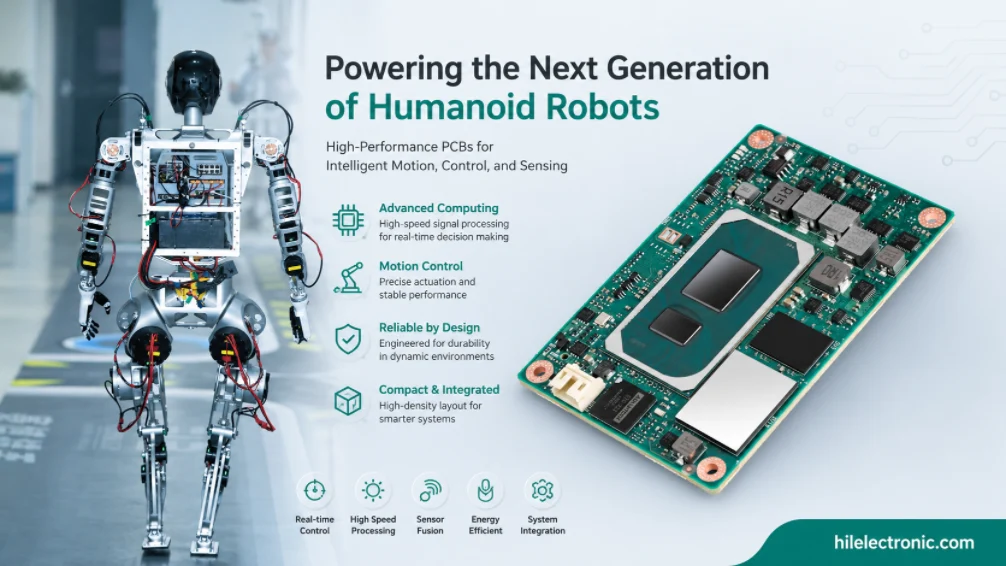
Central beregning på humanoider håndterer den højeste arbejdsbyrde for planlægning, perception og koordinering. Moderne platforme bruger betydelig AI-beregning. De vigtigste overvejelser er:
- AI-accelerator: GPU eller NPU, der kører opfattelses- og adfærdsmodeller. Standard på nuværende generation af humanoider.
- Multikamera-vision: stereodybde, panoramaudsigt eller opgavespecifikke kameraer. Multi-gigabit-grænseflader.
- IMU og sensorfusion: Højpræcisions-IMU til balance; sensorfusion, der kombinerer IMU med ledfeedback og -syn.
- Bevægelseskoordination: Koordineret kontrol af mange led. Deterministisk timing ved kilohertz-hastigheder.
- Kommunikation: trådløs ekstern kommunikation plus kablede interne busser.
- Opbevaring: logfiler, kort, modeller og applikationsdata på eMMC eller SSD.
Overvejelser vedrørende fremstilling og pålidelighed
Testdækningsdisciplinen skaleres med pålidelighedskravet. Forbrugerapplikationer kræver mindre dækning end industrielle; industrielle mindre end medicinske; medicinske mindre end sikkerhedskritiske. Ved at matche testdækningen med det faktiske krav bevares omkostningsbudgettet, samtidig med at den sikkerhed, som applikationen har brug for, gives.
Produktionsdokumentation er ofte underinvesteret i designfasen og dyr at konstruere med tilbagevirkende kraft. Testoptegnelser pr. enhed, der indsamles under produktionen, understøtter feltundersøgelser år senere; sporbarhed af komponentpartier understøtter post mortem-analyse af feltreturneringer. Programmer, der planlægger dokumentation tidligt, har de optegnelser, de har brug for; programmer, der tilføjer dokumentation senere, mister ofte de data, de ville have ønsket.
Perceptionskort har brug for rene data fra sensorgrænsefladeenheder og kontrolleret routing på visionskameraets printkort.
Opfattelse: Syn, Lyd, Taktil, IMU
Vigtige designvalg for opfattelse
Opfattelse på humanoider integrerer typisk flere sensormodaliteter. De vigtigste opfattelsesundersystemer er:
- Vision: stereokameraer, panoramakameraer eller fiskeøjekameraer. Nogle gange dybdekameraer.
- Lyd: mikrofonarrays til talegenkendelse og lydlokalisering.
- Taktil: Distribuerede berøringssensorer på hænder og krop. Muliggør sikker interaktion.
- Kraft og drejningsmoment: ledmoment plus registrering af endeeffektorkraft.
- IMU: Estimering af kropsholdning. Kombineret med ledfeedback for fuld kropsholdning.
- Nærhed: ultralyd eller infrarød til detektering af forhindringer på nært hold.
Overvejelser vedrørende fremstilling og pålidelighed
Synlighed i forsyningskæden under produktionen påvirker både omkostninger og pålidelighed. Producenter med aktiv sourcing-kapacitet absorberer allokeringscyklusser, der ellers ville forårsage produktionsstop; producenter uden aktiv sourcing sender forsyningsproblemer videre til kunderne. Værdien af aktiv sourcing er højest under brancheomfattende mangler og lavest under stabile forsyningsforhold.
Design-iterationscyklusser drager fordel af tæt design-produktionsfeedback. En produktionspartner, der giver hurtig DFM-feedback, muliggør hurtig iteration; en partner, der giver langsom eller overfladisk feedback, forsinker iterationen proportionalt. Programmer, der vælger produktionspartnere delvist baseret på feedbackkvalitet, bevæger sig typisk hurtigere gennem prototypefasen end programmer, der udelukkende vælger ud fra det laveste tilbud.
De centrale beregnings- og ledmoduler skal også matche robottens distribuerede effekttrin, så spændingsfald og genopretningsadfærd er forudsigelige.
Strømarkitektur til batteridrevet drift
Arkitekturvalg for strømarkitektur til batteridrevet drift
Strømarkitekturen på humanoider balancerer batteriets masse mod driftstiden. De vigtigste overvejelser er:
- Batterivalg: Lithium-ion til energitæthed. NMC- eller NCA-kemistandard på nuværende humanoider.
- Strømfordeling: flere skinner; bevægelseskraft adskilt fra computerkraft. Muliggør selektiv nedlukning til strømstyring.
- BMS: integreret pakkehåndtering med celleovervågning og sikkerhed.
- Opladning: enten ekstern oplader eller selvdockingopladning. Hurtigopladningsfunktion prioriteres nogle gange.
- Standby-styring: Vågen- og dvaletilstande for forlænget batterilevetid under inaktivitet.
- Energibudgettering: Størrelsesforholdet mellem kontinuerligt forbrug og spidsbelastning bestemmer afvejningen af runtime og spidskapacitet.
Valideringskrav til strømarkitektur til batteridrevet drift
Volumenbåndsøkonomi påvirker de rigtige procesvalg forskelligt ved forskellige produktionsskalaer. Praksisser, der betaler sig tilbage ved 100,000 enheder om året, betaler sig sjældent tilbage ved 500 enheder; praksisser, der giver mening ved prototype, giver sjældent mening ved store mængder. At matche produktionstilgangen med den faktiske produktionsvolumen er det, der gør hvert volumenbånd økonomisk rentabelt.
De regulatoriske certificeringsforpligtelser varierer betydeligt afhængigt af anvendelse og marked. Produktionsdokumentation, der understøtter kundeindsendelser, kan variere fra minimal (forbrugerprodukter på uregulerede markeder) til omfattende (medicinsk udstyr med stramme opbevaringsperioder). Programmer, der specificerer certificeringskrav ved tilbud, får produktionen korrekt opsat; programmer, der tilføjer certificeringskrav senere, kræver nogle gange procesændringer.
Mekaniske integrationsbegrænsninger
Vigtige designvalg for mekaniske integrationsbegrænsninger
Mekanisk integration er ofte den dominerende begrænsning for humanoid elektronik. Ledelektronik passer ind i aktuatorhuse; central elektronik passer i torso; kabelruter gennem lemmernes strukturer. De vigtigste overvejelser er:
- Fleksibilitet i bestyrelsesoversigten: Ikke-rektangulære former, der matcher den mekaniske hylster. Standard på fælles regulatorer.
- Termisk sti: Varmeoverførsel fra elektronik til strukturel masse. Nogle gange begrænset kølekapacitet.
- Vibration og stød: Humanoid bevægelse skaber betydelig mekanisk belastning på elektronik.
- Kabeldesign: Fleksible kabler, der overlever gentagen ledbevægelse. Stiv-fleksibel integration er almindelig.
- Servicevenlighed: Nem adgang til elektronik til reparation. Kompakt emballage er et godt valg.
- Vægtbudget: Hvert gram tæller på humanoide platforme. Komponentvalg inkluderer massehensyn.
Overvejelser vedrørende fremstilling og pålidelighed
Konsolideret produktion hos én produktionspartner bevarer institutionel viden, der akkumuleres på tværs af produktgenerationer. En partner, der har bygget flere generationer af lignende produkter, kender de specifikke problemer, der opstår, de procesjusteringer, der forbedrer udbyttet, og de designmønstre, der fører til god produktion. Denne viden overføres ikke til nye partnere uden omkostninger.
Løbende dialog mellem ingeniører og produktionsvirksomheder forbedrer både produkternes og leverandørforholdets omfang over tid. Udbyttedata, der strømmer tilbage til ingeniørvirksomhederne, informerer designforfining; feltreturdata, der strømmer tilbage, informerer både design- og produktionsforbedringer. Programmer, hvor denne dialog er aktiv, forbedres på tværs af produktgenerationer.
For tilstødende designbeslutninger, se servo- og BLDC-controller-printkortet til robotsamlinger og robotvisionskamera-printkortet til humanoid perception.
Fremstilling af humanoide robot-printkort hos Highleap
DFM-gennemgang før produktion
Highleap fremstiller humanoid robotelektronik med de specifikke behov inden for kompakt multi-board robotteknologi. De specifikke funktioner omfatter:
- Kompakte formfaktorkort: ikke-rektangulære konturer, HDI-konstruktion, finpitch SMT.
- Stiv-fleksibel integration: Fleksible sektioner til samlinger. Statisk og dynamisk fleksibel konstruktion.
- Koordinering på tværs af bestyrelser: fremstilling af de mange lignende kort, der er nødvendige til den distribuerede fællesarkitektur.
- Kompakt PCBA: placering med høj tæthed med fin disciplin.
- Central computerproduktion: AI-acceleratorkort med kontrolleret impedans og termisk styring.
- Integrationsstøtte: Multi-board test og boksbygning til komplette humanoide elektroniske underenheder.
Test, sporbarhed og build-overdragelse
Fremstillingsprocesdisciplinen for robotteknologi blander praksisser fra flere traditionelle elektronikkategorier. Fra forbrugerelektronik - omkostningsdisciplin og volumenproduktion. Fra industriel elektronik - pålidelighedsteknik og lang levetid. Fra bilelektronik - vibrations- og miljøtolerance. Fra medicinsk elektronik - dokumentation og sporbarhed. Robotteknologi drager fordel af at kombinere disse.
Programmer, der behandler produktion som strategisk – investering i leverandørrelationer, deling af prognoseoplysninger, koordinering af kapacitet – overgår typisk programmer, der behandler produktion transaktionelt. Den transaktionelle tilgang sparer forhandlingstid, men går glip af de samlede fordele ved et langsigtet leverandørpartnerskab.
Ofte stillede spørgsmål om humanoid robot-printkort
Hvad gør det vanskeligt at designe humanoide robot-printkort?
Humanoide printkort kombinerer højdensitetspakning, mange distribuerede aktuatorer, AI-beregning, batteristrøm, perceptionssensorer, kraftregistrering, strenge vægtgrænser og bevægelige mekaniske strukturer. Printkortene skal være små, termisk effektive, vibrationsbestandige og nemme at iterere, fordi humanoide platforme ændrer sig hurtigt under udvikling.
Hvor mange PCB'er er der normalt inde i en humanoid robot?
Antallet varierer afhængigt af arkitekturen, men en humanoid kan omfatte et centralt computerkort, batteri- og strømkort, kommunikationskort, perceptionskort, torso-interfacekort og et eller flere kort pr. led- eller lemsegment. Platforme med 20 til 40 aktiverede led kan indeholde mange gentagne led-controller-enheder.
Hvorfor bruges distribuerede fælles controllere i humanoider?
Distribuerede fællescontrollere reducerer ledningsføringens kompleksitet, forkorter sensor- og motorveje, forbedrer den lokale strømsløjfes ydeevne og gør fællesmoduler nemmere at udskifte. De kræver også pålidelig deterministisk kommunikation, kompakt strømforsyning, termiske veje inde i aktuatoren og testdækning på tværs af mange gentagne printkort.
Hvornår er rigid-flex nyttig i humanoid robotelektronik?
Rigid-flex er nyttigt, hvor plader skal passe inden i lemmer, passere gennem samlinger eller erstatte kabelnet, der ellers ville bøje gentagne gange. Det kan reducere antallet af stik og spare plads, men det kræver omhyggelig planlægning af bøjningsradius, mekanisk understøtning, materialevalg og produktionskontrol for at undgå udmattelsesfejl.
Hvordan bør AI-computerkort designes til humanoide robotter?
AI-computerkort kræver højhastighedshukommelse, kameragrænseflader, lagerplads, strømstyring, termiske stier og tilstrækkelig plads til at opfatte og planlægge arbejdsbelastninger. Designet skal afbalancere ydeevne, varme, vægt og batterilevetid. Mange tidlige platforme bruger moduler; designs med større volumen kan bevæge sig mod brugerdefinerede carrier- eller computerkort.
Hvilken strømarkitektur er almindelig i humanoide robotter?
Humanoider bruger normalt en højenergibatteripakke, der forsyner distribuerede DC-skinner til fælles drev, beregning, sensorer og kommunikation. Arkitekturen skal håndtere peak aktuatorstrøm, regenerativ energi, skinnesekvensering, sikkerhedsnedlukning og tilstandsovervågning. Effekttæthed og effektivitet er især vigtige, fordi batteriets masse påvirker bevægelsesydelsen.
Hvordan testes humanoide robot-printkort under prototypefremstilling?
Prototypetests bør verificere hvert printkort individuelt og derefter teste den integrerede kæde: ledbevægelse, encoderfeedback, momentregistrering, kommunikationstiming, effektforbrug, termisk stigning, firmwareopdatering og fejlrespons. Da humanoider itererer hurtigt, bør testfixturer understøtte gentagne revisioner i stedet for kun den endelige produktion.
Hvad skal der være inkluderet i en produktionspakke til en humanoid robot-printkort?
Inkluder fabrikationsfiler, stack-up, stykliste, placeringsdata, samlingstegninger, mekaniske dispositionsbegrænsninger, krav til stiv-fleksibel bøjning, hvis anvendt, testprocedurer, firmwareinstruktioner, stikben, noter om termiske grænseflader og serialiseringskrav. Gentagne samlingskort bør også definere variantkontrol, så det korrekte kort placeres i hver samling.
Send humanoide robot PCB-filer til gennemgang af fælles controller og strømforsyning

anbefalet Indlæg
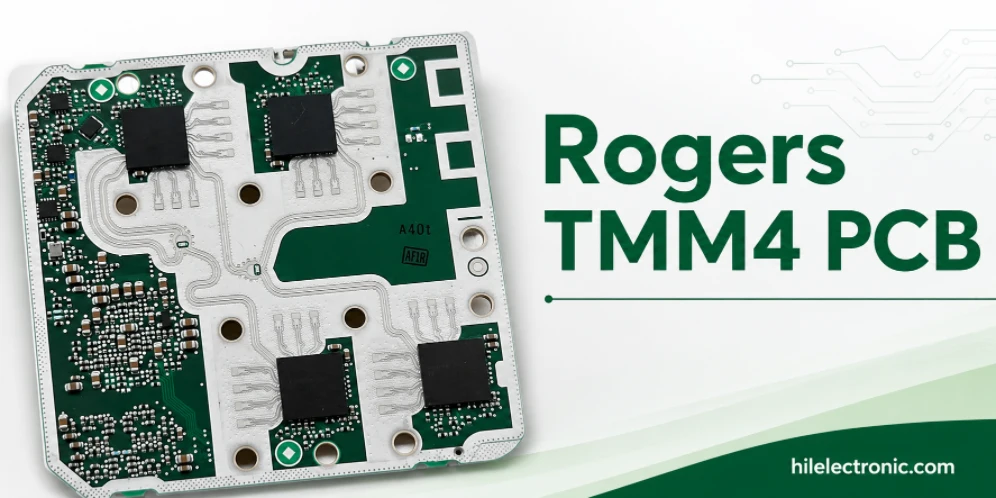
TMM4 Filter PCB Fremstilling
Fremstilling af TMM4-filterprintkort styres af...
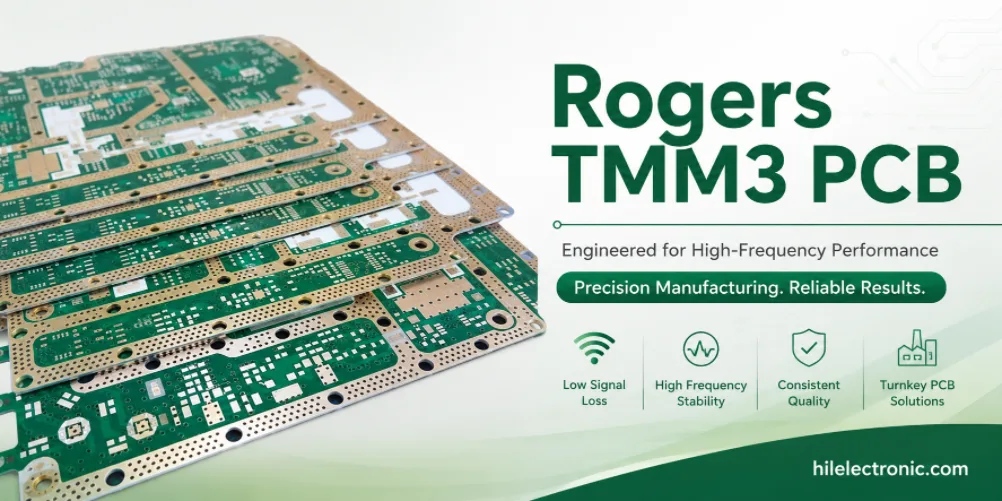
TMM3 PCB-fremstilling til RF-moduler
TMM3 PCB-fremstilling er mest nyttig, hvor RF-modulet...
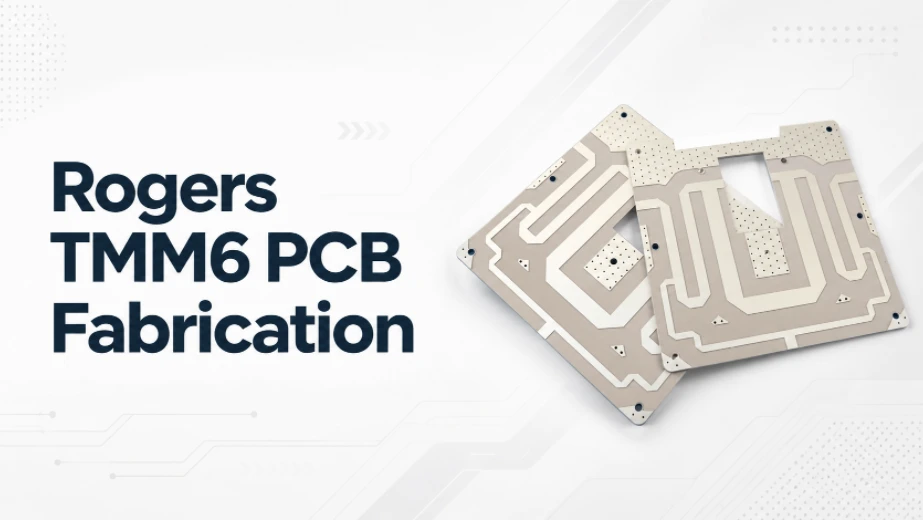
TMM6 PCB-fremstilling
TMM6-fabrikation er processtyringssiden for en mellem-Danmark...
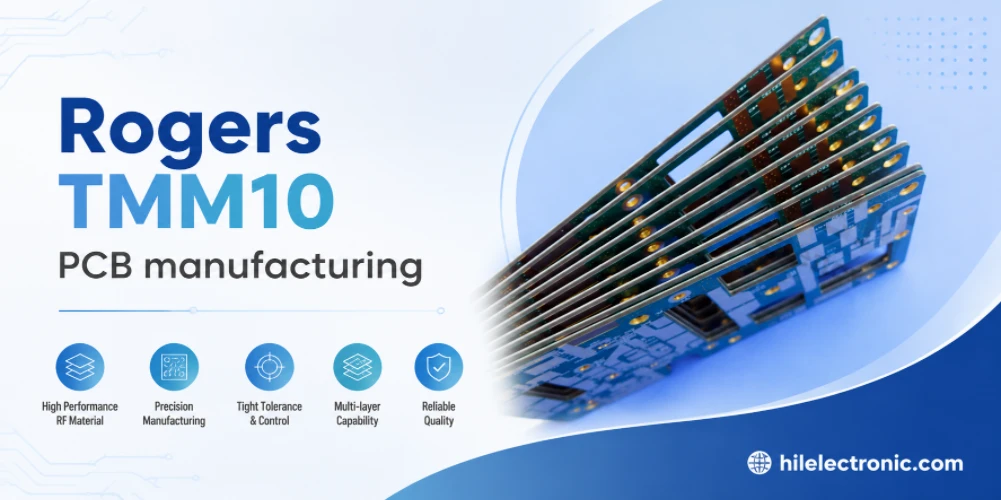
TMM10 PCB-fremstilling til kompakte RF-design
IndholdsfortegnelseHvordan TMM10 krymper RF-strukturerTMM10 vs...
Sådan får du et tilbud på printkort
Lad os køre en DFM/DFA-analyse for dig og vende tilbage til dig med en rapport. Du kan uploade dine filer sikkert via vores hjemmeside. Vi har brug for følgende oplysninger for at kunne give dig et tilbud:
-
- Gerber, ODB++ eller .pcb, spec.
- Stykliste, hvis du ønsker montering
- Antal
- Vendetid
For PCBA-tjenester bedes du fremvise din BOM (Bill of Materials) og eventuelle specifikke monteringsinstruktioner. Vi tilbyder også DFM/DFA-analyse for at optimere dine designs med hensyn til fremstillingsevne og montering, hvilket sikrer en problemfri produktionsproces.