
Matériau préimprégné pour la fabrication de circuits imprimés multicouches
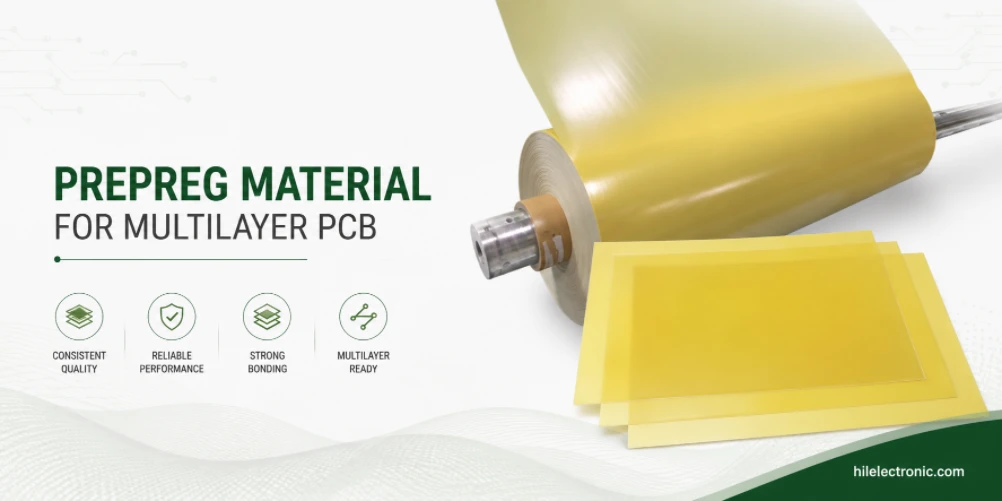
Le préimprégné est le matériau de liaison qui transforme un empilement de couches de cuivre individuelles en un circuit imprimé multicouche unique. Son choix est l'une des décisions les plus importantes et pourtant les plus négligées dans la fabrication de circuits imprimés multicouches. Un préimprégné adapté remplit les espaces entre les couches de cuivre gravées, définit l'espacement diélectrique qui contrôle l'impédance et lie l'ensemble de l'empilement en un stratifié sans défauts sous l'effet de la chaleur et de la pression. Un préimprégné inadapté – ou une teneur en résine inappropriée pour une configuration de couches donnée – engendre des défauts, un délaminage ou des erreurs d'impédance qui peuvent ne se manifester qu'une fois la carte en service. Ce guide explique le fonctionnement conjoint du noyau et du préimprégné, l'importance de la teneur en résine, les exigences des conceptions à grand nombre de couches et comment évaluer les choix de matériaux avant la production.
Comprendre les matériaux de base et préimprégnés
Un circuit imprimé multicouche alterne deux types de matériaux. Le noyau est un stratifié cuivré entièrement polymérisé : une feuille de résine durcie et de tissu de verre avec du cuivre collé sur une ou deux faces, supportant les circuits gravés des couches internes. Le préimprégné (ou pré-imprégné) est un tissu de verre imprégné de résine partiellement polymérisée, conservée à l’état intermédiaire (étape B) pour pouvoir encore s’écouler et adhérer à chaud.
Lors de la stratification, les feuilles de préimprégné sont placées entre les noyaux gravés, et l'ensemble est pressé à chaud. La résine du préimprégné se ramollit, s'écoule pour remplir les espaces autour des pistes de cuivre, puis durcit complètement, fusionnant les noyaux en une seule carte rigide. Les noyaux constituent les couches de circuit stables et dimensionnellement fixes ; le préimprégné assure la liaison et l'espacement diélectrique contrôlé entre elles. Les deux doivent provenir d'un système de matériaux compatible afin que leur chimie de résine, leur qualité de verre et leur comportement thermique soient identiques. Le rôle de ces deux matériaux dans les conceptions avancées est abordé dans notre guide des matériaux pour circuits imprimés à grand nombre de couches , et la pression d'approvisionnement sur le stratifié sous-jacent est traitée dans notre aperçu des pénuries de matériaux pour circuits imprimés.
Teneur en résine et performances de stratification
La propriété déterminante d'un préimprégné est sa teneur en résine, c'est-à-dire le rapport entre la résine et le tissu de verre, exprimé en pourcentage. Cette teneur détermine la quantité de résine disponible pour s'écouler dans les espaces autour du cuivre lors de la stratification, et elle doit être adaptée au motif de cuivre sur lequel elle est collée. Une couche comportant une forte proportion de cuivre ou de larges surfaces nécessite un préimprégné contenant suffisamment de résine pour combler les vides profonds entre les éléments ; une quantité insuffisante de résine laisse des espaces vides qui se transforment en cavités, tandis qu'une quantité excessive peut entraîner un écoulement excessif, des variations d'épaisseur et un manque de résine à certains endroits.
La teneur en résine détermine également l'épaisseur du diélectrique polymérisé entre les couches, ce qui influe directement sur l'impédance. Deux préimprégnés de même description nominale, mais de teneur en résine différente, auront des épaisseurs et des impédances différentes après pressage. Le choix du préimprégné fait donc partie intégrante du calcul d'impédance et ne doit pas être laissé à la discrétion de l'atelier. Un empilement correct spécifie la construction du préimprégné (type de fibre de verre et teneur en résine) pour chaque couche diélectrique, afin que le remplissage, l'épaisseur et l'impédance soient simultanément optimisés. C'est pourquoi le choix du préimprégné est indissociable du calcul d'impédance et du choix des matériaux décrits dans notre guide de sélection des matériaux pour circuits imprimés haute vitesse .
Exigences relatives aux circuits imprimés à nombre élevé de couches
Les cartes multicouches intensifient les contraintes liées au préimprégné, car le nombre d'interfaces de collage est plus élevé et chacune doit être correctement pressée pour que la carte soit validée. Avec l'augmentation du nombre de couches due à l'IA et aux équipements réseau (les cartes de serveurs d'IA sont passées d'environ 18 couches en 2023 à 32 couches en 2025), les exigences de tolérance cumulées concernant le remplissage, l'épaisseur et l'alignement du préimprégné ont considérablement augmenté. Une petite variation d'épaisseur par couche, négligeable sur une carte à 8 couches, se traduit, sur 32 couches, par des erreurs significatives d'épaisseur totale et d'impédance.
Ces conceptions privilégient généralement les systèmes de matériaux à faibles pertes, où le préimprégné doit être de qualité adaptée aux noyaux à faibles pertes, souvent en cuivre HVLP lisse et en verre spécial à faible perméabilité à l'oxygène (Dk). Un préimprégné FR-4 générique associé à un noyau à faibles pertes ne peut être utilisé ; les systèmes de résine doivent être compatibles pour garantir une liaison fiable et les performances électriques attendues. Les structures multicouches doivent donc répondre simultanément aux exigences électriques des matériaux à faibles pertes et aux contraintes mécaniques des nombreuses interfaces, ce qui explique leur examen approfondi avant fabrication. Elles héritent également des mêmes contraintes d'alimentation que ces entrées : les pénuries de CCL et de feuilles de cuivre qui limitent les noyaux limitent également le préimprégné correspondant. Les exigences plus générales relatives aux matériaux pour ces cartes sont détaillées dans notre guide des matériaux pour circuits imprimés de serveurs d'IA .
Risques courants liés à la lamination
La plupart des défaillances multicouches sont dues à quelques problèmes de stratification, et le choix du préimprégné est primordial. Des vides apparaissent lorsque le flux de résine est insuffisant pour remplir les espaces autour du cuivre, emprisonnant de l'air qui fragilise la liaison et peut entraîner une rupture lors des cycles thermiques. Le délaminage (séparation entre les couches) résulte d'une mauvaise adhésion résine-âme, souvent due à des matériaux incompatibles ou à des surfaces contaminées. Un manque de résine, lorsque la quantité de résine restante sur les éléments est insuffisante, crée des zones fragiles et cassantes.
Deux autres risques augmentent avec le nombre de couches. L'erreur d'alignement entre les couches (défaut d'alignement entre les couches gravées) s'accroît avec le nombre de couches et les variations dimensionnelles des matériaux lors du pressage, et peut entraîner un mauvais positionnement des vias percés par rapport à leurs pastilles. Le gauchissement, ou courbure de la carte finie, résulte d'une dilatation thermique inégale au sein de l'empilement et d'une construction asymétrique, et complique l'assemblage. Chacun de ces problèmes est évitable dès la conception grâce à une sélection appropriée de la résine préimprégnée, un appariement compatible entre le noyau et le préimprégné, une construction symétrique équilibrée et un empilement vérifié. C'est pourquoi l'examen des matériaux est bien plus important que toute tentative de correction après pressage. Ces considérations mécaniques sont similaires à celles présentées dans notre guide des matériaux pour circuits imprimés à grand nombre de couches .
Disponibilité des matériaux et délais de livraison
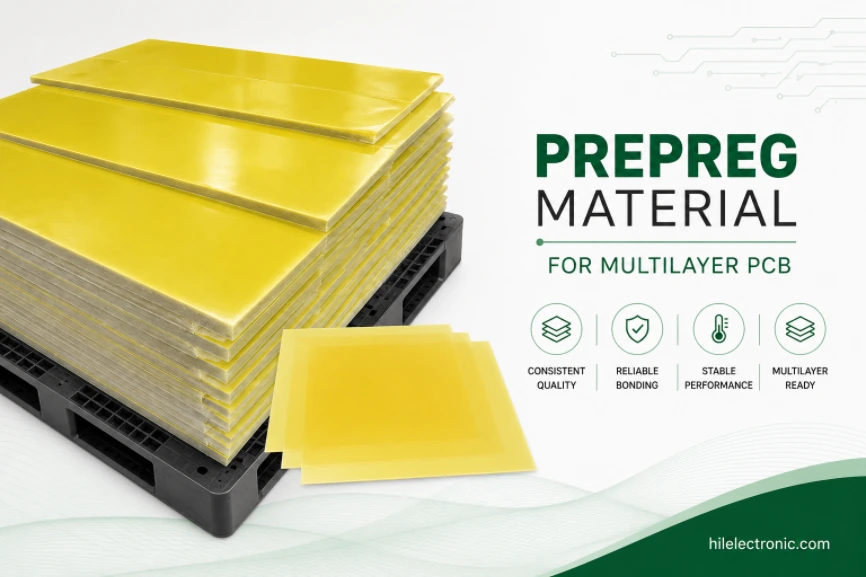
La disponibilité des préimprégnés constitue désormais une contrainte de planification à part entière, car leur fabrication dépend des mêmes stocks de résine, de tissu de verre et de stratifiés en général, dont l'approvisionnement s'est raréfié entre 2025 et 2026. Les résines spéciales et les verres à faible perméabilité à l'oxygène (Dk) qui limitent la disponibilité des stratifiés de base limitent également celle des préimprégnés correspondants ; les deux doivent donc être commandés ensemble. Les délais de livraison en 2026 en témoignent : le matériau FR-4 standard est passé de 2 à 3 semaines à environ 6 à 8 semaines, les qualités à pertes moyennes et faibles à 14 à 18 semaines, et les qualités spéciales les plus avancées sont désormais disponibles uniquement sur allocation, avec un délai de 20 semaines ou plus. Quant à l'approvisionnement en résine époxy, il est passé d'environ 3 semaines à 15 semaines.
En pratique, il est impératif de planifier conjointement le préimprégné et l'âme, et ce bien en amont des besoins de production. Commander une âme à faibles pertes sans se procurer le préimprégné correspondant (ou inversement) risque d'entraîner l'imprégnation d'une couche inutilisable. Les commandes de matériaux pour les systèmes à faibles pertes sont de plus en plus souvent passées 16 à 20 semaines à l'avance. Pour les programmes multicouches nécessitant des qualités spéciales, le délai d'approvisionnement des matériaux, et non le délai de fabrication, doit être le facteur déterminant du planning. Notre guide des délais de livraison des stratifiés pour circuits imprimés présente l'ensemble des informations relatives aux délais.
Processus de révision avant la production
La fiabilité d'une carte multicouche est garantie lors de la revue de l'empilement, avant toute commande de matériaux. Cette revue confirme que chaque couche diélectrique est constituée d'un préimprégné dont la teneur en résine est adaptée au motif de cuivre sur lequel elle est collée ; que l'âme et le préimprégné proviennent d'un système de matériaux compatible ; que l'épaisseur totale et l'épaisseur de chaque couche diélectrique permettent d'obtenir l'impédance cible ; et que la structure est symétrique afin de limiter la déformation. Elle vérifie également la disponibilité des matériaux : que l'âme et le préimprégné correspondant peuvent être effectivement fournis dans les délais impartis, et qu'un équivalent qualifié existe lorsque la qualité est imposée.
C’est lors de cette revue que les surspécifications sont détectées et corrigées, ce qui est crucial car une part importante du coût et des risques liés à une carte est fixée dès la conception ; selon certaines estimations, jusqu’à 80 % du coût est déterminé avant le début de la fabrication. Opter par défaut pour un système préimprégné à faibles pertes alors qu’un FR-4 à haute Tg conviendrait, ou spécifier une tolérance sur la teneur en résine plus stricte que nécessaire, augmente les coûts et les risques liés à l’allocation des ressources. Highleap Electronics effectue un calcul d’empilement validé et une vérification de la disponibilité des matériaux pour chaque programme multicouche, afin que le préimprégné et le noyau soient vérifiés conjointement par rapport aux objectifs électriques et à l’approvisionnement réel avant la passation de la commande.
Meilleures pratiques pour une fabrication fiable
Quelques bonnes pratiques permettent de distinguer les programmes multicouches fiables de ceux qui posent problème. Il est recommandé d'associer l'âme et le préimprégné en un seul système de matériaux plutôt que de mélanger différentes qualités, afin d'assurer la cohérence de la chimie de la résine et du comportement thermique. Le dosage de résine par couche doit être adapté au motif de cuivre, plutôt que d'appliquer un seul préimprégné uniformément sur un empilement présentant des épaisseurs de cuivre variables. Une construction symétrique est essentielle pour limiter la déformation, notamment sur les cartes à grand nombre de couches. Les qualités à faibles pertes et les qualités spéciales doivent être spécifiées uniquement lorsque le débit du signal l'exige, et une structure hybride doit être utilisée pour réserver les matériaux haut de gamme – et les risques liés à leur allocation – aux couches critiques.
Du côté de l'approvisionnement, il est essentiel de planifier conjointement le noyau et le préimprégné, d'anticiper les commandes de matériaux bien avant les besoins de production, de qualifier un second système de matériaux compatibles pour toute nuance limitée et de partager des prévisions glissantes afin que le fabricant puisse réserver les quantités nécessaires en fonction de la demande réelle. Considérer le préimprégné comme un matériau technique dont l'approvisionnement est limité – plutôt que comme une feuille de collage générique – est la clé du succès pour un programme multicouche, garantissant son respect des délais et sa fiabilité sur le marché de 2026.
Obtenez une analyse de la structure de votre circuit imprimé multicouche.
Highleap Electronics est une usine de fabrication et d'assemblage de circuits imprimés. Dans le cadre de nos programmes de fabrication de circuits imprimés et de circuits imprimés multicouches, nous vérifions simultanément l'appariement des noyaux et des préimprégnés, la teneur en résine, l'impédance et la disponibilité des matériaux, afin de garantir une stratification fiable dès la première fois pour chaque carte multicouche.
FAQ sur les matériaux préimprégnés
Quelle est la différence entre le noyau et le préimprégné ?
Le noyau est un stratifié cuivré entièrement polymérisé, comportant un circuit imprimé interne gravé. Le préimprégné est un tissu de verre imprégné d'une résine partiellement polymérisée (étape B) qui s'écoule et se lie sous l'effet de la chaleur, fusionnant ainsi les noyaux en une seule carte lors de la stratification. Les noyaux assurent la stabilité des couches de circuit ; le préimprégné assure la liaison et l'espacement diélectrique entre elles.
Pourquoi la teneur en résine préimprégnée est-elle importante ?
La teneur en résine détermine la quantité de résine disponible pour s'écouler autour du cuivre lors de la stratification et l'épaisseur du diélectrique polymérisé entre les couches. Elle doit correspondre au motif du cuivre : une quantité insuffisante crée des vides, une quantité excessive entraîne des variations d'épaisseur. Comme elle contrôle l'épaisseur du diélectrique, elle influe directement sur l'impédance.
Puis-je associer n'importe quel préimprégné à n'importe quel noyau ?
Non. L'âme et le préimprégné doivent provenir d'un système de matériaux compatible afin que leur chimie de résine, leur qualité de verre et leur comportement thermique soient identiques. Associer une âme à faibles pertes à un préimprégné FR-4 générique risque d'entraîner une mauvaise adhérence, un délaminage et des performances électriques incorrectes.
Quels sont les défauts de lamination les plus courants ?
Les défauts les plus courants sont les vides dus à un flux de résine insuffisant, le délaminage causé par une mauvaise adhérence résine-âme, le manque de résine sur les détails, les erreurs d'alignement entre les couches qui augmentent avec le nombre de couches, et les déformations liées à une dilatation thermique inadaptée ou à une construction asymétrique. Le choix d'un préimprégné approprié et la vérification de l'empilement des couches permettent de les prévenir.
Quel est l'impact des préimprégnés sur les délais de livraison en 2026 ?
Le préimprégné dépend des mêmes stocks limités de résine et de tissu de verre que le stratifié d'âme et doit être commandé en kit. Le délai de livraison du matériau FR-4 standard est désormais d'environ 6 à 8 semaines, celui des qualités à pertes moyennes et faibles de 14 à 18 semaines, et celui des qualités spéciales avancées de plus de 20 semaines (sous réserve d'allocation). Il est donc conseillé de planifier et de commander simultanément le stratifié d'âme et le préimprégné bien avant la production.

messages recommandés
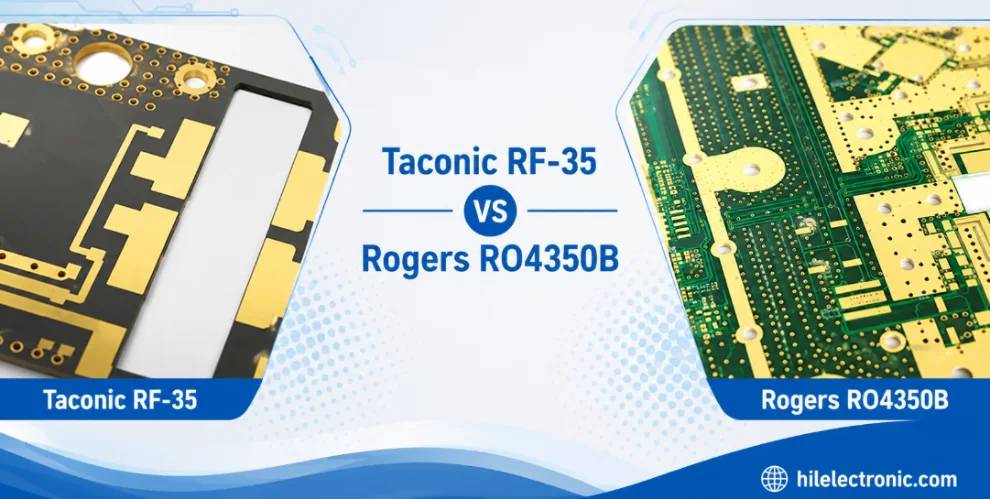
Taconic RF 35 vs RO4350B PCB
Table des matières : RF-35 vs RO4350B : Approvisionnement et…
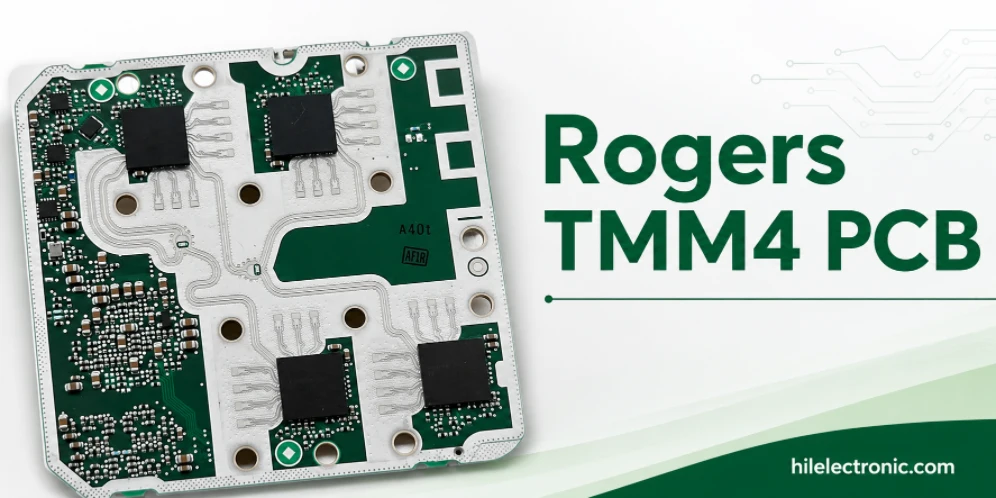
Fabrication de circuits imprimés pour filtres TMM4
La fabrication des circuits imprimés pour filtres TMM4 est contrôlée par...
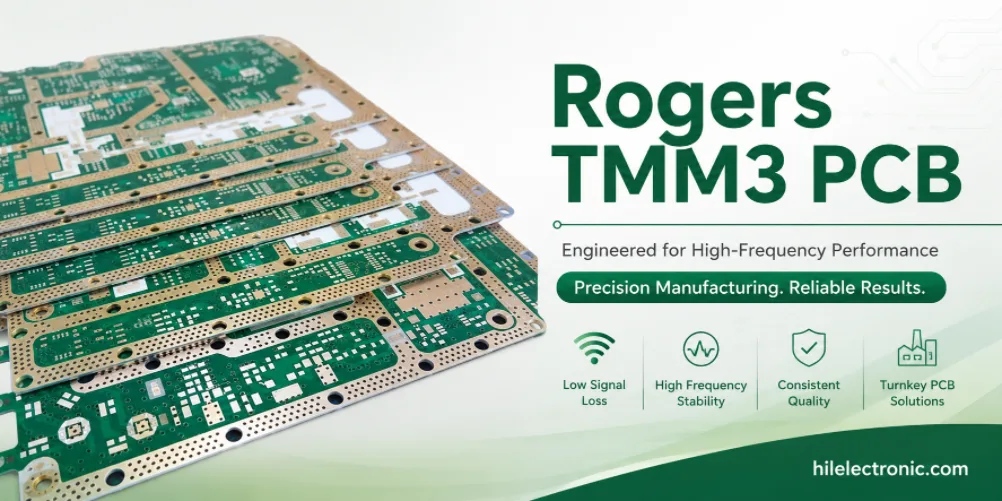
Fabrication de circuits imprimés TMM3 pour modules RF
La fabrication de circuits imprimés TMM3 est particulièrement utile lorsque le module RF...
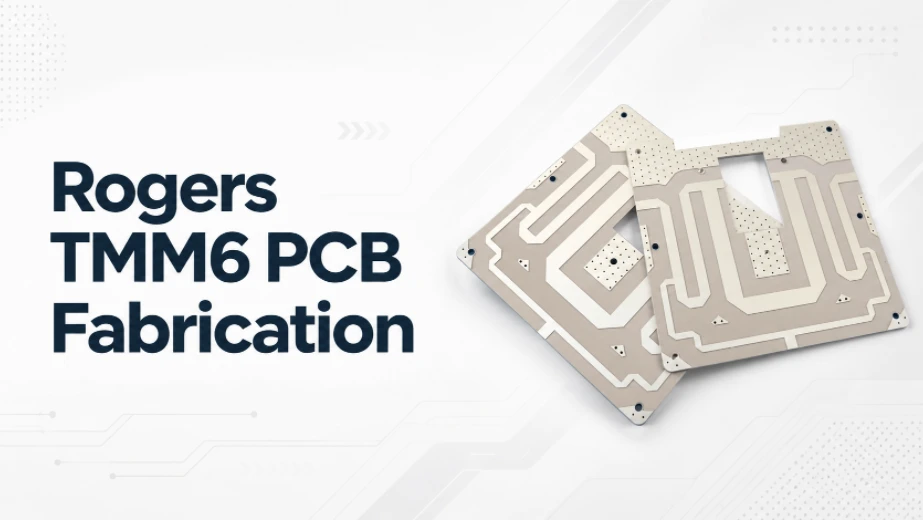
Fabrication de circuits imprimés TMM6
La page de contrôle des processus de fabrication TMM6 concerne un processus de fabrication de moyenne densité...
Comment obtenir un devis pour les PCB
Nous réalisons une analyse DFM/DFA et vous fournissons un rapport. Vous pouvez télécharger vos fichiers en toute sécurité sur notre site web. Pour vous établir un devis, nous avons besoin des informations suivantes :
-
- Gerber, ODB++ ou .pcb, spécifications.
- Liste de nomenclature si vous avez besoin d'un assemblage
- Quantité
- Temps de rotation
Pour les services PCBA, veuillez fournir votre nomenclature (BOM) et toute instruction d'assemblage spécifique. Nous proposons également des analyses DFM/DFA pour optimiser la fabricabilité et l'assemblage de vos conceptions, garantissant ainsi un processus de production fluide.