
Konsumentelektronik PCB-montering
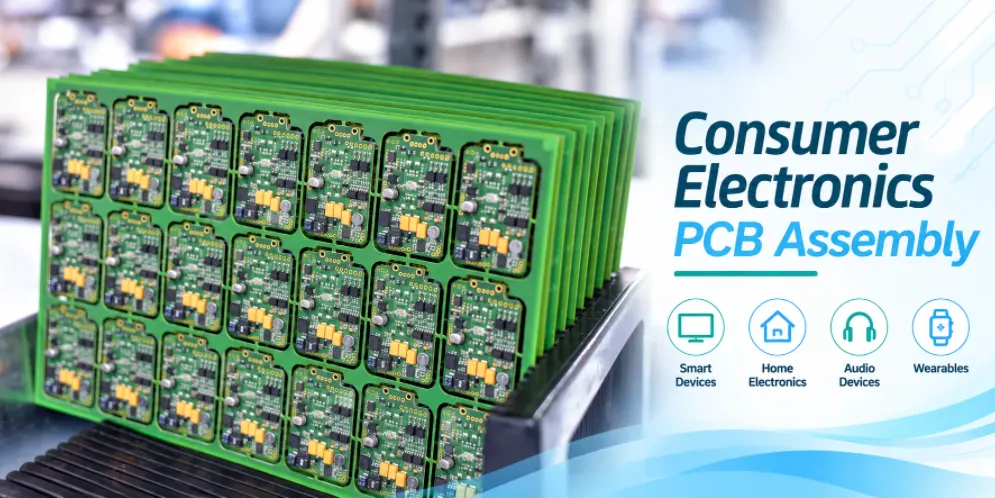
Highleap Electronics provides consumer electronics PCB assembly in China for OEM and ODM hardware teams that need PCB fabrication, component sourcing, SMT/THT assembly, inspection, programming and product-specific testing coordinated within one manufacturing project. Our focus is not simply getting a prototype to power on. It is building a documented assembly process that can be reproduced when a compact consumer product moves into repeat orders.
For smart-home controllers, connected accessories, portable devices and compact user-interface boards, the supplier decision comes down to a few engineering questions: Can the layout be assembled consistently? Are the specified components available and approved? Which defects can the inspection plan actually detect? What must be proven before the production quantity is released? This guide answers those questions from the perspective of an OEM evaluating a consumer electronics PCBA manufacturer.
Need a manufacturing review? Include Gerber/ODB++ files, the approved BOM, pick-and-place data and target quantity when you begär offert för PCB-montering. Flag critical QFN/BGA packages, IC programming and functional-test requirements so the manufacturing scope can be evaluated accurately.
Can Highleap Assemble Your Consumer Electronics PCB in China?
Can Highleap manufacture and assemble a consumer electronics PCBA? Yes. Highleap offers PCB fabrication, SMT and through-hole assembly, component sourcing, IC programming, AOI, X-ray inspection and functional testing. Its PCB monteringsmöjligheter include 0201 chip placement, five SMT placement lines and four DIP insertion lines. The feasibility of a particular component mix, board thickness, test fixture or production quantity still depends on review of the released design files.
That distinction matters to professional buyers: a general assembly capability is not approval of every layout. A compact board with a USB-C connector, a BGA wireless module, exposed-pad power ICs and a tight enclosure calls for a different process review from a spacious two-layer control board. The useful first deliverable from a supplier is a list of design or sourcing exceptions—not an unsupported promise that every build is routine.
| Projektets omfattning | Highleap’s published service | What the OEM must define |
|---|---|---|
| Bare PCB + population | PCB fabrication with SMT / THT assembly | Layer stack-up, board dimensions, assembly side(s), surface finish |
| Turnkey or partial-turnkey PCBA | Komponentanskaffning och montering | Approved manufacturer part numbers, sourcing responsibilities, alternates |
| Programmed and tested board | IC programming, inspection and functional testing | Firmware image, fixture/interface, test limits, acceptance criteria |
| Integrated consumer product | Electro-mechanical and nyckelfärdiga monteringstjänster | Housing, cable, programming, labeling and packaging scope |
Assembly repeatability begins with the bare board. In consumer electronics PCB manufacturing, laminate thickness, via placement, solder-mask clearances and connector-pad design can influence solder-paste printing, component placement and enclosure fit. Reviewing these constraints alongside the BOM and pick-and-place data helps prevent late changes to stencils, fixtures and panelization.
DFM for Compact Devices: QFN, BGA and Connector Risks
What should a consumer electronics PCB assembly DFM review cover? It should resolve component footprints, solder-paste access, panel support, component orientation, test access and mechanical interfaces before a stencil or fixture is ordered. These factors are coupled: making a board smaller may simplify enclosure fit while making its assembly and test less robust.
Fine-pitch QFN/BGA footprints and thermal-pad design
For QFN/DFN devices, the exposed thermal pad and surrounding fine-pitch terminals need a land pattern and stencil strategy appropriate to the exact manufacturer part number. Over-deposition can contribute to floating or solder bridging; insufficient paste can impair the joint. For BGA or LGA packages, an optical top-side check cannot fully evaluate the hidden connections. Review solder-mask openings, via-in-pad conditions, solder-paste apertures and reflow suitability together. Component supplier mounting guidance should take precedence over generic footprint shortcuts; see the Texas Instruments QFN/SON assembly guidance.
Connector placement, panel breakaway and enclosure fit
USB-C receptacles, pogo-pin contacts, tact switches and board-to-wire connectors are frequently the mechanically stressed parts of a small consumer board. A connector may pass a basic electrical test while failing after repeated insertion or housing loading if the attachment and surrounding PCB support were not designed for its use. Review mounting tabs, hole tolerances, connector retention, hand-solder access if required, and the position of nearby fragile ceramic capacitors.
Panel rails, tooling holes and fiducials also matter. A tiny finished board may require a larger temporary assembly panel to run reliably through paste printing, component placement and reflow. Keep components and delicate traces clear of depanelization stress zones; confirm whether the intended separation method is compatible with the board outline and components.
Test access before the layout is frozen
Reserve accessible points for power rails, programming, reset, ground and critical measurement nodes where the product architecture allows them. A design that consumes every available square millimeter on components may force a more expensive fixture or weaker fault isolation later. For a wireless accessory or battery-powered controller, decide in advance whether the factory must check current consumption, firmware identity, RF behavior, charging operation or only basic power-up.
Practical DFM decision: If the PCB outline, connector position and enclosure are fixed, share those constraints at quotation. If they are flexible, ask the supplier whether minor changes to panelization, test points or component placement would reduce assembly complexity without changing product function.
SMT Assembly of 0201 Components and Double-Sided PCBs
How is compact consumer electronics SMT yield protected? Through coordinated control of solder-paste printing, placement, reflow and inspection, not through placement-machine speed alone. Highleap’s advertised capabilities include 0201 placement and inspection technologies; the process plan for any particular 0201, QFN or BGA assembly should be evaluated against the actual footprint and board construction.
Solder paste and placement setup
On a dense PCB, the stencil cannot be optimized for one package in isolation. Small 0201 passives, a large exposed-pad regulator and a USB connector may need different aperture approaches. Where solder-paste inspection is included, it can reveal deposition volume, positional errors and bridging risks before components are reflowed. Placement setup should use a controlled pick-and-place file, approved rotations and confirmed polarity markings; orientation errors in customer CAD data can otherwise repeat across every board.
Double-sided SMT, reflow profile and moisture handling
Double-sided consumer electronics PCB assembly requires a deliberate order of assembly passes. Component mass, thermal sensitivity and the likelihood of part movement during a second reflow are relevant to the sequence. The reflow profile must match the populated PCB and component requirements, rather than a generic temperature recipe. Moisture-sensitive ICs require handling consistent with the supplier’s packaging and applicable floor-life guidance.
Boards with mixed SMT and through-hole connectors should be evaluated for the most practical sequence: reflow, connector insertion, manual/selective/wave soldering as applicable, inspection, cleaning where required, then test. The correct route depends on the design and available factory process, so confirm it in the approved manufacturing plan.
| Assembly feature | Dominant process risk | Granska före publicering |
|---|---|---|
| 0201 passiva element | Paste imbalance, skew or tombstoning | Land pattern, aperture and placement clearance |
| QFN with exposed pad | Inaccessible joints, paste/voiding issues | Thermal-pad design, paste pattern and X-ray scope |
| BGA/LGA | Hidden shorts, opens or incomplete connections | Footprint, profile, inspection and rework strategy |
| USB-C / large connector | Mechanical stress and soldering access | Retention features, fixture and solder sequence |
These are engineering checkpoints, not numerical process guarantees. Paste-volume targets, thermal profiles, defect thresholds and sampling rules must be tied to the released product specification.
Turnkey PCBA: Component Sourcing, Approved Alternates and BOM Control
What does full turnkey consumer electronics PCB assembly include? Highleap's nyckelfärdig PCB montering combines bare-board fabrication, approved component procurement, SMT/THT assembly and agreed inspection within a defined manufacturing scope. In a partial-turnkey or consigned build, the customer supplies some or all components. In either model, the production BOM must clearly identify approved part numbers, alternates and sourcing responsibilities.
The BOM should specify manufacturer part number, reference designators, quantities per assembly, approved alternates and any restrictions on substitution. Distributor availability and component lifecycle matter as much as unit price. A pin-compatible replacement can still require electrical, thermal, mechanical or firmware validation; the assembler should not silently approve it.
Three sourcing questions that change a production quote
- Who owns shortages and substitutions? Define whether alternates require written OEM approval, and who bears engineering-change costs.
- Which components require traceability? Identify critical ICs, connectors, cells or programmed devices requiring purchase and lot records as applicable.
- When is the BOM frozen? Tie procurement and programming data to the same product revision as the Gerber files and placement data.
For fast-moving consumer product launches, separate the engineering BOM from the released manufacturing BOM. If a new part is approved after a pilot lot, record the revision, affected serial or lot range, acceptance test and owner. This avoids quoting or producing a hybrid of old and new versions.

Which Tests Are Needed? AOI, X-ray, ICT and Functional Verification
Which tests does a consumer electronics PCBA actually need? No single inspection method proves complete product functionality. AOI, X-ray, in-circuit testing and functional testing address different failure modes. Highleap supports AOI, X-ray and product-specific functional checks through its PCBA inspection services; the exact test coverage, sampling frequency and pass/fail limits must be defined for each product.
| Metod | Användbar för | Cannot establish on its own |
|---|---|---|
| SPI (solder paste inspection) | Paste coverage and print variation before placement/reflow | Final joint strength or end-product operation |
| AOI (automatiserad optisk inspektion) | Visible polarity, placement and solder anomalies | All hidden BGA/QFN connections |
| Röntgeninspektion | Selected hidden joints, bridging, void patterns | Complete circuit function and firmware validity |
| ICT / flying probe (when applicable) | Accessible opens, shorts, components or electrical measurements | Wireless performance or end-use behavior without a specific test |
| Funktionstest (FCT) | Customer-defined operating functions and programmed behavior | Every latent defect or long-term field reliability outcome |
Turn product requirements into measurable pass/fail criteria
For a smart-home control PCB, a meaningful test might verify input voltage range, regulated rails, device identity, button or relay response and communication behavior under an agreed fixture. For a portable device, the OEM may need current-draw limits in several operating states, charging-interface behavior, sensor response and firmware version. Those are examples of test categories, not claims about tests automatically performed on every Highleap assembly.
Supply the firmware binary, programming instructions, expected outputs, tolerances, test contacts or interface protocol, and disposition rules for failures. Without these, “100% functional testing” is not a defined service. Also specify the applicable acceptance class and the revision of IPC J-STD-001 and IPC-A-610, where these standards are required by contract. A workmanship standard is not a substitute for product-specific electrical limits.
From Prototype to Production: NPI and Pilot Build Gates
When is a consumer electronics PCBA ready for volume production? When the build data are controlled, assembly exceptions are resolved, component sourcing is approved, and a representative pilot has met agreed inspection and functional-test criteria. A hand-reworked prototype that powers up is not enough.
An OEM may use EVT, DVT and PVT stages, but naming conventions differ between organizations. The operational gates are more important than labels:
- Tekniskt exempel: verify connectivity, package selection, hardware functions and major mechanical interfaces; log manual modifications separately.
- Design validation build: confirm released land patterns, enclosure fit, firmware/boot behavior, critical measurements and any required environmental testing plan.
- Production validation / pilot: run the intended assembly route, approve the first article, test the fixture and record defects, rework and their disposition.
- Upprepad produktion: build to a frozen revision with approved BOM, work instructions, inspection points and change-approval procedure.
Ask for records, not a generic ‘high yield’ claim
Before increasing quantities, agree on first-article evidence, known defects, test coverage, rework limits, traceability requirements and the escalation route for process changes. The appropriate data may include the approved BOM revision, process exception log, test results, component-lot information and selected inspection evidence. Do not rely on an unsupported industry-average first-pass yield; judge the supplier against the actual pilot build and the acceptance criteria you defined.
This release-gate approach is especially relevant for compact electronics with lifecycle-sensitive ICs or firmware-controlled behavior. A change that seems minor to purchasing—such as replacing a USB interface controller—can require a different test procedure or programming package.
Consumer Electronics PCB Assembly Cost and RFQ Requirements
What determines consumer electronics PCB assembly cost? Total landed PCBA cost reflects the approved component BOM, bare-board specification, assembly complexity, setup and tooling, inspection/test requirements, volume, rework exposure and delivery commitments. A low assembly labor figure does not necessarily mean a lower finished-board cost.
För en low-volume consumer electronics PCB assembly order, stencil and fixture setup may be spread across relatively few units. For repeat production, component pricing, panel utilization, assembly passes and test time can dominate. A board with a compact outline can still be costly if it uses BGA inspection, unusual component sourcing or a custom functional-test fixture. Ask suppliers to distinguish one-time engineering/tooling charges from recurring unit costs and clearly identify excluded test or programming work.
What to send Highleap for a meaningful PCBA quote
A production-oriented RFQ should contain the following information. Missing information does not always prevent a preliminary discussion, but it prevents a reliable apples-to-apples comparison.
- PCB fabrication package: Gerber/ODB++, layer count and stack-up, thickness, finish, drill data, board/panel outline, special impedance or via notes.
- Component and assembly files: BOM with manufacturer part numbers, approved alternates, centroid/pick-and-place, assembly drawing, polarity and critical placement notes.
- Tillverkningsomfattning: turnkey, partial-turnkey or consigned materials; single- or double-sided SMT, THT/connector operations, coating or final box assembly if needed.
- Quality and software: required acceptance standard/class, AOI/X-ray coverage, functional-test limits, fixture responsibilities, firmware/programming data and reports.
- Kommersiella detaljer: prototype/pilot/repeat quantities, forecast, target delivery date, shipping destination, revision status and packaging/labeling requirements.
For professional purchasing teams, a stronger quote comparison includes total BOM value, alternate-part assumptions, bare-board specification, one-time charges, testing scope, defect disposition and change-control terms. This is more useful than comparing only “price per SMT point.”
Request a Consumer Electronics PCB Assembly Quote
For a project-specific review, provide your PCB fabrication package, approved BOM, pick-and-place data, planned quantity and test or programming requirements. Request a PCBA manufacturing quotation based on the actual build scope and acceptance criteria.
Frequently Asked Questions from OEM and ODM Buyers
Can Highleap handle 0201 SMT components, QFN and BGA assembly?
Highleap’s published capability page identifies 0201 chip placement and discusses BGA assembly and X-ray inspection. The applicable pitch, pad geometry, component mix, board thickness and inspection plan should be checked against the actual data before production acceptance.
Do you offer turnkey PCB assembly for smart-home and connected consumer products?
Yes. Highleap advertises component sourcing, PCB fabrication, SMT/THT assembly and related testing. Smart-home or connected-device requirements such as network provisioning, RF measurements, programmed identifiers and product-specific functional tests need to be explicitly included in the approved scope.
Can a consumer electronics PCBA supplier manufacture prototypes and repeat orders?
Highleap publicly offers prototype through production-oriented PCB assembly services. The specific quantity, schedule, tooling plan and repeatability criteria should be established by a pilot-build review rather than inferred from a generic minimum-order or lead-time claim.
Is AOI plus X-ray enough to ship a consumer electronics board?
Not by itself. AOI and X-ray inspect different assembly features; neither verifies all firmware, power, wireless or end-use functions. Define a functional-test specification with measurable pass/fail limits wherever product performance must be verified.
What information makes a China PCBA quotation accurate?
The current PCB fabrication files, approved BOM, placement data, assembly drawing, expected quantities, test/programming requirements and acceptable substitutions. Call out critical delivery conditions and design features that cannot be changed.

Rekommenderade inlägg
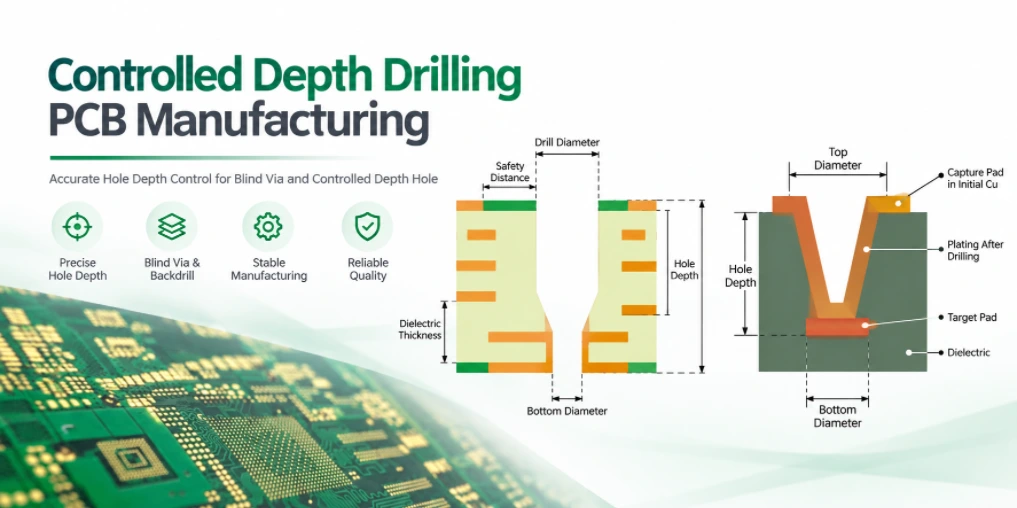
Tillverkning av kretskort för kontrollerad djupborrning
Hur man får en offert för kretskort Låt oss köra DFM/DFA-analys för...
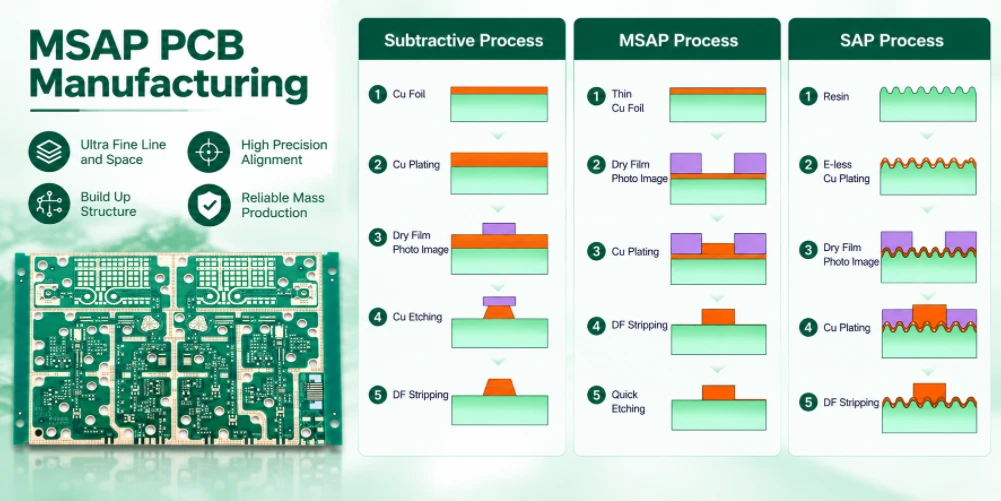
mSAP-kretskortstillverkning för finlinjekretsar
Highleap Electronics tillhandahåller tillverkning av mSAP-kretskort...
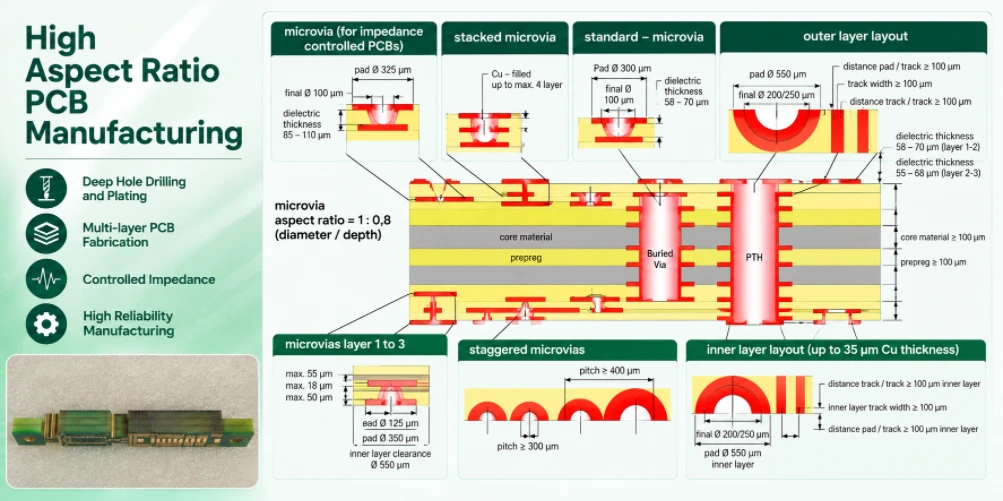
Tillverkning av kretskort med högt bildförhållande för pläterade genomgående hål
Highleap Electronics tillhandahåller kretskort med högt bildförhållande...
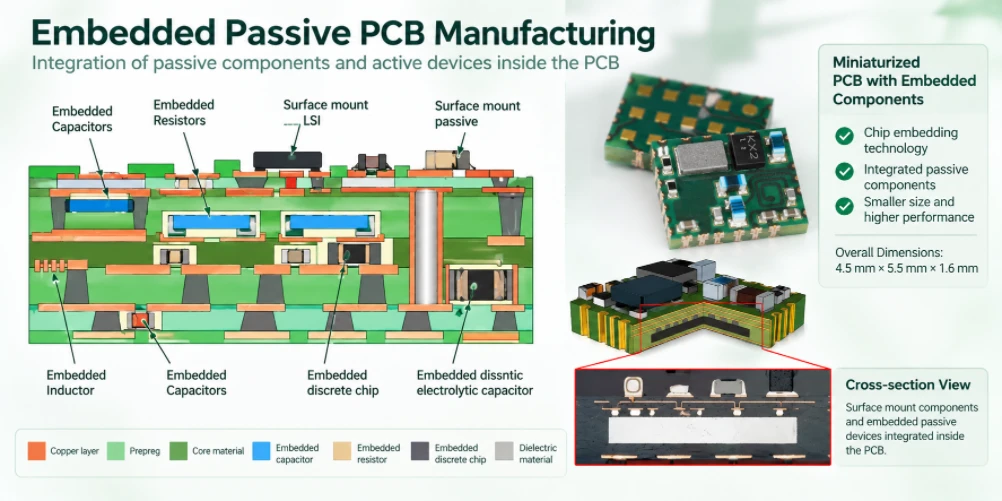
Tillverkning av inbyggda passiva kretskort för integrerade konstruktioner
Highleap Electronics tillhandahåller inbyggda passiva kretskort...
Hur man får en offert för kretskort
Låt oss köra en DFM/DFA-analys åt dig och återkomma till dig med en rapport. Du kan ladda upp dina filer säkert via vår webbplats. Vi behöver följande information för att kunna ge dig en offert:
-
- Gerber, ODB++ eller .pcb, spec.
- Stycklista om du behöver montering
- Antal
- Vändningstid
Förutom kretskortstillverkning erbjuder vi ett omfattande utbud av elektroniska tjänster, inklusive kretskortsdesign, PCBA och nyckelfärdiga lösningar. Oavsett om du behöver hjälp med prototypframtagning, designverifiering, komponentförsörjning eller massproduktion, erbjuder vi heltäckande support för att säkerställa ditt projekts framgång.
För PCBA-tjänster, vänligen ange din BOM (Bill of Materials) och eventuella specifika monteringsanvisningar. Vi erbjuder även DFM/DFA-analys för att optimera dina konstruktioner för tillverkningsbarhet och montering, vilket säkerställer en smidig produktionsprocess.