
Zangni o'chirish sxemalarini qanday tozalash kerak: keng qamrovli qo'llanma

“Rust on a circuit board” can mean rust on steel hardware, corrosion of copper or solder, battery leakage, or residue that only resembles corrosion. Identify the affected material and contamination before choosing a cleaning method. Cleaning cannot replace metal already lost from a trace, pad, contact or plated hole.
Sxemalardagi zangni tushunish
Rust refers to iron corrosion products. Copper corrosion, tarnished contacts, damaged plating and dried flux are different conditions. Inspect both sides of the board and the surrounding enclosure to locate the source rather than treating every deposit as iron rust.
- Corroded contacts can increase resistance or become intermittent.
- Loss of conductor material can create open circuits.
- Moisture and ionic contamination can enable leakage or conductive bridging.
- Damaged connectors, component leads or inner layers may require replacement rather than surface cleaning.
Oldini olish asosiy hisoblanadi
Control moisture ingress, contamination and storage conditions. If corrosion is already present, establish its cause and extent before returning the equipment to use.
Tayyorgarlik va xavfsizlik
- Isolate energy: Disconnect power and batteries, and follow the equipment’s procedure for stored charge. Do not work on an energized assembly.
- Document the damage: Photograph the board, connectors and contamination before cleaning.
- Muvofiqlikni tekshiring: Identify unsealed switches, displays, sensors, batteries, labels and coatings that may be damaged by liquid, heat or vibration.
- Use controlled handling: Follow ESD precautions and the cleaning product’s ventilation and protective-equipment instructions.
- Set a repair limit: Severe corrosion, damaged insulation, battery damage or uncertain high-voltage clearances require qualified assessment before further work.
Cleaning Methods and Their Limits on Printed Circuit Boards
1. Dry Brushing for Loose Debris
A suitable soft, ESD-safe brush can remove loose contamination from an isolated board. Avoid scraping fine conductors, lifting pads or forcing debris into connectors. Use only clean, dry air where the equipment and component instructions permit it; brushing does not restore corroded metal.
2. Isopropyl Alcohol for Compatible Residues
Electronics-grade IPA may be suitable for certain oils and flux residues after compatibility checks. It is not a universal rust remover or a treatment for every ionic deposit. A solvent can move dissolved contamination rather than remove it unless the residue is collected and the cleaning process completed. Follow the selected cleaner’s instructions and verify drying beneath components.
3. Vinegar Is Not a General PCB Cleaner
Do not apply a household vinegar-and-water recipe to an unidentified populated board. Acid compatibility, residue removal and the original contaminant must be understood. Battery leakage also varies by chemistry; a neutralization procedure for one contaminant is not appropriate for every deposit.
4. Baking Soda Paste Can Leave Ionic Residue
Abrasive household pastes are not a general PCB repair method. Residue can remain beneath packages or inside connectors and interfere with insulation. Use a documented electronics cleaning process matched to the contamination instead of assuming an alkaline paste makes corrosion harmless.
5. Electrolytic Rust Removal Is Not a Populated-PCB Procedure
Do not connect a battery charger to a circuit board immersed in an electrolyte. Industrial methods for derusting separate metal parts do not establish a safe process for semiconductor devices, fine copper, plating and insulation on an assembly. Remove and assess damaged hardware separately when the equipment procedure allows it.
6. Ultrasonic Cleaning Needs Component Approval
Ultrasonic cleaning can be useful in a qualified process, but vibration can damage sensitive parts or solder joints. Murata’s resonator guidance illustrates why component-specific conditions matter. There is no universal five- or ten-minute cycle for every populated board; verify chemistry, power, frequency, loading and drying for the actual BOM.
7. Laser Cleaning Needs a Qualified Process
A laser can also remove plating, damage solder mask or overheat a component. The ability to clean rust from a separate steel surface does not prove suitability for an assembled PCB. Do not treat laser derusting as a routine escalation when brushing fails.
8. Vapor Corrosion Inhibitors Are Primarily Preventive
A corrosion-inhibiting atmosphere is not a general method for dissolving existing corrosion or restoring electrical contacts. Product compatibility and packaging conditions must be verified. Distinguish corrosion prevention from a separately specified cleaning or rust-removal product.
9. Citric Acid Baths Are Not a Universal Board Treatment
Do not immerse a populated board in a household acid bath for a fixed number of hours. Mixed metals, exposed contacts, trapped liquid and component seals require separate compatibility assessment. A process for removable metal hardware cannot be transferred unchanged to a PCB.
10. Rust Converters Are Not PCB Repair Coatings
Steel rust-converter primers may leave a coating or reaction product. They do not restore conductor dimensions, solderability or connector contact resistance, and should not be substituted for a qualified electronics coating or repair material.
Tozalashdan keyingi protseduralar
- Verify cleanliness and dryness: Follow an approved drying process compatible with the complete assembly. Surface dryness or a universal oven setting does not prove that cavities are dry.
- Inspect the remaining metal: Check pads, traces, connectors, component terminations and any accessible plated holes under suitable magnification.
- Repair or replace damaged features: Cleaning alone does not establish adequate current capacity, insulation or mechanical strength.
- Qayta sinov: Carry out the relevant continuity, insulation and functional checks before an approved return to service.
- Remove the cause: Address leaks, contamination sources, enclosure seals and storage conditions.
Xulosa
A useful corrosion assessment identifies the metal, contaminant, remaining damage and acceptable repair scope. Electronics cleaning is distinct from industrial derusting, and a clean-looking board is not necessarily an electrically sound board. The limits of nanotechnology in PCB repair also matter when a coating or conductive ink is proposed: material novelty does not establish that the original electrical function has been restored.
Humidity control and a correctly selected himoya qoplamasi can be part of prevention after cleaning and repair are approved. Coating should not conceal active contamination or replace inspection and testing.
Tavsiya Xabarlar
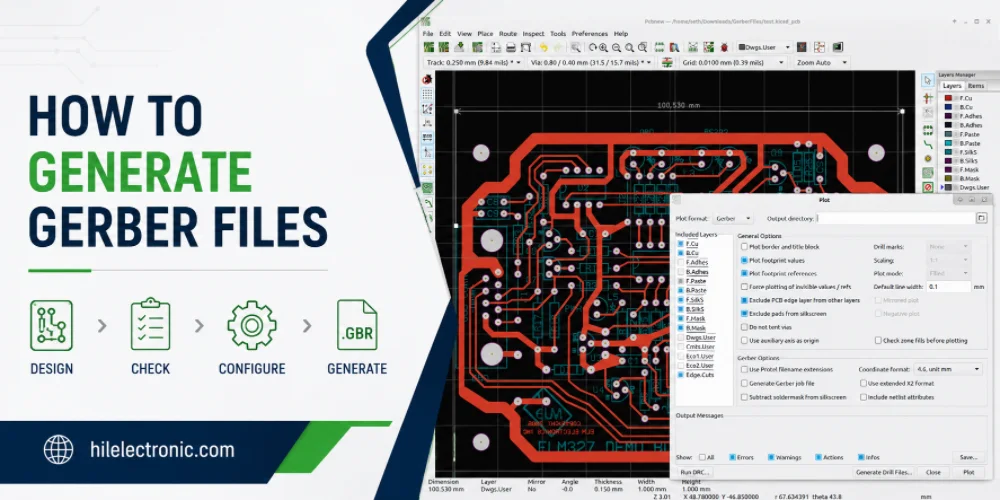
PCB ishlab chiqarish uchun Gerber fayllarini qanday yaratish mumkin
1-rasm. Highleap uchun Gerber fayllari tasvirini qanday yaratish mumkin...
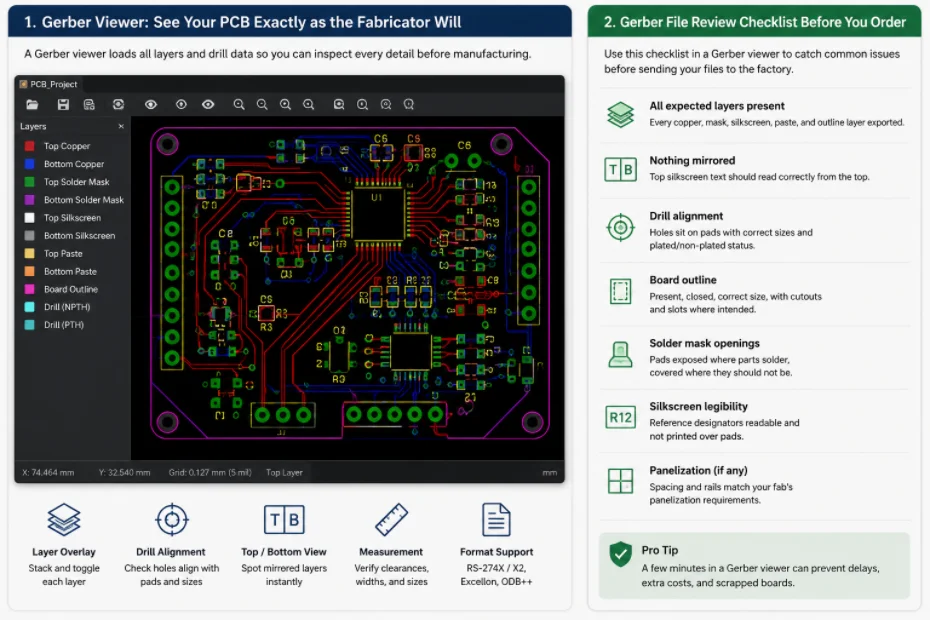
Gerber faylini ko'rib chiqish ro'yxati: Buyurtma berishdan oldin PCB fayllarini qanday tekshirish mumkin
1-rasm. Gerber faylini ko'rib chiqishda yo'qolgan qatlamlar aniqlandi, burg'ulash...
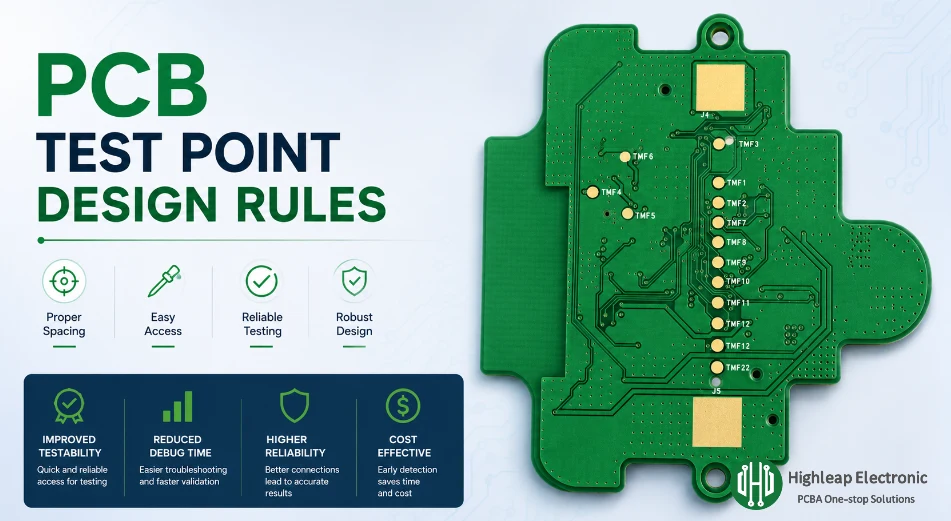
Nosozliklarni tuzatish va AKT uchun PCB sinov nuqtalarini loyihalash qoidalari
1-rasm. PCB sinov nuqtasini loyihalash qoidalari nosozliklarni tuzatishga yordam beradi...
PCB Jumper Wire: Foydalanish, turlari va dizayn bo'yicha maslahatlar
1-rasm. PCB o'tish simlari prototiplar va... uchun foydalidir.