

Robot Microduck: sztuczna inteligencja fizyczna typu open-source, symulacja rzeczywistości i inżynieria PCB
Microduck: Wewnątrz małego robota z fizyczno-sztuczną inteligencją i elektroniki, która za nim stoi
Microduck firmy Pollen Robotics łączy w sobie uczenie maszynowe ze wzmacnianiem, komputery wbudowane, czujniki i 15 aktywowanych stopni swobody w 25-centymetrowym robocie dwunożnym. Ciekawą historią inżynieryjną jest nie tylko sposób, w jaki się porusza, ale także to, jak symulowana inteligencja staje się niezawodnym, rzeczywistym sprzętem.
Informacje techniczne zawarte w tym artykule zostały sprawdzone pod kątem zgodności z oficjalnymi materiałami Microduck firmy Pollen Robotics oraz oficjalnymi repozytoriami GitHub w dniu 30 sierpnia 2026 r.
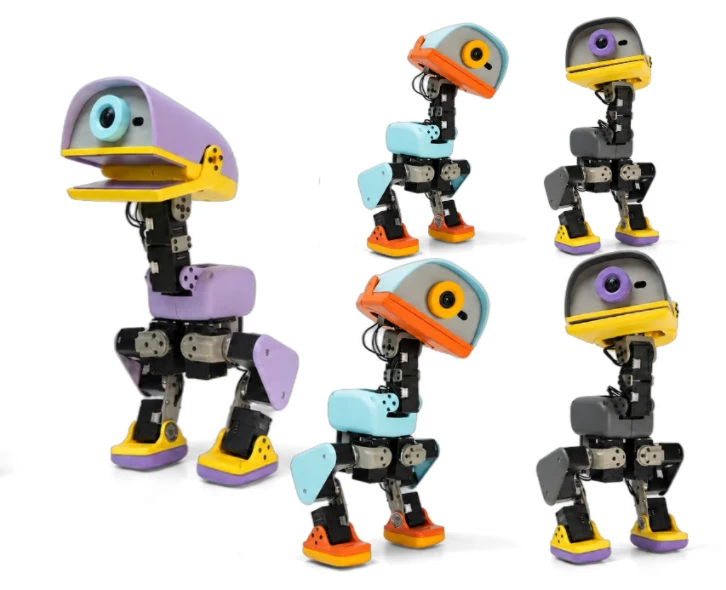
Dlaczego Microduck stał się interesującą platformą fizyczno-sztucznej inteligencji
Firma Pollen Robotics ogłosiła Microduck 27 sierpnia 2026 roku . Podczas premiery firma opisała go jako dwunożnego robota o długości 25 cm, zaprojektowanego z myślą o ułatwieniu eksperymentowania z fizyczno-sztuczną inteligencją, uczenia się ruchu i tworzenia symulacji w rzeczywistości.
Opublikowana specyfikacja obejmuje układ Rockchip RK3566 z akceleratorem AI , 1 GB pamięci RAM, 32 GB pamięci masowej, przednią kamerę, matrycę LiDAR 8×8 time-of-flight, dwa IMU, mikrofony, głośnik, dwie anteny NFC, Wi-Fi, Bluetooth i wyjmowalną baterię NP-F550 o pojemności 2600 mAh.
Jego ruchomy dziób umożliwia chwytanie przedmiotów, a oficjalne materiały opisują takie zachowania, jak chodzenie, siedzenie, kucanie, podnoszenie się po typowych upadkach, podnoszenie przedmiotów, kopanie i jazda na rolkach.
Szczegóły premiery warte dokładnego zacytowania
- Zamówienia w przedsprzedaży można będzie składać od 27 sierpnia 2026 r.
- Cena promocyjna wynosiła 399 USD (przed podatkami i przesyłką).
- Pierwsze dostawy planowane są przed Bożym Narodzeniem 2026 roku.
- Rynkami docelowymi były Ameryka Północna i Europa.
- Cztery wersje kolorystyczne: Cream, Graphite, Lavender i Sky.
- Czas pracy na baterii wynosił około jednej godziny, w zależności od sposobu użytkowania.
*Kwota 399 USD jest ceną promocyjną/ceną przedpremierową i nie oznacza gwarancji stałej ceny detalicznej.
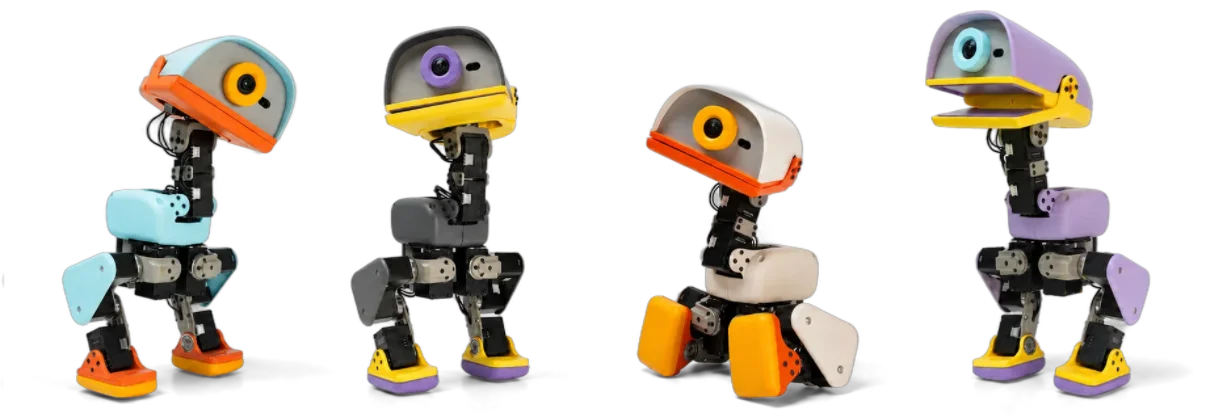
Co jest rzeczywiście oprogramowaniem typu open source, a co nim nie jest
Microduck jest trafnie opisany jako oprogramowanie oparte na otwartym kodzie źródłowym . Firma Pollen Robotics wyraźnie stwierdza, że deklaracja open source obejmuje oprogramowanie; pliki projektu mechanicznego i elektronicznego robota nie są otwarte . To rozróżnienie jest istotne dla inżynierów, którzy w przeciwnym razie mogliby zakładać, że schematy, pliki układów PCB lub pliki do produkcji mechanicznej są publicznie dostępne.
Wbudowane środowisko wykonawcze, usługi sterujące i oprogramowanie robota. Licencja repozytorium: Apache-2.0. Repozytorium Microduck RL github.com/pollen-robotics/microduck_rl
Środowiska RL, narzędzia symulacyjne do rzeczywistych, szkolenie PPO i eksport ONNX. Oficjalny symulator przeglądarki Piaskownica z mikrokaczką Hugging Face
Uruchom wytrenowane zasady Microduck w symulacji opartej na przeglądarce.
Od symulacji do robota, który potrafi kopać, chodzić i odzyskiwać siły
Oficjalne repozytorium microduck_rl opisuje środowiska uczenia się przez wzmacnianie zbudowane na platformie mjlab (MuJoCo Warp) z wykorzystaniem PPO . Zasady są trenowane z częstotliwością 50 Hz , eksportowane do ONNX , a następnie ładowane przez środowisko wykonawcze Microduck na prawdziwym robocie.
Repozytorium dokumentuje również recepturę symulacji rzeczywistej, która obejmuje fizykę siłowników, randomizację domeny i symulację luzów zwrotnych. Techniki te mają znaczenie, ponieważ strategia, która dobrze działa w idealnym symulatorze, może zawieść w zetknięciu z rzeczywistymi silnikami, luzami mechanicznymi, hałasem czujników, zmianami tarcia i wahaniami baterii.
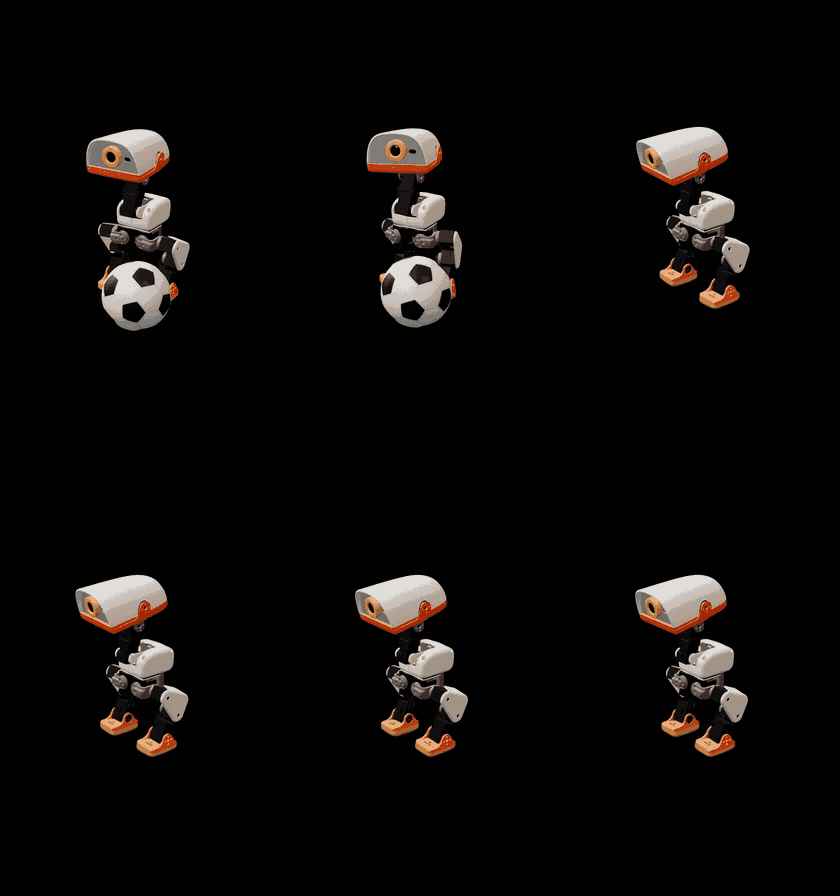
Co Pollen Robotics publicznie określiło
Poniższa tabela pozostaje w zgodzie ze specyfikacją premierową opublikowaną przez Pollen Robotics. Celowo unika ona zgadywania nieopublikowanych szczegółów PCB.
| Obszar | Opublikowana specyfikacja Microduck |
|---|---|
| Wymiary | 25 cm wysokości, 14 cm szerokości |
| Waga | Poniżej 800 g |
| Aktywacja | 15 stopni swobody w obrębie połączonych nóg, głowy i szyi |
| obliczać | Rockchip RK3566 z akceleratorem AI |
| Pamięć / magazynowanie | 1 GB RAM, magazyn 32 GB |
| Wizja | Przednia kamera ze wskaźnikiem użycia kamery |
| Wykrywanie zasięgu | Kompaktowy LiDAR wykorzystujący macierz czasu przelotu 8×8 |
| Wykrywanie ruchu | Dwa IMU, jeden w ciele i jeden w głowie |
| Wzajemne oddziaływanie | Przegubowy chwytny dziób; mikrofony i głośnik; dwie anteny NFC |
| Łączność | Wi‑Fi i Bluetooth; wersje tymczasowe w momencie premiery |
| bateria | Wyjmowany akumulator NP-F550, 2600 mAh; około godziny w zależności od użytkowania |
| Kontrola / polityka | Pętla polityki pokładowej 50 Hz |
Dlaczego fizyczna sztuczna inteligencja ostatecznie staje się problemem w produkcji elektroniki
Schematy PCB i pliki projektów elektronicznych Microduck nie zostały opublikowane, więc twierdzenie o konkretnej strukturze PCB, liczbie płytek, topologii sterowników silników i układów elektronicznych Microduck byłoby nieprawdziwe. Można natomiast śmiało omówić szerszy problem inżynieryjny, wspólny dla robotów kompaktowych: czujniki, obliczenia, łączność, sterowanie i zasilanie muszą współdziałać w ramach małego, ruchomego systemu.
Integralność zasilania
Obciążenia siłowników mogą się szybko zmieniać. Planowanie zasilania, uziemienie, odsprzęganie, prąd znamionowy złącza i zachowanie w stanach przejściowych mogą decydować o tym, czy czuła logika pozostanie stabilna podczas ruchu robota.
Integralność sygnału i szum czujnika
Kamery, IMU, czujniki głębokości i interfejsy cyfrowe mogą być wrażliwe na problemy z drogą powrotną, zakłócenia i szumy zasilania. Układ warstwowy, routing i rozmieszczenie komponentów mają znaczenie.
Gęstość cieplna
Procesory, regulatory i elektronika siłowników generują ciepło w zamkniętej obudowie. Należy wcześnie rozważyć kwestię dystrybucji miedzi, przelotek termicznych i ścieżek cieplnych na poziomie systemu.
Niezawodność mechaniczna
Roboty poruszają się, wibrują, a czasem upadają. Montaż płytek PCB, odciążenie kabli, dobór złączy, jakość połączeń lutowanych i kontrola montażu mogą mieć wpływ na niezawodność w terenie.
Prototyp robotyki nie jest jeszcze produktem powtarzalnym
Gdy zespół robotyki wychodzi poza eksperymenty, proces produkcji sprzętu musi stać się powtarzalny. Praktyczna ścieżka produkcji często przebiega od walidacji prototypu, przez budowę inżynieryjną, NPI, produkcję pilotażową, a następnie produkcję seryjną.
W przypadku projektu PCB lub PCBA robotyki, kompletny pakiet produkcyjny może obejmować dane Gerber lub ODB++, zestawienie materiałów (BOM), dane dotyczące pobierania i umieszczania, rysunki montażowe, specjalne wymagania procesowe i uzgodniony plan testów.
Tworzysz kontroler robota, płytkę czujnikową lub urządzenie oparte na sztucznej inteligencji?
Highleap Electronics oferuje produkcję i montaż płytek PCB dla elektroniki wbudowanej, robotyki i innych produktów wymagających dużej wiedzy inżynieryjnej. Jeśli Twój projekt przechodzi od prototypu do powtarzalnej wersji, prześlij dane produkcyjne w celu weryfikacji i wyceny PCB/PCBA.
Inżynierowie Microduck często zadają pytania
Czy Microduck jest sprzętem w pełni otwartym?
Nie. Materiały prasowe Pollen Robotics wyraźnie wskazują, że oświadczenie o otwartym kodzie źródłowym obejmuje stos oprogramowania. Pliki projektów mechanicznych i elektronicznych nie są otwarte.
Jak duży i ciężki jest Microduck?
Oficjalna specyfikacja podaje, że Microduck ma 25 cm wysokości, 14 cm szerokości i waży mniej niż 800 g.
Do czego wykorzystuje Microduck w uczeniu się przez wzmacnianie?
Oficjalne repozytorium RL opisuje środowiska zbudowane na platformie mjlab (MuJoCo Warp) z PPO. Polityki są trenowane z częstotliwością 50 Hz, eksportowane do ONNX i wdrażane przez środowisko wykonawcze robota.
Gdzie znajdują się oficjalne repozytoria open-source?
Oprogramowanie robota jest dostępne na stronie pollen-robotics/microduck , a środowisko uczenia maszynowego znajduje się na stronie pollen-robotics/microduck_rl.
Czy pliki projektów PCB firmy Microduck są publiczne?
Nie. Firma Pollen Robotics wyraźnie oświadcza, że pliki projektu elektronicznego nie są open source. Publiczne dyskusje na temat dokładnej konstrukcji płytki PCB Microduck nie powinny zatem być przedstawiane jako zweryfikowane, chyba że firma opublikuje dodatkową dokumentację sprzętową.
Polecamy Wiadomości
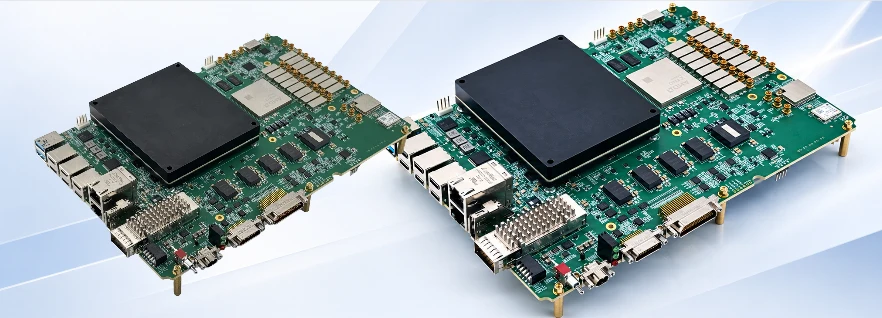
Produkcja i montaż szybkich płytek PCB RFSoC: kluczowe zagadnienia inżynieryjne
Jak uzyskać wycenę płytek PCB Przeprowadźmy analizę DFM/DFA dla...

1206 Usługi montażu PCB dla prototypów i produkcji
src="https://hilelectronic.com/wp-content/uploads/2026/08/PC...

Usługi w zakresie zestawów PCBA dla komponentów dostarczanych przez klienta
Kitted PCBA to model produkcji, w którym klient...

Usługi montażu płytek PCB w technologii „Build to Print”
src="https://hilelectronic.com/wp-content/uploads/2026/08/PC...
Jak uzyskać wycenę płytek PCB
Przeprowadzimy dla Ciebie analizę DFM/DFA i prześlemy raport. Możesz bezpiecznie przesłać pliki za pośrednictwem naszej strony internetowej. Aby przygotować wycenę, potrzebujemy następujących informacji:
-
- Gerber, ODB++ lub .pcb, specyfikacja.
- Lista BOM, jeśli wymagany jest montaż
- Ilość
- Czas na zmianę
W przypadku usług PCBA prosimy o dostarczenie BOM (listy materiałów) i wszelkich szczegółowych instrukcji montażu. Oferujemy również analizę DFM/DFA w celu optymalizacji projektów pod kątem możliwości produkcji i montażu, zapewniając płynny proces produkcji.