
Waterdichte PCB's voor elektronica in vochtige omgevingen

Waterdichte printplaat
Waterproof PCB design addresses moisture exposure at both board and product level. A beschermende coating can improve resistance to moisture and contaminants, but does not by itself establish a waterproof rating. Applications in medical, automotive, consumer, and industrial equipment may require suitable coatings, encapsulation, seals, connectors, and enclosures, followed by testing under the intended exposure conditions.
Belang van waterdichte PCB's
Moisture protection can reduce corrosion and leakage-current risks in outdoor equipment, marine PCB assemblies, and kitchen appliances. Its effectiveness depends on board cleanliness, coverage, curing, material compatibility, and the type and duration of exposure. Select the protection method for the actual environment and validate the complete assembly.
Water exposure varies by application: automotive electronics may encounter spray and contamination, while consumer products may require a defined ingress-protection rating. Medical equipment must also tolerate its specified cleaning or sterilization process. These requirements apply to the complete product and cannot be established by a PCB coating alone.
Verschillen met conventionele PCB's
A PCB intended for wet conditions needs a defined protection strategy. Conformal coating provides a thin protective film; potting or encapsulation and sealed enclosures address different exposure requirements. An ordinary solder mask is not a substitute for a qualified environmental coating, and none of these choices removes the need to evaluate connectors, board edges, and assembly interfaces. A boat speed-controller board combines motor-power circuitry with an environment-sensitive assembly, so sealing and coating decisions must preserve the specified heat path and connector access. For pool-light PCB protection and integration, specify the immersion conditions and the complete luminaire test scope; a coating or nominal low-voltage rating alone does not establish suitability for underwater use.
Methoden voor het waterdicht maken van PCB's
Er zijn verschillende methoden voor het waterdicht maken van PCB's, elk geschikt voor verschillende soorten toepassingen en vereiste waterdichtheidsniveaus. Enkele veel voorkomende methoden zijn:
- Moisture-Resistant Substrates: Compare moisture absorption and electrical performance for the specific FR-4, PTFE, or ceramic material grade. A low-moisture-absorption substrate can support the design, but it does not make the assembled PCB waterproof.
- Protective Coating: Parylene N or parylene C may be considered where their barrier and electrical properties suit the application. Coverage, adhesion, masking, and exposure conditions must be validated; a coating name alone does not establish waterproof performance.
- De connectoren afdichten: Het afdichten van de connectoren met een waterdicht materiaal kan voorkomen dat water via de connectoren in de PCB diffundeert.
- Qualified Protective Materials: Use a coating or encapsulant intended for electronic assemblies, with documented dielectric properties and compatibility. General-purpose waterproof paint may interfere with electrical contacts, rework, or heat transfer and should not be assumed suitable.
Welk aanvraagproces is beter?
The coating application process depends on board geometry, masking requirements, production volume, and the specified dry-film thickness. Manual spray, automated selective coating, dipping, and dispensing each have practical tradeoffs. The PCB oppervlakteafwerking must also be compatible with the coating and cleaning process.
Manual spraying can be practical for low-volume or complex assemblies, but coverage and thickness depend on process control. Shadowed areas, board edges, connectors, and cure conditions require inspection; manual spraying does not inherently provide better coverage than an automated process.
Het is echter belangrijk op te merken dat de selectie van het aanvraagproces gebaseerd moet zijn op een zorgvuldige beoordeling van de specifieke vereisten van de aanvraag. Voor sommige toepassingen kunnen andere methoden, zoals dompelen of dompelen, geschikter zijn, afhankelijk van factoren zoals de kosten, complexiteit en het gewenste niveau van waterdichtheid.
Choose the application process through trials on representative assemblies, then document masking, thickness, cure, coverage, and inspection requirements.
Andere manieren om PCB's tegen water te beschermen
Naast de hierboven genoemde methoden zijn er nog twee andere veel voorkomende manieren om PCB's tegen water te beschermen:
Conformal Coating: Acrylic, urethane, epoxy, silicone, and other coating systems offer different moisture, chemical, thermal, and rework characteristics. Select a qualified system for the exposure conditions. Conformal coating is moisture-resistant protection, not a guarantee of long-term immersion resistance.
Sealed Enclosures: Plastic or metal enclosures, suitable gaskets, sealed connectors, and cable-entry protection can limit water ingress. Validate the assembled enclosure to the required ingress-protection conditions; its material alone does not establish a waterproof rating.
Conclusie
Het beschermen van elektronische apparaten from moisture requires a defined exposure requirement and a tested protection system. Consider the substrate, coating or encapsulation, connectors, seals, and enclosure together. Verify electrical performance after the relevant environmental tests instead of assuming that a coated PCB is waterproof.
aanbevolen berichten
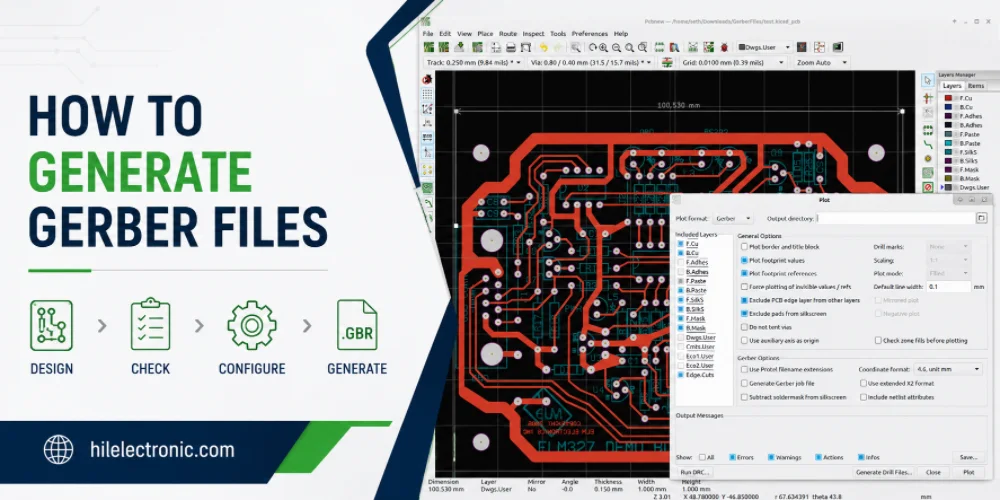
Hoe genereer je Gerber-bestanden voor de productie van printplaten?
Afbeelding 1. Hoe genereer je Gerber-afbeeldingsbestanden voor Highleap...
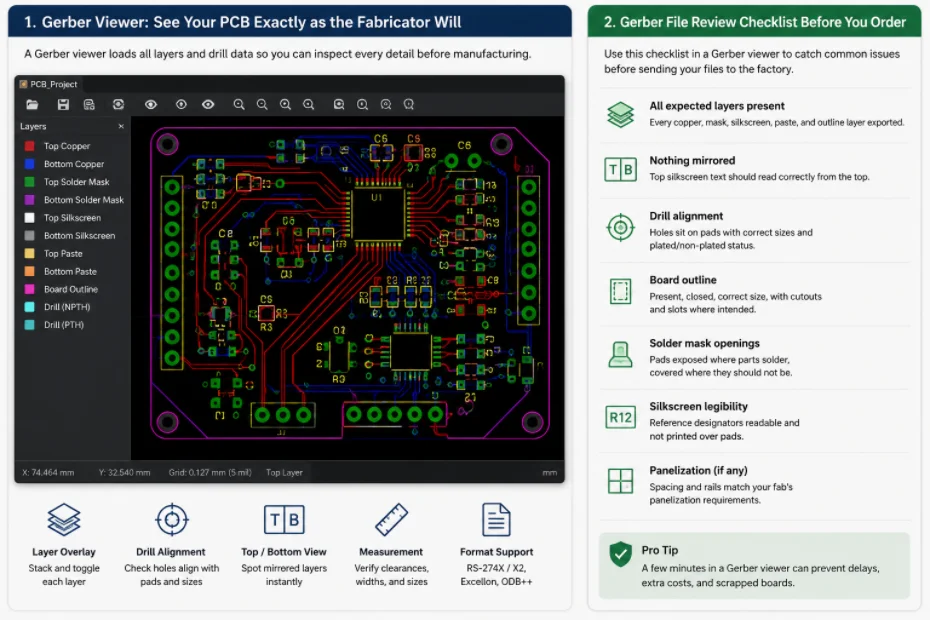
Controlelijst voor Gerber-bestanden: Hoe u PCB-bestanden controleert voordat u bestelt
Figuur 1. Controle van Gerber-bestand detecteert ontbrekende lagen, boorgat...
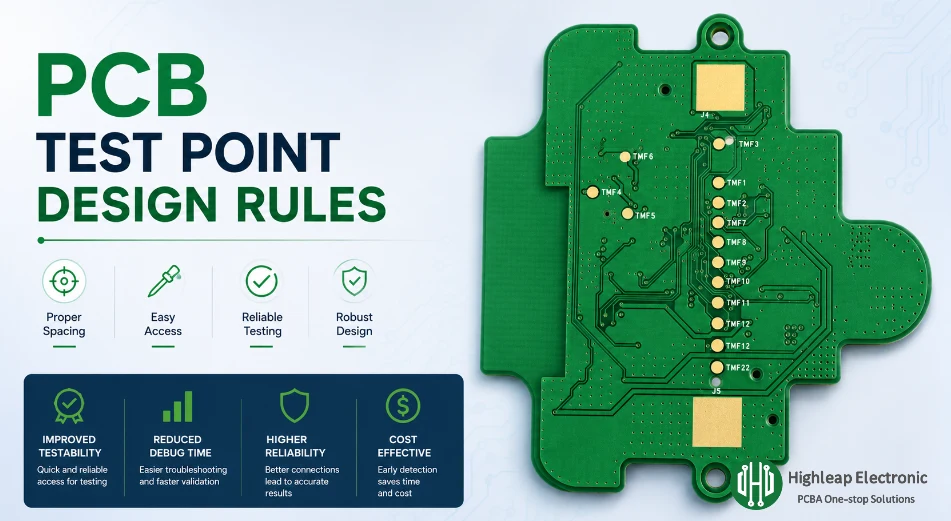
Ontwerpregels voor PCB-testpunten voor debuggen en ICT
Figuur 1. Ontwerpregels voor PCB-testpunten helpen bij het debuggen,...
PCB-jumperdraad: toepassingen, soorten en ontwerptips
Afbeelding 1. PCB-jumperdraden zijn handig voor prototypes en...