
Hoe vergelijk je offertes voor 6-laags printplaten voordat je bestelt?
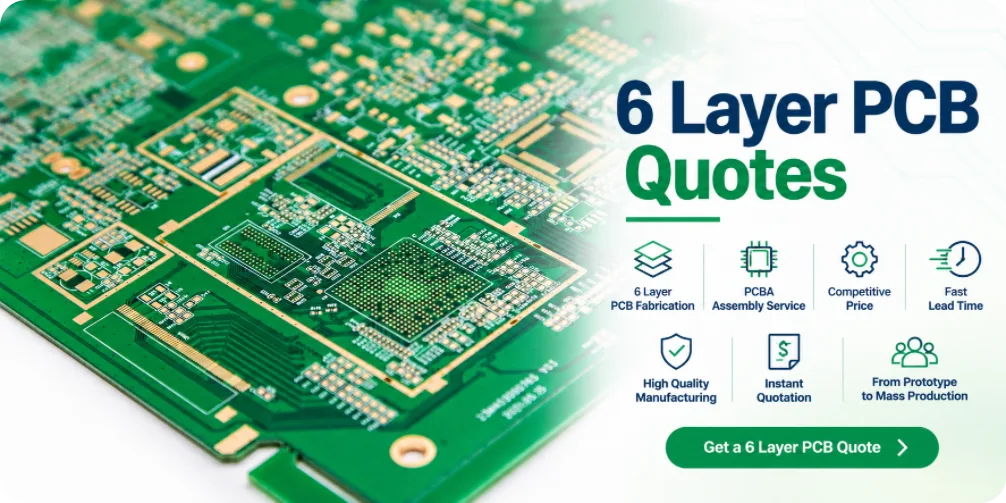
For OEM purchasing teams, hardware engineers, and contract manufacturers sourcing custom 6-layer PCBs, the objective is straightforward: obtain quotations for the same approved board specification, understand the full cost, and select a supplier that can support the project from prototype through production. This checklist explains what to send, what to compare, and where costs can be reduced without compromising your requirements.
Have a six-layer board ready for pricing? Highleap Electronics provides PCB manufacturing and PCB assembly services. Share your design files, order quantity, and production requirements to request a project-specific 6-layer PCB quote.
6-Layer PCB Quote Comparison
- What to Include in Your 6-Layer PCB RFQ
- Compare 6-Layer PCB Quotes on the Same Specifications
- What Drives the Real Manufacturing Cost?
- Why Supplier Prices Differ
- When to Quote PCB Fabrication and Assembly Together
- Choosing a Manufacturing Partner That Can Support Production
- Get a Project-Specific Quote From Highleap Electronics
Need a 6-Layer PCB Quote?
Submit your fabrication files, board specifications, quantity, and delivery requirements for a project-specific quotation.
Special materials and manufacturing processes are subject to engineering review.
1. What to Include in Your 6-Layer PCB RFQ
A useful quotation starts with a complete RFQ (request for quotation). Board dimensions, layer count, and quantity are not enough to establish whether suppliers are pricing the same construction. The more precisely you define manufacturing requirements, the less room there is for costly assumptions or revised pricing later.
- Fabricagegegevens: Supply the current Gerber or ODB++ files, NC drill files, board outline, fabrication drawing, and revision identifier. Confirm that all suppliers are quoting the same release.
- Bordconstructie: Specify overall dimensions, finished thickness, layer sequence, copper weight for each layer, and any dielectric constraints. For controlled-impedance designs, the 6-laags PCB-stackup must be reviewed as part of the electrical and manufacturing requirements, not treated as a generic six-layer build.
- Laminaat: State any mandatory material grade, Tg, Dk, Df, or thermal requirements. If substitutes are acceptable, define the approval process rather than allowing suppliers to change the material silently. Effective PCB materiaal selectie balances application needs, availability, and cost.
- Drilling and special processes: Identify the smallest finished holes, via type, filled or capped vias, blind or buried vias, backdrilling, slots, edge plating, and gold fingers where relevant.
- Electrical and quality requirements: Provide impedance targets and tolerances, surface finish, applicable acceptance criteria, electrical testing requirements, and any required inspection or test reports.
- Commerciële eisen: Provide the order quantity, likely future volumes, target delivery date, destination, packaging needs, and whether the price should include shipping.
- Omvang van de levering: State whether you are buying bare PCBs only or also need component procurement, assembly, and testing of the finished PCBA.
A Copy-Ready RFQ Checklist
When contacting suppliers, use the following fields so important information is not lost across email threads:
- Project / part number / revision: [Details invoegen]
- bestanden: [Gerber or ODB++ / drill files / fabrication drawing]
- PCB: [Six layers / board dimensions / finished thickness]
- Constructie: [Stackup / copper weights / material requirements]
- Kritische specificaties: [Impedance / minimum finished holes / special vias / finish / tolerances]
- hoeveelheden: [Prototype / pilot / production price breaks]
- Levering: [Target date / ship-to location / packaging]
- Leveringsomvang: [Bare PCB or fabricated-and-assembled PCBA]
- Quote clarification requested: [Material alternatives / exclusions / testing / NRE / lead-time starting point]
Inkooptip: Ask the supplier to list any assumptions, exclusions, or proposed substitutions directly in the quotation. A written clarification at RFQ stage is easier to evaluate than a change request after engineering approval.
2. Compare 6-Layer PCB Quotes on the Same Specifications
Before ranking suppliers by price, confirm that their quotes cover equivalent specifications and deliverables. Instead of relying on a single quoted unit cost, review these eight items for each supplier.
- Material and finished stackup. Is the specified laminate included? Do the dielectric construction, total thickness, and copper weights match the approved design? Record every deviation requiring engineering approval.
- Impedance control. Are the signal layers, target impedances, tolerances, and verification requirements understood? Changes in dielectric thickness or trace geometry can affect the result, so eisen voor gecontroleerde impedantie should be agreed before fabrication.
- Via structures and mechanical features. Are blind or buried vias, backdrilling, via filling, slots, routing, edge plating, and other special operations included where specified?
- Oppervlakteafwerking. Does the quote name the required finish? ENIG, HASL, OSP, and selective plating options should not be treated as interchangeable without considering assembly, storage, and contact requirements.
- Testen en documentatie. Which electrical tests, inspection criteria, impedance measurements, and reports are included? The scope of PCB elektrische testen should reflect your acceptance requirements rather than a vague promise that the boards will be tested.
- One-time and recurring costs. Separate PCB unit pricing from tooling, engineering, special fixtures, and other non-recurring charges. Ask which fees would apply again on a repeat order.
- Lead time and delivery. Confirm when the quoted lead time begins: after payment, final engineering approval, material readiness, or another defined milestone. Check shipping terms and whether freight is included.
- PCB versus PCBA scope. A bare-board price cannot be compared directly with a quote that includes components, SMT/THT assembly, inspection, and functional testing. Compare the same end deliverable.
Use three statuses during your review: confirmed, excluded, or pending clarification. If an item is still pending, do not count its apparent cost reduction as a verified saving.
Example: When a Lower Quote Is Not the Better Comparison
Imagine Supplier A quotes a six-layer board with the specified laminate, approved impedance stackup, electrical testing, and required documentation. Supplier B quotes the same board dimensions and quantity at a lower unit price, but the material is described only as “FR-4,” with no clear impedance verification or test-report scope.
These are not yet equivalent quotations. Request that Supplier B price the same material, construction, tests, and deliverables as Supplier A. If Supplier B still offers a lower total cost after the specifications are aligned, that saving is meaningful. If not, the original difference was at least partly a difference in scope.
3. What Drives the Real Manufacturing Cost?
The number of layers is only one cost driver. Board dimensions, panel utilization, material grade, copper thickness, drill count, via complexity, process tolerances, surface finish, testing, and order volume can all change the final price. The best cost-reduction opportunities are those that preserve the electrical performance and reliability required by the product.
Check Material and Stackup Requirements
Standard FR-4 may be suitable for many industrial and general electronics applications, while more demanding thermal or high-speed designs may require a specific higher-performance laminate. Avoid specifying an expensive material without a design reason, but never accept a cheaper substitute without engineering approval. Material choices and dielectric construction must also be consistent with impedance and finished-thickness requirements.
Review Via Complexity Before Production
Conventional plated through-holes are generally less process-intensive than blind or buried vias and certain filled-via constructions. If the layout can meet routing, signal, and reliability requirements without an advanced via structure, ask for an alternate fabrication assessment. Do not change a via strategy simply to lower the quote without checking the impact on the design.
Improve Panel Utilization and Volume Planning
Material usage and fabrication setup can affect the cost per finished board. Ask whether small changes in board outline, array configuration, or order quantity could improve manufacturing efficiency. For an assembled product, panelization must also accommodate component placement, handling, depanelization, and test access.
Choose Finishes and Tolerances Deliberately
Select the surface finish for the actual soldering process, connector function, storage conditions, and reliability needs. Apply tight tolerances only where they are technically justified. Unnecessarily restrictive dimensions or inspection conditions may add manufacturing complexity without improving product performance.
Compare Total Delivered Cost, Not Only Unit Price
Bij het overwegen van PCB-fabricagekosten, include setup charges, agreed test documentation, packaging, shipping, and any costs arising from unresolved specifications. For repeat production, ask which charges are one-time and whether the supplier can provide price breaks at your forecast quantities.
Useful request to send a supplier: “Please identify any engineering-approved changes to material, panel layout, via structure, finish, or quantity that could reduce cost, and quote those alternatives separately from the specified build.” This preserves a clear baseline while making cost optimization actionable.
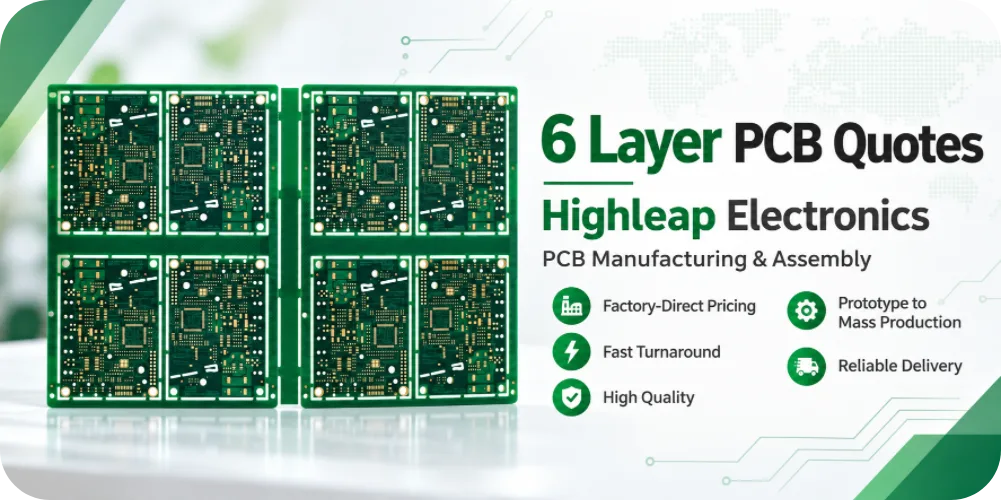
4. Why Supplier Prices Differ
Price gaps do not always indicate that one manufacturer is more efficient. They can reflect differences in engineering interpretation, process availability, delivery assumptions, or what has been omitted from the written scope.
- Different materials or constructions: One proposal may include the requested laminate and copper build while another assumes a standard alternative.
- Different manufacturing scope: Special vias, selective plating, tight features, or required inspections may be absent from the lower quote.
- Different quality deliverables: Electrical testing may be included, but impedance verification, special reports, or customer-specific acceptance documentation may not be.
- Unresolved design questions: Missing drawings, conflicting notes, and unspecified tolerances can cause a supplier to estimate conservatively—or omit costs that appear later.
- Different commercial terms: Tooling, shipping, taxes, packaging, material procurement, and lead-time conditions may be handled differently.
Before releasing a purchase order, resolve the important technical questions in writing. A pre-production PCB design-for-manufacturability review can help expose issues involving spacing, drilling, panelization, stackup, and manufacturing notes before they turn into schedule or cost changes.
5. When to Quote PCB Fabrication and Assembly Together
If your actual deliverable is a populated circuit board, the bare PCB is only part of the purchasing decision. A low-cost PCB may not produce the lowest-cost finished assembly if the panel design complicates SMT placement, the surface finish does not match assembly requirements, or components and test coverage are treated as separate late-stage problems.
Highleap Electronics supports PCB fabrication alongside kant-en-klare PCB-assemblage. When requesting a combined quotation, share the fabrication package together with:
- stuklijst: Manufacturer part numbers, quantities, approved alternates, and any critical sourcing restrictions.
- Plaatsingsgegevens: Pick-and-place or centroid files and clear component orientation information.
- Montagehandleiding: Assembly drawings, polarity and connector notes, special handling requirements, and the expected build quantity.
- Testvereisten: Any AOI, X-ray, in-circuit, functional, programming, or other specified tests relevant to your product. State which deliverables and results you need.
- Aanbodmodel: Clarify whether parts will be customer-supplied, supplier-sourced, or mixed. The scope of sourcing van elektronische componenten affects cost, scheduling, substitutions, and material traceability.
Ask for separate visibility into bare PCB fabrication, components, assembly, testing, and one-time charges. This makes an integrated PCBA proposal easier to compare against separate vendors and helps your team make a better total-cost decision.
6. Choosing a Manufacturing Partner That Can Support Production
Once the quotes cover the same requirements, evaluate how each supplier handles production details—not just how quickly it returns a price. A reliable purchasing decision needs clarity on engineering questions, approved changes, quality acceptance, repeat orders, and communication.
- Engineering communication: Will the supplier highlight missing or conflicting requirements before pricing is finalized?
- Productiegeschiktheid: Can the proposed materials, stackup, via structures, tolerances, and special processes be evaluated against the actual design?
- Kwaliteitsbereik: Are inspection criteria, electrical tests, and reports clearly agreed?
- Wijzigingscontrole: Will material substitutions or construction changes require your approval before implementation?
- schaalbaarheid: Can the supplier discuss prototype, pilot, repeat-production, and assembly needs as part of one production plan?
Voor klanten die een evaluatie uitvoeren PCB-fabricage and assembly together, Highleap Electronics can be considered for a project-specific manufacturing quotation. The most helpful starting point is a complete set of current files and clear acceptance requirements, so feasibility, scope, cost, and delivery expectations can be discussed against the actual board rather than a generic six-layer specification.
7. Get a Project-Specific Quote From Highleap Electronics
Whether you need prototype boards, a production run, or a fully assembled PCBA, the next step is to request a quote for your real design—not a sample price based only on layer count.
Send Highleap Electronics your current fabrication files, stackup, quantity, required surface finish, any impedance or special-process requirements, and target delivery date. If you also need PCBA, include the BOM, placement files, assembly drawings, and test requirements. State any mandatory materials or specifications and identify where engineering-approved alternatives may be considered.
Request Your 6-Layer PCB Manufacturing and Assembly Quote →
Final pricing, capabilities, production lead time, and any proposed cost-saving alternatives depend on review of the actual design and order requirements.
Frequently Asked Questions About 6-Layer PCB Quotes
Can I get a 6-layer PCB quote with only Gerber files?
Gerber and drill files can support an initial review, but a reliable quote also needs board thickness, material, copper, finish, quantity, and any impedance, special-process, or quality requirements. If details are unresolved, ask the supplier to identify assumptions explicitly.
Why is one 6-layer PCB quote much cheaper than another?
The difference may come from board construction, material choice, special processes, testing, quantity, one-time charges, or shipping terms. Compare quotations only after each supplier confirms the same technical and commercial scope.
Can I reduce 6-layer PCB cost without changing the design?
Sometimes. Better panel utilization, realistic order quantities, appropriate finish selection, and clearer acceptance requirements may reduce cost without changing the electrical design. Other opportunities—such as modifying the via structure or laminate—require engineering assessment and approval.
Should I include assembly when requesting a 6-layer PCB quote?
Yes, if the finished product you need is an assembled board. Providing a BOM, placement files, assembly drawings, and test requirements allows the supplier to evaluate the complete PCBA scope and provide a more meaningful total-cost comparison.

aanbevolen berichten

5G Small Cell PCB-productie voor RF- en telecommunicatie-infrastructuur
Inhoudsopgave 5G Small Cell PCB-vereisten zijn afhankelijk van...
Fabricage van op maat gemaakte 65% toetsenbord-PCB's en PCBA's
Inhoudsopgave 1. Van ontwerpbestanden tot productieklaar product...
Productie en assemblage van RFSoC-printplaten: een totaaloplossing.
InhoudsopgaveReferentie RFSOC-bordproject: 115 × 175...

Hoe de kosten van printplaten in 2026 te verlagen
Inhoudsopgave Waarom 80% van de printplaatkosten vastligt bij...
Hoe u een offerte voor PCB's kunt krijgen
Wij voeren graag een DFM/DFA-analyse voor u uit en sturen u vervolgens een rapport. U kunt uw bestanden veilig uploaden via onze website. Om u een offerte te kunnen geven, hebben we de volgende informatie nodig:
-
- Gerber, ODB++ of .pcb, spec.
- BOM-lijst als u assemblage nodig heeft
- Aantal
- Draaitijd
Voor PCBA-diensten verzoeken wij u uw BOM (Bill of Materials) en eventuele specifieke assemblage-instructies te verstrekken. Wij bieden ook DFM/DFA-analyses aan om uw ontwerpen te optimaliseren voor maakbaarheid en assemblage, wat een soepel productieproces garandeert.