
Come selezionare i materiali per PCB TG180 per schede personalizzate
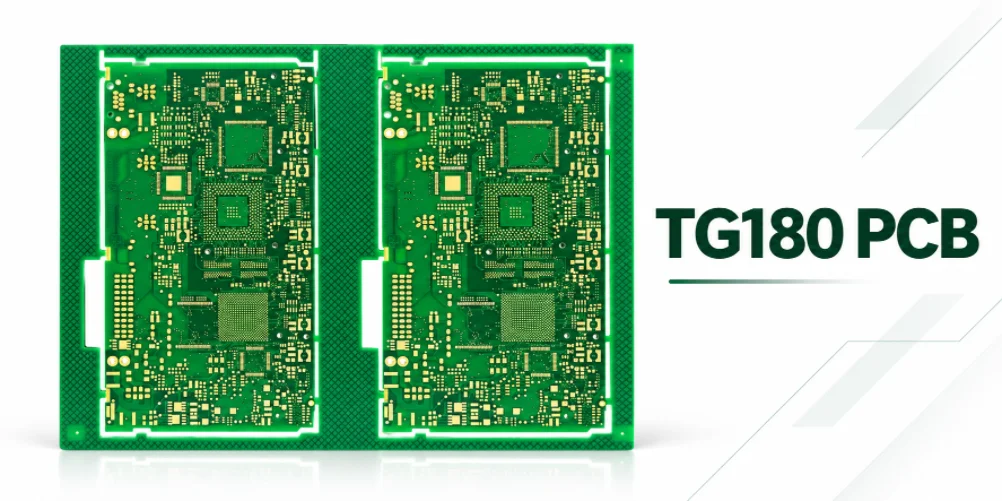
Choosing a Tg180 PCB involves more than selecting a laminate with a glass transition temperature of 180°C. The material must also meet the board’s electrical, thermal, mechanical, and manufacturing requirements.
For PCB buyers and engineering teams, the key decisions are which material grade to specify, how the stackup affects fabrication, and whether the finished board meets the intended assembly requirements. Highleap Electronics provides PCB fabrication and assembly for custom projects, from prototype builds to production orders.
Sommario
Tg180 PCB Materials, Brands, and Material Selection
Several laminate manufacturers offer high-Tg materials around the 180°C range. However, matching Tg values do not make different materials interchangeable. Electrical properties, thermal expansion, dielectric construction, and processing requirements must also be considered.
Isola 370HR and I-Speed
Isola 370 HR is a high-reliability epoxy laminate system used in multilayer PCB applications. Evaluate its thermal properties and construction against the board’s reliability and fabrication requirements.
Isola I-Speed is another laminate option with a published Tg of 180°C. Its electrical characteristics make it worth evaluating for designs with demanding signal-integrity requirements.
For either material, verify the current datasheet and compare Dk, Df, dielectric construction, and relevant test conditions before approving the stackup. See the dedicated PCB Isola 370HR and PCB Isola I-Speed pages for more material-specific information.
Shengyi S1000-2 and S1000-2M
Published product information identifies Tg values of 180°C by DSC for Shengyi S1000-2 and S1000-2M. For procurement and engineering approval, confirm the exact grade, available laminate and prepreg constructions, thicknesses, and applicable specifications.
Do not select a material based on its Tg value alone. Its dielectric properties, thermal data, and compatibility with the required stackup must also satisfy the project specification.
ITEQIT-180A
ITEQ IT-180A may be considered when evaluating high-Tg FR-4 materials, but its reported Tg value must be checked against the current datasheet and specified test method.
If the project requires Tg of at least 180°C by DSC, a reported value below that threshold should not be accepted without clarification and approval. See the existing ITEQ IT-180A material page per ulteriori discussioni.
How to Compare Tg180 PCB Laminate Options
Use the following table as an initial screening guide, not as a substitute for the manufacturer’s current technical documentation.
On mobile, swipe horizontally inside the table to view all columns.
These are selected examples rather than a complete list of Tg180 materials. Confirm the current datasheet and availability of the exact grade before production. For a wider overview, see the high-Tg PCB material guide.
How to Specify Tg180 FR-4 for PCB Manufacturing
A specification that states only “Tg180 FR-4” may leave critical details unresolved. Define the required material grade and board construction, along with the properties the finished PCB must meet.
- Grado materiale: Identify the manufacturer and exact grade if a specific laminate is required.
- Tg and test method: State the required threshold and measurement method.
- Proprietà termali: Review Td, Z-axis CTE, and other relevant data against the application.
- Proprietà elettriche: Specify Dk, Df, impedance targets, and relevant frequencies for controlled-impedance or high-speed designs.
- Costruzione della scheda: Define layer count, finished thickness, copper weights, dielectric thicknesses, and via structures.
- Requisiti di assemblaggio: Identify the intended soldering process and relevant thermal exposure.
Material substitutions require a review of the complete specification. Two laminates with similar Tg values may have different dielectric properties, expansion behavior, and stackup compatibility.
For general material selection, consult the FR-4 material guide. The final grade should be chosen according to the board’s actual requirements, not the material category alone.
Tg180 PCB Manufacturing Requirements
Material selection is only one part of PCB fabrication. Stackup design, drilling, plating, copper distribution, surface finish, and testing must all match the finished board specification.
Stackup and Dielectric Construction
Define the core and prepreg arrangement, copper weights, dielectric thicknesses, and finished board dimensions. For controlled-impedance designs, the actual dielectric construction must support the specified impedance targets.
Changing the laminate or dielectric construction can affect impedance and signal performance. Review substitutions before releasing manufacturing data.
Drilling, Plating, and Via Reliability
Hole sizes, board thickness, aspect ratio, via structures, and required copper thickness determine important process requirements. Drilling, desmear, plating, and inspection must be appropriate for the specified construction.
A high Tg value alone does not guarantee plated-through-hole reliability. The finished board must meet the applicable fabrication specifications and acceptance criteria.
Copper Balance and Dimensional Stability
Uneven copper distribution and an asymmetrical stackup can contribute to warpage and dimensional variation. Review copper balance, board thickness, outline tolerances, and mounting requirements together, especially for complex multilayer boards.
Surface Finish and Testing
Choose the surface finish according to solderability, component compatibility, storage conditions, and customer requirements. ENIG, OSP, and lead-free HASL are possible options where suitable.
Define electrical testing, impedance verification, and additional inspection according to the design and required acceptance criteria. Highleap’s Servizi di fabbricazione di PCB can be used as the starting point for reviewing bare-board manufacturing requirements.
Tg180 PCB Assembly Considerations
When the bare board will undergo assembly, the laminate specification must be evaluated alongside the soldering process. A Tg180 designation does not, by itself, guarantee compatibility with every lead-free reflow profile.
Reflow Profile and Thermal Exposure
Review the planned reflow profile against the laminate data, component limits, board construction, and number of heating cycles. Rework and other thermal processes may also affect the overall exposure.
A reflow peak above Tg does not automatically make a material unsuitable. Likewise, a higher Tg does not guarantee the reliability of the complete PCB assembly.
Component Sourcing and Assembly Files
For an assembly quotation, provide a BOM with manufacturer part numbers and quantities. Identify any restrictions on substitutes, since component availability and lifecycle status can affect sourcing and production planning.
Include pick-and-place data, assembly drawings, polarity information, and any special process instructions needed to build the board correctly.
Inspection and Functional Testing
The inspection plan depends on component technology, product risk, and acceptance requirements. Depending on the design, it may include AOI, X-ray inspection for applicable packages, electrical testing, or functional testing.
For projects requiring both bare-board fabrication and PCBA, review the two scopes together. See Highleap’s Servizi di assemblaggio PCB per maggiori informazioni.
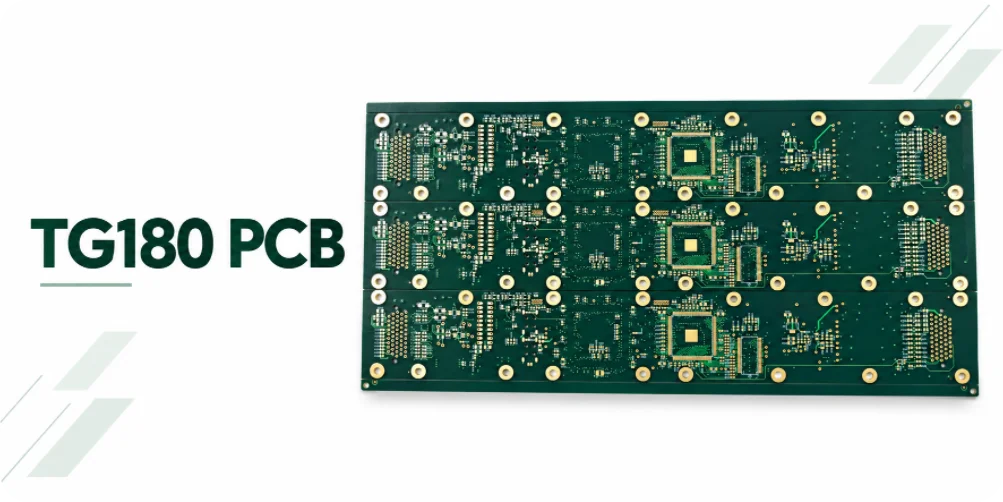
Tg180 PCB Cost and Quotation Requirements
Tg180 PCB pricing depends on the complete specification, not just the Tg value. Material grade, board construction, fabrication complexity, and material availability all influence the final quotation.
Factors That Affect Tg180 PCB Cost
- Material grade and availability: Different laminate systems, thicknesses, and sourcing conditions can affect cost and lead time.
- Numero di strati e loro sovrapposizione: Finished thickness, dielectric construction, copper weights, and layer count influence fabrication complexity.
- Drilling and feature requirements: Small holes, high aspect ratios, complex vias, and tight tolerances can increase processing and inspection requirements.
- Finitura superficiale e test: Finish selection, impedance requirements, electrical testing, and additional inspection affect the quotation.
- Order quantity and delivery target: Prototype, small-batch, and production orders have different setup and material-utilization considerations. The requested delivery date also affects scheduling and sourcing review.
- PCB assembly scope: For PCBA, component availability, placement complexity, soldering requirements, and testing contribute to the total project cost.
There is no universal price premium for every Tg180 PCB. The actual cost difference depends on the material grade, board construction, manufacturing requirements, quantity, and availability. For more detail, see the PCB fabrication cost guide.
What Information Is Needed for a Tg180 PCB Quote?
A complete data package helps the manufacturing team assess the design, confirm the material requirements, and identify missing information before production planning.
Per la fabbricazione del PCB, fornire:
- Gerber or ODB++ fabrication files and NC drill files.
- Board outline, layer count, finished thickness, and copper weights.
- Stackup and dielectric thickness requirements.
- Required laminate manufacturer and grade, if specified.
- Surface finish, solder mask, impedance targets, and dimensional tolerances.
- Quantity, target delivery date, and testing requirements.
For PCB assembly, provide:
- BOM with manufacturer part numbers and quantities.
- Pick-and-place or centroid files.
- Assembly drawings and component polarity information.
- Approved component alternatives or sourcing restrictions.
- Assembly process and inspection or functional testing requirements.
If the laminate has not been selected, specify the required thermal and electrical performance and state whether alternatives may be evaluated. Any substitute should be checked against the project specification and approved where required.
For combined fabrication and assembly projects, submitting both sets of files helps establish the complete scope. Start with the Pagina di preventivo PCB and include the relevant project requirements.
Frequently Asked Questions About Tg180 PCB
1. What is Tg in a PCB?
Tg, or glass transition temperature, describes the temperature range in which a polymer-based laminate transitions from a relatively rigid state to a softer state. It does not define the maximum operating temperature of the finished PCB.
2. What is the difference between Tg170 and Tg180 PCB?
The stated glass transition temperatures differ by 10°C. Actual material performance also depends on the laminate grade, test method, Td, Z-axis CTE, electrical properties, and board construction. Tg180 is not automatically the better choice for every application.
3. What is the difference between Tg and Td in PCB materials?
Tg is the glass transition temperature, while Td is the decomposition temperature measured under a specified test method. They describe different material behaviors and should not be used interchangeably.
4. Is high-Tg FR-4 required for lead-free soldering?
Not for every design. Suitability depends on the laminate’s thermal properties, reflow profile, number of heating cycles, board construction, and reliability requirements. Evaluate the material and assembly process together.
5. Does a Tg180 PCB cost more than standard FR-4?
It may, but there is no fixed price difference. Cost depends on the selected grade, board thickness, layer count, fabrication complexity, order quantity, material availability, and testing requirements.
6. Can Tg180 PCB be used for high-speed or high-frequency applications?
Some materials around the 180°C Tg range may be suitable, but Tg alone does not establish signal-integrity performance. Evaluate Dk and Df at the relevant frequencies, along with stackup, impedance requirements, and signal-loss limits.
Plan Your Tg180 PCB Manufacturing Project
Choosing a Tg180 PCB material requires a balance of laminate properties, board construction, manufacturing requirements, and assembly conditions. The correct choice depends on the exact grade and the acceptance criteria for the finished product.
Highleap Electronics supports custom PCB fabrication and assembly projects. Providing a clear material specification, complete fabrication files, and assembly data where applicable helps define the scope and prepare a more accurate quotation.
Prepare your board files, material requirements, quantity, and target delivery date for review. If assembly is included, provide the BOM and assembly files as well.
TG180 PCB FABRICATION AND ASSEMBLY
Request a Tg180 PCB Quote
Share your PCB files, laminate requirements, board specifications, quantity, and target delivery date. Highleap Electronics can review your fabrication and assembly requirements for quotation.
SUPPORTO AL PROGETTO
Revisione del materiale
Confirm the Tg threshold, laminate grade, and applicable datasheet.
Fabbricazione di PCB
Review stackup, copper weights, drilling, and testing requirements.
PCB Assembly
Coordinate BOM sourcing, assembly processes, and inspection.
For a faster review: Include Gerber or ODB++ files, the stackup drawing, material specification, quantity, and target delivery date. For assembly, provide the BOM and pick-and-place files as well.

Messaggi consigliati
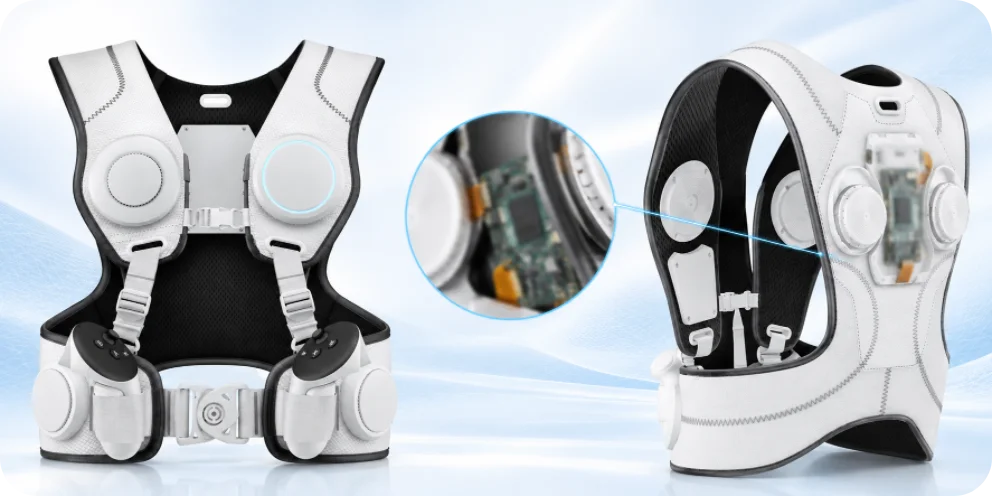
Produzione e assemblaggio di PCB per giubbotti aptici indossabili per OEM di sistemi aptici multizona.
In un giubbotto aptico indossabile, chi lo indossa percepisce...
Produzione e assemblaggio di PCB per registratori di temperatura indossabili per OEM di sensori BLE
Un PCB per registratore di temperatura indossabile è la scheda elettronica...
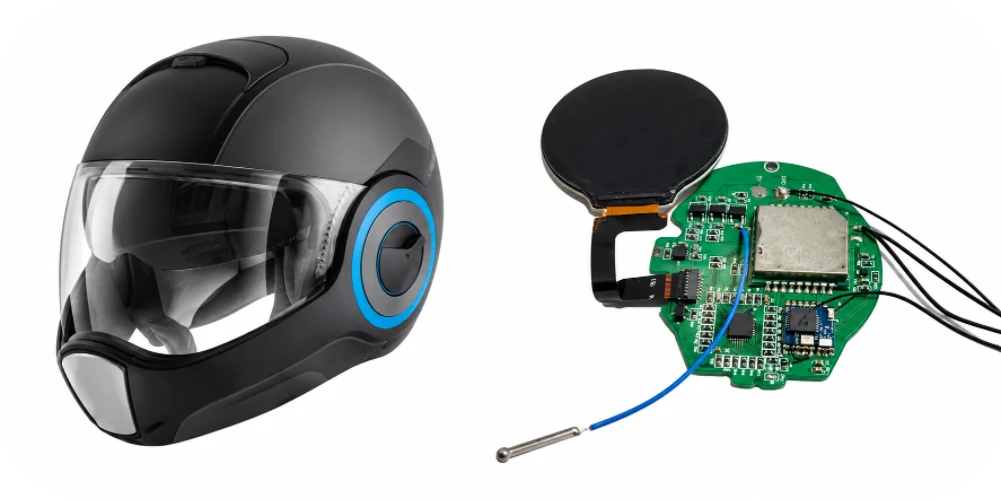
Produzione e assemblaggio di PCB per caschi di sicurezza connessi per OEM di IoT industriale.
Una scheda PCB per casco di sicurezza connesso è un dispositivo IoT industriale...
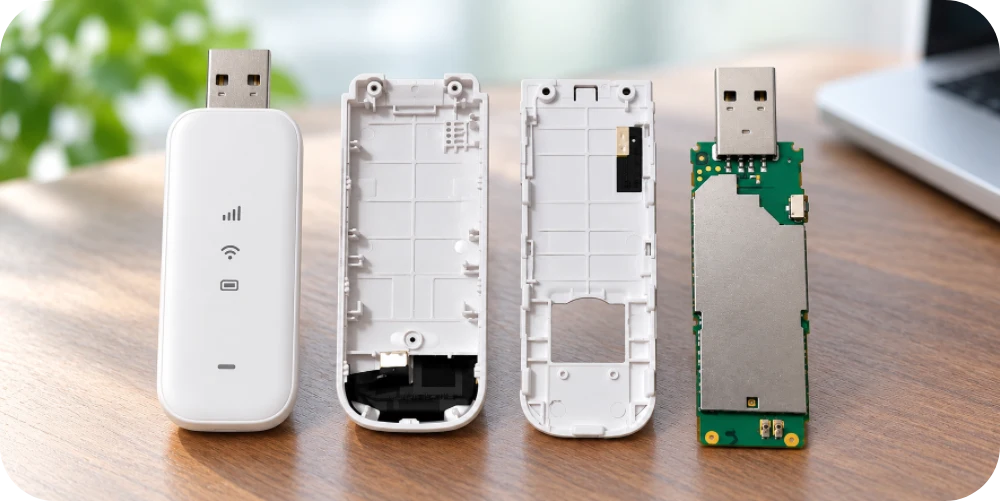
Produzione e assemblaggio di PCB per router Wi-Fi mobili per OEM di hotspot 4G/5G.
La scheda PCB per router Wi-Fi mobile è la piattaforma di produzione...
Come ottenere un preventivo per i PCB
Eseguiremo un'analisi DFM/DFA per te e ti invieremo un report. Puoi caricare i tuoi file in modo sicuro tramite il nostro sito web. Per poterti fornire un preventivo, abbiamo bisogno delle seguenti informazioni:
-
- Specifiche Gerber, ODB++ o .pcb.
- Elenco BOM se è necessario l'assemblaggio
- Quantità
- Tempo di svolta
Per i servizi PCBA, vi preghiamo di fornire la vostra distinta base (BOM) e le istruzioni di assemblaggio specifiche. Offriamo anche analisi DFM/DFA per ottimizzare i vostri progetti in termini di producibilità e assemblaggio, garantendo un processo produttivo fluido.