
Сборка печатных плат для промышленной электроники
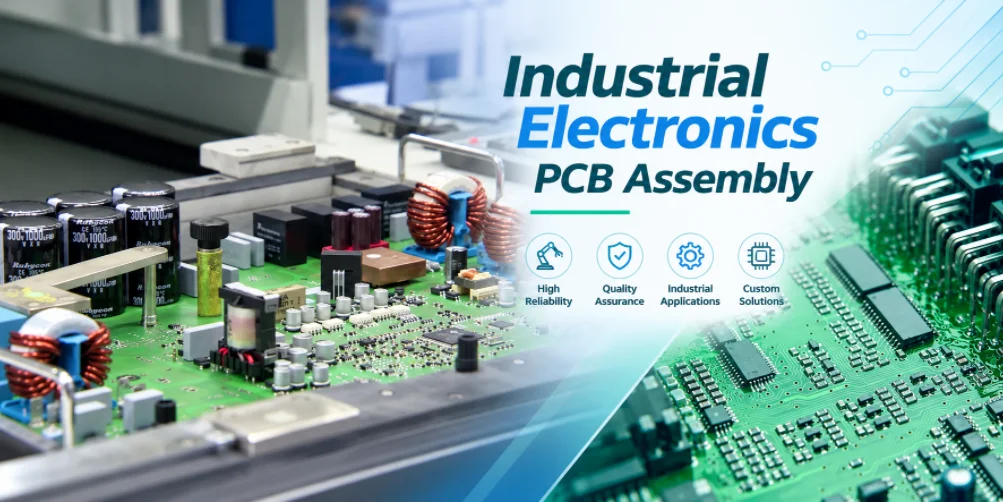
Industrial electronics PCB assembly covers the manufacture, inspection and verification of populated circuit boards used in automation, power control, measurement and industrial communications; programming and protective finishing are incorporated when the project requires them. For an industrial OEM, the critical question is not whether a supplier can place components on a PCB. It is whether the supplier can build the same approved assembly across repeat orders, maintain component and firmware control, and test the electrical functions that matter in the finished system.
Highleap Электроника provides industrial electronics PCB assembly in China, bringing PCB fabrication, component sourcing, SMT and through-hole assembly, inspection, functional testing and optional protective finishing into a coordinated manufacturing project. We work from the customer’s released design and acceptance requirements; the exact process, test coverage and deliverables are confirmed during engineering review.
Consider a 24 V industrial controller with an isolated RS-485 port, analog inputs, relay outputs and pluggable terminals. Its production risk is not defined by component count alone. Solder-joint access, connector loading, power dissipation, firmware configuration, interface calibration and long-term component availability can all determine whether the board is ready for industrial service. The sections below explain how to specify and source that type of PCBA.
Industrial Electronics PCB Assembly: What Highleap Can Support
Highleap can support industrial PCBA projects that require custom industrial circuit boards, purchased components, SMT/THT population and defined inspection or functional-test operations. The practical scope ranges from an assembled control PCB to electromechanical integration when programming, protective coating or enclosure installation is specified. The actual service combination should be reflected in the quotation and controlled manufacturing package.
Industrial OEM projects often fall into four useful assembly groups. They share some processes but do not have identical risks or test requirements.
| Industrial PCBA application | Manufacturing risk to review | Useful production verification |
|---|---|---|
| PLC expansion and digital I/O boards | Terminal blocks, relay solder joints, isolation spacing, channel mapping | Channel-by-channel input/output and representative load tests |
| Industrial sensor and data-acquisition modules | Analog-front-end placement, leakage, calibration data and connector pinout | Defined analog test points and calibration or measurement checks |
| RS-485/CAN communication gateways | Transceiver orientation, isolation, bias/termination options, firmware configuration | Communication exercise using the approved protocol and configuration |
| Power, relay and motor-control PCBAs | High-current paths, thermal interfaces, switching components and mechanical anchoring | Power-up, output switching, current/voltage measurements and fault-response checks |
This distinction matters when qualifying an industrial control PCB assembly manufacturer. A supplier may be able to populate all four boards using the same SMT equipment, yet the production fixtures, acceptance evidence and release procedure can be very different. A credible quotation should identify those differences instead of hiding them under “100% testing.”
DFM for 24 V Control Boards, Industrial I/O and Power Circuits
Industrial PCBA design-for-manufacturing (DFM) must consider electrical clearance, heat, connectors and test access together. For a 24 VDC controller, 24 V is a useful system description, not a substitute for checking transients, isolation requirements or the maximum voltage that any part of the circuit may experience. The manufacturing review should begin with the actual power tree, interfaces and operating conditions.
Power entry and high-current paths
Industrial 24 V input stages may contain reverse-polarity protection, surge suppression, filters, DC/DC conversion and protected output channels. On the assembled board, inspect the polarity and orientation of diodes, TVS devices, electrolytic capacitors and switching components; confirm the locations of thermal pads and heat-sinking hardware; and identify joints that carry sustained current. A populated board can pass visual inspection and still fail under its specified electrical load.
Where the PCB design needs heavy copper, multilayer routing, controlled impedance or other special construction, coordinate the bare-board stack-up with требования к изготовлению печатных плат before stencils and assembly tooling are approved. Copper weight, finished hole dimensions, thermal reliefs and solder-mask geometry influence how the assembly is actually soldered.
Isolation boundaries, connectors and service access
For mixed low-voltage control, isolated field I/O and higher-energy sections, verify the designed creepage and clearance against the applicable product requirements. Isolation slots, coating keep-outs and connector positions must be consistent between the mechanical drawing and PCB data. Assembly teams should not be expected to infer the required safety spacing from silkscreen markings alone.
Industrial terminal blocks and panel connectors introduce forces that tiny SMT packages do not. Review through-hole fit, solder access, fastener torque requirements where relevant, enclosure alignment and strain from field wiring. If a connector is meant to withstand repeated maintenance cycles or cable loads, communicate that requirement so the mechanical design and inspection plan address it.
Design for test, not just design for assembly
Before layout release, reserve safe power injection points, ground references, programming access and accessible pads for critical rails or signals. Determine which signals need an external load or loopback fixture. For industrial control boards with relays, sensors or isolated interfaces, a generic “power-on OK” test seldom demonstrates that every field channel works.
Полезный обзор технологичности производства returns an actionable list: assembly risks, missing test access, ambiguous drawing notes and decisions that must be approved by the OEM. It should not silently change component values, connector pinouts or isolation geometry.
Mixed SMT and Through-Hole PCB Assembly for Industrial Equipment
Industrial electronics typically combine compact SMT electronics with mechanically robust through-hole components. Fine-pitch controllers, ADCs, transceivers and passive networks sit alongside terminal blocks, power inductors, large capacitors, transformers, relays and board-to-board connectors. The manufacturing plan should therefore address both solder-joint precision and mechanical retention.
SMT placement and reflow controls
For QFN, BGA and other bottom-terminated packages, stencil aperture design, paste deposition, component alignment and reflow profiling require particular attention. The supplier should determine which joints are visually inspectable, which need X-ray evaluation and what soldering criteria apply to the approved product class. Component moisture sensitivity and reflow exposure also belong in material handling plans when applicable.
Through-hole soldering and large-component support
Terminal blocks, connectors and magnetics should be evaluated for hole-to-lead fit, insertion sequence, solder fill and thermal mass. Large ground planes can affect heat delivery during soldering. Fixtures may be needed to maintain alignment, while heavy parts may require additional mechanical support defined by the product design. Highleap’s mixed SMT and through-hole assembly capabilities allow the two assembly methods to be planned as parts of the same build, rather than treated as unrelated operations.
Process sequencing is a production decision
A double-sided industrial control board may require SMT on both sides, followed by insertion, soldering, cleaning, programming and testing. Whether selective or manual soldering is appropriate for a given feature depends on component type, clearance, thermal behavior and the agreed process. Coating or enclosure installation should occur only after the necessary inspections, rework decisions and electrical tests have been completed.
Для команд по закупкам, сравнивающих mixed-technology industrial PCB assembly services, ask for the proposed routing of the product through SMT, THT, test and finishing operations. That answers more than a list of machine brands.
Industrial-Grade Component Sourcing and Long-Term BOM Control
The long-term risk in industrial PCB assembly is often uncontrolled component change rather than placement capability. Industrial OEM products may remain in service and receive repeat orders for years. A component substitution that appears electrically equivalent can change input accuracy, isolation ratings, EMC behavior, firmware compatibility or serviceability.
До turnkey industrial electronics PCB assembly, an approved BOM should define manufacturer part numbers, packages, ratings and approved alternatives and sourcing restrictions for critical items. Particular attention is needed for isolated transceivers, precision references, optocouplers or digital isolators, power devices, terminal connectors, MCUs and long-lead-time semiconductors.
- Authorized change control: do not treat a distributor cross-reference as permission to substitute. Obtain OEM approval for critical alternates.
- Прозрачность жизненного цикла: identify obsolete, end-of-life and allocation-risk parts before production quantities are committed.
- Совместимость прошивки: confirm that memory, MCU revisions, bootloaders and programmed options match the released hardware revision.
- Прослеживаемость партии: agree which purchased-part lot and date-code records are needed and how long they must be retained.
- Commercial ownership: distinguish OEM-consigned parts from components sourced under a turnkey PCB assembly agreement.
Industrial temperature-rated components should be selected because the product specification requires them, not because the words “industrial grade” appear in an RFQ. Component operating temperature, assembly soldering limits, storage requirements and final product environmental performance are different engineering questions.
For repeat industrial PCBA orders, the purchasing package should also identify revision effectivity: which board, BOM, programming file and test procedure apply to each lot. This is especially important for maintenance spares and equipment with multiple installed hardware versions.
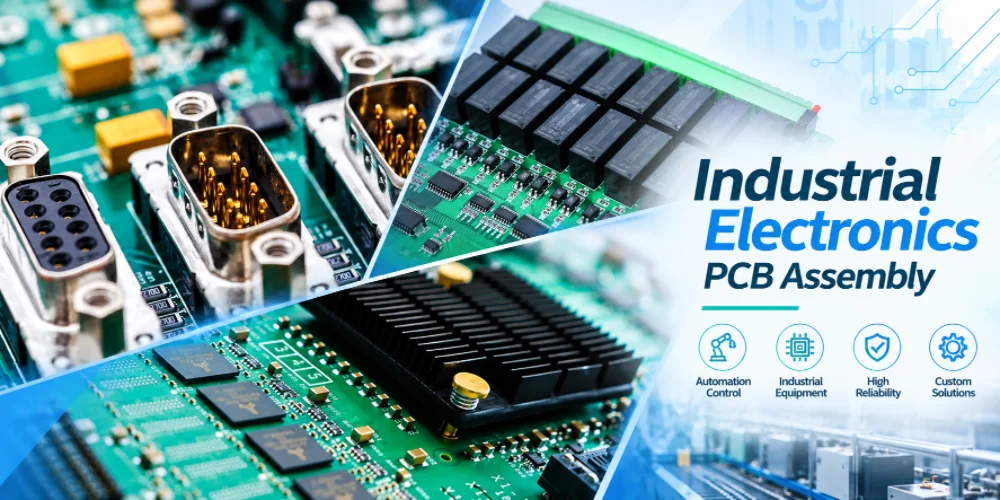
Functional Testing of PLC I/O, RS-485, 4–20 mA and Power PCBAs
AOI and X-ray inspect aspects of assembly workmanship; functional testing checks whether the populated circuit performs its specified job. Neither inspection method proves that a PLC output switches correctly or that an analog input measures within tolerance. For industrial PCBA, test coverage must be tied to the product’s electrical functions, operating modes and fault behavior.
Highleap describes first-article inspection, AOI, X-ray inspection, electrical checks and product-level functional testing among its PCBA services. The customer and factory should agree the required fixture, software, limits, records and sampling or 100% coverage for each project. Where in-circuit test is required, fixture feasibility and available access must be confirmed rather than assumed.
| Function / assembly area | Пример проверки | Что оно не устанавливает |
|---|---|---|
| SMT and hidden solder joints | AOI for visible features; X-ray where hidden joints require review | Correct firmware, sensing accuracy or application-level performance |
| 24 V input and DC/DC rails | Defined startup behavior, rail values and output operation under specified conditions | Full surge, EMC or lifetime qualification |
| 4–20 mA analog channels | Check approved points such as 4 mA, 12 mA and 20 mA against tolerances | Accuracy across all temperatures unless that is part of the test plan |
| RS-485 or CAN interface | Known-good transmit/receive or protocol exercise using approved settings | Full network interoperability or EMC compliance |
| Digital inputs, relay outputs and drivers | Channel-state, polarity, switching and defined representative-load checks | Mechanical switching endurance or system-level safety certification |
| Programming and identification | Firmware version, configuration data, serial number and test-log association | Validation of every field-use software scenario |
What a useful industrial PCBA test report contains
A credible test report should connect a board or batch identifier to the applied hardware/firmware revision, test procedure, relevant equipment and fixture versions, measured results, pass/fail limits and disposition of failures. For calibrated measurement channels, include the accepted calibration method and any required stored coefficients. Where an OEM requests a test log per unit, define the data format and retention period before the test fixture is built.
Industry acceptance language must also be precise. IPC J-STD-001 и IPC-A-610 address soldered assembly process requirements and post-assembly acceptability respectively; they are not substitutes for a customer’s functional test. Agree the applicable standard revision and product class in the purchasing specification rather than claiming all industrial assemblies automatically require a single class.
Conformal Coating, Cleanliness and Environmental Reliability
Conformal coating can protect selected industrial PCBAs from moisture and contamination, but it does not make an assembly waterproof or automatically qualified for harsh environments. Coating suitability depends on the actual contaminants, chemistry, application method, curing conditions, film thickness and intended service environment.
For boards exposed to condensation, dust or corrosive atmospheres, determine whether selective conformal coating is appropriate and specify the coating system. Define no-coat areas such as mating connectors, test contacts, serviceable switches and certain mechanical interfaces. A coating drawing should be aligned with the assembly drawing so masking can be executed and inspected consistently.
Cleaning is equally important. Flux residues or incompatible contamination may affect coating adhesion and long-term electrical behavior. The cleaning or no-clean process must be suitable for the components and approved coating; there is no single universal cleaning rule for every industrial assembly. Critical verification can include cleanliness requirements, visual coating coverage, cure documentation and any OEM-specified environmental qualification.
Environmental qualification belongs to the product requirement. Thermal cycling, humidity exposure, vibration, electrical fast transients, surge and EMC testing address different risks. A factory functional test at room temperature does not replace them. If the OEM needs qualification according to particular IEC or customer specifications, state the exact tests and acceptance limits in the project scope; do not assume that normal PCBA inspection includes certified system-level compliance.
From Industrial PCBA Prototype to Repeatable Production
Successful industrial PCBA scale-up means freezing the right evidence, not merely increasing the order quantity. An engineering sample demonstrates feasibility; a controlled pilot lot verifies that the intended materials, assembly sequence, programming and test process can be repeated. The production release should be based on documented acceptance, not on a single working prototype.
Three practical release gates for an industrial OEM
- Технический обзор: confirm manufacturing data, electrical and isolation risks, approved BOM, mechanical/connector requirements, programming method and test concept. Record unresolved DFM/DFT items.
- First build and pilot verification: approve the first-article result, soldering and inspection findings, fixture operation, functional-test coverage and any critical correction to drawings or process instructions.
- Repeat-order release: freeze the manufacturing revision, approved alternate-part rules, firmware image, test limits, labeling, traceability requirements and handling of nonconforming boards.
When an industrial controller is revised after its first batch, the change should be evaluated against installed-field compatibility. A new transceiver, connector or controller IC may require a different firmware build, test limit or qualification activity. Request a clear engineering-change process and a record of which approved configuration was delivered in each lot.
До low-volume industrial PCB assembly, the key cost challenge may be test engineering and setup, not placement time. For repeat orders, component allocation, change control and fixture maintenance become more important. A good manufacturer quote distinguishes nonrecurring engineering and tooling from recurring assembly, component and test costs.
Industrial PCB Assembly Cost and RFQ Requirements
An accurate industrial electronics PCB assembly quote requires more than Gerber files and board quantity. Cost depends on the bare-board construction, approved components, SMT/THT process mix, assembly fixtures, programming, functional-test time, protective finishing, lot size and documentation obligations. Two assemblies with the same board area can have very different production costs when one needs a load fixture, analog calibration and traceable serial-level records.
For an OEM sourcing an industrial PCB assembly manufacturer in China, submit a production-oriented RFQ package:
- Изготовление: Gerber/ODB++ or IPC-2581 data, drill data, layer stack-up, board thickness, copper weights, finish and controlled features.
- Сборка: BOM with manufacturer part numbers, approved alternates, pick-and-place file, assembly drawing, polarity notes and special connector or hardware instructions.
- Электрические: nominal and maximum operating inputs, field I/O configuration, isolation requirements, critical loads and product-specific test limits.
- Software and identification: firmware images, programming instructions, serial-number conventions, configuration or calibration files.
- Производственный контроль: required IPC/customer criteria, ESD/material handling, coating map, inspection reports, traceability and any required qualification.
- Коммерческий: prototype quantity, projected annual demand, lot releases, target schedule, packaging and whether the order uses turnkey assembly and sourcing, consigned materials or a mixed model.
Ask the supplier to return a quote that separates bare-board fabrication, component procurement, assembly, one-time fixture/programming costs and optional testing or coating. If a critical part is unavailable, it is better to receive a documented alternate proposal than an apparently low price that relies on an unapproved substitution.
Highleap Electronics can review the available files and define the manufacturing scope for a project-specific quotation. Send the current revision and the most important acceptance criteria for Highleap’s engineering review. Where information is incomplete, clearly identify which drawings or tests are preliminary so the engineering review can focus on the decisions that affect manufacturing readiness.
Industrial OEM Procurement Questions
Can Highleap manufacture and assemble industrial control PCBs?
Highleap offers PCB fabrication, SMT/THT assembly, component sourcing, inspection and functional testing services relevant to industrial control-board projects. A specific board’s buildability, materials, electrical requirements, testing and delivery conditions must be confirmed against its released files.
What is the difference between industrial electronics PCB assembly and consumer electronics PCBA?
The equipment used for assembly may overlap. Industrial PCBA procurement places greater emphasis on application-specific electrical tests, connector durability, long product lifecycles, controlled substitutions, traceable revisions and environmental requirements. Those requirements must be specified; the word “industrial” alone does not define them.
Does AOI or X-ray replace functional testing for industrial controllers?
No. AOI evaluates accessible assembly features and X-ray can help review hidden solder joints. Functional testing is still required where the OEM needs proof of analog accuracy, digital I/O behavior, communications, power performance or correct programming.
Can industrial PCBAs receive conformal coating and programming?
Highleap describes coating and IC programming among its PCBA services. Coating material, masking, firmware procedure, verification method and any traceability records should be agreed for the particular product before production.
What should an OEM approve before repeat industrial PCBA orders?
Approve the board and BOM revision, authorized alternates, assembly instructions, firmware/configuration version, inspection criteria, functional-test procedure and required reports. For long-lived equipment, define how later engineering changes will be tracked across delivered lots.
Request an Industrial Electronics PCB Assembly Review
Share your industrial control board files, BOM, estimated production quantity, operating requirements and proposed functional tests. Highleap can review the manufacturability and quotation scope for PCB fabrication, mixed-technology assembly, component sourcing, programming and project-specific testing.
Manufacturing note: product-specific capabilities, material substitutions, inspections, environmental tests, certification obligations, yield commitments and production schedules require project approval. Published service descriptions do not establish compliance with every industrial end-product standard.

Рекомендуемые сообщения
Сверхтонкое линейное производство печатных плат для трассировки высокой плотности
Как получить коммерческое предложение на печатные платы? Давайте проведем анализ DFM/DFA для...
Производство печатных плат с многослойными микропереходами
Как получить коммерческое предложение на печатные платы? Давайте проведем анализ DFM/DFA для...
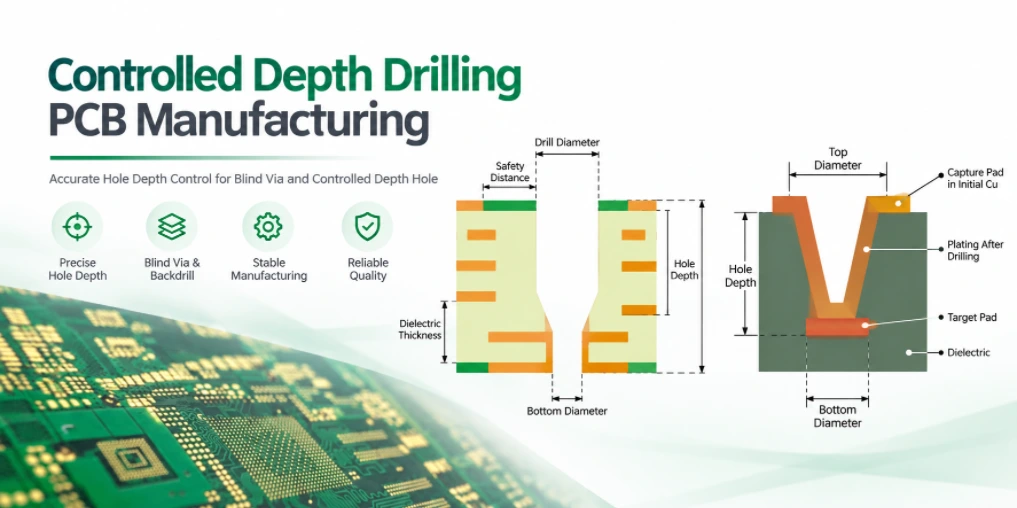
Производство печатных плат с контролируемой глубиной сверления
Как получить коммерческое предложение на печатные платы? Давайте проведем анализ DFM/DFA для...
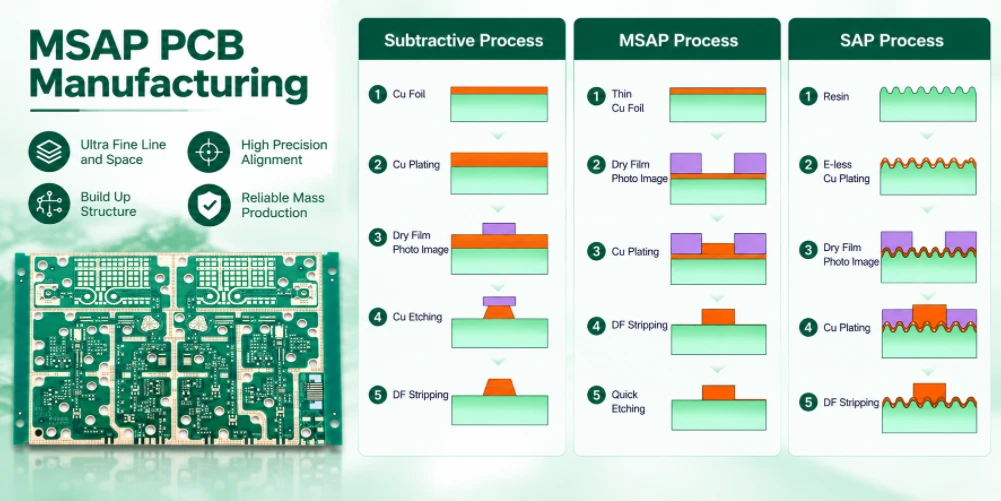
Производство печатных плат mSAP для тонкостенных схем.
Компания Highleap Electronics занимается производством печатных плат для mSAP...
Как получить расценки на печатные платы
Давайте проведем для вас анализ DFM/DFA и вернемся к вам с отчетом. Вы можете безопасно загрузить свои файлы через наш веб-сайт. Для того, чтобы дать вам предложение, нам нужна следующая информация:
-
- Gerber, ODB++ или .pcb, спец.
- Список спецификаций, если вам требуется сборка
- Количество
- Время поворота
Помимо производства печатных плат, мы предлагаем широкий спектр электронных услуг, включая проектирование печатных плат, печатные платы и готовые решения. Если вам нужна помощь с прототипированием, проверкой дизайна, поиском компонентов или массовым производством, мы оказываем комплексную поддержку, чтобы гарантировать успех вашего проекта.
Для услуг PCBA, пожалуйста, предоставьте ваш BOM (спецификация материалов) и любые конкретные инструкции по сборке. Мы также предлагаем анализ DFM/DFA для оптимизации ваших проектов для технологичности и сборки, обеспечивая плавный процесс производства.