
PCB组装及固件编程
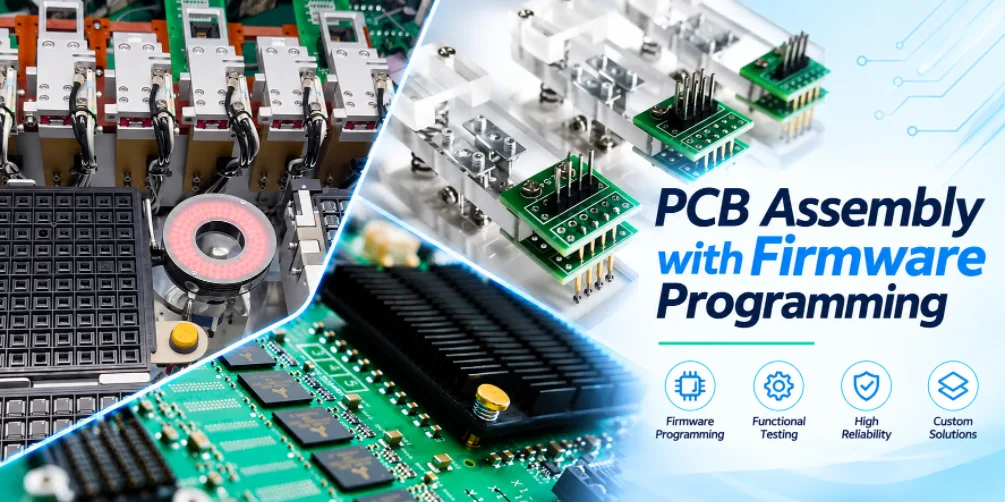
Highleap Electronics provides PCB assembly with firmware programming for OEMs that need populated, programmed and tested boards delivered under one manufacturing order. Our published services cover PCB fabrication, component sourcing, SMT and through-hole assembly, online and offline IC programming, inspection, functional testing and optional finished-product integration. Instead of receiving assembled boards and arranging firmware loading elsewhere, customers can specify the approved firmware and programming requirements as part of the PCBA build.
Most buyers searching for PCB组装及固件编程 already have a circuit design and production firmware. They want a factory that can place the correct devices, write the correct image, verify that programming succeeded, load any unit-specific data, and ship boards that operate as specified. The manufacturing risk is not the act of transferring a BIN or HEX file; it is controlling the relationship between hardware revision, target chip, firmware release, configuration, programming equipment and final test result.
Highleap offers both offline and in-system IC and firmware programming services. Compatibility with a particular MCU, FPGA, memory device, security feature or programming interface is confirmed from its exact part number and the customer’s approved production instructions.
Turnkey PCB Assembly with Firmware Programming at Highleap
Yes. Highleap can combine PCB assembly and IC programming within a single turnkey manufacturing scope. The exact deliverable can be an assembled PCB with firmware installed, a tested and serialized PCBA, or a complete electronic unit where enclosure integration is also specified. This is different from sending finished PCBAs to a third party for firmware flashing: the programming operation can be planned around the device purchase, assembly sequence, test fixture and final product revision.
下一个 full turnkey PCBA manufacturing program, the OEM normally supplies the released design and programming/test instructions while Highleap coordinates sourcing, board production, component placement, programming, inspections and shipment. For partial-turnkey or consigned builds, the OEM may provide restricted ICs, preprogrammed components or its own programmer. Responsibilities for hardware, software, confidential data and process approval should still be stated in the purchasing agreement.
One Build Flow, Rather Than Separate Assembly and Flashing Orders
- Review the production package. Match the PCB revision, BOM, programmable-device part numbers, firmware image, programming access and required tests.
- Manufacture and populate the boards. Release the bare-board construction through PCB制造, then assemble components by SMT, through-hole or a combination of processes.
- Load the approved firmware. Use an agreed offline programmer before placement, or a supported in-system method on the populated PCBA.
- Verify and configure. Check the written image and, when required, assign serial numbers, calibration data or device-specific configuration.
- Run agreed production tests. Confirm power-up and the relevant inputs, outputs or interfaces before labeling, packing and releasing the lot.
Component availability matters in this workflow. A pin-compatible MCU substitution can still have different flash capacity, silicon revision, boot behavior or device ID. Changes must be reviewed jointly with the component procurement plan and approved firmware configuration—not handled as a routine purchasing substitution.
For customers purchasing an end product rather than a bare assembly, programming can also be included in electronic box-build integration, alongside cable harnesses, enclosure assembly, system tests and packaging. Whether the programming station sits before or after mechanical integration depends on access, test coverage and the product’s approved process.
In-Circuit Programming: Interfaces, Fixtures and Firmware Release Control
The right method for production firmware flashing depends on the exact chip and what the PCB exposes—not simply on the firmware filename. Two major routes are used in PCBA production: programming the device before placement (offline/pre-programming) and programming it after assembly (in-system or on-board programming). Both can be appropriate; the choice affects fixture design, revision flexibility, material handling and throughput.
| 编程路线 | Best-fit production situation | 需要确认的内容 |
|---|---|---|
| Offline / pre-programmed IC | A supported loose MCU, memory or other device can be written and verified before SMT placement. | Part/package compatibility, programming adapter, handling, lot identification, image revision and preprogrammed-device inventory control. |
| SWD or JTAG on assembled PCBA | Supported MCUs and programmable logic with accessible debug/programming connections. | Pinout, target voltage, reset, JTAG chain if applicable, approved programmer/algorithm and fixture access. |
| ISP / ICSP | Device-specific serial programming after components are soldered. | Exact target-device protocol, shared pins, programming voltage and entry/exit sequence. |
| UART / USB / other bootloader | The controller has a supported ROM or installed bootloader and an accessible production interface. | Boot mode, physical wiring, interface logic levels, first-time bootloader installation and recovery procedure. |
Designing the PCB for Reliable Production Programming
When programming occurs after assembly, test pads or a connector must provide repeatable access. The programming setup may also need a reference ground, stable target power, reset control, boot-mode selection and isolation from circuitry sharing the same pins. For a production pogo-pin fixture, pad location, keep-outs, board support and orientation become part of the manufacturing specification. These are reasons to include programming access in the 可测试性设计评审 before the PCB layout is frozen.
For example, if an Arm MCU is written over SWD, the approved work instruction should identify the actual device part number, target voltage and programmer setup. If a UART bootloader is used instead, the board must support the necessary boot-mode and reset sequence. The same PCBA may offer a convenient USB connector yet have no USB firmware loader; the connector alone does not establish programmability. Programming a separate SPI flash, EEPROM, NAND or eMMC also requires the appropriate memory-specific workflow, not a generic MCU-flashing script.
Freeze the Firmware Release, Not Just the File Name
A factory should not have to decide which of several emailed images is the current production version. Give each build an approved firmware identity: image filename and hash/checksum, software version, approved PCB/BOM revision, target device, memory region, programmer settings and any option-byte, fuse, boot or read-protection requirements. When a bootloader and application are separate images, identify the programming order and compatibility requirements.
Security settings require special care. One-time-programmable bits, permanent debug locks and secure-boot provisioning can be difficult or impossible to reverse. Their activation point must be explicitly approved and tested on pilot boards. Private keys or device secrets should not be distributed as ordinary email attachments or written into unrestricted production logs; the secure provisioning workflow and custody of credentials must be agreed before a job is accepted. Highleap’s programming scope for a protected target should be validated against the customer’s security requirements and device documentation.
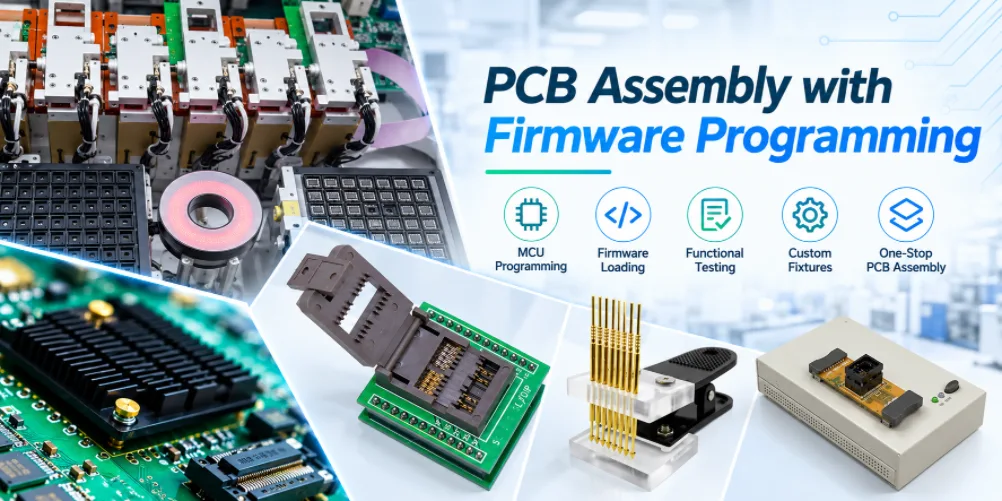
Firmware Verification, Serialization and Functional Testing
A “programming successful” message is necessary but not sufficient evidence that a completed PCBA is ready to ship. There are three distinct checks: the correct data was written to the correct device; any unit-specific configuration was assigned correctly; and the assembled board performs the functions specified by the OEM. These should be separate pass/fail stages when the project requires them.
Programming Verification and Per-Unit Data
Depending on the device and security state, programming verification may use memory read-back, checksum or hash comparison, device ID confirmation, configuration-register checks or an approved device-specific verification method. A full read-back may not be possible after readout protection has been enabled. In that case, the acceptance method must be defined in advance; reporting a write command as complete is not equivalent to demonstrating the approved firmware state.
Some products also need a unique serial number, MAC address, calibration constant, certificate or manufacturing configuration. These values should be assigned from a controlled source, with duplicate prevention, reconciliation of unused identifiers and handling of failed/reworked boards. If secure credentials are involved, the record should identify the operation and outcome without exposing the secrets themselves.
| 生产检查点 | Evidence for OEM acceptance | 它无法证明什么 |
|---|---|---|
| Image and device confirmation | Hardware revision, target device ID and approved image identity | Successful operation of the finished electronics |
| Write and verify | Programming status and device-supported read-back/hash or equivalent verification | Application-level behavior under load |
| Serialization / provisioning | Unit ID, assigned configuration and recorded provisioning result | Cybersecurity validation of the complete product |
| Post-flash functional test | Approved power-up, interface and I/O results against defined limits | Full environmental, EMC or field-lifetime qualification |
At Highleap, PCBA功能测试 can be coordinated with the programming stage based on customer-provided requirements. The required test might be a boot/version response and power-rail check for a small control board, or a fixture-driven exercise of sensors, relays, communications and calibration limits for a more complex unit. AOI and X-ray remain relevant for assembly workmanship, but they do not establish that the firmware image, fuse settings or product behavior are correct.
对于 prototype and low-volume PCBA runs, a pilot batch should validate fixture contact, flashing time, firmware-to-hardware compatibility, handling of failed writes and the completeness of test logs. The approved programming and test procedure then becomes part of the production release for repeat orders. When unit-level traceability is requested, link the board serial number to the firmware version, test station, date, result and any authorized rework or reflash history.
What to Send for a Programmed PCBA Quote and Production Release
To quote PCB assembly with firmware programming accurately, Highleap needs the electronics manufacturing package and the programming instructions together. Gerber files and a BOM establish what to build; they do not identify which firmware to load, which programmer to use or how to verify a successful unit. Send the following information when available, and mark any item that is still under engineering review.
- PCB and assembly data: Gerber/ODB++ or equivalent, layer stack-up, fabrication notes, BOM with approved alternatives, pick-and-place file and assembly drawing.
- Target device details: exact MCU/MPU/FPGA or memory part numbers, hardware revision, device population options and any relevant datasheet or programming specification.
- Firmware package: approved BIN, HEX, ELF or device-specific files as appropriate; release identifier, file checksum, target memory region and bootloader/application relationship.
- Programming method: offline programming or in-system access, interface/pinout, target voltage, reset/boot sequence, approved programmer and required fixture or adapter.
- Configuration and security: option bytes, fuses, debug locks, boot/security settings and protected provisioning requirements, with explicit approval for irreversible operations.
- Unique data and traceability: serial number/MAC allocation method, calibration or configuration values, labeling rules and required log fields.
- Verification and final test: write/verify acceptance, power-up behavior, communication commands, test limits, per-unit or sample-level coverage and failure disposition.
- 商业范围: sample and production quantities, forecast, target shipment schedule, whether parts are consigned or sourced, and whether finished-device assembly is required.
What Changes the Cost and Schedule?
Programming cost depends on the device family and programmer compatibility, offline adapters or in-circuit fixture development, image size, write/verify duration, number of programmable devices, unique-data provisioning, security controls, testing time and expected batch size. These are different from the component and SMT charges in an ordinary PCB组装报价. Where custom fixtures or automated scripts are required, ask for one-time setup/NRE charges to be identified separately from the recurring per-unit cost.
A sensible first-order release is a small, representative programmed batch. Approve one or more golden units, confirm the hardware and firmware revisions, review actual test records and freeze the manufacturing instruction before committing the production lot. For later changes, specify whether a firmware-only revision requires reprogramming, regression testing or relabeling, and whether already-built inventory may be updated.
Highleap Electronics is a manufacturing and programming partner—not automatically the author or owner of your firmware. The OEM normally supplies the production-ready image, rights to use it, configuration requirements and pass/fail limits. Firmware development, secure key services, special programmer integration and other engineering work should be quoted explicitly if required.
Request a Turnkey PCB Assembly + Firmware Programming Quote
Send your current Gerber files, BOM, assembly data, target IC part number, firmware release, programming interface, estimated quantity and required functional tests. Highleap can review the combined manufacturing and flashing scope, then clarify fixture, configuration or verification needs before quotation.
工程备注: supported devices and tools, programming security, fixture design, verification coverage, lead time and commercial terms depend on the released project. MCU programming success alone does not certify product safety, software quality, cybersecurity or environmental reliability.

推荐文章
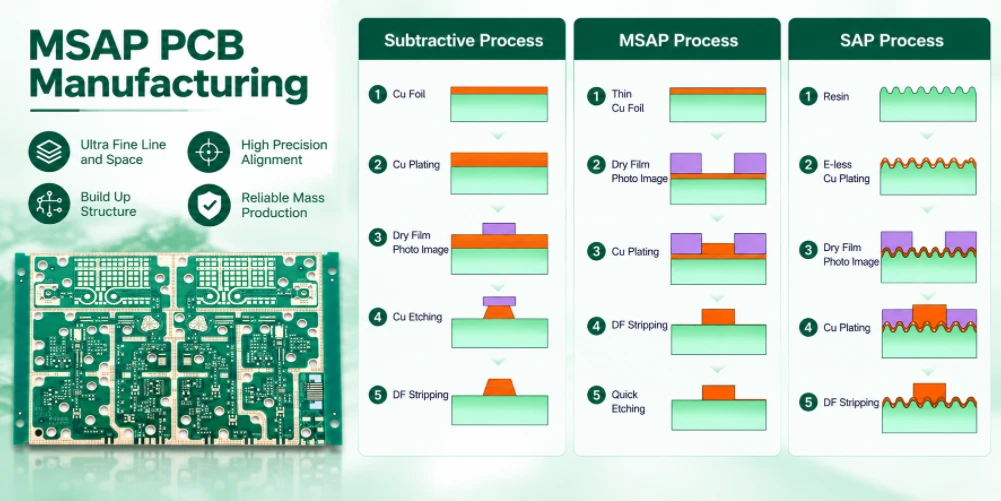
用于精细电路的mSAP PCB制造
Highleap Electronics 提供 mSAP PCB 制造服务……
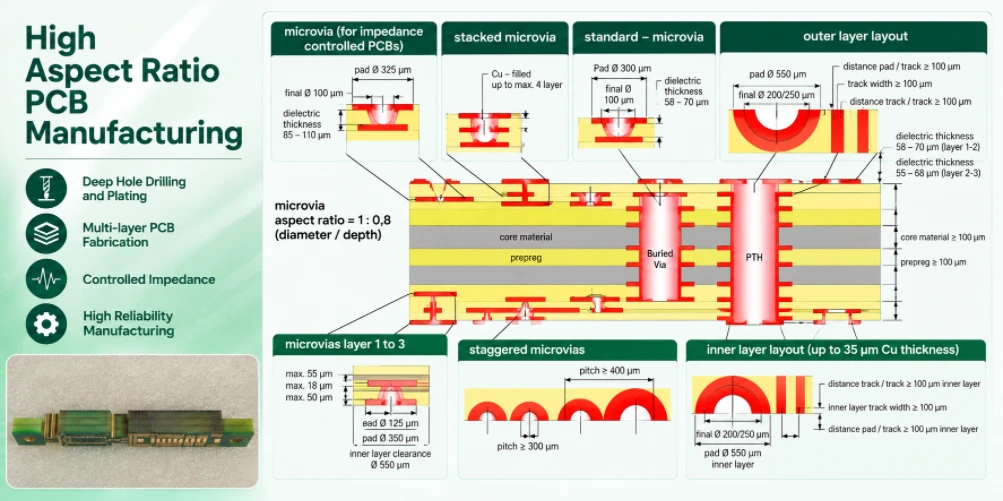
用于镀通孔的高纵横比PCB制造
Highleap Electronics 提供高纵横比 PCB...
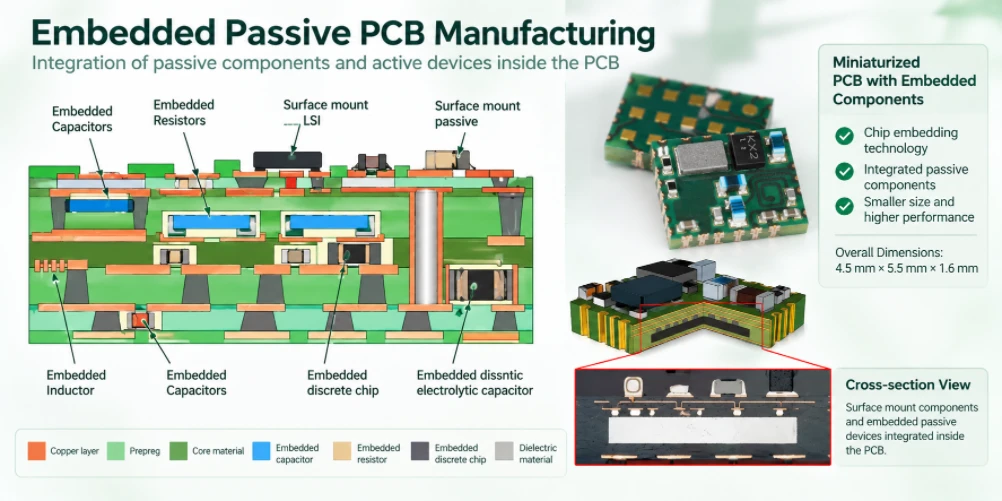
面向集成设计的嵌入式无源PCB制造
Highleap Electronics 提供嵌入式被动式 PCB...
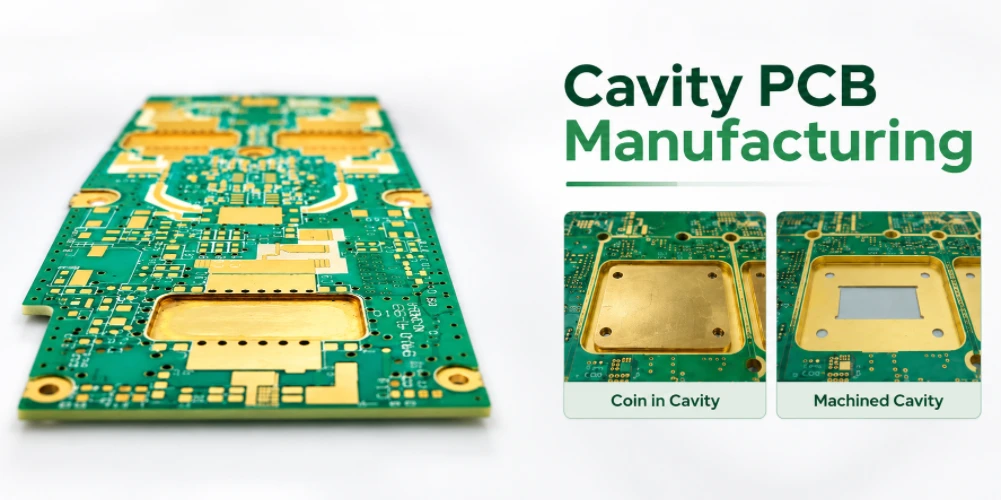
精密电路板设计的腔体PCB制造
腔体式PCB是一种带有凹槽或……的专用电路板。
如何获取 PCB 报价
我们将为您进行 DFM/DFA 分析,并向您提供报告。您可以通过我们的网站安全地上传文件。我们需要以下信息才能为您提供报价:
-
- Gerber、ODB++ 或 .pcb,规格。
- 如果需要组装,请提供 BOM 清单
- 数量
- 转弯时间
除了 PCB 制造,我们还提供全面的电子服务,包括 PCB 设计、PCBA 和交钥匙解决方案。无论您需要原型设计、设计验证、元器件采购还是量产方面的帮助,我们都提供端到端支持,确保您的项目成功。
如需 PCBA 服务,请提供您的 BOM(物料清单)和任何具体的装配说明。我们还提供 DFM/DFA 分析,以优化您的设计,提高可制造性和装配性,确保生产流程顺畅。