
Výběr materiálu desky plošných spojů TU-768 pro bezolovnaté vícevrstvé desky
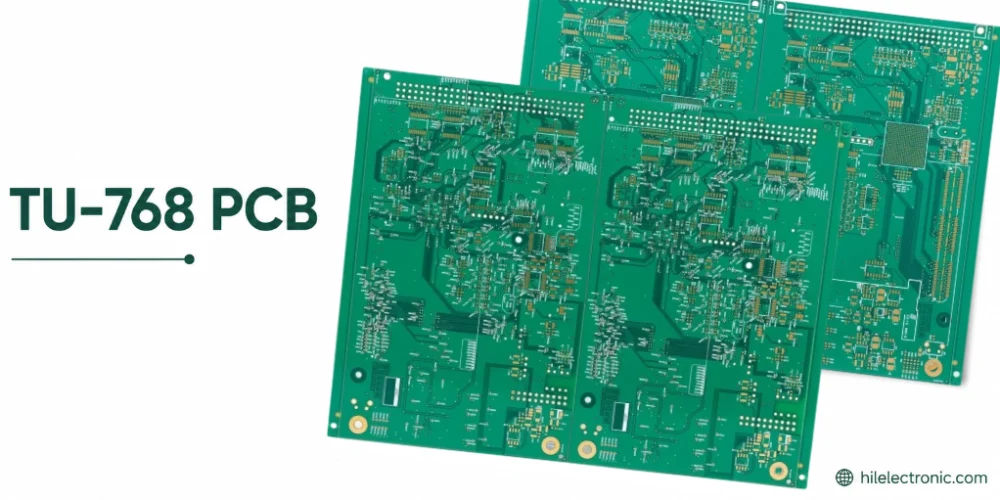
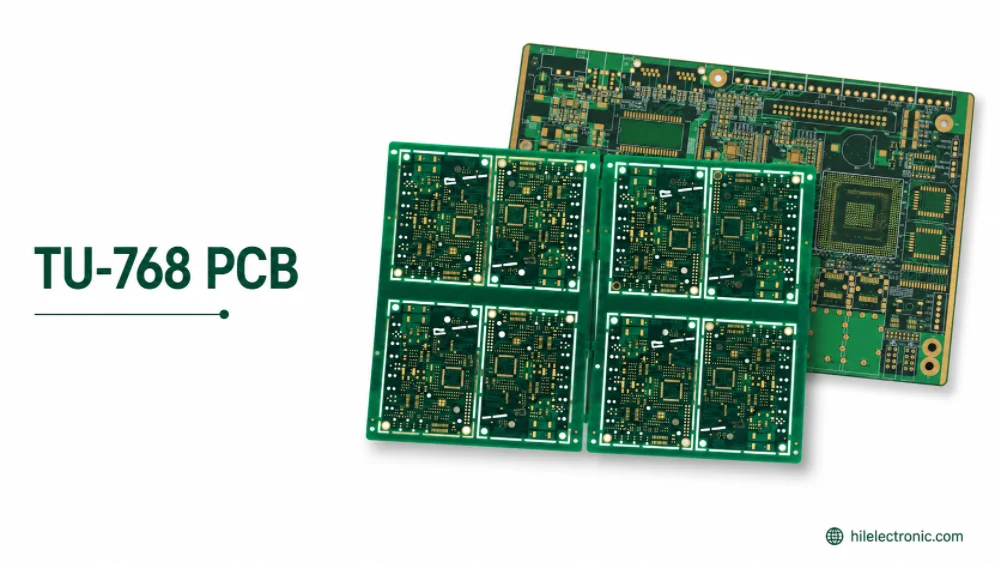
TUC TU-768 is a high-Tg, high-thermal-reliability FR-4.0 system for boards that must tolerate demanding lead-free assembly, thick multilayer construction or repeated thermal exposure. Highleap Electronics manufactures TU-768 PCBs by connecting the material choice to via geometry, copper distribution, assembly history and release evidence.
For procurement, the material is best treated as a reliability upgrade—not as a low-loss upgrade. TU-768 has standard-loss electrical behavior, so a high-speed product may still need a lower-Df material even when TU-768 is thermally strong.
Where TU-768 Adds Value
TUC lists consumer electronics, servers, workstations and automotive applications for TU-768. A better engineering description is: multilayer products that need a robust lead-free material with low expansion, chemical resistance, moisture resistance and anti-CAF properties.
| Stav desky | Why TU-768 may help | Remaining design responsibility |
|---|---|---|
| Multiple reflow, wave or rework exposures | High thermal class and T260/T288 margin | Develop a real assembly profile and limit uncontrolled rework |
| Thick board with through holes | Lower Z-axis expansion than mainstream FR-4 | Keep aspect ratio, drilling and hole copper within capability |
| Dense conductors in humid environments | Published anti-CAF positioning | Maintain spacing, cleanliness and moisture protection |
| High-speed channel with tight loss budget | Thermally capable but standard-loss | Compare TU-872 SLK or another lower-loss material |
For a general comparison of material classes, see the Průvodce materiály pro desktopové spoje s vysokou teplotou topení (Tg). High-Tg is useful only when the complete board construction and thermal history justify it.
Official Properties and Engineering Meaning
TUC publishes typical TU-768 values of Tg 180°C by DSC, 190°C by DMA, total Z-axis expansion of 2.7% from 50–260°C, T260 greater than 60 minutes, T288 greater than 15 minutes, Dk 4.3 and Df 0.018 at 1 GHz and 50% resin content. The material is lead-free compatible, moisture resistant and CAF resistant.
Thermal values provide margin, not immunity
Low expansion reduces strain on plated holes, but it does not compensate for a poor drill, insufficient copper or excessive aspect ratio. Similarly, high Tg does not authorize unlimited BGA rework. The released board should be qualified using the actual thickness, hole geometry and assembly process.
Electrical values show the boundary
Df 0.018 at 1 GHz places TU-768 in a standard-loss class. It can support many digital products, especially when routes are short, but it should not be presented as a low-loss laminate. Where channel loss is critical, compare it with TU-872 SLK PCB manufacturing or another lower-loss family.
Stackup, Holes and High-Layer-Count Design
Highleap develops the TU-768 stackup around finished thickness, copper distribution, impedance, drilling and press capability. TUC publishes cores down to approximately 0.05 mm and broad copper availability, but the selected construction must match the fabricator’s controlled process.
Aspect ratio remains a primary risk metric
For thick boards, the smallest finished hole and total thickness should be reviewed before routing is frozen. A smaller via can improve routing density but raise drill wear, smear-removal and plating difficulty. Highleap may recommend a larger hole, different layer transition or sequential lamination when the original structure creates unnecessary risk.
Copper balance and registration
High-layer-count boards need symmetric layer placement and balanced copper to control movement and flatness. Plane voids, dense BGA breakouts and asymmetric copper weights can change local resin flow. The Průvodce sestavováním desek plošných spojů explains why a manufacturable construction is more than a list of dielectric thicknesses.
Ask for a stackup and via-risk review before final layout.Send layer count, board thickness, smallest finished hole, copper by layer, impedance targets and assembly scope.
Lead-Free Assembly and Rework History
The fabrication material and PCBA process must be assessed together. A board that sees two SMT reflows, selective soldering, a press-fit insertion and later BGA repair has a different thermal and mechanical history from a single-sided assembly.
Profile development should reflect copper mass
Thick planes and large BGAs can create temperature gradients. The reflow profile should achieve solder-joint formation without unnecessary peak temperature or time above liquidus. Moisture handling and bake decisions should follow component and board conditions rather than a blanket rule.
Rework must be limited and recorded
Local rework can expose a small area to more severe heat than the original reflow. The process should control nozzle, ramp, peak, dwell and cooling. For high-reliability orders, the permitted rework class and documentation should be agreed before production.
Manufacturing Controls and Validation
Highleap’s TU-768 process can include material identity control, stackup release, inner-layer AOI, lamination registration, drill monitoring, desmear, copper plating, microsection, solder mask, finish, routing and 100% elektrický test. The quality package is selected from the product risk.
| Ověřovací položka | Co to ukazuje |
|---|---|
| Mikrořez | Hole copper, plating distribution, resin condition and layer registration |
| Solder-float or thermal-stress coupon | Resistance to a defined thermal exposure |
| Impedanční kupón | Production correlation to the released geometry |
| CAF or humidity-bias testing | Project-specific insulation performance when formally required |
| First-article PCBA and functional test | Assembly workmanship and end-function verification |
Claims such as “automotive grade” or “Class 3” should not be inferred from the laminate. The customer drawing, applicable IPC class, control plan and validation requirements must be defined for the finished board and assembly.
Server and workstation boards
Server-control, storage and workstation boards can combine high layer count, press-fit connectors, large BGAs and multiple assembly exposures. TU-768 provides thermal margin, while the design still needs backdrill, impedance and loss decisions based on the channel. Highleap can separate the thermally driven material choice from the electrically driven one and propose a hybrid or lower-loss alternative where necessary.
Press-fit connector considerations
Press-fit zones require controlled finished-hole diameter, hole-wall copper, annular ring, local board thickness and mechanical support. Insertion and repair forces can damage weak holes even when the laminate is high Tg. The quotation should identify connector part number, compliant-pin specification and any test coupon or insertion-force requirement.
Production transfer and golden samples
For repeat PCBA, a customer-approved golden board or test reference can improve functional-test consistency. The golden sample does not replace drawings and limits; it supports fixture correlation. Firmware revision, connector population and optional components should be controlled so the reference remains valid.
How to avoid over-specifying test
Requesting microsection, impedance, thermal stress, CAF, IST and full functional test on every routine lot can add cost without improving the decision. The evidence plan should target the highest risks. Highleap can propose first-article, periodic and per-lot controls separately, allowing the buyer to choose a proportionate quality package.
What the quotation response should contain
A useful TU-768 response identifies the proposed material and source, preliminary stackup, major DFM risks, included tests, optional reports, assembly assumptions and any excluded validation. This gives procurement a comparable scope and prevents a low headline price from omitting required quality work.
Alternatives, Cost and Quotation
TU-768 pricing depends on material availability, thickness utilization, layer count, drill count, copper, panel yield, inspection and PCBA scope. The material premium is only one element. A manufacturable design can cost less than a nominally cheaper material that requires more scrap or rework.
Materiálové alternativy
- Use mainstream FR-4 when thermal cycles, hole geometry and environment are ordinary.
- Use TU-872 SLK or another lower-loss material when the channel budget is the primary constraint.
- Use a higher-reliability low-CTE platform when the customer mission profile requires more severe validation.
- Use an HDI-qualified system when laser microvias and sequential lamination dominate the design.
Balíček RFQ
- Rozměry a množství desek
- Layers and thickness
- Měď po vrstvách
- Smallest hole and aspect ratio
- Požadavky na impedanci
- Tepelná sekvence montáže
- IPC class or customer specification
- Microsection/test evidence
- Prototype and annual demand
- Holá deska plošných spojů nebo deska plošných spojů
Material approval and sourcing continuity
If TU-768 is customer-specified, the order should identify whether material must come from a particular TUC facility or whether any certified source is acceptable. For long-lifecycle products, Highleap can discuss forecast, material reservation and approved equivalents. These commercial controls are important because an emergency substitution can invalidate a previously correlated stackup or qualification.
Where a lower-loss alternative is proposed, the change should include a new impedance solution and, when relevant, channel re-simulation. A “better” Df does not automatically mean a drop-in replacement because Dk and pressed construction can alter trace geometry and timing.
TU-768 Procurement FAQ
Is TU-768 a low-loss material?
No. It is a high-Tg, high-thermal-reliability standard-loss material. Lower-loss grades should be evaluated for long high-speed channels.
Can TU-768 support multiple soldering cycles?
Its published thermal properties provide margin, but the actual board must be reviewed for thickness, holes, copper and process profile.
Is TU-768 suitable for automotive products?
TUC lists automotive as an application. Finished automotive approval still requires customer-specific material approval, process control and validation.
Can Highleap quote without a schematic?
Yes. A schematic is not needed for initial pricing. Fabrication data, stackup requirements and assembly BOM become necessary before final release.
Primární referenční materiál: TUC TU-768 product data. Manufacturer figures are typical reference values; use the current datasheet and approved construction for production specifications.
Highleap can quote the bare PCB, assembly sequence, inspection and lot evidence as one manufacturing plan.

doporučené příspěvky
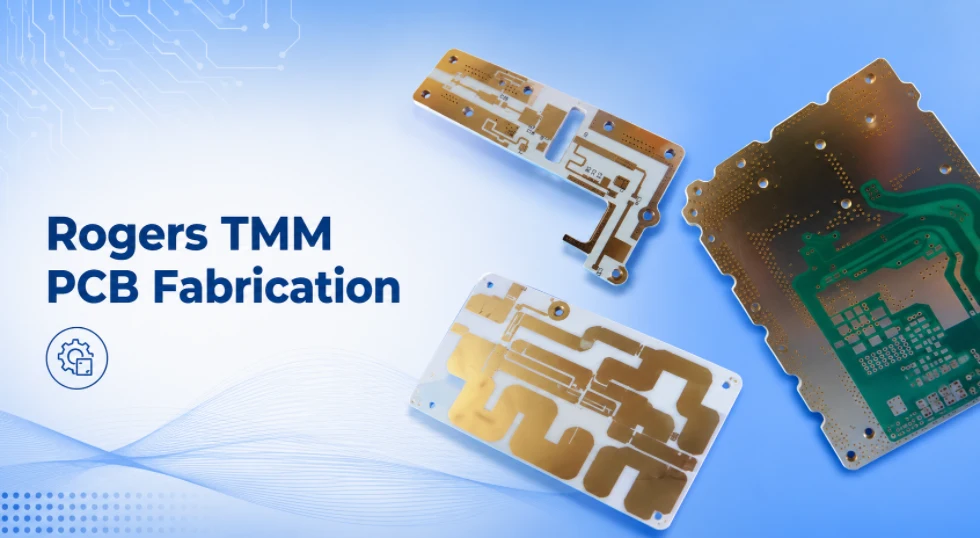
Výroba desek plošných spojů TMM
Obsah Rozsah výroby desek plošných spojů TMM pro RF a...

RT duroid 6002 PCB Quote and Stackup
Tato stránka vlastní úkol definice cenové nabídky a stackupu...
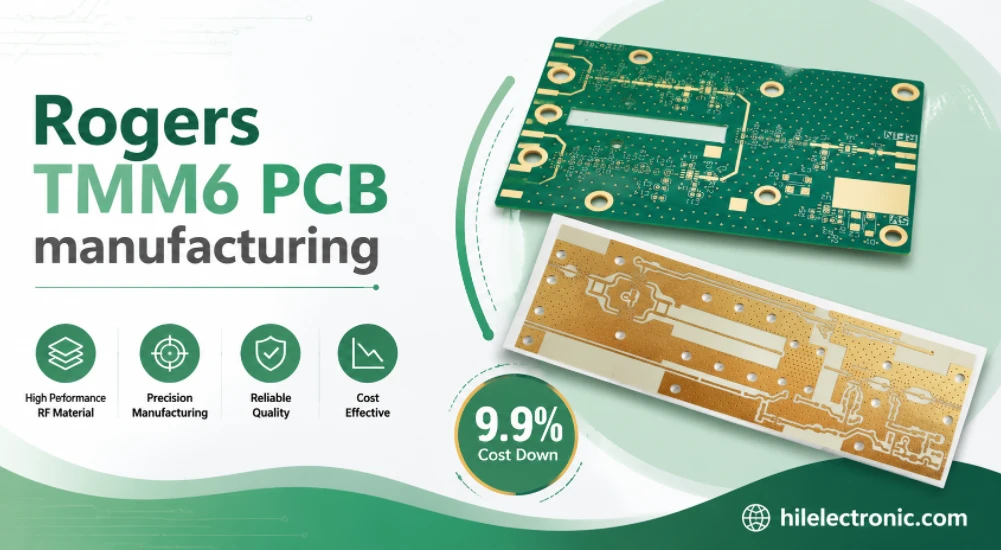
Výroba desek plošných spojů filtrů TMM6
ObsahProč konstruktéři mikrovlnných filtrů používají...
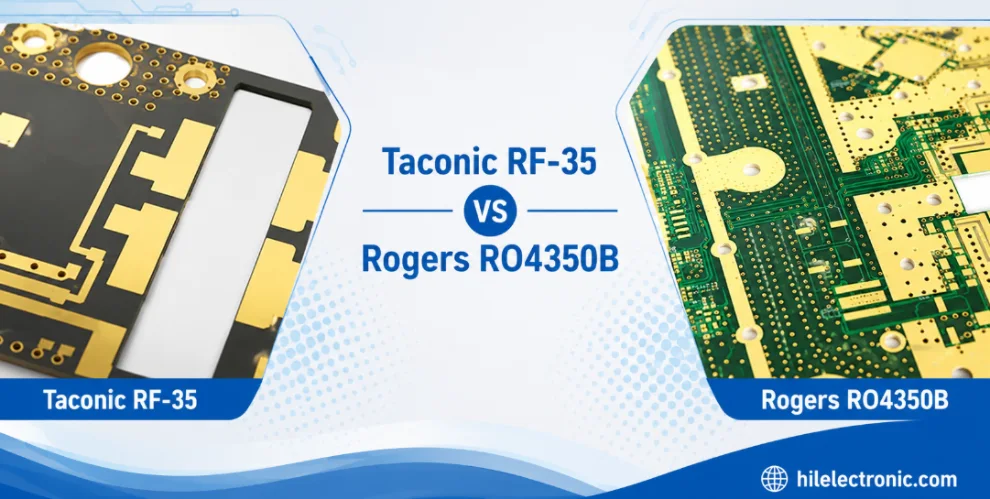
Taconic RF 35 vs. RO4350B DPS
ObsahRF-35 vs. RO4350B Zadávání veřejných zakázek a...
Jak získat cenovou nabídku na desky plošných spojů
Provedeme pro vás analýzu DFM/DFA a ozveme se vám se zprávou. Své soubory můžete bezpečně nahrát prostřednictvím našich webových stránek. Pro vypracování cenové nabídky potřebujeme následující informace:
-
- Gerber, ODB++ nebo .pcb, spec.
- Seznam kusovníků, pokud požadujete montáž
- Množství
- Čas otáčení
Pro služby PCBA prosím poskytněte kusovník (BOM) a případné konkrétní montážní pokyny. Nabízíme také analýzy DFM/DFA pro optimalizaci vašich návrhů z hlediska vyrobitelnosti a montáže a zajištění plynulého výrobního procesu.