
Shengyi S1000-2M Leiterplatte für hohe Zuverlässigkeit dicker Mehrschichtsysteme
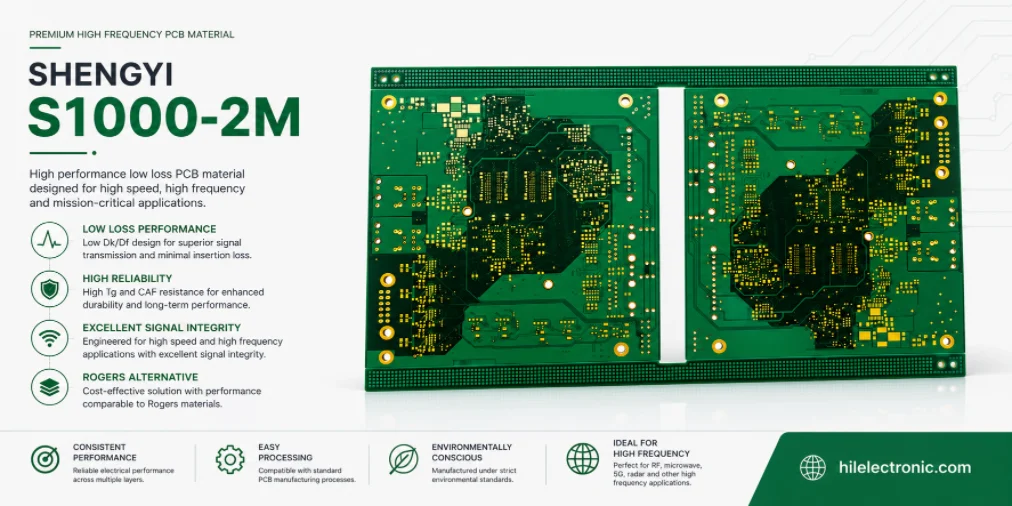
Shengyi S1000-2M ist ein FR-4.0-Laminat mit hoher Glasübergangstemperatur (Tg) und niedrigem Wärmeausdehnungskoeffizienten (CTE) für Leiterplatten mit hoher Lagenzahl , die bleifreie Verarbeitung überstehen und die Zuverlässigkeit von Durchkontaktierungen und Isolationen gewährleisten müssen. Shengyi hebt folgende Eigenschaften hervor: Tg 180 °C (DSC), 185 °C (DMA), Td 355 °C, Wärmeausdehnungskoeffizient in z-Richtung 41 ppm/°C unterhalb Tg, 208 ppm/°C oberhalb Tg, Gesamtausdehnung in z-Richtung 2.4 % von 50–260 °C, T260 > 60 Minuten, T288 > 30 Minuten, Anti-CAF-Eigenschaften, geringe Wasseraufnahme und Eignung für Computer-, Kommunikations-, Automobil- und Hochlagen-Produkte.
Das Material sollte nicht als Laminat mit extrem geringen Verlusten positioniert werden. Laut den öffentlichen Daten von Shengyi beträgt der typische Dk-Wert bei 1 GHz für das angegebene Referenzmuster 4.6 und der Verlustfaktor 0.018. Der primäre Wert liegt in der thermomechanischen Zuverlässigkeit dicker Multilayer-Leiterplatten. Eine zuverlässige S1000-2M-Leiterplatte erfordert weiterhin eine konservative Lochgeometrie, kontrolliertes Bohren und Entschmieren, eine gleichmäßige Beschichtung, eine ausgewogene Kupferbilanz, präzise Ausrichtung, Feuchtigkeitsmanagement und eine definierte Bestückungshistorie.
Warum eine hohe Lagenanzahl jedes thermomechanische Risiko verstärkt
Jede zusätzliche Lage erhöht die Anzahl der Schnittstellen, die Kupferverteilung, die Ausrichtungsmöglichkeiten, die Toleranzen der Dielektrikumdicke und die Laminierungshistorie. Leiterplatten mit mehreren Lagen sind oft auch physisch größer und dicker und weisen mehr Steckverbinder und Durchkontaktierungen auf. Das bedeutet, dass die gleiche Materialeigenschaftsabweichung einen größeren absoluten Effekt hat.
| Hochschichteffekt | Risiko geschaffen | Kontrollstrategie |
|---|---|---|
| Größere Enddicke | Längere PTH-Zylinder und größere Gesamt-Z-Expansion. | Verwenden Sie konservative Lochgrößen/Seitenverhältnisse, Material mit niedrigem Wärmeausdehnungskoeffizienten, robuste Beschichtung und thermische Qualifizierung. |
| Weitere Schnittstellen innerhalb der inneren Schichten | Mehr Möglichkeiten für Harzmangel, Lufteinschlüsse, Behandlungsfehler oder Registrierungsfehler. | Harzbedarfsanalyse, Kupferbilanz, Pressrezeptur, Querschnitte der Paneelpositionen. |
| Weiteres Kupferungleichgewicht | Verformung, lokale Dickenschwankungen, ungleichmäßiger Druck und ungleichmäßige Erwärmung. | Symmetrische Stapelung, Kupferausgleich/Kupferdiebstahl, kontrolliertes Paneldesign. |
| Mehr über Felder/Konnektoren | Dichte Löcher erhöhen die CAF-Pfade und den Beschichtungsaufwand. | Abstands-/Spannungsregeln, Bohr-/Entschmierkontrolle, Galvanisierungsverteilung, Anti-CAF-Qualifizierung. |
| Weitere Routing-Ebenen | Weitere Schichtwechsel und Rückbohrstrukturen. | Durch Topologieplanung, Rest-Stub-Kontrolle, Registrierung und Inspektion. |
| Mehr thermische Masse | Längere oder ungleichmäßige Erwärmung und Abkühlung der Baugruppe. | Temperaturprofilierung der Leiterplatte in Bereichen mit hohem Kupferanteil und Steckverbindern. |
S1000-2M reduziert verschiedene materialbedingte Risiken, insbesondere Ausdehnung und thermische Belastbarkeit. Die Geometrie wird dadurch nicht vereinfacht. Die Freigabe der oberen Lagen sollte mit den ungünstigsten Strukturen der Leiterplatte beginnen: kleinstes fertiges Loch, dickste lokale Kupferschicht, tiefstes Backbohrloch, dichtestes Via-Feld, größter Kupferdichteübergang und die Bereiche mit der stärksten Bestückungsexposition.
Warum die Zuverlässigkeit von Bohrungen wichtiger sein kann als elektrische Verluste
Bei vielen Telekommunikations-, Industrie-, Fahrzeugsteuerungs- und Computerplatinen sind die Signalwege so moderat, dass der Verlustfaktor (Df) nicht der limitierende Faktor ist. Das Risiko im praktischen Einsatz besteht in offenen Lötstellen , Wackelkontakten, CAF-Leckagen oder Delaminationen nach Temperaturwechselbeanspruchung. Die Wahl eines verlustärmeren Harzes bei gleichbleibendem Lochsystem kann zwar Kosten verursachen, reduziert aber nicht die Hauptausfallwahrscheinlichkeit.
| Prioritäten des Vorstands | Material-/Prozessreaktion |
|---|---|
| Viele Durchgangslochverbinder | Schutz vor Materialermüdung des Laufs, Presspassungsgeometrie, Ringdichtung, Kupferwandung und Montagespannungen. |
| Dicke Rückwandplatine/Steuerplatine | Niedrige z-Expansion, konservatives Seitenverhältnis, Kupferbilanz und Panel-Scale-Registrierung verwenden. |
| Mehrere bleifreie Reflow-Lötvorgänge | Die vollständige thermische Vorgeschichte erfassen und die Bohrungen nach der Vorbehandlung prüfen. |
| Feuchtigkeitsorientierter Service | Verwenden Sie Anti-CAF-Materialien mit Kontrollen hinsichtlich Abstand, Sauberkeit, Beschichtung und Feuchtigkeitsregulierung. |
| Langer Hochgeschwindigkeits-Backplane-Kanal | S1000-2M erfüllt möglicherweise nicht die Verlustanforderungen; vergleichen Sie nach einer Topologieanalyse eine dedizierte Low-Loss-Familie. |
Zuverlässigkeitskennzahlen benötigen eine Platinengeometrie
Der T288-Wert eines Referenzlaminatmusters gibt keine Auskunft darüber, wie sich eine 4 mm dicke Platte mit einer 0.25 mm großen Bohrung nach drei Reflow-Prozessen und Nachbearbeitungen verhält. Er dient lediglich der Materialauswahl. Die endgültige Entscheidung muss die gesamte Ausdehnung in z-Richtung, die Bohrungsdehnung, die Beschichtung, den Harzzustand, die Feuchtigkeit und das tatsächliche Temperaturprofil berücksichtigen.

Dicke Platine, kleines Loch und mehrfaches Reflow-Löten: Das kombinierte Risiko
Die Kombination aus Dicke, kleinen Löchern und wiederholter Erwärmung ist wichtiger als jeder einzelne Faktor. Beim Reflow dehnt sich das Harz in z-Richtung aus, während sich die Kupferschicht weniger stark ausdehnt. Die Kupferschicht ist zyklischen Spannungen ausgesetzt, die sich häufig in der Nähe der inneren Schichtverbindung oder des Knickpunkts konzentrieren. Kleinere Durchmesser und dünnere Beschichtungen verringern den verfügbaren Ermüdungsquerschnitt.
| Risikokombination | Warum es so schwerwiegend ist | Designantwort |
|---|---|---|
| Dickes Brett + kleines Loch | Ein hohes Aspektverhältnis stellt eine Herausforderung für die Beschichtung dar und führt zu einem langen, beanspruchten Lauf. | Vergrößern Sie nach Möglichkeit den Lochdurchmesser, reduzieren Sie die Wandstärke lokal/systemisch und überprüfen Sie die Kupferverteilung in der Wand. |
| Dicke Platine + viele Reflow-Lötvorgänge | Mit jedem Zyklus baut sich Spannung auf und es kann ein anfänglicher Defekt entstehen. | Maximale Montage-/Nachbearbeitungszyklen definieren und nach Abschluss der gesamten Sequenz qualifizieren. |
| Kleines Loch + hohes Kupfergewicht | Bohr-/Ätz-/Galvanisierungsprozesse werden uneinheitlicher; der Harzbedarf steigt. | Bohrlochspezifische Bohrparameter, robuster Ringspalt, Überprüfung der Harzfüllung und Probenahme an der Platte verwenden. |
| Dichte durch Feld + Luftfeuchtigkeit/Vorspannung | Zahlreiche Glas/Harz-Grenzflächen und hohe lokale elektrische Felder erhöhen die Wahrscheinlichkeit für CAF (Korrosionskorrosion). | Vergrößern Sie nach Möglichkeit die Abstände, kontrollieren Sie Sauberkeit und Beschichtung und führen Sie einen Feuchtigkeitsabweichungstest durch. |
| Tiefbohren + Registrierungsvariante | Restliche Verbindungsstücke oder Beschädigungen der Kontaktflächen können sowohl die SI als auch die Zuverlässigkeit beeinträchtigen. | Tiefen-/Wanderungsgrenzen festlegen und Röntgen-/Querschnitts-/elektrische Überprüfung verwenden. |
Die technische Zeichnung sollte nicht nur den Bohrdurchmesser, sondern auch das fertige Loch angeben. Sie sollte die Beschichtung und die Fertigungstoleranzen definieren, da die Kompatibilität von Press- oder Lötverbindungen vom Enddurchmesser abhängt, während die Zuverlässigkeit der Beschichtung vom Herstellungsverfahren bestimmt wird.
Schichtaufbau, Ausrichtung und Harzfüllplanung
Ein hochlagiger S1000-2M-Lagenaufbau sollte auf Ausgewogenheit ausgelegt sein. Symmetrische Dielektrikumskonstruktion und Kupferverteilung reduzieren Verformungen und sorgen für eine gleichmäßigere Laminierung (Druck/Wärmeverteilung). Elektrische Anforderungen können eine perfekte Symmetrie verhindern; Abweichungen sollten jedoch bewusst in Kauf genommen und überprüft werden.
- Wo möglich, sollten Kupfergewichte spiegelbildlich oder ausbalanciert um die Platinenmitte angebracht werden.
- Um große lokale Kupferdichteübergänge zu reduzieren, kann man Kupferdiebstahl in dünn besiedelten Gebieten einsetzen.
- Das Volumen des Prepreg-Harzes muss an die tatsächliche Kupfertopographie und die Ebenenabstände angepasst werden.
- Dicht dichte Steckverbinder- und Via-Felder sind getrennt von offenen Routing-Bereichen zu prüfen.
- Verwenden Sie Werkzeug- und Designkompensationen für die Paneele, die auf der vom Hersteller gemessenen Dimensionsänderung basieren.
- Platzieren Sie Registrierungs- und Dickenproben an Stellen der Platten, an denen Abweichungen zwischen Plattenmitte und Rand sichtbar werden.
- Kontrolle der Wärmeentwicklung und der kumulativen Bewegung bei der sequenziellen Laminierung, wenn vergrabene oder Blind-Vias verwendet werden.
Harzmangel und Dickenabweichung
Zu wenig Harz kann zu Hohlräumen, mangelhafter Haftung oder glasreichen Grenzflächen führen. Zu viel Harz kann Dickenschwankungen und Bewegungen verstärken. Der Verarbeiter sollte den Harzbedarf anhand des Kupferanteils, der Kupferdicke, der Glasart und des gewünschten Dielektrikums abschätzen. Querschnitte des ersten Prüflings sollten Bereiche mit hoher und niedriger Kupferdichte vergleichen und nicht nur einen geeigneten Teststreifen.
Die Registrierung ist mit der Zuverlässigkeit des Bohrlochs verknüpft.
Ungenaue Registrierung kann den Ringring verringern und die Kupferaufnahme in einer inneren Lage verändern. Dies birgt sowohl elektrische als auch mechanische Risiken. Die Registrierungsfähigkeit sollte bei der tatsächlichen Panelgröße und Lagenanzahl bewertet werden; ein kleines Testpanel repräsentiert möglicherweise nicht die Produktionsstreckung und -schrumpfung.
Bohr-, Entschmier- und Beschichtungskontrollen
Beim Bohren und Galvanisieren von Leiterplatten wird die Materialeigenschaft in eine zuverlässige Verbindung umgesetzt. Hohe Hitzebeständigkeit kann eine verschmierte oder beschädigte Lochwand nicht reparieren. Der Prozess muss eine saubere, gut aktivierte Kontaktfläche und eine gleichmäßige Kupferschicht erzeugen.
| Prozessstufe | Ausfallrisiko | Kontrollnachweise |
|---|---|---|
| Bohren | Schmierspuren, Glasbruch, raue Wand, Nagelkopfspuren, übermäßige Hitze, Werkzeugverschleiß. | Parameter für die Bohrungsgröße, Werkzeugstandzeit-/Treffpunktkontrolle, Ein-/Ausfahren, repräsentative Mikroschnitte. |
| Desmear | Unzureichend gereinigtes Harz verhindert den Kontakt der inneren Schichten; Überbearbeitung greift Glas/Harz an. | Qualifizierte Chemie-/Plasma-, Gewichtsverlust- oder Prozesskontrolle, Lochwandinspektion. |
| Stromloses Kupfer | Lücken oder mangelhafte Aktivierung schaffen Schwachstellen. | Badkontrolle, Abdeckungsprüfung, Coupon/Mikroabschnitt. |
| Elektrolytische Beschichtung | Eine zu dünne Kupferschicht im Inneren des Zylinders oder eine ungleichmäßige Verteilung verringert die Dauerfestigkeit. | Aktuelle Verteilung, Modulbelastung, Streuleistungsdaten, minimaler/durchschnittlicher Wandkupfergehalt. |
| Planarisierung/Oberflächenbearbeitung | Die fertigen Loch- und Auflageflächenabmessungen können variieren. | Messen Sie den Enddurchmesser, die Kupferwandstärke, den Ringdurchmesser und den Oberflächenzustand. |
| Hinterbohren | Tiefenfehler, Wanderung, Verschmieren, Beschädigung des Pads, Reststumpf. | Tiefenmessung, Röntgen-/Querschnittsanalyse, elektrische Prüfprobe, Werkzeugsteuerung. |
Mindestkupfer muss eine Anforderung an die fertige Leiterplatte sein.
Geben Sie die geltenden Mindestanforderungen gemäß IPC/Kundenvorgabe sowie alle produktspezifischen höheren Anforderungen an. Das erste Prüfstück sollte an mehreren Stellen und mit unterschiedlichen Lochgrößen gemessen werden, da die Beschichtungsverteilung von der Position und Geometrie der Platte abhängt. Ein einzelner Durchschnittswert kann eine dünne Stelle verschleiern, die die Dauerfestigkeit beeinflusst.
Anti-CAF-Design für dichte Telekommunikations- und Industrieplatinen
S1000-2M zeichnet sich durch hervorragende Anti-CAF-Eigenschaften aus , was insbesondere für dicht bestückte Telekommunikations- und Industrieplatinen wichtig ist. Das Material reduziert die Anfälligkeit, kann jedoch unzureichende Abstände, beschädigte Glas/Harz-Grenzflächen, Verunreinigungen oder Kondensation nicht kompensieren.
| CAF-Steuerungsschicht | Technische Maßnahmen |
|---|---|
| Layout | Die Leiterabstände müssen unter Berücksichtigung von Spannung, Luftfeuchtigkeit, Beschichtung, Verschmutzungsgrad und Lebensdauer festgelegt werden; dabei sind auch Flächenkanten und Durchkontaktierungspfade zu berücksichtigen. |
| Material | Freeze S1000-2M Kern/Prepreg- und Glaskonstruktionen, die bei der Qualifizierung verwendet werden. |
| Bohren/Entfetten | Verhindern Sie Grenzflächenschäden und Rückstände, die Migrationswege bilden könnten. |
| Fertigungsreinheit | Spülvorgänge, ionische Rückstände, Handhabung und Lagerung kontrollieren. |
| Sauberkeit der Montage | Flussmittel und Prozessrückstände managen; No-Clean-Annahmen an die tatsächliche Umgebung anpassen. |
| Schutz | Bei Bedarf Schutzlackierung, Versiegelung oder umweltgerechte Gestaltung anwenden; Deckkraft und Aushärtung überprüfen. |
| Test | Führen Sie eine CAF-Qualifizierung mit Feuchtigkeitsbias durch, die repräsentativ für Spannung, Abstand, Temperatur, Luftfeuchtigkeit und Dauer ist. |
Wenn mehrere Spannungsbereiche ein dichtes Anschlussfeld gemeinsam nutzen, sollte eine Spannungsverteilungskarte erstellt werden, anstatt einen einheitlichen Abstand vorzugeben. Hochspannungs- und hochohmige Anschlüsse benötigen möglicherweise größere Abstände oder einen verbesserten Schutz vor Umwelteinflüssen, selbst wenn der Rest der Leiterplatte mit Niederspannung arbeitet.
Die Prozesskontrollpunkte, die am ehesten scheitern
Die häufigsten Produktionsfehler treten an Übergängen auf: von dichter zu spärlicher Kupferbestückung, von der Plattenmitte zum Plattenrand, von kleinen zu großen Bohrungen, von Durchgangsbohrungen zu Hinterbohrungen, vom ersten zum späteren Laminierungszyklus und von unbestückter Leiterplatte zu Bestückung. An diesen Übergängen sollten Kontrollpunkte eingerichtet werden.
| Kontrollpunkt | Warum es einen hohen Wert hat |
|---|---|
| Materialeingangsprüfung | Verhindert, dass minderwertige Materialien wie Prepreg, Glas, Kupfer oder abgelaufene Materialien in komplexe Konstruktionen gelangen. |
| Vorlaminierungs-Laminatprüfung | Erkennt Fehler bei Lagen, Ausrichtung, Trennmitteln, Werkzeugen und Sequenz, bevor Wert hinzugefügt wird. |
| Karte der gepressten Dicke | Zeigt Probleme mit dem Harzfluss und der Plattenhomogenität auf, die sich auf die Passgenauigkeit und die Löcher auswirken. |
| Überprüfung des Registrierungscoupons | Erkennt akkumulierte Schichtbewegungen vor dem Bohren/Beschichten. |
| Überwachung von Kleinbohrlöchern | Erkennt Werkzeugverschleiß und Hitzeschäden, bevor es zu einem Beschichtungsfehler kommt. |
| Mikroschnitt nach der Plattenpräparation | Bestätigt den Kontakt zwischen Innenschicht und Wandkupferverteilung. |
| Beweise nach der Rückbohrung | Bestätigt den Reststumpf und verhindert Beschädigungen an verdeckten Pads. |
| Abschnitt „Vorbedingungen nach der Montage“ | Zeigt, ob die gesamte thermische Vorgeschichte Risse oder Delaminationen verursacht. |
Ein Kontrollplan sollte festlegen, wer die einzelnen Prüfpunkte überprüft und welche Maßnahmen bei Überschreitung eines Grenzwerts ergriffen werden. Der Wert der Erstmusterdaten geht verloren, wenn in der Produktion Änderungen an Glasart, Kupfer, Bohrstapelhöhe, Beschichtungsmenge oder Pressrezeptur ohne entsprechende Überprüfung zugelassen werden.
Qualifizierungsplan für dicke Mehrschichtsysteme
Die Belastungsprüfung von Verbindungsleitungen sollte die tatsächliche Geometrie des ungünstigsten Falls berücksichtigen. Ein Standard-1.6-mm-Coupon repräsentiert keine dicke Leiterplatte mit vielen Lagen. Die Probe sollte das kleinste Loch, die längste Durchkontaktierung, die höchste Kupferstärke, die tiefste Rückbohrung, das dichteste Feld mit vorgespannten Durchkontaktierungen und die geplante Belichtung der Bestückung umfassen.
- Material- und Konstruktionsprüfung. Bitte bestätigen Sie die genaue Zusammensetzung des S1000-2M Laminats/Prepregs, die Charge, den Glas- und Harzgehalt, den Kupfergehalt und den kontrollierten TDS-Wert.
- Ist-Zustand. Messen Sie die Dicke des Dielektrikums/Kupfers, die Gesamtdicke der Platine, die Passgenauigkeit und den Verzug über die verschiedenen Positionen der Platine hinweg.
- PTH-Mikroschnitte. Prüfen Sie Bohrungen, Entschmierungen, Verbindungen in der inneren Schicht, Wandkupfer, Ringspalt und Rückbohrung.
- Thermische Vorkonditionierung. Wenden Sie die geplante Reflow-/Wellen-/Selektiv-/Nachbearbeitungshistorie vor der endgültigen Lochinspektion an.
- Zuverlässigkeit der Verbindungen. Verwenden Sie IST-, Temperaturwechsel-, Löt-Float- oder kundenspezifische Tests an repräsentativer Geometrie.
- CAF/Umwelt. Führen Sie Feuchtigkeitsbias-Tests durch, wenn Spannung, Abstände und Betriebsbedingungen ein Risiko darstellen.
- Elektrische Steuerung. Überprüfen Sie die Impedanz und die Leitungsperformance anhand bauspezifischer Daten; behaupten Sie nicht, dass die Verluste extrem niedrig sind.
- Produktionsgrundlagen. Archivieren Sie Rohmesswerte, Bilder, Materialchargen, Press-/Bohr-/Plattenaufzeichnungen und Akzeptanzgrenzen.
Testfehler sollten lokalisiert werden
Wenn ein Coupon versagt, muss festgestellt werden, ob der Riss am Knie, am Übergang der inneren Schichten, in der Mitte des Barrels, an der Mikrovia-Grenzfläche oder am Übergang der Rückbohrung auftritt. Unterschiedliche Stellen weisen auf unterschiedliche Ursachen hin – Geometrie, Beschichtung, Bohren/Entschmieren, Passgenauigkeit oder thermische Spannung. Eine allgemeine Schlussfolgerung wie „Materialversagen“ ist selten ausreichend.
S1000-2M nach Ausfallrisiko auswählen, nicht allein nach Tg.
| Auswahlfrage | Antwort S1000-2M |
|---|---|
| Benötigen wir hochschichtige, bleifreie Materialien mit niedrigem Wärmeausdehnungskoeffizienten und hoher Zuverlässigkeit hinsichtlich der Durchbruchtemperatur? | Ja – das ist die primäre Positionierung des Materials. |
| Ist die längste Route bei 56G/112G PAM4 verlustbegrenzt? | S1000-2M ist möglicherweise nicht ausreichend; vergleichen Sie ein System mit geringeren Verlusten. |
| Ist der hohe Tg-Wert der einzige Grund für die Zeichnung? | Unzureichend. Definieren Sie die Anforderungen an Wärmeausdehnung/Wärmeausdehnung, Bohrungen, CAF, Wärmeleitfähigkeit und Prozess. |
| Kann es durch ein beliebiges FR-4 mit einer Glasübergangstemperatur von 180°C ersetzt werden? | Nein. Vergleichen Sie Ausdehnung, T260/T288, CAF, Feuchtigkeit, Prepreg-Verhalten, Konstruktion und Qualifizierung. |
| Wird dadurch garantiert, dass eine dicke Platte mit kleinen Löchern das Risiko des Versagens übersteht? | Nein. Geometrie, Beschichtung, Bohren, Entschmieren und thermische Vorgeschichte bleiben entscheidend. |
| Ist es für die Automobilindustrie oder die Telekommunikation geeignet? | Möglicherweise im Rahmen der produktspezifischen Kunden- und Missionsprofilqualifizierung. |
Angebotsanfrage und Produktionsdatenpaket
| RFQ-Kategorie | Erforderlicher Inhalt |
|---|---|
| Material | Shengyi S1000-2M Laminat und passendes Prepreg, genaue Konstruktion, Glas, Harzgehalt, Kupfer, aktueller TDS/CoC. |
| Brettenden | Lagenanzahl, Dicke, Platinen-/Panelgröße, Kupfergewichte, kleinstes Bohrloch/fertiges Loch, Seitenverhältnis, Rückbohrung, Durchkontaktierungsdichte. |
| Thermische Geschichte | Anzahl und Profil der Reflow-Prozesse, Wellen-/Selektivlöten, Nacharbeitsgrenze, Back-/Lagerungs- und Feldzyklen. |
| Zuverlässigkeit | PTH/Verbindungstest, Mindestwandkupfer, Mikroschnittkriterien, CAF/Feuchtigkeitsbias, Reinheit, IPC/Kundenklasse. |
| Stapelverarbeitung/Prozess | Kupferbilanz, Harzfüllungsprüfung, Laminierungszyklus, Registrierung, Bohren/Werkzeugstandzeit, Entschmieren, Plattieren und Verwindung/Verdrehung. |
| Boardelektronik | Impedanzvorgaben und baustellenspezifische Dk/Df-Werte; Streckenbegrenzungen bei Vorhandensein von Verbindungen mit mittlerer Geschwindigkeit. |
| Beweisbar | Materialzertifikat, Bestandsaufbau, Plattenpläne, Pressprotokoll, Mikroschnitte, Beschichtungsdaten, Vorbehandlungs- und Zuverlässigkeitsergebnisse. |
| Kontrolle ändern | Genehmigung erforderlich für Material-/Prepreg-/Glas-/Kupfer-, Press-, Bohr-, Entschmierungs-, Galvanisierungs-, Paneel- oder Montageprofiländerungen. |
Die Angebotsanfrage sollte den Hersteller auffordern, die anspruchsvollste Bohrung und die dafür vorgesehene Fertigungstoleranz anzugeben. Dies fördert ein technisches Angebot anstelle einer allgemeinen Aussage, dass die Leiterplatte „im Rahmen der Fertigungsmöglichkeiten“ liegt. Der Lieferant sollte erläutern, wie die gewählte S1000-2M-Konstruktion, das Bohr-, Beschichtungs- und Testverfahren diesem Worst-Case-Szenario gerecht werden.
Herstellerangaben und Versionshinweise
Die untenstehende Shengyi-Produktseite ist die öffentliche Quelle für die Zuverlässigkeitspositionierung und die typischen Referenzeigenschaften des S1000-2M, die in diesem Artikel verwendet werden. Dem Angebot des Herstellers sollte das aktuelle kontrollierte Datenblatt beigefügt sein und die genauen Kern-/Prepreg-Aufbauten angeben, da die Zuverlässigkeit der fertigen Leiterplatte nicht allein anhand der Werte auf Familienebene bestimmt werden kann.

Empfohlen Beiträge
Taconic RF 35 vs RO4350B Leiterplatte
Inhaltsverzeichnis RF-35 vs RO4350B Beschaffung und...
TMM4 Filter-Leiterplattenfertigung
Die Herstellung der Leiterplatten für den TMM4-Filter wird gesteuert durch...
TMM6 Leiterplattenfertigung
TMM6-Fertigung ist die Prozesssteuerungsseite für eine mittlere Dk...
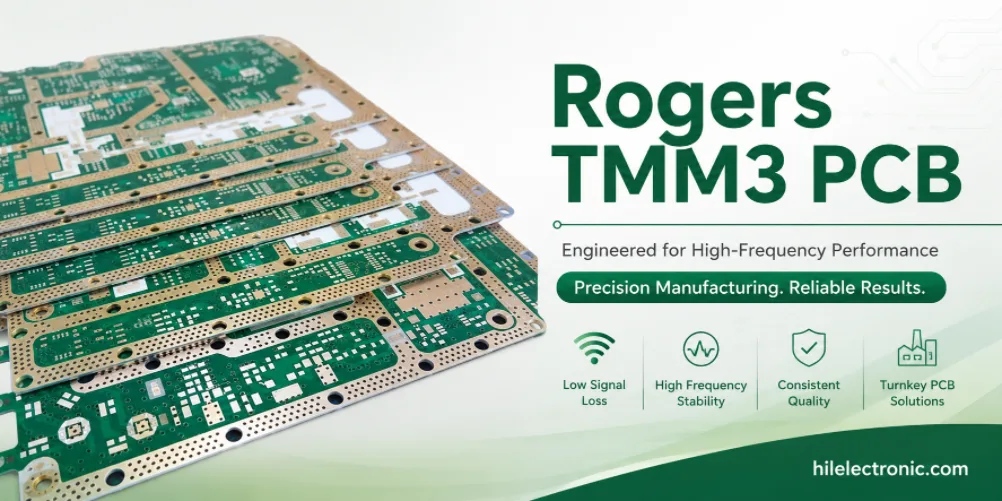
TMM3 Leiterplattenfertigung für HF-Module
Die Fertigung von TMM3-Leiterplatten ist am sinnvollsten dort, wo das HF-Modul...
So erhalten Sie ein Angebot für Leiterplatten
Wir führen gerne eine DFM/DFA-Analyse für Sie durch und senden Ihnen anschließend einen Bericht zu. Sie können Ihre Dateien sicher über unsere Website hochladen. Für die Erstellung eines Angebots benötigen wir folgende Informationen:
-
- Gerber, ODB++ oder .pcb, Spezifikation.
- Stückliste, wenn Sie eine Montage benötigen
- Die Menge
- Wendezeit
Für PCBA-Dienstleistungen geben Sie bitte Ihre Stückliste (BOM) und alle spezifischen Montageanweisungen an. Wir bieten auch DFM/DFA-Analysen an, um Ihre Designs hinsichtlich Herstellbarkeit und Montage zu optimieren und so einen reibungslosen Produktionsprozess zu gewährleisten.