
Back to blog
Challenges and Considerations in LED PCB Design

Introduction to LED PCB
LED PCB, or Light Emitting Diode Printed Circuit Board, is a fundamental component in the world of modern lighting systems. It represents the fusion of cutting-edge technology and innovative design, offering numerous advantages for a wide range of applications.
In essence, LED PCBs are the backbone of LED illumination systems, serving as the platform upon which LEDs are integrated, powered, and controlled. These boards have transformed the lighting industry by providing compact, energy-efficient, and long-lasting lighting solutions that have revolutionized various sectors, from residential lighting to automotive and industrial applications.
This article explores the intricate world of LED PCBs, shedding light on their importance, applications, design considerations, and the challenges faced in harnessing their full potential. As we delve deeper into the intricacies of LED PCBs, you’ll discover how these circuit boards have become indispensable in our daily lives, contributing to brighter and more energy-efficient lighting solutions.
Applications of LED PCB
LED PCBs find a multitude of applications across various industries, thanks to their versatility and efficiency in providing illumination. These applications extend far beyond traditional lighting, impacting numerous sectors with their unique capabilities. Here are some of the prominent applications of LED PCBs:
- Residential Lighting: LED PCBs have revolutionized residential lighting by offering energy-efficient and long-lasting alternatives to incandescent bulbs. They are used in ceiling lights, downlights, LED strips, and other fixtures, contributing to reduced energy consumption and lower maintenance costs for homeowners.
- Automotive Lighting: LED PCBs are extensively used in automotive lighting systems, including headlights, taillights, and interior lighting. Their durability, brightness, and energy efficiency make them ideal for enhancing road safety and vehicle aesthetics.
- Street Lighting: LED PCBs play a crucial role in modern street lighting solutions. LED street lights offer improved visibility, lower energy consumption, and reduced maintenance needs, contributing to more sustainable and well-lit urban environments.
- Electronic Devices: LED PCBs are integrated into various electronic devices, such as smartphones, tablets, and laptops, to provide backlighting for screens and indicators. Their small size, low power consumption, and ability to produce various colors make them valuable in consumer electronics.
- Industrial Lighting: Industrial settings benefit from LED PCBs’ ability to deliver high-intensity illumination with minimal heat generation. They are used in factories, warehouses, and manufacturing facilities to ensure well-lit workspaces and enhance safety.
- Telecommunications: LEDs on PCBs are crucial in telecommunications equipment, where indicator lights and displays are essential for monitoring and operation. Their heat dissipation capabilities and reliability make them suitable for this sector.
- Medical Equipment: High-powered LED lights integrated into medical equipment, such as surgical tools and examination devices, rely on LED PCBs for their functionality. The longevity and heat resistance of LED PCBs ensure reliable performance in critical medical applications.
- Display Screens: LED PCBs serve as the foundation for various display screens, including LED TVs, computer monitors, and digital billboards. They offer vibrant colors, high resolution, and energy efficiency, making them preferred choices for visual displays.
- Backlit Membrane Switches: LED PCBs are commonly used in membrane switches and control panels, providing backlighting for buttons and indicators. This application enhances user interface design and readability in low-light conditions.
- Horticultural Lighting: LED PCBs with specific spectral outputs are used in horticulture to support plant growth in controlled environments. They offer precise control over light wavelengths, optimizing photosynthesis and plant development.
- Traffic Lights: LED PCBs power traffic signal lights, contributing to enhanced visibility, reduced energy consumption, and longer service life for traffic management systems.
- Aerospace: LED PCBs are employed in aerospace applications, such as cockpit displays and interior lighting, where reliability, compactness, and resistance to harsh environmental conditions are crucial.
- Consumer Electronics: Beyond lighting, LED PCBs are used in consumer electronics for status indicators, power buttons, and display backlighting, enhancing user experience and product aesthetics.
- Gaming and Entertainment: LED PCBs are integrated into gaming peripherals, entertainment systems, and stage lighting to create captivating visual effects and immersive experiences.
- Architectural Lighting: In architectural lighting design, LED PCBs are utilized to illuminate buildings, bridges, and landmarks, allowing architects to showcase their designs and create dramatic lighting effects.
For related manufacturing decisions, Highleap also documents AlN and alumina PCB and through-hole PCB assembly, which can help prevent unclear notes in the quote package.
Advantages and Features of LED PCB

LED PCBs offer a host of advantages and features that make them highly desirable for a wide range of applications. Here’s an overview of the key advantages and features associated with LED PCBs:
- Energy Efficiency: LED PCBs are exceptionally energy-efficient. They convert a significant portion of the electrical energy into visible light, minimizing wasted energy as heat. This efficiency translates to reduced power consumption, making them an eco-friendly lighting option.
- Long Lifespan: LED PCBs have an extended operational lifespan compared to traditional lighting sources. They can last up to 25 times longer, reducing the need for frequent replacements and maintenance, which can lead to cost savings over time.
- Compact Size: LEDs are inherently compact, allowing for versatile design possibilities. LED PCBs can be tailored to fit into small and tight spaces, making them suitable for various applications with size constraints, including electronics and automotive lighting.
- Low Heat Generation: LEDs generate significantly less heat compared to incandescent and fluorescent lights. This reduced heat production enhances safety, especially in enclosed or sensitive environments, and minimizes the risk of overheating.
- Instant Lighting: LED PCBs provide instant illumination without the need for warm-up time. This feature is particularly beneficial in applications where immediate and consistent light output is required, such as in traffic lights and emergency lighting.
- Color Options: LEDs are available in a wide range of colors and color temperatures. This flexibility allows for precise control over the color of emitted light, making them ideal for applications where specific lighting hues are necessary, such as stage lighting and displays.
- Durability: LED PCBs are highly durable and resilient to shock and vibration. Their solid-state construction makes them less prone to damage from mechanical stress, ensuring reliable operation in challenging environments.
- Dimmability: Many LED PCBs support dimming capabilities, enabling users to adjust the light output to their preference. This feature enhances energy efficiency and offers greater control over lighting levels in various settings.
- Mercury-Free: Unlike fluorescent lighting, LED PCBs do not contain mercury or other hazardous materials. This makes them environmentally friendly and simplifies disposal procedures, reducing potential harm to ecosystems.
- Directional Lighting: LEDs emit light in a specific direction, allowing for focused illumination without the need for additional reflectors or diffusers. This directional nature is advantageous in applications like spotlights and task lighting.
- Wide Operating Temperature Range: LED PCBs can operate effectively across a broad temperature range, from extremely cold to hot conditions, making them suitable for outdoor and automotive applications subject to temperature variations.
- Instantaneous Switching: LEDs can be rapidly turned on and off without impacting their lifespan or performance. This capability is crucial in applications requiring frequent switching, such as brake lights in vehicles.
- Customizable Designs: LED PCBs can be customized in terms of size, shape, and arrangement of LEDs to meet specific design requirements. This versatility allows for creative and tailored lighting solutions.
- Low UV Emissions: LED PCBs emit minimal ultraviolet (UV) and infrared (IR) radiation, reducing the potential for fading or damage to sensitive materials and artworks in museums and galleries.
- Remote Control and Automation: LED PCBs can be easily integrated into smart lighting systems, allowing for remote control, automation, and dynamic lighting effects, enhancing convenience and energy savings.
Challenges in LED PCB Design
While LED PCBs offer numerous advantages, they also present specific challenges in their design and implementation. Here are some of the key challenges that engineers and designers may encounter when working with LED PCBs:
-
Thermal Management
-
Color Consistency
-
Power Efficiency
-
LED Bin Selection
-
Circuit Layout and PCB Size
-
Optical Design
-
Environmental Considerations
-
Cost vs. Quality
-
Dimming Compatibility
-
Color Tuning
-
Regulatory Compliance
-
Manufacturability
-
Serviceability
Factors to Consider in LED PCB Design
Designing an efficient LED PCB involves several key factors. First and foremost, thermal management is critical. LEDs can generate significant heat, so it’s essential to incorporate effective heat dissipation methods such as heat sinks and thermal vias to maintain optimal operating temperatures.
Circuit layout and grounding are also vital considerations. Proper placement and routing of traces are necessary to minimize electromagnetic interference (EMI) and ensure signal integrity. Grounding techniques should be employed to reduce noise and maintain a stable electrical connection.
Selecting the right LEDs is crucial for achieving the desired lighting performance. Factors like color temperature, luminosity, and viewing angles must be taken into account to meet specific application requirements.
Environmental conditions should not be overlooked. LED PCBs may be exposed to various elements, so designing for moisture and dust resistance can extend the lifespan of the board.
Manufacturability is another factor to consider. Designing with manufacturability in mind can lead to cost-effective production and faster time-to-market.
Finally, compliance with regulatory standards is essential, especially in safety-critical applications. Ensuring that the LED PCB design meets industry-specific requirements and certifications is a fundamental consideration for a successful design.
How to Choose LED PCB Circuit Design Material?

When choosing the material for LED PCB circuit design, several critical factors should be considered to ensure optimal performance and reliability. Here’s a closer look at these factors:
Fire Retardant: The selected material must possess fire-resistant properties to slow down or halt the spread of fire during an outbreak. These fire-retardant properties are achieved through chemical reactions that render the material minimally flammable, thus reducing the risk of the LED circuit board catching fire. This is crucial for safety in various applications.
Dielectric Constant: The dielectric constant of the material is important to consider because it affects the electrical power storage capabilities of the PCB. It measures the ability of the material to store electrical energy and its electrical force strength. Since LED circuit boards are used in electrical appliances, evaluating the material’s dielectric constant is essential to maintain electrical performance.
Loss Factor: The loss factor, also known as the dissipation factor, helps measure performance differences between materials regarding dielectric loss. A lower dissipation factor indicates less dielectric loss in the laminate. Choosing a material with a lower dielectric loss is essential for maintaining signal integrity and reducing energy loss in the PCB.
Tensile Strength: Tensile strength is a measure of a material’s ability to resist breaking under tension or the maximum load it can sustain without breaking. It indicates the material’s ability to withstand stretching and mechanical stress. Ensuring that the LED PCB material has the necessary tensile strength is crucial to prevent physical damage or deformation during handling and use.
Glass Transition Temperature (Tg): The glass transition temperature (Tg) is critical when using polymers in PCB design. At this temperature, the properties of the polymer transition from a rigid, glass-like state to a more flexible, rubbery state. Choosing a material with an appropriate Tg is essential to ensure that the PCB can perform well even under harsh temperature conditions without becoming brittle or losing structural integrity.
Z-axis Expansion Coefficient: Dimensional stability, especially when subjected to varying temperatures, is essential for LED PCBs. The Z-axis expansion coefficient measures how the material changes in size under constant pressure as a result of thermal expansion. Different methods, including volumetric, area, and linear measurements, are used to assess this coefficient. A low Z-axis expansion coefficient is desirable to maintain the structural integrity of the PCB when exposed to temperature variations.
Aluminum LED Circuit Boards
Aluminum PCBs are a prevalent choice for LED PCBs due to their excellent thermal properties and versatility. These boards consist of multiple layers, each serving a specific purpose:
- Base Layer: The base layer is made of an aluminum alloy sheet, typically composed of aluminum, magnesium, and silicon. This layer forms the foundation upon which the rest of the PCB is built.
- Thermal Insulation Layer: The thermal insulation layer is crucial for dissipating heat generated by the LED circuits. It consists of a ceramic polymer that acts as a thermal barrier, protecting the board from thermal and mechanical damage. This layer efficiently absorbs heat generated by the current flowing through the circuits and transfers it to the aluminum layer, where it is dispersed.
- Circuit Layer: The circuit layer contains copper circuits arranged according to the LED PCB’s specific circuit design. These circuits are responsible for carrying electrical signals and powering the LEDs.
The number of layers in aluminum LED PCBs can vary depending on the board’s design and complexity.
There are several types of aluminum LED PCBs, each offering unique characteristics for various applications:
- Flexible Aluminum: Flexible LED PCBs combine aluminum with polyimide resin and ceramic fillers, resulting in increased flexibility and insulation while retaining good thermal conductivity. These boards can be flexed to establish connections, eliminating the need for connectors, cables, and additional fixtures. However, it’s important to note that they are designed to bend once and then be fixed in place, as opposed to continuous flexing. This distinguishes them from rigid boards.
- Hybrid Aluminum: Hybrid aluminum PCBs are created by combining an aluminum base metal with a non-thermal material, often a traditional FR-4 board. This combination reduces costs, enhances rigidity, and maintains excellent heat dissipation capabilities. It’s a cost-effective solution that offers improved thermal performance.
- Multilayer Aluminum: Multilayer aluminum PCBs consist of more than two layers, incorporating thermally conductive dielectrics. These boards provide high-performance capabilities while still effectively dissipating heat, although they may be less efficient at heat transfer compared to some other board types. Multilayer aluminum PCBs are suitable for applications that require both performance and thermal management, distinguishing them from simpler single or double-layer PCBs.
Designing the Size and Shape of LED PCB

The size and shape of an LED PCB play a crucial role in determining its functionality and compatibility with specific applications. Here are key considerations when designing the size and shape of an LED PCB:
Application Requirements: The first step is to identify the specific application for the LED PCB. Different applications may require varying sizes and shapes to fit within the designated space and provide the desired illumination. Consider whether it’s for automotive lighting, residential fixtures, display screens, or any other use case.
LED Configuration: The arrangement of LEDs on the PCB affects its size and shape. Determine the number of LEDs required and their layout, whether it’s a linear strip, a matrix, or a custom configuration. This will influence the dimensions and form of the PCB.
Space Constraints: Evaluate the physical space available for installing the LED PCB. Ensure that the dimensions of the PCB fit comfortably within the allocated area without interfering with other components or structures.
Heat Dissipation: LED PCBs generate heat during operation, and efficient heat dissipation is essential for maintaining LED performance and longevity. Consider the size and shape of the PCB in relation to the integration of heat sinks, thermal vias, or other cooling mechanisms. A larger PCB may offer better thermal management.
Custom Shapes: LED PCBs can be designed in various shapes to meet specific design aesthetics or functional requirements. Circular, rectangular, square, and custom shapes are all possible options. The choice of shape should align with the application’s needs and design objectives.
Material Properties: The choice of PCB material can influence the size and shape. Some materials are more flexible, allowing for unique shapes, while others are rigid. Additionally, the dielectric constant and thermal properties of the material should be considered when designing the PCB size and shape.
Electrical Requirements: Ensure that the chosen size and shape accommodate the electrical connections, traces, and components necessary for the LED circuit. Consider factors like trace length, width, and spacing to meet electrical performance requirements.
Optical Design: For applications where the direction of light emission is critical, such as LED displays or automotive headlights, the size and shape of the PCB should align with the optical design to achieve the desired light distribution and intensity.
Manufacturability: Keep manufacturability in mind when designing the size and shape. PCB manufacturers may have limitations on the minimum or maximum dimensions they can produce. Design within these constraints to ensure cost-effective and reliable production.
Cost Considerations: Larger or complex-shaped PCBs may incur higher manufacturing costs. Balance design requirements with cost constraints to achieve an optimal solution.
Environmental Factors: Consider the environmental conditions in which the LED PCB will operate. Extreme temperatures, humidity, or exposure to chemicals may impact the choice of materials and the design of the PCB to ensure long-term reliability.
Testing and Quality Control: The size and shape of the PCB can influence the ease of testing and quality control during manufacturing. Design the PCB to facilitate testing procedures without compromising functionality.
In summary, designing the size and shape of an LED PCB requires a thoughtful analysis of application requirements, thermal management, electrical considerations, aesthetics, and manufacturability. A well-designed PCB will contribute to the overall performance and longevity of LED lighting systems.
Guidelines for LED PCB Circuit Design
When designing LED PCBs for the lighting industry, it’s crucial to follow specific guidelines to ensure the reliability and performance of the circuit board. Here are some essential guidelines to consider:
Component Placement and Trace Routing: When designing LED PCBs for the lighting industry, careful consideration should be given to component placement and trace routing. To avoid weak solder joints, vias should not be placed too close to surface mount technology (SMT) pads. A minimum distance of 0.025″ between vias and SMT pads is recommended, with the use of mask vias on pads. Additionally, it’s essential to avoid routing wide traces that can limit solder paste coverage and heat dissipation.
SMT Pad Design: The design of SMT pads plays a crucial role in LED PCB reliability. Routing traces along the edges of SMT pads should be avoided to prevent issues like etchant trapping and corrosion during the rinse cycle. This also reduces the risk of thermal shock during assembly and oversized pads. Furthermore, circuit traces should not be routed at acute angles less than 90 degrees to distribute stress more evenly.
Component-to-Board Clearance: Adequate clearance between components and the PCB’s outline is necessary to prevent damage during the de-penalization process. Maintaining a minimum clearance of at least 0.1 inches from the board’s edge ensures safe component placement. The inclusion of tab locations helps determine proper component positioning and allows for adjustments during de-penalization.
File Export Considerations: Exporting Gerber files at the 2:3 decimal ratio, a method used for transferring files onto floppy disks, is not suitable for compact PCB designs. This practice can result in data loss and issues with arc points. Designers should choose appropriate file export settings for their specific design requirements.
Thermal Pads and Through Holes: To ensure the effective operation of holes, it’s essential to use direct connects for vias, particularly in crowded areas. Unnecessary thermal pads in vias can lead to open circuit situations. Additionally, designers should size thermal pads accurately to match the interior diameter with that of the exterior layer pads. For multilayer PCBs, maintaining a minimum distance of 0.006″ between plated through holes (PTH) and traces is critical to ensure accuracy, considering factors like material movement, pinning setup, artwork scaling, and drill depletion.
By adhering to these guidelines, LED PCB designers can enhance the reliability, manufacturability, and overall performance of LED circuits in the lighting industry.
Why Use LED PCB Circuit Design?
LED PCB Circuit Design offers several compelling reasons for its widespread use in various lighting and electronic applications:
- Compact Size: LEDs are inherently small, allowing for versatile placement and integration into compact electronic devices and lighting fixtures. This compactness is especially advantageous in applications like smartphones, automotive lighting, and portable electronics.
- Lower Power Consumption: LED lighting is known for its energy efficiency, significantly reducing power consumption compared to traditional lighting sources. LED lights can cut power usage by approximately 80%, making them a cost-effective and environmentally friendly choice.
- Longer Lifespan: LEDs have a much longer operational lifespan compared to traditional light sources. They can last up to 25 times longer, reducing the frequency of replacements and maintenance.
- Mercury-Free: Unlike traditional fluorescent bulbs, which contain mercury and require special disposal methods, LEDs are mercury-free. This makes them environmentally friendly and reduces pollution risks associated with mercury exposure.
- Efficiency: LED lights are highly efficient in converting electrical energy into light, minimizing energy wastage as heat. Traditional incandescent bulbs, on the other hand, emit around 90% of their energy as heat. LED PCBs focus on optimizing the efficient conversion of energy into light, enhancing overall performance.
- Heat Management: Efficient heat management is crucial in LED PCB design due to the heat generated, even though it’s significantly less than traditional bulbs. Heat can affect LED performance and lifespan, making proper thermal solutions essential.
In summary, LED PCB Circuit Design is preferred for its compactness, energy efficiency, long lifespan, environmental friendliness, and overall performance. These advantages make LEDs the go-to choice for a wide range of applications, from consumer electronics to industrial and architectural lighting, contributing to energy savings and reducing environmental impact. Proper design and thermal management further enhance the reliability and functionality of LED lighting systems.
Importance of Heat Management in LED PCB Design

Heat management in LED PCB design is crucial for several reasons. First, it significantly impacts the lifespan of LEDs. LEDs are renowned for their longevity, but excessive heat can curtail their operational life. Proper heat management maintains LEDs at optimal temperatures, making them last longer, which is especially critical in applications where frequent replacements are impractical.
Second, efficient heat dissipation helps in maintaining consistent light output. LEDs perform most efficiently when they are cooler. As temperature rises, light output can decrease, affecting overall lighting system performance. Effective heat management ensures that LEDs deliver the desired illumination levels throughout their lifespan.
Additionally, color consistency is vital in applications where LEDs produce specific colors of light. Temperature variations can alter the emitted color. Precise thermal control becomes essential in scenarios such as stage lighting and display screens to avoid undesirable variations in lighting quality.
In summary, heat management is pivotal in LED PCB design as it influences LED lifespan, light output, and color consistency. It also contributes to energy efficiency, reliability, safety, and environmental impact, making it a critical consideration for designers aiming to create high-performing and sustainable LED lighting systems.
Defects in LED PCB Circuit Design and Solutions
- Circuit Scratch: Circuit scratches occur when pads on the circuit board are close together, leading to potential short circuits and exposed copper. To overcome this, increase the copper foil’s coverage on the circuit board, reducing the chances of open and short circuits. Additionally, reducing the line and pad pitch can help mitigate circuit scratching.
- Solder Mask Oil Peeling: Using a thicker solder mask or inadequate exposure energy can result in solder mask oil peeling. To address this issue, apply the right exposure energy while considering the solder mask’s consignment ability for optimal results.
- Bad Board Outline: Bulging of the board outline can happen when applying LED through-holes in smaller-sized boards without margins. Loose screws or board displacement during the process can cause this. To solve this problem, establish appropriate margins to aid in the marking-up process.
- Solder Mask Oil Color Unconformity: Achieving consistent oil color conformity is challenging due to the lack of widely accepted standards. To address this, adhere to stricter manufacturing standards and explore suitable manufacturing methods and control parameters.
- Board Angle Defects: For thicker circuit boards, be mindful of the fragility of the side angles, especially during transportation. Handle the delicate side angles with care, and consider making the base plates relatively larger than standard single-margin printed circuit boards.
- Warpage: Warping of LED PCBs can result from an uneven distribution of stress, particularly with dense pads or large copper blocks on the driver side of the circuit board. Maintaining a warpage of less than 0.5 percent helps keep the board flat and stable.
- Pad Outline: The intricate arrangement of pads can lead to omissions during inspection. Define favorable production procedures to minimize the omission ratio and consider addressing visual fatigue that affects visual inspectors’ performance.
- Degrading Functions: LED PCBs with dense pads and black solder masks can make it challenging to identify malfunctioning LEDs accurately. When a function failure occurs, the PCBA may only indicate the failure without specifying which pad is at fault. Pinpointing the specific faulty LED may require removing components and thorough inspection through demolition.
By addressing these defects and implementing the suggested solutions, you can improve the efficiency and functionality of LED PCBs, ensuring the reliability of LED lighting systems.
Where to use LED PCB Circuit Design?
LED PCB Circuit Design can be applied in various lighting and electronic applications to harness the advantages of LED technology. Here are some key areas where LED PCB Circuit Design finds extensive use:
LED Strip PCB Design: LED strips are versatile lighting solutions used in decorative lighting, architectural lighting, and more. Proper LED strip PCB design is crucial for factors like water resistance, color variation, and addressability, ensuring the desired lighting effects in applications ranging from home decor to industrial use.
SMD LED PCB Design: Surface Mount Technology (SMT) LEDs are employed in electronics such as laptops, network systems, and mobile phones. SMD LED PCBs provide efficient heat dissipation and are essential for compact and portable electronic devices.
LED Street Light PCB: LED street light PCBs are designed for street lighting applications, offering energy-efficient illumination and advanced features like Variable Message Signs (VMS) for traffic guidance and management. LED street lights contribute to improved visibility and safety on roadways.
PCB Design for LED Bulb: LED PCBs are widely used in LED bulb manufacturing, making LED lighting a standard choice for energy-efficient and long-lasting lighting solutions in homes, offices, and commercial spaces.
LED Matrix PCB Design: LED matrix displays are used for showcasing information and graphics with low resolution. These displays find applications in enterprise premises, television, computer monitors, medical monitors, and more, offering control over color and brightness.
COB LED PCB Board: Chip on Board (COB) LED PCBs feature direct contact between bare diodes and the MCPCB substrate, providing excellent thermal conductivity. They are used in various applications, including LED TVs, street lighting, automotive lighting, horticulture lighting, and high-energy LED applications.
These applications highlight the versatility and efficiency of LED PCB Circuit Design in delivering energy-efficient, durable, and customizable lighting solutions for a wide range of industries and use cases. Proper design considerations in each application ensure optimal performance and longevity of LED-based lighting systems.
Advancements In Aluminum-LED PCB Design
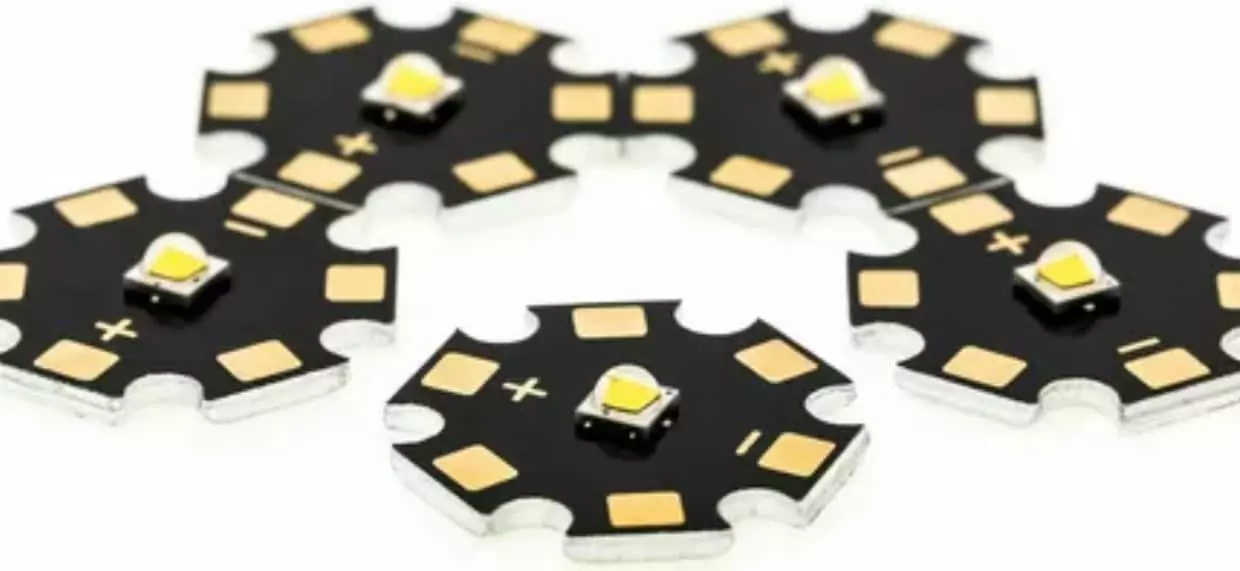
Advancements in Aluminum-LED PCB Design have brought about significant improvements in thermal management, allowing for enhanced LED performance and reliability. Here are the key aspects and advantages of these design advancements:
Improved Thermal Management
Aluminum-LED PCBs excel at dissipating heat generated by LEDs more effectively than traditional cores or fiberglass bases. This enhanced thermal control is crucial because as more LEDs are used, the heat generated increases. Aluminum cores help maintain stable temperatures, ensuring optimal LED operation.
Advantages of Design Advancements
- Support for More LEDs: With aluminum PCBs, it’s possible to incorporate a larger number of LEDs into the design, even in situations where excessive heat would have been a limiting factor with other materials.
- Enhanced Heat Dissipation: Aluminum PCB designs are capable of efficiently dissipating excess heat that can accumulate during prolonged LED operation. This heat management capability contributes to improved LED performance and longevity.
Applications of Aluminum-LED PCBs
Aluminum-based LED PCBs find applications in various industries and scenarios due to their ability to handle heat and provide reliable performance. Some notable applications include:
- Telecom Equipment: LED indicators and monitors used in telecom equipment benefit from the superior heat transfer capacity of aluminum-based PCBs. These PCBs ensure reliable performance and reduced weight, making them ideal for telecommunications applications, including filtering equipment and high-frequency power amplifiers.
- Automotive Lighting: Many automotive lighting applications, such as turn signals, headlights (high and low beams), and brake lights, utilize LEDs mounted on aluminum PCBs. These PCBs are known for their durability, longevity, and cost-effectiveness.
- Computer Components: Aluminum PCB LEDs are well-suited for use in computer screens, indicators, and various components due to their low thermal resistance. They contribute to maintaining the performance and reliability of LEDs in computer systems.
- Medical Equipment: High-powered LED lights commonly found in surgical and diagnostic equipment often feature aluminum PCBs. These PCBs excel at dissipating heat, ensuring uninterrupted operation in medical settings where reliability is paramount. They are also used in medical scanning equipment.
In summary, the advancements in Aluminum-LED PCB Design have revolutionized the use of LEDs in various industries. These PCBs offer improved thermal management, allowing for more LEDs, better heat dissipation, and increased reliability in applications ranging from telecommunications and automotive lighting to computers and medical equipment.
Future Trends in LED PCB Technology
One of the prominent trends in LED PCB technology is the continuous drive toward miniaturization and integration. As electronics become smaller and more compact, LED PCBs are following suit. Future LED PCBs are expected to feature even smaller form factors, allowing for integration into increasingly compact devices. This trend aligns with the demand for thinner and lighter electronics across various industries, including consumer electronics, automotive, and wearable technology.
As LEDs become more powerful and efficient, effective thermal management remains a critical consideration. Future LED PCBs are likely to incorporate advanced thermal management solutions, such as enhanced heat sinks, conductive materials, and innovative designs to dissipate heat more efficiently. These developments will enable LEDs to operate at higher power levels without compromising performance or longevity, making them suitable for high-output applications like automotive headlights and stadium lighting.
The integration of LEDs with smart and connected technologies is a significant trend in LED PCB technology. Future LED PCBs will not only provide illumination but also offer intelligent features like color tuning, remote control, and connectivity to IoT networks. These smart LED PCBs will find applications in smart homes, smart cities, and industrial automation, enabling dynamic and energy-efficient lighting solutions that respond to environmental conditions and user preferences. This trend reflects the growing demand for sustainable and adaptable lighting systems in modern society.
conclusion
LED PCBs play a pivotal role in various aspects of our daily lives, offering efficient lighting solutions for a wide range of applications. This article has provided insights into the creation of LED PCB designs, assembly, and fabrication processes, as well as considerations for selecting the most suitable LED PCB option for specific applications.
LED PCB manufacturers provide LED circuit boards, including embedded LED boards, metal core PCBs, SMD boards, rigid PCBs, flex boards, and custom LED boards, offering versatile solutions to meet diverse lighting needs. Armed with this knowledge, readers are now better prepared to navigate the world of LED PCBs with confidence and make informed decisions about their use in different contexts. LED PCB technology continues to evolve, driving advancements in lighting efficiency, miniaturization, and smart capabilities, promising a bright future for LED illumination across industries.
PCB & PCBA Quick Quote
Related Articles
LED Spotlight & Projection PCBs: High-Flux Light Engines, Optical Registration & Drivers
Order LED spotlight PCBs for high-flux COB or SMD engines, optical registration, compact drivers and outdoor-hardened projection lighting.
Underwater & Pool LED Light PCBs: IP68 Potted Boards, Low-Voltage Drivers & Safety
Manufacture LED pool light PCBs for IP68 potted underwater fixtures, low-voltage drivers, RGBW boards and corrosion-resistant assemblies.
Motion Sensor & Smart LED Light PCBs: Sensor, Control, Driver & Wireless Boards
Build motion sensor LED light PCBs with PIR or microwave sensing, MCU control, wireless modules, drivers and smart-lighting PCBA integration.