
AC-DC Power Supply PCB Manufacturing Guide

Figure 1. AC-DC power supply PCB
An AC-DC power supply PCB is the printed circuit board that converts mains alternating current (typically 100–240VAC) into a regulated direct-current output such as 3.3V, 5V, 12V, 24V or 48V. It is not a single function but a chain of stages on one board — input protection and EMI filtering, rectification, bulk energy storage, the switching or regulating stage, isolation, output rectification and feedback regulation — and the way those stages are laid out, spaced and thermally managed decides whether the supply passes safety testing, holds efficiency under load and survives in the field. At Highleap Electronics we manufacture and assemble AC-DC power supply PCBs from single-sided boards up to multilayer designs, with heavy copper, mixed dielectric stackups and full Hipot and functional testing for power products.
Need an AC-DC power supply PCB built to your schematic and safety class? Send your Gerbers, stackup and isolation requirements for a fast manufacturing and assembly quote.
What an AC-DC Power Supply PCB Actually Has to Do
The reason an AC-DC power supply PCB is harder to build than an ordinary logic board is that two very different worlds live on the same laminate. On the primary side you have rectified high-voltage DC — around 325VDC after a 230VAC line is rectified — switching at tens or hundreds of kilohertz. On the secondary side you have low-voltage, high-current DC feeding the load. Between them sits a safety isolation barrier that, in a medical or industrial product, may have to withstand several kilovolts. The board has to keep those domains apart for safety, keep the switching loops tight for EMI, and move heat away from the hot components, all inside whatever footprint the enclosure allows.
Because of that, a power supply PCB is judged less by trace routing elegance and more by physical discipline: how far apart the primary and secondary copper is kept, how wide the high-current traces are, how the magnetics and the bulk capacitor are placed, and how the heat-generating parts couple to copper pour or a heatsink. A board that is electrically correct but thermally or spacing-wrong will either fail Hipot, run hot and degrade, or radiate enough noise to fail EMC. These are the failure modes that actually sink power projects, which is why the manufacturing and DFM review matters as much as the schematic.
The Functional Blocks on a Typical AC-DC Board
| Stage | Typical Components | What It Demands From the PCB |
|---|---|---|
| Input / EMI Filter | Fuse, NTC, X/Y caps, common-mode choke, MOV | Clean entry layout, fuse upstream of everything, controlled loop area to suppress conducted emissions. |
| Rectification | Bridge rectifier or discrete diodes | Wide copper for surge current, thermal relief on the bridge, room for a heatsink if >10W. |
| Bulk Storage | High-voltage electrolytic capacitor(s) | Footprint and height clearance, low-impedance path to the switch, ripple-current heat handling. |
| Switching Stage | MOSFET/GaN, controller IC, transformer | Minimal switching-loop area, tight gate routing, thermal copper under the switch. |
| Isolation Barrier | Transformer, optocoupler, isolation slot | Enforced creepage/clearance, often a routed slot, no copper or silk bridging the gap. |
| Output / Feedback | Secondary diode/SR FET, output caps, TL431 | Wide high-current copper, short feedback sense path, low output ripple layout. |
The practical takeaway is that an AC-DC power supply PCB is a layout problem before it is a fabrication problem. Two boards with identical schematics can behave completely differently if one keeps the switching loop tight and the isolation gap clean and the other does not. When we quote a power board, the first thing we look at is whether the placement and spacing already support the target safety class — because fixing that after the first article is far more expensive than catching it in DFM.
Linear, Flyback or LLC: How Topology Drives the Board
The converter topology you choose is the single biggest driver of what the PCB has to be. A linear supply is simple and quiet but dumps the voltage difference as heat, so the board is dominated by a large transformer and a heatsinked regulator and is only practical at low power. A switch-mode supply is far more efficient and compact, but it trades that for high-frequency switching nodes that must be laid out carefully or the board becomes an EMI radiator. Within switch-mode, a flyback is the workhorse below roughly 75W, while resonant LLC and PFC-plus-LLC designs take over at higher power where efficiency and emissions targets get strict.
This matters for manufacturing because each topology stresses the board differently. A flyback concentrates heat and switching noise around the transformer and primary MOSFET, so that corner needs thermal copper and a tight loop. An LLC stage is sensitive to layout symmetry and resonant-tank parasitics. A PFC front end pushes large currents through the boost inductor and switch, demanding heavy copper and careful thermal planning. Getting the topology and the stackup matched early is what keeps a power board both efficient and manufacturable.
Topology Comparison for PCB Planning
| Topology | Typical Power | PCB Implication |
|---|---|---|
| Linear | Up to ~10W practical | Large copper area or heatsink for the pass element; simple, low-noise layout. |
| Flyback | 5–75W | Tight primary switching loop, thermal copper under the MOSFET, clean isolation gap under the transformer. |
| Forward / Half-Bridge | 50–500W | Multilayer with ground planes, careful gate routing, controlled output inductor placement. |
| LLC Resonant | 100W–several kW | Layout symmetry critical, low-parasitic resonant tank, heavy secondary copper for SR FETs. |
| PFC + LLC | 75W and up (regulatory) | Heavy-copper boost stage, large inductor footprint, multi-stage thermal and EMI planning. |
There is no universally “best” topology — the right one is set by your power level, efficiency target and whether power-factor correction is legally required for your product class. What we contribute is matching the board build to that choice: a 24V/60W flyback adapter and a 1kW PFC-LLC server supply are both “AC-DC power supply PCBs,” but they need different copper weights, layer counts and thermal strategies, and quoting them as if they were the same is how cost and lead-time surprises happen.
Material, Copper Weight and Thermal Build for Power PCBs
Most AC-DC power supply PCBs are built on FR-4, but “FR-4” is not one material — for power boards the grade matters. Standard FR-4 has a glass transition temperature (Tg) around 130–140°C, which is fine for low-power adapters, but boards that run hot or face reflow and field thermal cycling benefit from high-Tg FR-4 at 170°C or above, which resists delamination and holds plated-through-hole reliability over time. Where heat density is high — LED drivers, dense converters — aluminum-backed (metal-core) PCBs or thermal interface to a chassis become the right call.
Copper weight is the other defining choice. Logic boards use 1oz copper, but power traces carrying several amps need 2oz, 3oz or heavier to keep temperature rise and voltage drop in check. The relationship is roughly that doubling copper weight lets a trace of the same width carry meaningfully more current at the same temperature rise, which is why heavy-copper capability is a baseline requirement for serious power PCB work rather than an exotic option.
Copper Weight vs Current-Carrying Guideline
| Copper Weight | Approx. Thickness | Where It Fits in AC-DC Design |
|---|---|---|
| 1 oz | ~35 µm | Control, feedback and low-current signal areas of the board. |
| 2 oz | ~70 µm | Common baseline for primary and secondary power paths in mid-power supplies. |
| 3–4 oz | ~105–140 µm | High-current output rails, PFC boost paths, bus bars on board. |
| 6 oz and above | ~210 µm+ | Heavy-current industrial and telecom power, often with thermal vias or metal core. |
The thermal strategy ties these together. Beyond copper weight, real boards use thermal vias to move heat to inner or back-side copper, generous copper pour as a spreader, component placement that keeps hot parts away from electrolytic capacitors (whose life roughly halves for every 10°C rise), and sometimes onboard heatsinks or metal-core construction. When we review a power layout, we are checking that the copper and thermal plan actually match the dissipation — a board specified with too little copper will pass at the bench and fail in a hot enclosure.
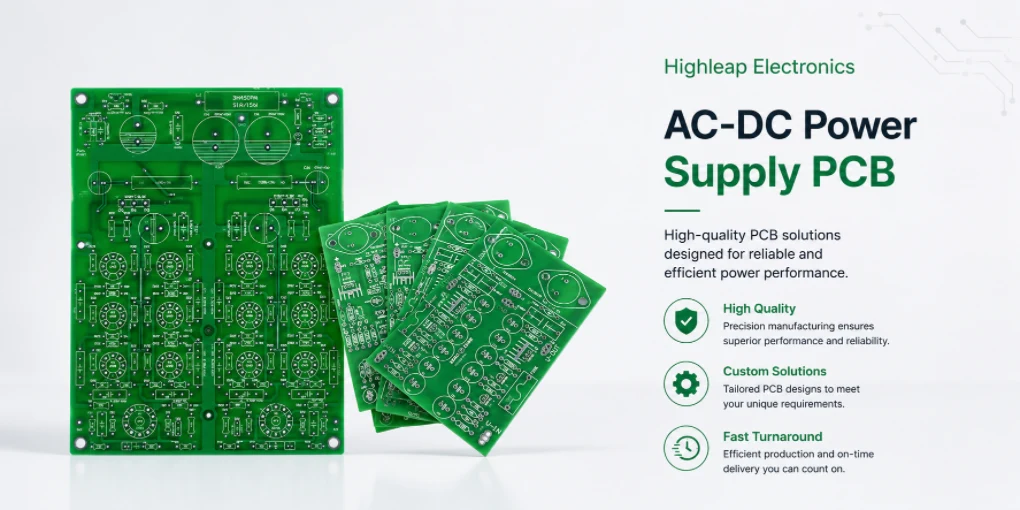
Figure 2. AC-DC power supply PCB manufacturing and assembly
Creepage, Clearance and Isolation: The Rules That Shape the Layout
Nothing shapes an AC-DC power supply PCB more than safety spacing. Creepage is the shortest distance along the board surface between two conductors, and clearance is the shortest distance through air; both have minimums set by the voltage between the conductors, the pollution degree of the environment and the insulation class required. For mains-referenced spacing, designers commonly hold on the order of 2.5mm or more between primary and secondary copper for basic isolation at 230VAC, and considerably more for reinforced isolation in medical or outdoor products. Get this wrong and the board fails Hipot, full stop.
These rules are not decoration — they dictate where parts can go and how the board is physically cut. Designers routinely add a routed isolation slot under the transformer and optocoupler to extend creepage across the barrier, keep all primary copper and silkscreen clear of the secondary zone, and ensure no via, test point or label bridges the gap. A board can be electrically perfect and still be unsellable if the barrier is compromised, so this is one of the first things we verify in DFM on any mains-input board.
Isolation and Spacing Reference Points
| Concept | What It Means | Layout Consequence |
|---|---|---|
| Creepage | Distance along the surface between conductors | Sets minimum primary-to-secondary gap; often extended with a routed slot. |
| Clearance | Distance through air between conductors | Limits how close tall components and copper can approach across the barrier. |
| Basic vs Reinforced | Single vs double insulation requirement | Reinforced roughly doubles required spacing; drives board size and part choice. |
| Pollution Degree | Expected contamination of the environment | Higher pollution degree increases required creepage for the same voltage. |
| Hipot Test | High-voltage withstand test across the barrier | The pass/fail proof that spacing and build are correct; we test power boards to spec. |
Because the exact numbers depend on the safety standard your product falls under, the right approach is to fix the safety class and standard first, then let spacing flow from it. We do not certify products, but we build to the creepage, clearance and isolation rules your design specifies and verify the barrier with Hipot testing in assembly — so what leaves our line matches what your compliance plan assumed.
Where AC-DC Power Supply PCBs Are Used
AC-DC power supply PCBs sit inside almost everything that plugs into a wall, but the application sets the priorities. A phone-charger-class adapter prioritizes tiny size and low standby power; an industrial DIN-rail supply prioritizes wide temperature range and surge robustness; a medical supply prioritizes reinforced isolation and very low leakage current; an LED driver prioritizes constant-current regulation and thermal life. The same conversion principle produces very different boards once those priorities are applied.
This is why “an AC-DC power supply PCB” is never a generic order. Knowing the end application tells us the copper weight, the safety class, the operating temperature and the testing the board must pass, and that in turn sets the realistic cost and lead time. The applications below show how widely the requirements spread.
- Consumer adapters and chargers: compact flyback boards, low standby power, cost-sensitive, often single- or double-sided with 1–2oz copper.
- Industrial and DIN-rail supplies: wide input range, surge and transient hardening, high-Tg material, conformal coat for dust and humidity.
- Medical power supplies: reinforced isolation, low leakage current, tight spacing discipline and full Hipot verification.
- LED drivers: constant-current output, strong thermal management, often aluminum-core for heat life.
- Telecom and server power: high-power PFC-LLC, heavy copper, multilayer with planes, high efficiency targets.
- EV and battery chargers: high voltage and current, robust isolation, heavy thermal and creepage requirements.
When you tell us the application up front, the quote and the build come back matched to reality rather than to a generic FR-4 assumption. That single piece of context — what the supply powers and where it lives — removes most of the back-and-forth that otherwise slows a power project down.
Building AC-DC Power Supply PCBs at Highleap
Highleap Electronics manufactures and assembles AC-DC power supply PCBs as a single source, which matters for power products because the board, the build and the testing all have to agree. We fabricate from single-sided through multilayer, support 1oz to heavy 6oz+ copper, high-Tg FR-4 and metal-core construction, and review every mains-input design for creepage, clearance and isolation before we commit it to production. On the assembly side we handle through-hole magnetics and bulk capacitors alongside fine-pitch SMT controllers, and we Hipot- and functional-test power boards so the isolation barrier is proven, not assumed.
What we ask from you to make a power quote accurate is straightforward: Gerbers or design files, the stackup and copper weight, the input/output specification, the safety class or standard the board must meet, and the production volume. With those in hand we can confirm manufacturability, flag any spacing or thermal risk while it is still cheap to fix, and return a realistic price and lead time for both fabrication and assembly. A power supply PCB rewards getting the details right early, and that review is built into how we quote.
Ready to build your AC-DC power supply PCB? Share your files, stackup and isolation class and we will return a manufacturing-and-assembly quote with DFM feedback. Request your quote here.
For a cleaner production release, compare the PCB manufacturing process, heavy copper choices for power supplies, FR4 material options, circuit board surface finish, PCB electrical testing, and the PCB DFM checklist before locking the build package.

Recommended Posts
TMM4 Filter PCB Manufacturing
TMM4 filter PCB manufacturing is controlled by the...
TMM3 PCB Manufacturing for RF Modules
TMM3 PCB manufacturing is most useful where the RF module...
TMM6 PCB Fabrication
TMM6 fabrication is the process-control page for a mid-Dk...
TMM10 PCB Manufacturing for Compact RF Designs
Table of contentsHow TMM10 Shrinks RF StructuresTMM10 vs...
How to get a quote for PCBs
Let‘s run DFM/DFA analysis for you and get back to you with a report. You can upload your files securely through our website. We require the following information in order to give you a quote:
-
- Gerber, ODB++, or .pcb, spec.
- BOM list if you require assembly
- Quantity
- Turn time
For PCBA services, please provide your BOM (Bill of Materials) and any specific assembly instructions. We also offer DFM/DFA analysis to optimize your designs for manufacturability and assembly, ensuring a smooth production process.