
Complete PCB DFM Checklist for Manufacturing Success

Table of Contents
- Copper Features Checklist
- Holes and Vias Checklist
- Solder Mask Checklist
- Silkscreen Checklist
- Panelization Checklist
- Assembly-Ready Checklist
At Highleap Electronics, we use this checklist internally during our free DFM review process. We’re sharing it to help designers catch issues early and submit production-ready designs.
1. Copper Features Checklist
Copper features must meet minimum manufacturing capabilities while maintaining electrical performance.
1.1 Trace Width and Spacing
| Check Item | Standard Capability | Advanced |
|---|---|---|
| Minimum trace width | 4 mil (0.1mm) | 3 mil (0.075mm) |
| Minimum spacing | 4 mil (0.1mm) | 3 mil (0.075mm) |
| Trace-to-edge clearance | 0.25mm minimum | 0.2mm with care |
| Trace-to-hole clearance | 0.2mm minimum | 0.15mm |
☐ Verify minimum trace width meets capability
☐ Verify minimum spacing between traces
☐ Check trace-to-board-edge clearance
☐ Confirm no acid traps (acute angles below 45 degrees)
☐ Verify copper balance between layers
1.2 Copper Weight Considerations
☐ Copper weight specified for each layer
☐ Trace width adjusted for copper weight:
- 1oz copper: standard minimums apply
- 2oz copper: increase minimums by 50%
- 3oz+ copper: contact manufacturer for guidance
☐ Current capacity verified for trace widths
☐ Thermal relief specified for plane connections
1.3 Plane Layers
☐ Plane clearances adequate around holes
☐ Plane-to-edge clearance specified
☐ Thermal relief spoke width appropriate (minimum 8 mil)
☐ Split planes have adequate separation (10 mil minimum)
☐ Isolated copper regions connected or removed
2. Holes and Vias Checklist
Holes and vias require careful specification for reliable manufacturing.
2.1 Through-Hole Specifications
| Check Item | Standard | Advanced |
|---|---|---|
| Minimum drill size | 0.25mm (10 mil) | 0.15mm (6 mil) |
| Maximum aspect ratio | 10:1 | 12:1 to 15:1 |
| Minimum annular ring | 0.15mm (6 mil) | 0.1mm (4 mil) |
| Hole-to-hole spacing | 0.25mm minimum | 0.2mm |
☐ Minimum drill size meets capability
☐ Aspect ratio within limits for board thickness
☐ Annular ring adequate on all layers
☐ Hole-to-hole spacing verified
☐ Hole-to-trace spacing verified
2.2 Via Types and Requirements
☐ Via type specified (through, blind, buried, microvia)
☐ Blind/buried via span clearly indicated
☐ Microvia requirements defined:
- Laser drill diameter (typically 0.1mm)
- Target pad size (typically 0.25mm)
- Capture pad size (typically 0.35mm)
☐ Via fill requirements specified (if needed)
☐ Via-in-pad requirements defined
2.3 PTH Component Holes
☐ Hole size appropriate for component leads
☐ Hole tolerance specified
☐ NPTH (non-plated) holes clearly marked
☐ Slot dimensions and tolerance specified
☐ Press-fit holes identified with requirements
3. Solder Mask Checklist
Solder mask protects copper and defines solderable areas. Proper mask design prevents solder bridging, ensures reliable joints, and protects traces from environmental damage.
Solder Mask DFM Requirements
|
4 mil
Standard dam width minimum
|
0.1mm
Typical SMD expansion
|
3 mil
Fine-pitch minimum dam
|
Tip: When dam width falls below 3 mil, consider combining mask openings for the entire component footprint rather than trying to maintain individual pad isolation—thin dams often fail during coating anyway.
4. Silkscreen Checklist
Silkscreen (legend) provides assembly guidance and product identification.
4.1 Text and Graphics
☐ Minimum line width: 5 mil (0.125mm)
☐ Minimum text height: 32 mil (0.8mm) for readability
☐ Text not placed on pads or solderable areas
☐ Text clearance from pads: 6 mil (0.15mm) minimum
☐ Reference designators present and readable
4.2 Polarity and Orientation Markings
☐ Pin 1 indicators present for ICs
☐ Polarity marks for diodes and capacitors
☐ Connector orientation indicated
☐ Component outlines accurate
4.3 Production Information
☐ Board name/part number included
☐ Revision marking present
☐ Date code location defined (if required)
☐ Logo and branding placed correctly
☐ Compliance marks positioned (CE, UL, etc.)
5. Panelization Checklist
Panel design affects manufacturing efficiency and assembly handling. See detailed panelization requirements for SMT.
5.1 Panel Configuration
☐ Panel size within manufacturing limits (typically 460×610mm max)
☐ Board spacing adequate for routing (2-3mm typical)
☐ Rail width sufficient for handling (5mm minimum)
☐ Panel orientation optimizes material usage
5.2 Depaneling Method
☐ Tab routing or V-score specified
☐ Tab locations do not interfere with components
☐ V-score depth specified (typically 1/3 board thickness per side)
☐ Breakout tabs sized appropriately:
- Standard: 3-5mm wide, 0.3mm thick web
- Mouse bites: 0.5mm holes, 5-8 per tab
5.3 Panel Features
☐ Global fiducials present (minimum 3 per panel)
☐ Tooling holes in rails
☐ Bad board marking location defined
☐ Panel identification included
6. Assembly-Ready Checklist
For complete PCBA orders, verify assembly-specific requirements. See our complete PCB assembly design rules.
6.1 Component Placement
☐ Component-to-component spacing adequate (0.5mm minimum)
☐ Component-to-board-edge clearance (2mm for rails)
☐ No components under other components
☐ Tall components do not shadow small ones
☐ Through-hole and SMT on opposite sides reviewed
6.2 Pad Design
☐ Pad sizes match component specifications
☐ Thermal pads designed per manufacturer guidelines
☐ QFN/BGA thermal vias adequate
☐ Stencil aperture ratio appropriate (see stencil aperture design guideline)
6.3 Fiducials
☐ Global fiducials: minimum 3 per board/panel
☐ Local fiducials for fine-pitch components (0.5mm pitch and below)
☐ Fiducial size: 1mm diameter typical
☐ Fiducial clearance: 2mm solder mask opening
6.4 Test Points
☐ Test points accessible for ICT/flying probe
☐ Test point size: 1mm minimum diameter
☐ Test point pitch: 2.54mm for standard fixtures
☐ Critical nets have test access
See DFT for PCB for complete testability guidelines.
6.5 Data Files
☐ Pick and place file generated and verified
☐ Centroid file coordinates accurate
☐ BOM complete with manufacturer part numbers
☐ Assembly drawing clear and complete
☐ All files at same revision level
See PCB assembly file requirements for complete data specifications.
Download and Customize
This checklist provides a comprehensive starting point. Customize it based on your specific requirements, design complexity, and manufacturing partner capabilities.
For free DFM review using this checklist, submit your design files to Highleap Electronics. Our engineering team will provide a detailed DFM report identifying any issues against these requirements.

Charles has over 10 years of experience in PCB CAM engineering and electronics manufacturing, specializing in PCB file verification, DFM analysis, and production preparation for multilayer, HDI, RF, and high-speed boards. Proficient in Genesis, InCAM, and CAM350, he ensures accurate data, stable processes, and high manufacturing yield.
At Highleap Electronics, he focuses on process optimization and manufacturability evaluation to help customers reduce risks, shorten lead times, and achieve reliable production results.

Recommended Posts

PCB Panelization for Volume Production: Cost and Yield
A fabrication panel that holds more boards is not...
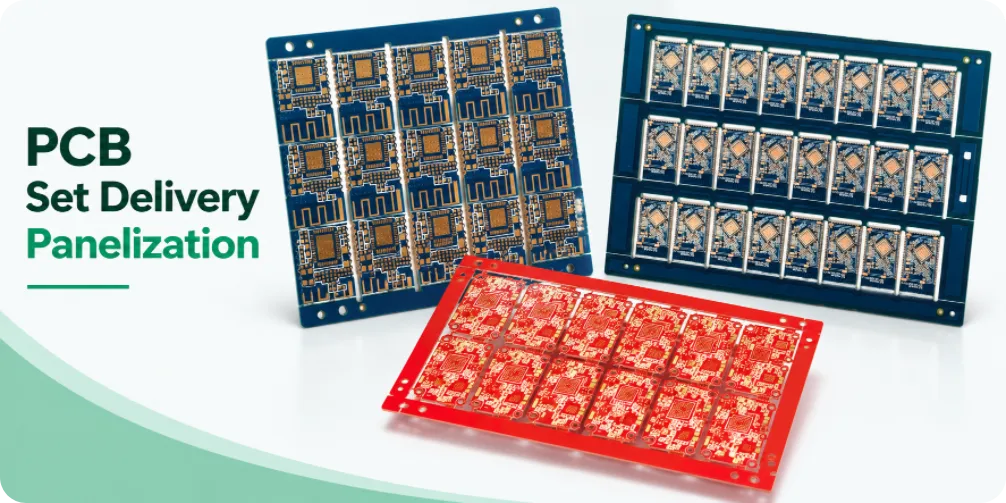
PCB SET Delivery and Panelization: Quantities and Acceptance
A purchase order for “500 SET” looks straightforward until...
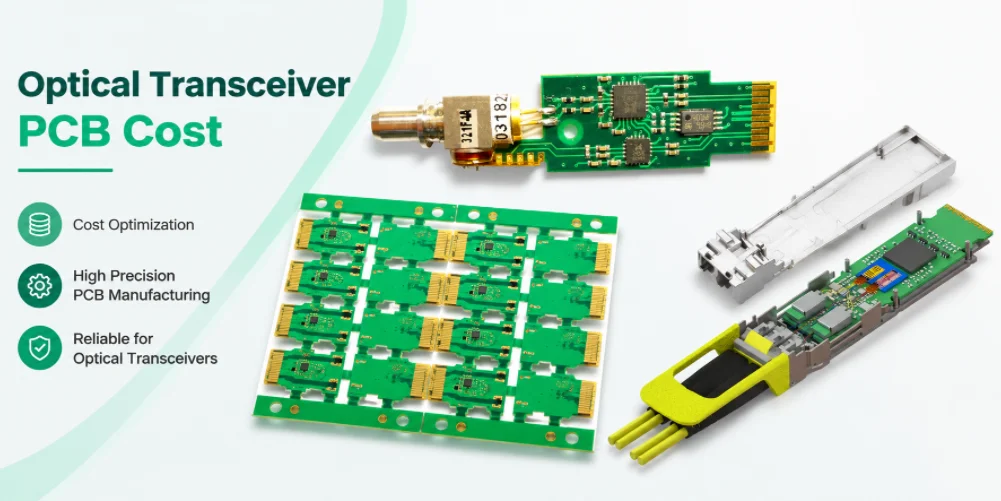
Optical Transceiver PCB Cost: Compare Equivalent Quotes
Two suppliers may quote a nominally identical six-layer...
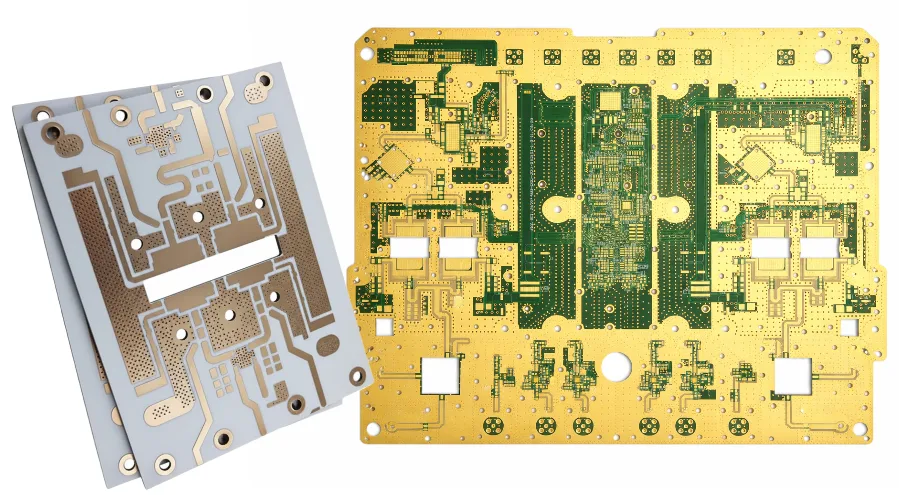
PCB Materials Database: Laminate Grades & Properties
How to get a quote for PCBs Let‘s run DFM/DFA analysis for...
How to get a quote for PCBs
Let us run DFM/DFA analysis for you and get back to you with a report.
You can upload your files securely through our website.
We require the following information in order to give you a quote:
-
- Gerber, ODB++, or .pcb, spec.
- BOM list if you require assembly
- Quantity
- Turn time
In addition to PCB manufacturing, we offer a comprehensive range of electronic services, including PCB design, PCBA (Printed Circuit Board Assembly), and turnkey solutions. Whether you need help with prototyping, design verification, component sourcing, or mass production, we provide end-to-end support to ensure your project’s success. For PCBA services, please provide your BOM (Bill of Materials) and any specific assembly instructions. We also offer DFM/DFA analysis to optimize your designs for manufacturability and assembly, ensuring a smooth production process.