
Nelco N4000-13 PCB Material and Manufacturing Guide | Highleap Electronics

Figure 1. Nelco N4000-13 PCB
Nelco N4000-13 PCB is a mid-loss, high-Tg laminate option used when a design needs better signal integrity and thermal reliability than standard FR-4, but does not require the cost of ultra-low-loss materials such as Megtron 6, Megtron 7 or RF-grade PTFE laminates.
Highleap Electronics provides Nelco N4000-13 PCB manufacturing and PCB assembly services for multilayer boards, high-speed digital PCBs, telecom backplanes, networking boards, server boards, storage systems and mixed-dielectric stackups. We manufacture printed circuit boards using customer-specified Nelco N4000-13 laminate according to approved drawings, stackup requirements, impedance notes, fabrication specifications and quality documentation requirements.
This guide explains how Nelco N4000-13 compares with standard FR-4, high-Tg FR-4, N4000-13 EP SI, Nelco N5000, N4350-13-RF, Megtron-class materials and specialty low-loss laminate RF laminates. It also explains how Highleap reviews N4000-13 PCB stackups, controls lamination and drilling, manages impedance, supports back-drilling and provides PCB assembly and inspection documentation.
Nelco N4000-13 Material Position and Key PCB Properties
Nelco N4000-13 is commonly selected for PCB designs that need better electrical performance than conventional FR-4 while still maintaining a practical manufacturing cost. It is often used in multilayer high-speed digital boards where controlled impedance, signal loss, lead-free assembly compatibility and long-term reliability all matter.
In many PCB projects, the material decision is not simply “FR-4 or low-loss.” There is a middle range where standard FR-4 may be too lossy, but premium low-loss laminates may be unnecessary. Nelco N4000-13 sits in this cost-performance range. It is a practical choice for N4000-13 PCB fabrication, high-speed digital PCB manufacturing, N4000-13 backplane PCB, N4000-13 telecom PCB and multilayer server board projects where the loss budget is real but not extreme.
Highleap does not manufacture Nelco laminate material. We manufacture PCBs using Nelco N4000-13 laminate specified by customers. If a drawing allows equivalent materials, Highleap will only review alternatives after customer approval.
Typical Material Characteristics Considered in PCB Manufacturing
| Property | Why It Matters | Manufacturing Impact |
|---|---|---|
| Dk | Determines impedance, trace width and dielectric spacing. | Stackup must be modeled with actual dielectric thickness and copper weight. |
| Df | Affects insertion loss in high-speed channels. | Long channels may require loss budget review before choosing N4000-13. |
| Tg | Supports lead-free reflow and thermal reliability. | Lamination and assembly profiles should match the material system. |
| CTE | Influences plated through-hole reliability during thermal cycling. | Via aspect ratio and plating thickness need to be reviewed carefully. |
| CAF Resistance | Important for dense multilayer boards and long-term electrical reliability. | Spacing, laminate quality, drilling, desmear and cleanliness all affect reliability. |
For PCB manufacturing, these properties are not only datasheet values. They affect real production decisions such as stackup approval, copper foil choice, drill planning, plating thickness, impedance tolerance, solder mask clearance, surface finish and assembly process.
Nelco N4000-13 Material Comparison: FR-4, EP SI, N5000, N4350-13-RF and Megtron
Material comparison is where Nelco N4000-13 becomes most useful. It should not be treated as a universal replacement for every PCB material. Its strength is the balance between cost, manufacturability and mid-loss electrical performance.
Standard FR-4 is economical and widely available, but its higher loss can become a problem in longer high-speed channels. Ultra-low-loss materials provide better electrical performance, but they raise material cost and may require tighter process control. Nelco N4000-13 is often selected when the project needs a stronger material system than FR-4 but does not justify the cost of premium low-loss laminate.
N4000-13 vs Standard FR-4
Standard FR-4 remains the lowest-cost choice for many digital boards, power boards and general industrial PCBs. However, when trace lengths increase and data rates move into higher-speed territory, standard FR-4 may create too much insertion loss or impedance variation. N4000-13 offers improved electrical behavior and higher thermal capability while still remaining closer to FR-4 manufacturing flow than many specialty laminates.
- Choose standard FR-4 when: the board is low-speed, cost-sensitive and does not have tight loss requirements.
- Choose N4000-13 when: the design needs better signal integrity, higher Tg, improved reliability or more stable multilayer performance.
- Manufacturing note: N4000-13 can usually be processed with familiar multilayer PCB manufacturing methods, but stackup and impedance review are still required.
N4000-13 vs High-Tg FR-4
High-Tg FR-4 improves thermal performance compared with standard FR-4, but its electrical loss may still be too high for some high-speed designs. N4000-13 is a better fit when both lead-free assembly compatibility and improved signal integrity are needed.
- High-Tg FR-4 advantage: lower cost and broad availability.
- N4000-13 advantage: better fit for mid-loss high-speed PCB stackups and backplane-type designs.
- Review point: if the design already needs controlled impedance and longer channels, N4000-13 may reduce risk compared with high-Tg FR-4.
N4000-13 vs N4000-13 EP SI
N4000-13 EP SI is generally considered a more signal-integrity-oriented option within the N4000-13 family. It may be selected when tighter electrical consistency or improved high-speed performance is required. Standard N4000-13 remains useful when the design does not require the additional SI margin or when cost and material availability are more important.
- N4000-13: practical mid-loss material for cost-performance multilayer PCB manufacturing.
- N4000-13 EP SI: more suitable when signal integrity requirements are tighter and the customer drawing calls for this exact variant.
- Highleap review: the material callout must be confirmed before quotation, because N4000-13 and N4000-13 EP SI should not be treated as automatically interchangeable.
N4000-13 vs Nelco N5000
Nelco N5000 targets different requirements than N4000-13. N5000 may be considered when the project has stronger demands for thermal performance, insulation reliability or harsh-environment durability. N4000-13 is more commonly positioned as a cost-effective high-speed digital laminate for multilayer PCB and backplane manufacturing.
- N4000-13 focus: mid-loss signal integrity, high-Tg behavior, multilayer digital PCB manufacturing.
- N5000 focus: higher-performance needs where thermal, mechanical or insulation requirements drive the material choice.
- Manufacturing note: Highleap quotes according to the exact material specified on the drawing and does not substitute N5000 for N4000-13 unless approved.
N4000-13 vs N4350-13-RF
N4350-13-RF is better suited to RF-oriented designs where RF performance, dielectric stability and high-frequency behavior are the main concerns. N4000-13 is more commonly used for high-speed digital boards, telecom PCBs, server boards, networking PCBs and backplanes.
- Choose N4000-13 when: the board is mainly high-speed digital and cost-performance is important.
- Choose N4350-13-RF when: the design is RF-focused and needs RF laminate behavior.
- Review point: RF and high-speed digital designs should not be evaluated only by material family name; stackup, frequency, loss target and copper type all matter.
N4000-13 vs Megtron 4, Megtron 6 and Megtron 7
Megtron materials are often used in higher-speed digital designs where lower loss is required. Compared with N4000-13, Megtron 4 may be close in the mid-loss category depending on construction, while Megtron 6 and Megtron 7 are usually chosen for more demanding high-speed channels. N4000-13 can be more economical when the loss budget does not require those premium materials.
| Material Option | Best Fit | Cost Level | Manufacturing Review Focus |
|---|---|---|---|
| Standard FR-4 | General digital PCB, low-speed boards, cost-sensitive products. | Low | Basic stackup, Tg, board thickness and assembly compatibility. |
| High-Tg FR-4 | Lead-free assembly and improved thermal margin. | Low to medium | Thermal reliability, plating and reflow compatibility. |
| Nelco N4000-13 | Mid-loss high-speed PCB, backplane, telecom, server and networking boards. | Medium | Impedance, Dk/Df, mixed dielectric stackup, drilling and plating. |
| N4000-13 EP SI | More signal-integrity-sensitive versions of N4000-13 designs. | Medium to high | Exact material callout, impedance model and controlled loss requirement. |
| N4350-13-RF | RF-oriented circuit boards and high-frequency RF applications. | Medium to high | RF stackup, copper foil, surface finish and RF-critical geometry. |
| Megtron 6 / Megtron 7 | Lower-loss high-speed designs with stricter insertion loss targets. | High | Low-loss stackup, HVLP copper, back-drilling, insertion loss coupons. |
The best material is not always the lowest-loss option. The best material is the one that meets the electrical, thermal, mechanical, assembly and cost requirements of the PCB. For many 10G, 25G, telecom, networking and storage designs, Nelco N4000-13 PCB manufacturing offers a practical balance.
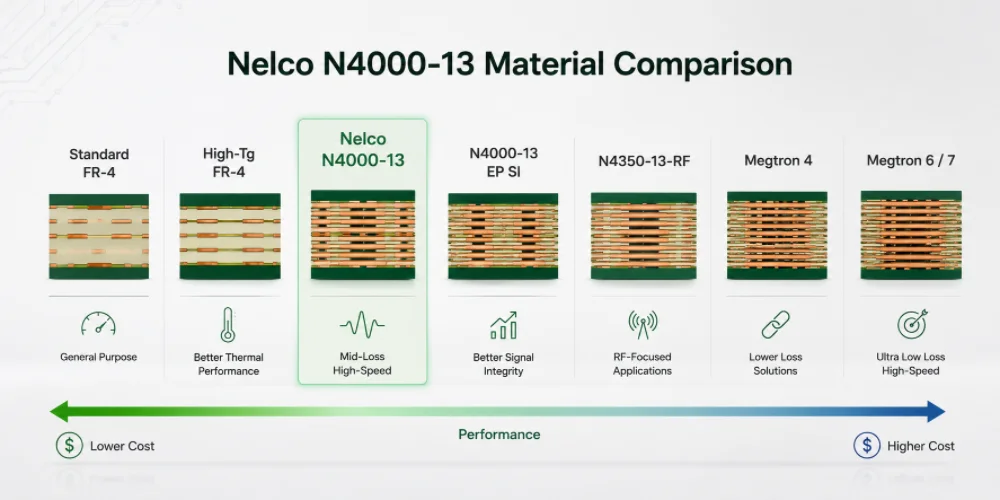
Figure 2. Nelco N4000-13 Material Comparison
Nelco N4000-13 PCB Stackup and Impedance Planning
Stackup review is the most important step before Nelco N4000-13 PCB fabrication. A correct N4000-13 PCB stackup must define material type, core thickness, prepreg thickness, copper weight, signal layer location, reference planes, surface finish, impedance requirements and final board thickness.
Highleap reviews each N4000-13 stackup before production to confirm that the construction is manufacturable and aligned with the customer’s electrical requirements. For controlled impedance PCB manufacturing, the actual dielectric spacing and copper thickness are more important than a generic material name.
Stackup Items Checked Before Production
| Stackup Item | Highleap Review | Why It Matters |
|---|---|---|
| Material Callout | Nelco N4000-13, N4000-13 EP SI or approved equivalent. | Prevents wrong material quotation or substitution. |
| Core and Prepreg | Thickness, resin content and dielectric build-up. | Affects impedance, board thickness and lamination behavior. |
| Signal Layers | Microstrip, stripline, differential pairs and reference planes. | Controls impedance and signal return path. |
| Copper Weight | Inner copper, outer copper and plated copper thickness. | Affects etching, impedance, plating and final thickness. |
| Via Structure | Through-hole, blind via, buried via, via-in-pad and back-drill. | Determines drilling sequence, plating control and microsection plan. |
| Impedance Requirement | Single-ended, differential, tolerance and coupon requirement. | Defines etching compensation and test reporting. |
Mixed-Dielectric N4000-13 PCB Stackups
Many N4000-13 PCB projects use mixed-dielectric stackups to balance cost and performance. For example, N4000-13 may be used on high-speed signal layers while high-Tg FR-4 is used for lower-speed sections or power distribution layers. This approach can reduce cost, but it must be reviewed carefully.
For mixed-dielectric PCB manufacturing, Highleap checks the actual dielectric material between each signal layer and its reference plane. A stackup model using only one material value may not match real production. The impedance model must reflect the real material construction, copper weight and finished dielectric thickness.
Controlled Impedance and Loss Review
N4000-13 controlled impedance PCB manufacturing requires close control of trace width, trace spacing, copper thickness and dielectric height. For many designs, ±10% impedance tolerance is standard, while ±5% may require tighter manufacturing control and test coupons.
- Single-ended impedance: used for selected clock, control and high-speed routes.
- Differential impedance: used for high-speed pairs and board-to-board interconnects.
- Impedance coupons: added to the production panel when required.
- Back-drilling: reviewed when via stubs may affect high-speed performance.
- Insertion loss coupons: available for production programs when specified.
For high-speed N4000-13 boards, loss budget should be evaluated using actual channel length, copper type, via count, connector structure and operating speed. If the channel margin is too tight, a lower-loss material may be a better choice.
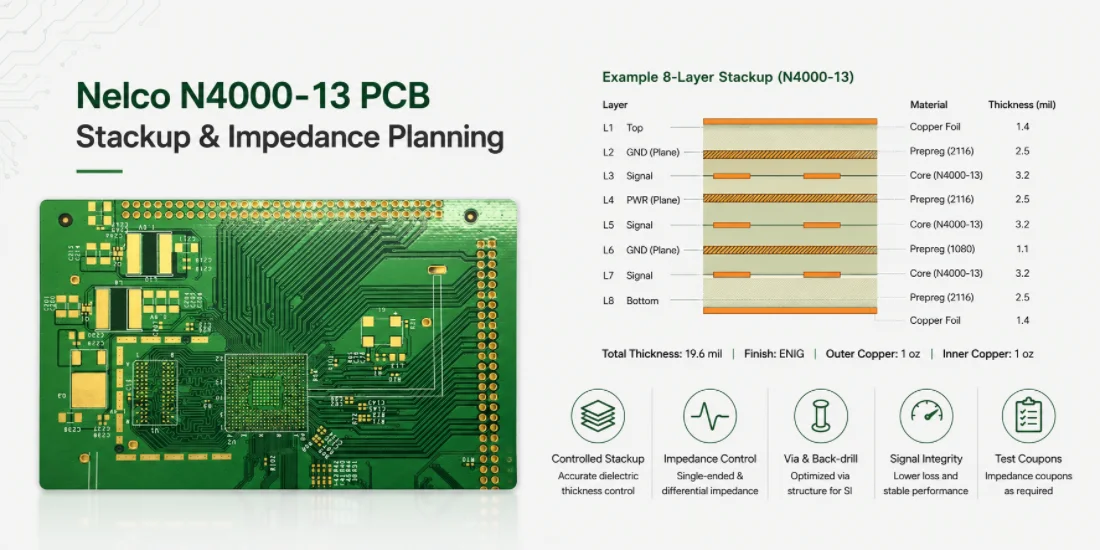
Figure 3. Nelco N4000-13 PCB Stackup and Impedance Planning
Nelco N4000-13 PCB Fabrication Process at Highleap
Nelco N4000-13 PCB fabrication is similar to high-Tg FR-4 manufacturing in many process steps, but it still requires proper engineering review and process control. Highleap focuses on material handling, lamination balance, drilling quality, desmear, plating, impedance, surface finish and final inspection.
Material Preparation and Lamination
Before lamination, Highleap verifies the released stackup, material lot, prepreg type, copper distribution and tooling plan. Lamination must produce stable dielectric thickness, good resin flow, strong interlayer bonding and acceptable bow and twist.
- Material verification: N4000-13 core and prepreg are checked against the approved stackup.
- Layup control: layer order, copper orientation and tooling holes are confirmed before pressing.
- Copper balance: inner copper distribution is reviewed to reduce lamination stress.
- Press cycle: lamination parameters are selected according to material system and board structure.
- Post-lamination inspection: thickness, registration, surface condition, bow and twist are checked before drilling.
Drilling and Hole-Wall Preparation
Drilling quality affects plated through-hole reliability and impedance consistency. Highleap reviews minimum hole size, board thickness, aspect ratio, copper weight and hole density before confirming the drilling plan.
After drilling, desmear and hole-wall preparation are required before electroless copper deposition. Proper desmear exposes inner-layer copper and improves plating adhesion. For high-layer-count N4000-13 multilayer PCBs, microsection inspection can verify hole-wall quality and smear removal.
Electroless Copper and Electrolytic Plating
Electroless copper creates the initial conductive layer in drilled holes. Electrolytic copper plating then builds the required copper thickness on the hole wall and board surface. For N4000-13 PCB fabrication, plating control is especially important in high-aspect-ratio holes, backplanes and multilayer boards.
- Electroless copper: provides initial conductive coverage on prepared hole walls.
- Electrolytic copper: builds copper thickness according to drawing and IPC class.
- Plating distribution: controlled for hole-wall coverage and surface copper consistency.
- Microsection: verifies plating thickness and internal connection quality.
- Electrical test: finished boards are tested for continuity and isolation.
Back-Drilling and Via Structures
N4000-13 PCB back-drilling may be required when via stubs affect high-speed signals. Back-drill depth, residual stub length, drill tolerance and inspection method should be clearly specified in the fabrication drawing.
Highleap supports through-hole vias, blind vias, buried vias, via-in-pad, filled vias and back-drilled vias according to project requirements. For complex builds, the via structure must be reviewed together with the stackup before production tooling.
Nelco N4000-13 PCB Assembly, Surface Finish and Quality Control
Highleap provides both Nelco N4000-13 bare PCB fabrication and PCB assembly. For turnkey N4000-13 PCBA projects, the bare PCB data and assembly files should be reviewed together to avoid mismatch between surface finish, pad design, via-in-pad, solder mask, component package and inspection method.
Surface Finish Options
| Surface Finish | Use in N4000-13 PCB Manufacturing | Review Point |
|---|---|---|
| ENIG | Common finish for multilayer PCB and SMT assembly. | Flatness, solderability, nickel/gold thickness and storage life. |
| ENEPIG | Used when soldering and wire bonding are both required. | Palladium/gold control, bonding requirement and cost impact. |
| Immersion Silver | Used when a flat conductive surface is required. | Storage control, handling and tarnish prevention. |
| OSP | Used when cost and short storage cycle are acceptable. | Assembly timing, handling control and shelf-life planning. |
PCB Assembly Support
For Nelco N4000-13 PCB assembly, Highleap supports SMT assembly, BGA assembly, component sourcing, stencil review, solder paste process review, reflow profile support, AOI inspection, X-ray inspection when required and functional test support according to customer procedures.
- BOM review: part number, quantity, package, polarity and sourcing status are checked before assembly.
- Pick and Place review: centroid data and component rotation are checked against the assembly drawing.
- BGA assembly: BGA pad design, via-in-pad, solder mask opening and X-ray inspection requirements are reviewed.
- Stencil review: stencil thickness and aperture design are reviewed according to component package.
- Reflow support: reflow profile is selected according to board structure, copper weight and surface finish.
- Inspection: AOI, visual inspection and X-ray inspection are used according to assembly complexity.
Quality Control and Documentation
Quality requirements for N4000-13 PCB manufacturing should be defined before production. Highleap reviews IPC class, customer specifications, impedance requirements, inspection records, traceability and documentation needs during the quotation and engineering stage.
- Certificate of Conformance
- Material certificate or material lot reference when required
- Electrical test report
- Controlled impedance test report
- Microsection report for plating and via inspection
- Back-drill microsection report when required
- Final visual inspection report
- Solderability report when specified
- Ionic cleanliness report when specified
- RoHS / REACH compliance declaration when applicable
- Assembly inspection report for PCBA projects
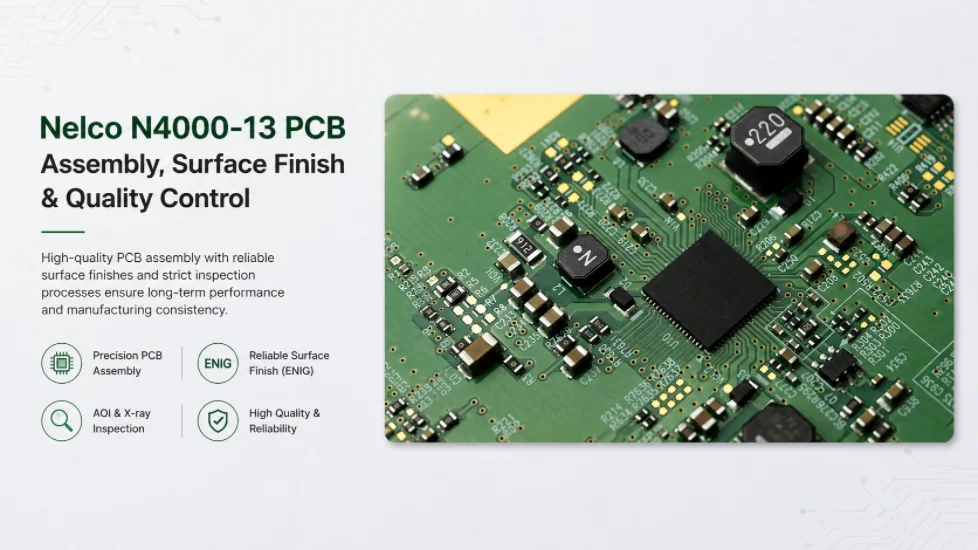
Figure 4. Nelco N4000-13 PCB Assembly, Surface Finish and Quality Control
Nelco N4000-13 PCB Quote and Engineering Support
Highleap Electronics supports Nelco N4000-13 PCB prototyping, small-batch production, volume manufacturing and turnkey PCB assembly. For most bare PCB quotations, Gerber and drill files are the best starting point. If PCB assembly is required, BOM and Pick and Place files help us review component sourcing, SMT assembly and inspection requirements.
If your project has controlled impedance, special stackup, back-drilling, blind or buried vias, via-in-pad, mixed-dielectric construction or special quality documentation requirements, please include the related notes when available.
If you are not sure which files or specifications to provide, contact Highleap directly. We provide one-on-one engineering support, and our engineers can communicate with you to review the design stage, confirm the required files and assist with the quotation process.
Need a Nelco N4000-13 PCB quote? Send your Gerber files first, or contact our engineering team for support with PCB fabrication, PCB assembly and turnkey PCBA quotation.

Recommended Posts
TMM4 Filter PCB Manufacturing
TMM4 filter PCB manufacturing is controlled by the...
TMM3 PCB Manufacturing for RF Modules
TMM3 PCB manufacturing is most useful where the RF module...
TMM6 PCB Fabrication
TMM6 fabrication is the process-control page for a mid-Dk...
TMM10 PCB Manufacturing for Compact RF Designs
Table of contentsHow TMM10 Shrinks RF StructuresTMM10 vs...
How to get a quote for PCBs
Let‘s run DFM/DFA analysis for you and get back to you with a report. You can upload your files securely through our website. We require the following information in order to give you a quote:
-
- Gerber, ODB++, or .pcb, spec.
- BOM list if you require assembly
- Quantity
- Turn time
For PCBA services, please provide your BOM (Bill of Materials) and any specific assembly instructions. We also offer DFM/DFA analysis to optimize your designs for manufacturability and assembly, ensuring a smooth production process.