
Isola Astra MT77 PCB Manufacturing

Figure 1. Isola Astra MT77 PCB Manufacturing
Table of Contents
- What Isola Astra MT77 Is — and Why It Needs a Capable Manufacturer
- Engineering Review Before Production — Where Most RF Board Problems Are Prevented
- Manufacturing Process Control for Astra MT77 PCBs
- Hybrid Stackups — MT77 with FR-4, specialty low-loss laminate, or Megtron in the Same Board
- One Factory for Every Board in Your Product — Not Just the RF Board
- IP Protection, NDA and Confidentiality Throughout Manufacturing
- Prototype, Volume Production, and Turnkey PCBA Assembly
- Inspection, Test, Documentation, and After-Sales Support
- How to Start an Isola Astra MT77 PCB Manufacturing Project with Highleap
1. What Isola Astra MT77 Is — and Why It Needs a Capable Manufacturer
Isola Astra MT77 is a thermoset, low-loss laminate and prepreg system designed for RF, microwave, and mmWave printed circuit boards. Its core advantage is that it delivers low-loss electrical performance at frequencies up to 77 GHz and above, while remaining compatible with standard FR-4 manufacturing equipment and process chemistry. Unlike PTFE-based RF laminates that require sodium-etch surface activation or specialized lamination atmospheres, MT77 can be drilled, desmeared, and plated using the same chemical lines that process FR-4 and high-Tg epoxy laminates.
Key material properties
- Dielectric constant (Dk): 3.0 at 10 GHz — stable across frequency up to 80 GHz, with approximately 0.04 dispersion. Lower than FR-4 (4.0–4.2) and lower than a specialty low-loss laminate (3.48), which means wider 50-ohm traces for the same dielectric thickness.
- Dissipation factor (Df): 0.0017 at 10 GHz — competitive with PTFE laminates like Taconic FastRise28, and significantly lower than a specialty low-loss laminate (0.0037). This translates to lower insertion loss per inch at mmWave frequencies.
- Glass transition temperature (Tg): above 200°C — safely above lead-free reflow peak (245–260°C), which means the resin stays rigid during assembly.
- FR-4 process compatibility: no sodium-etch activation required for plating; standard permanganate or plasma desmear works; standard lamination press cycle with no special atmosphere.
- Thermoset chemistry: crosslinks during lamination like epoxy; does not require the PTFE-specific handling discipline that inflates manufacturing cost on specialty low-loss laminate or Taconic materials.
Why the manufacturer matters as much as the material
MT77 is FR-4-compatible in process chemistry, but it is not a standard FR-4 board. The electrical performance depends on dielectric thickness accuracy, copper foil profile, etching tolerance on RF geometry, surface finish selection, and solder mask clearance around antenna patches and transmission lines. A factory that processes MT77 with the same attention it gives commodity FR-4 will ship boards that measure differently from what the designer simulated. Highleap treats every Isola Astra MT77 PCB manufacturing job as an RF-grade project with dedicated engineering review, regardless of layer count or volume.
For broader context on the Isola product line, see our Isola Astra MT77 material page. For comparisons with other high-frequency substrates, see high-frequency PCB materials.
2. Engineering Review Before Production — Where Most RF Board Problems Are Prevented
The single most common failure mode on RF PCBs is not a manufacturing defect — it is an incompletely specified design that the factory builds exactly as drawn, only to have the customer discover at test that the board does not meet RF performance targets. Highleap prevents this by running a structured engineering review before any Astra MT77 PCB enters production.
What the engineering review covers
- Stackup verification: dielectric thickness per layer, copper weight, prepreg selection, finished board thickness. We model the actual stackup in our impedance solver and compare the result against the customer’s impedance requirement before accepting the job.
- Copper foil type: standard electrodeposited copper, reverse-treated copper, or HVLP (hyper-very-low-profile) copper. If the customer’s simulation assumed HVLP copper but the fabrication drawing does not call it out, we flag this before production — not after the board ships with higher-than-expected insertion loss.
- RF geometry audit: microstrip lines, stripline pairs, grounded coplanar waveguides, antenna patches, coupled-line filters, RF launches, and via fences are reviewed for manufacturability. We check trace width tolerance against our etching capability and flag any geometry that is at process limits.
- Solder mask clearance: mask over RF transmission lines adds dielectric loading and shifts impedance. We confirm with the customer whether RF traces should be mask-opened, and if so, what clearance to the mask edge is required.
- Via structure review: plated through-hole, blind via, buried via, via-in-pad (VIPPO), and via fence structures are checked for drill aspect ratio, registration tolerance, and plating capability.
- Surface finish compatibility: immersion silver gives lower insertion loss at mmWave but has storage-life and tarnish sensitivities. ENIG provides long shelf life but the nickel layer adds skin-effect loss above 10 GHz. We discuss the tradeoff with the customer rather than defaulting to the cheapest option.
When the engineering review catches real problems
On a recent Astra MT77 automotive radar project, the customer’s fabrication drawing specified ENIG surface finish and standard-profile copper. Our engineering review flagged both: at 77 GHz, the nickel layer in ENIG adds approximately 0.3 dB/inch of insertion loss versus immersion silver, and standard copper profile adds another 0.2 dB/inch versus HVLP copper. For a 2-inch antenna feed network, that combination would cost nearly 1 dB — enough to measurably reduce radar detection range. The customer switched to HVLP copper with immersion silver, and the prototype met insertion loss targets on the first build.
This kind of pre-production engineering review is included with every Isola Astra MT77 PCB manufacturing quote at Highleap. It is not an upsell — it is how we prevent costly re-spins.
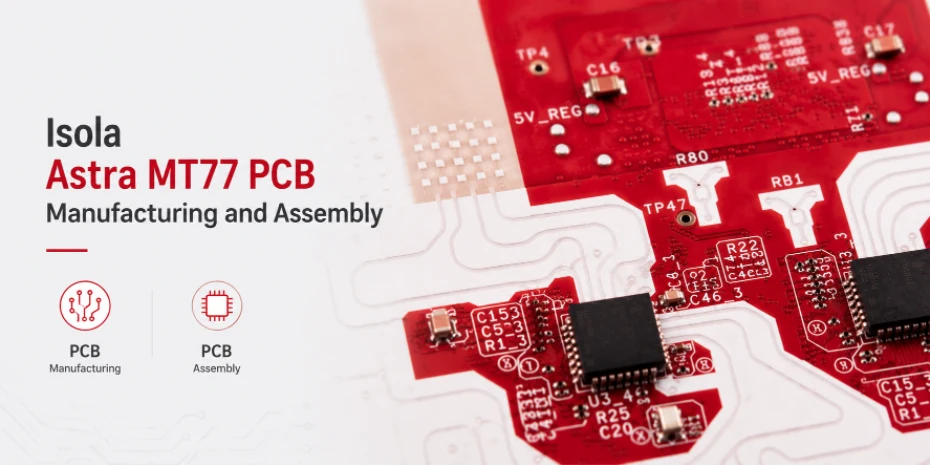
Figure 2. Isola Astra MT77 PCB Manufacturing and Assembly
3. Manufacturing Process Control for Astra MT77 PCBs
Once the engineering review is complete and the design is released for production, the manufacturing process for Astra MT77 follows a controlled flow that preserves the electrical performance the designer intended.
Lamination
- Press cycle: standard thermoset cure profile — peak temperature approximately 200°C, 60–90 minutes at cure plateau, 300–350 psi. No special atmosphere required.
- Dielectric thickness control: prepreg resin content and flow characteristics are verified per material lot. Finished dielectric thickness is held within the tolerance that the impedance model requires — typically ±10% or tighter by agreement.
- Copper balance: panels with unbalanced copper distribution warp during lamination. We review copper fill distribution and add balancing copper in unused panel areas where needed.
- Hybrid lamination: when the stackup combines MT77 with FR-4 or other materials, the press cycle is optimized for the most demanding material in the stack. Bond ply selection is engineered for the thermal mismatch at the material interface.
Drilling
- Mechanical drilling: standard parameters comparable to high-Tg FR-4. Feed rate 50–70 in/min, spindle speed 100,000–140,000 RPM for small holes. Drill bit life approximately 2,500–3,500 hits per bit — similar to high-Tg epoxy, far better than PTFE materials.
- Laser drilling: for HDI and VIPPO structures on compact Astra MT77 RF modules. Laser via diameter, taper, and capture pad size reviewed during engineering.
- Hole-wall quality: Ra target below 15 μm; verified by microsection on each production lot.
Desmear and plating
- Desmear: standard permanganate chemistry or plasma desmear. No sodium-etch activation required — this is the key manufacturing advantage MT77 holds over PTFE-based laminates.
- Electroless copper: 0.5–1.5 μm uniform coverage; same chemistry as FR-4 production lines.
- Electrolytic copper: pulse plating to 25–30 μm hole-wall thickness for IPC Class 3, or to customer specification.
- VIPPO: via-in-pad plated over — via filling with conductive or non-conductive paste, planarization, and cap plating for assembly-ready pads on BGA or module-style layouts.
Etching and RF trace geometry
- Trace width tolerance: ±15 μm standard on outer layers; ±20 μm on inner layers. For critical RF structures (antenna patches, coupled-line filters), we can hold ±10 μm with additional process attention.
- Etch factor management: copper profile after etching affects impedance. We monitor etch factor on each panel and adjust chemistry to hold target.
- Antenna pattern fidelity: for phased-array antenna boards, patch geometry accuracy drives beam-pointing precision. We use optical inspection on antenna panels to verify copper geometry before plating.
For broader process context, see our pages on impedance control PCB and PCB surface finish.
4. Hybrid Stackups — MT77 with FR-4, specialty low-loss laminate, or Megtron in the Same Board
Most production Astra MT77 PCBs are not built as all-MT77 stacks. The more common — and more cost-effective — approach is a hybrid stackup where MT77 is used only on the RF-critical layers, and a less expensive material fills the remaining layers.
Common hybrid configurations
- MT77 cap + FR-4 sub-stack: the most common architecture. Antenna patches and RF feed network on the top 2 layers (MT77); ground, DC bias, control, and digital routing on lower layers (standard FR-4 or high-Tg FR-4). Cost savings of 25–40% versus all-MT77 construction.
- MT77 + Isola FR408HR: when the design has both mmWave RF and high-speed digital signaling. Single-vendor material supply from Isola simplifies qualification.
- MT77 + a specialty low-loss laminate or a specialty low-loss laminate: uncommon but occasionally seen when a legacy design transitions from a specialty low-loss laminate material to MT77 on the antenna layer while preserving specialty low-loss laminate on feed layers.
- MT77 + Panasonic Megtron 6R: for designs that combine mmWave radar with high-speed digital processing (56G+ PAM4) on the same board.
- All-MT77 build: used when the entire board operates at mmWave or when thermal symmetry requirements rule out mixed-material construction. Simplest to manufacture; highest material cost.
Engineering considerations for hybrid MT77 builds
- Impedance modeling: field-solver simulation of the actual hybrid stack is mandatory. Nominal single-material models do not match measured results on hybrid boards. We model every hybrid stackup during the quote stage.
- CTE matching: MT77 and standard FR-4 have compatible CTE values, making hybrid construction straightforward. Hybrid with specialty low-loss laminate or PTFE materials requires more careful CTE analysis.
- Bond ply selection: FR-4 prepreg at the MT77/FR-4 interface works well; we select high-Tg prepreg with controlled resin flow to avoid bleed into RF areas.
- Press cycle optimization: single press cycle covers both MT77 and FR-4 layers; cycle is set to the MT77 thermoset cure profile, which is compatible with FR-4 crosslinking.
For related stackup discussion, see our PCB stackup guide and multilayer PCB manufacturing pages.
5. One Factory for Every Board in Your Product — Not Just the RF Board
A typical electronic product that uses an Isola Astra MT77 antenna board also includes several other PCBs that are not built on MT77. An automotive radar module, for example, may contain an MT77 antenna board, a standard FR-4 digital processing board, a heavy-copper power supply board, and a flex-rigid interconnect — all within the same housing. A 5G small cell may contain an MT77 front-end board plus a high-speed digital backplane on Megtron 6R plus a power distribution board on thick copper FR-4.
Sourcing each board type from a different supplier creates problems that are easy to underestimate: misaligned delivery schedules, inconsistent quality documentation, different engineering contacts for each board, duplicated NDA management, and no single point of accountability when a system-level problem spans multiple boards.
What Highleap manufactures beyond MT77
- Standard FR-4 and high-Tg FR-4 PCBs: the digital, control, and power boards that accompany the RF board in most products. From 2-layer to 40+ layers, including HDI, blind/buried vias, and back-drilling.
- specialty low-loss laminate PCBs: a specialty low-loss laminate, a specialty low-loss laminate, a specialty low-loss laminate, a PTFE-based low-loss laminate, a thermally conductive ceramic-filled PTFE laminate — for designs that use specialty low-loss laminate on the RF layers. See specialty low-loss laminate PCB manufacturing.
- Taconic PCBs: FastRise28, RF-35, TLY — for mmWave designs using Taconic substrates. See Taconic PCB materials.
- Panasonic Megtron PCBs: Megtron 4, Megtron 6, Megtron 6R, Megtron 7 — for high-speed digital boards in the same product. See Megtron 6 material.
- Heavy copper PCBs: 3 oz to 12 oz copper for power supply, motor drive, and power distribution boards. See heavy copper PCB design guide.
- Flex and rigid-flex PCBs: polyimide flex layers with rigid sections for space-constrained interconnects inside radar modules and sensor housings.
- Metal-core and thermal-management PCBs: aluminum-core or copper-core boards for LED drivers, power electronics, and thermal-limited designs.
Why single-source manufacturing matters for system-level products
- Synchronized delivery: all boards for the same product ship together. No more waiting for the RF board while the digital board sits in inventory aging.
- Consistent documentation: one Certificate of Conformance format, one impedance report format, one microsection report format across all board types.
- Single engineering contact: one project engineer manages the entire set of boards. Design changes that affect board-to-board interfaces are caught before production.
- Consolidated NDA: one confidentiality agreement covers all boards rather than managing separate NDAs with multiple vendors.
- Single accountability: if a system-level test failure involves the interface between two boards, Highleap owns both boards and investigates without finger-pointing between suppliers.
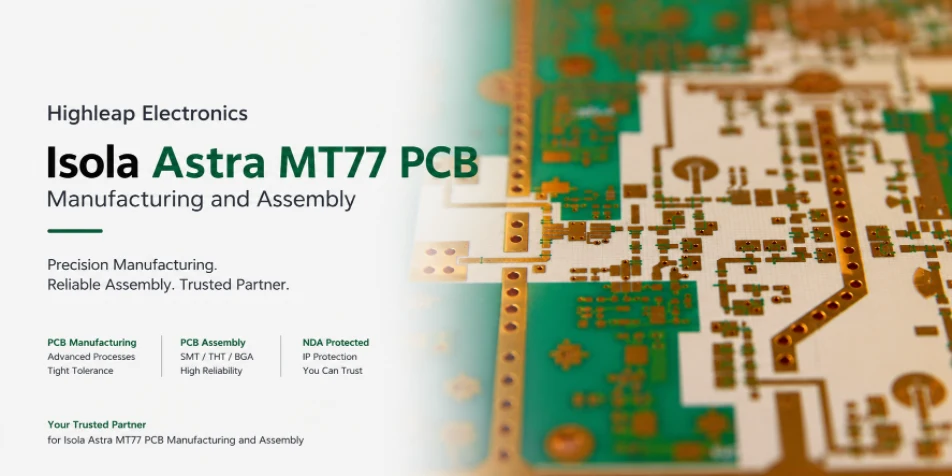
Figure 3. Isola Astra MT77 PCB Manufacturing
6. IP Protection, NDA and Confidentiality Throughout Manufacturing
Companies developing automotive radar, 5G infrastructure, defense electronics, or proprietary sensor modules are not just buying PCBs — they are entrusting their competitive advantage to the manufacturer. Design files contain antenna geometry, RF circuit topology, impedance targets, stackup architecture, and component placement that represent years of engineering investment. Losing control of this data to a competitor would be far more damaging than any single manufacturing defect.
Highleap’s IP protection measures
- NDA execution before file transfer: we sign a mutual non-disclosure agreement before receiving any customer design files. The NDA covers design data, specifications, pricing, volume information, and any technical correspondence.
- Access control: customer design files are stored on access-controlled servers. Only the assigned project engineer and production team members with direct manufacturing responsibility can view the files. No browsing by other teams or departments.
- No file sharing with third parties: Highleap does not subcontract critical manufacturing processes (drilling, plating, etching, lamination) to outside facilities. Design files never leave our factory network for production purposes.
- Employee confidentiality agreements: all engineering and production staff sign confidentiality agreements as a condition of employment. Training on IP handling is part of new-employee onboarding.
- Physical security: visitor access to the production floor is escorted and logged. Customer-specific production areas are designated when required.
- Data retention and destruction: after project completion and the agreed retention period, customer data is securely deleted per customer instruction. We do not retain design files beyond the agreed period without written authorization.
- Audit rights: customers can audit our IP protection practices as part of supplier qualification or ongoing surveillance.
Why this matters for Astra MT77 projects specifically
RF and mmWave board designs are among the most IP-sensitive in electronics. The antenna pattern geometry, feed network topology, and impedance structure are the design — not just supporting infrastructure. Customers developing proprietary radar waveforms, 5G beamforming algorithms, or satellite communication architectures need assurance that the PCB manufacturer handling their MT77 antenna board treats the design data with the same seriousness the customer does. Highleap’s IP protection is not a policy document filed in a drawer — it is an operational practice enforced daily.
7. Prototype, Volume Production, and Turnkey PCBA Assembly
Highleap supports the full production lifecycle for Isola Astra MT77 PCBs — from single-digit prototypes through volume production and turnkey assembled boards.
Prototype service
- Lead time: 7–10 working days for 4-layer hybrid; 10–14 days for 6+ layer or HDI builds. Faster evaluation available for urgent projects depending on material availability and stackup complexity.
- Quantity: minimum 5 pieces for prototype; flexible based on customer test and validation requirements.
- Engineering continuity: the same project engineer who reviewed the design files manages the prototype build. No handoff to a separate prototype team.
- Iteration support: design revisions between prototype rounds are handled with preserved tooling and incremental re-review rather than full re-quote.
Volume production
- Lead time: 18–22 working days standard; 14–18 days with scheduled blanket release.
- Production models: discrete purchase orders, blanket PO with scheduled releases, or consigned-material builds.
- Yield management: first-article data used to set production process parameters. Impedance and insertion loss coupons trended lot-over-lot. Statistical process control on key parameters.
- Automotive programs: IATF 16949 aligned production flow; PPAP submission support; AEC-Q200 reliability testing coordination. See automotive PCB manufacturing.
Turnkey PCBA assembly
For customers who need assembled boards rather than bare PCBs, Highleap provides turnkey PCBA service on MT77 boards:
- SMT assembly: fine-pitch component placement, BGA, QFN, 0201 and 01005 passives. Solder paste inspection (SPI) before reflow; AOI after reflow.
- RF component handling: connectors, RF launches, shield cans, and matching networks require specific placement accuracy and soldering profiles. We review RF component areas separately from standard SMT.
- BGA and VIPPO assembly: pad flatness verified pre-assembly; X-ray inspection post-assembly for hidden solder joints.
- Component sourcing: Highleap can source components from authorized distributors or work with customer-consigned material.
- Mixed-technology assembly: SMT plus through-hole (selective solder or wave solder) for boards that combine surface-mount RF components with through-hole connectors.
- Reflow profile: MT77 boards with immersion silver finish require profile attention — the high thermal conductivity of copper coin or heavy copper structures draws heat away from solder joints and may require extended soak.
For related service information, see our pages on SMT assembly and PCB assembly service.
8. Inspection, Test, Documentation, and After-Sales Support
Quality documentation on Astra MT77 PCBs goes beyond standard FR-4 reporting. RF boards have additional verification requirements, and customers in automotive, aerospace, and telecom often have specific documentation expectations.
Inspection and test capabilities
- Electrical test: 100% continuity and isolation test on every board.
- Controlled impedance test: TDR measurement on panel coupons; report includes target value, measured value, and deviation. Typical tolerance ±10% standard; ±5% available for RF traces.
- Insertion loss measurement: VNA-based measurement on representative line structures for production programs. Data trended lot-over-lot to detect process drift before it affects product.
- Cross-section microsection: hole-wall plating thickness, annular ring, copper-to-laminate adhesion, void check. Three microsections per panel per production lot.
- AOI (automated optical inspection): copper geometry inspection on all layers before and after etching.
- X-ray inspection: for PCBA orders — BGA solder joint verification, via-in-pad fill inspection, hidden defect detection.
- Solderability test: per J-STD-003 when required.
- Ionic cleanliness: per IPC-TM-650 2.3.25 when required.
Documentation package
- Standard package: Certificate of Conformance, electrical test report, impedance coupon report (when controlled impedance is specified).
- Extended package: adds microsection report, material lot reference, insertion loss data, solderability report, ionic cleanliness report.
- Automotive package: adds PPAP elements, process FMEA reference, control plan reference, lot traceability documentation.
- PCBA package: adds assembly inspection report, BOM verification report, X-ray report (for BGA), functional test data (when applicable).
After-sales support
- Technical review: if an issue is discovered after delivery — whether during customer assembly, test, or field operation — Highleap supports technical investigation using archived production records, inspection data, and retained coupons.
- Root cause analysis: for confirmed manufacturing-related issues, we conduct 8D root cause analysis with corrective and preventive action.
- Re-work or re-make: for manufacturing-related quality issues confirmed through investigation, Highleap supports corrective handling per the agreed quality terms — including re-work, re-make, or credit.
- Engineering debrief: after the first prototype delivery, we offer a debrief call to review any issues encountered during customer assembly and test, and to incorporate lessons learned into the production process.
9. How to Start an Isola Astra MT77 PCB Manufacturing Project with Highleap
Starting an Astra MT77 project with Highleap is straightforward, whether you have a complete set of production-ready files or are still in the design stage with questions about stackup and material selection.
If your design files are ready
Send Gerber files, drill files, stackup notes, and fabrication drawing through our online quote portal. Include quantity, desired surface finish, impedance requirements, and any special notes (HVLP copper, mask-open RF areas, insertion loss coupon requirement, etc.). Our engineering team reviews the files and returns a quote with DFM feedback within 24 hours for standard configurations, or 48 hours for complex hybrid or HDI builds.
If you are still in the design stage
If you are evaluating whether Isola Astra MT77 is the right material for your project — or deciding between MT77 and alternatives like a specialty low-loss laminate, Taconic FastRise28, or a PTFE laminate — our application engineering team can help. Send us your frequency range, loss budget, layer count estimate, and production volume expectation, and we will provide a material selection recommendation with a preliminary stackup proposal. No charge for this initial consultation.
If you need turnkey PCBA
For assembled boards, include BOM and Pick-and-Place centroid files with the PCB data. If component sourcing is part of the scope, note whether you want Highleap to source from authorized distributors or whether you will consign components. Assembly drawing, testing instructions, and packaging requirements are helpful when available.
If you need multiple board types for the same product
Send all board designs together — the MT77 antenna board, the FR-4 digital board, the heavy copper power board, and any flex or rigid-flex interconnects. We quote and manage them as a project set with synchronized delivery, single engineering contact, and one NDA covering the entire product.
What to expect after the quote
Once the quote is accepted and an NDA is in place, your assigned project engineer walks you through the engineering review, confirms any open questions, and releases the design for production. Prototype boards ship with full documentation, and a post-delivery debrief ensures any lessons learned are captured before volume production begins.
For related reading, see our pages on high-frequency PCB, mmWave PCB, automotive radar PCB, 5G PCB, millimeter-wave radar PCB, and high-frequency PCB materials.

Recommended Posts
TMM4 Filter PCB Manufacturing
TMM4 filter PCB manufacturing is controlled by the...
TMM3 PCB Manufacturing for RF Modules
TMM3 PCB manufacturing is most useful where the RF module...
TMM6 PCB Fabrication
TMM6 fabrication is the process-control page for a mid-Dk...
TMM10 PCB Manufacturing for Compact RF Designs
Table of contentsHow TMM10 Shrinks RF StructuresTMM10 vs...
How to get a quote for PCBs
Let‘s run DFM/DFA analysis for you and get back to you with a report. You can upload your files securely through our website. We require the following information in order to give you a quote:
-
- Gerber, ODB++, or .pcb, spec.
- BOM list if you require assembly
- Quantity
- Turn time
For PCBA services, please provide your BOM (Bill of Materials) and any specific assembly instructions. We also offer DFM/DFA analysis to optimize your designs for manufacturability and assembly, ensuring a smooth production process.