
AC-DC Power Supply PCB Manufacturer Guide

Figure 1. AC-DC power supply PCB manufacturer
An AC-DC power supply PCB manufacturer is a fabrication-and-assembly partner equipped specifically for mains-powered boards — meaning heavy-copper fabrication, high-Tg and metal-core material options, isolation-aware DFM, and Hipot plus functional testing on the line. Not every PCB shop is one. Plenty of capable manufacturers build excellent logic and RF boards but have never tuned their process for the heavy copper, tight safety spacing and high-voltage testing that power supplies demand. Choosing the right manufacturer is mostly about confirming the maker treats your board as a power product, not a generic order. Highleap Electronics builds AC-DC power supply PCBs as a core capability, with the copper weights, material range, spacing review and electrical testing power products require.
Evaluating manufacturers for a power-supply board? Send your specs to Highleap and see the DFM feedback for yourself before you commit. Get a manufacturing quote.
What Separates a Power-Supply PCB Maker From a Generic Shop
The gap between a generic PCB house and a real power-supply manufacturer shows up in the details that never appear in a marketing line. A generic shop will accept your Gerbers, fabricate exactly what is drawn and ship it — which sounds fine until the board comes back with a creepage gap that is 0.4mm short of the safety standard, or a 5A output trace etched in 1oz copper that runs 30°C too hot. A power-focused manufacturer catches those issues in review because it has built thousands of mains boards and knows where they fail.
That experience compounds across the whole job. A power-aware maker stocks and reliably etches 2–6oz copper without the over-etch and spacing loss that thin-copper-tuned lines produce. It knows how to plate and drill for the larger through-holes that magnetics and bulk capacitors need. It expects to Hipot-test the isolation barrier rather than treating high-voltage testing as a special request. None of this is exotic, but it is the difference between a board that passes your safety lab on the first article and one that sends you back to layout.
Generic Shop vs Power-Focused Manufacturer
| Area | Generic PCB Shop | Power-Focused Manufacturer |
|---|---|---|
| DFM Review | Checks manufacturability of the artwork | Also flags creepage, clearance and thermal-copper risk on mains boards |
| Copper Capability | Optimized around 1oz | Routinely etches 2–6oz+ with controlled spacing loss |
| Material Options | Standard FR-4 | High-Tg FR-4, metal-core and hybrid stackups in stock |
| Assembly | SMT-centric | Mixed THT magnetics/caps with fine-pitch SMT |
| Testing | Electrical net test | Adds Hipot and functional power testing |
So the first filter when shortlisting a manufacturer is simple: does the shop describe power, heavy copper and isolation as routine work, or as something it can “try”? The answer tells you whether your board will be the thousandth power supply they have built or the first.
The Capability Checklist That Actually Matters
Once you have confirmed a manufacturer understands power, the next step is matching their concrete capabilities to your board. This is where a precise spec saves you money, because asking for capability you do not need inflates cost, while discovering a missing capability after kickoff blows your schedule. The list that matters for AC-DC boards is short but specific, and a good manufacturer will state each limit clearly rather than answering “yes” to everything.
The capabilities below are the ones that actually decide whether your power supply can be built as designed. Walk your board against them before you place an order, and the quote you get back will be one you can trust rather than one that gets “revised” after the first article.
Capabilities to Confirm for an AC-DC Board
| Capability | What to Confirm | Why It Decides the Board |
|---|---|---|
| Heavy Copper | Max copper weight and min spacing at that weight | Determines current capacity and whether tight traces survive etching. |
| Layer Count | Single-sided through multilayer with planes | Higher-power topologies need plane layers for EMI and thermal. |
| Material Range | High-Tg, metal-core, hybrid availability | Thermal life and reliability depend on the right laminate. |
| Routed Slots | Internal slotting for isolation barriers | Needed to extend creepage across the safety gap. |
| Mixed Assembly | THT + SMT in one line | Power boards combine large THT parts with fine-pitch ICs. |
| Power Testing | Hipot and functional test in-house | Proves the isolation barrier and the assembled supply work. |
A manufacturer that can speak precisely to every row above — with numbers, not adjectives — is one that has built your kind of board before. That precision is itself the strongest signal you will get during evaluation.
Certifications and Testing a Power PCB Maker Should Hold
Certifications do not make a board good, but they tell you the manufacturer runs a controlled, repeatable process — which is exactly what you need when the board carries mains voltage. For power products, the baseline is a quality system such as ISO 9001, material and process compliance such as UL-recognized laminate and RoHS, and ideally industry-specific systems where your market requires them: IATF 16949 for automotive, ISO 13485 for medical. These do not certify your finished power supply, but they certify that the boards going into it were made under control.
Equally important is what the manufacturer tests. A power-supply maker should treat electrical net testing as a given, add Hipot testing across the isolation barrier as standard for mains boards, and offer functional testing of the assembled supply where you need it. Ask not just whether they hold certifications, but what they actually verify on every board — the testing is where reliability is proven or quietly skipped.
Certification and Test Reference
| Item | What It Covers | Why It Matters for Power Boards |
|---|---|---|
| ISO 9001 | General quality management system | Baseline that the process is documented and repeatable. |
| UL Recognition | Recognized laminate and flammability rating | Required for many mains-powered end products. |
| IATF 16949 | Automotive quality system | Needed for automotive AC-DC and charging boards. |
| ISO 13485 | Medical device quality system | Relevant for medical power supplies with reinforced isolation. |
| Hipot Test | High-voltage withstand across isolation | Direct proof the safety barrier holds. |
Not every project needs every certification — a consumer adapter does not require ISO 13485, and demanding it would only add cost. The point is to match the manufacturer’s certification scope to your market, then confirm the on-line testing covers the high-voltage reality of your board.
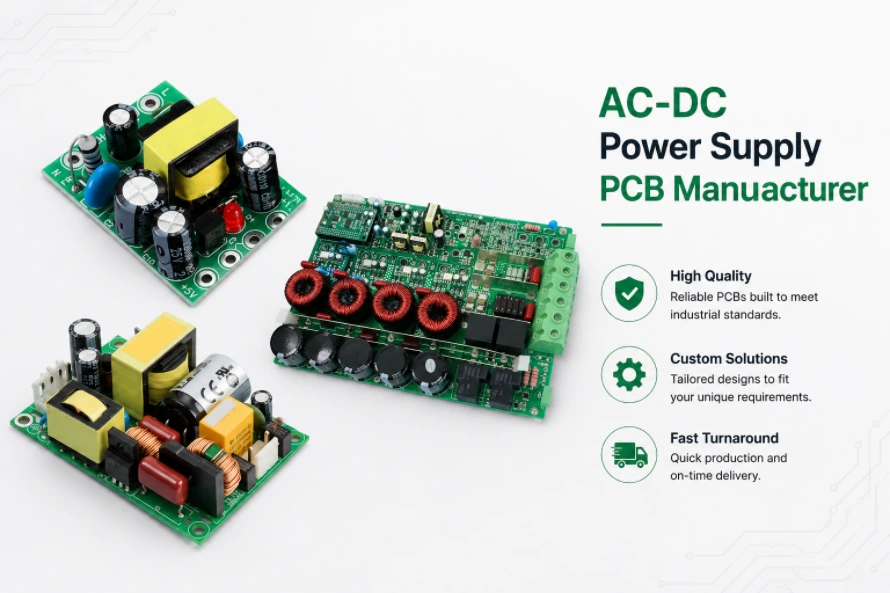
Figure 2. AC-DC power supply PCB manufacturer capability
Red Flags When Evaluating an AC-DC PCB Manufacturer
Some warning signs appear before you ever place an order, and they are worth taking seriously because a power board failure is expensive and sometimes unsafe. The most common red flag is a manufacturer that answers “yes” to every capability question without numbers — a shop that cannot tell you its minimum trace/space at 3oz copper has probably not run much 3oz copper. Another is a quote that comes back instantly with no DFM comment on a mains board; a real power-supply maker almost always has at least a spacing or thermal question.
Other flags are subtler. A manufacturer that treats Hipot testing as an unusual add-on, that has no opinion on your isolation gap, or that cannot explain how it handles the larger drills for your magnetics is telling you something. None of these alone disqualifies a shop, but together they suggest your power board would be a learning experience on their line — at your expense.
- Capability answers with no numbers: “we can do heavy copper” without a stated maximum or spacing rule.
- No DFM feedback on a mains board: a clean instant quote on a power supply usually means nobody looked at the isolation.
- Hipot treated as exotic: high-voltage testing should be routine for a power-PCB maker.
- Vague material answers: inability to confirm Tg, metal-core or UL recognition of the laminate.
- One-price-fits-all: no cost difference quoted between 1oz and 4oz copper signals a process not tuned for power.
- No mixed-assembly story: can’t explain how THT magnetics and SMT controllers run together.
You will not catch every risk before production, but a manufacturer that responds to your power board with specific questions and specific numbers has already passed the most important test. Silence and vague confidence are the warning signs that matter most.
The Questions to Ask Before You Place the Order
The fastest way to evaluate any AC-DC power supply PCB manufacturer is to send a real specification and watch how they respond. A short, pointed set of questions separates the shops that have built your kind of board from the ones that will figure it out on your order. Good answers are specific, fast and occasionally include a “we would do this differently” — which is exactly what you want from a partner who has seen power boards fail.
Ask what the maximum copper weight is and the minimum trace and space at that weight; whether they review creepage and clearance against your stated safety class; whether Hipot testing is standard or extra; what material grades they stock for thermal reliability; how they handle mixed through-hole and SMT assembly; and what realistic lead time looks like at your volume. The answers, taken together, tell you whether to trust them with a board that carries mains voltage. A manufacturer that engages seriously with these questions is one worth a first order.
Why Customers Choose Highleap for AC-DC Power PCBs
Highleap Electronics is set up as a power-capable manufacturer from fabrication through assembly and test, which is what lets us answer the questions above with numbers rather than adjectives. We fabricate single-sided through multilayer, etch 1oz to heavy 6oz+ copper with controlled spacing, stock high-Tg FR-4 and metal-core laminate, and cut routed isolation slots where the safety barrier requires them. On assembly we run through-hole magnetics and bulk capacitors alongside fine-pitch SMT, and we Hipot- and functional-test power boards as standard rather than as a special request.
Just as important, we review every mains-input board for creepage, clearance and thermal-copper risk before production and tell you what we find — so the first article matches your safety plan instead of surprising it. That review is built into how we quote, which means the price and lead time you receive already account for the realities of a power board. If you are comparing manufacturers, the most useful thing you can do is send us a real board and judge our DFM feedback against the others you receive.
Put a real power board in front of us. Send your files and safety class and compare our DFM review and quote against any other manufacturer. Start your quote.
A qualified supplier review should connect the PCB DFM checklist, free DFM review, heavy copper power-supply process, electrical testing plan, PCB assembly file requirements, and PCB assembly lead time before you compare manufacturers.

Recommended Posts
TMM4 Filter PCB Manufacturing
TMM4 filter PCB manufacturing is controlled by the...
TMM3 PCB Manufacturing for RF Modules
TMM3 PCB manufacturing is most useful where the RF module...
TMM6 PCB Fabrication
TMM6 fabrication is the process-control page for a mid-Dk...
TMM10 PCB Manufacturing for Compact RF Designs
Table of contentsHow TMM10 Shrinks RF StructuresTMM10 vs...
How to get a quote for PCBs
Let‘s run DFM/DFA analysis for you and get back to you with a report. You can upload your files securely through our website. We require the following information in order to give you a quote:
-
- Gerber, ODB++, or .pcb, spec.
- BOM list if you require assembly
- Quantity
- Turn time
For PCBA services, please provide your BOM (Bill of Materials) and any specific assembly instructions. We also offer DFM/DFA analysis to optimize your designs for manufacturability and assembly, ensuring a smooth production process.