
Taconic RF-35 PCB Manufacturing Service — Prototype Through Volume Production

Figure 1. Taconic RF-35 PCB
Taconic RF-35 is the workhorse laminate of the ORCER organic ceramic family — a woven glass reinforced PTFE ceramic composite with Dk 3.5 ±0.05, Df 0.0018 at 1.9 GHz, and Tg exceeding 315 °C. Engineers specify it when a project needs specialty low-loss laminate-class RF performance at a fraction of the cost, and production volumes run from hundreds to tens of thousands of boards per year. Highleap Electronics manufactures RF-35 PCBs across the full product family — RF-35, RF-35A, RF-35A2, RF-35TC, and RF-35HTC — covering double-sided through multilayer hybrid stackups with FR-4 core bonding, controlled impedance, and turnkey PCBA assembly.
Table of Contents
- What Is Taconic RF-35 — ORCER Family Position and Material Properties
- RF-35 Product Family — Variant Comparison and Selection Guide
- RF-35 PCB Design Rules and Stackup Options
- Manufacturing Process Overview — From Laminate to Finished Board
- Applications Served by RF-35 PCBs
- Why RF-35 Instead of specialty low-loss laminate or Standard PTFE
- One Factory for Every RF-35 Board Type
- IP Protection, NDA, and Confidentiality
- Get a Taconic RF-35 PCB Manufacturing Quote
1. What Is Taconic RF-35 — ORCER Family Position and Material Properties
RF-35 belongs to Taconic’s ORCER (Organic Ceramic) product line. The laminate combines woven E-glass reinforcement with a PTFE resin system filled with ceramic particles. This construction gives it dimensional stability comparable to FR-4 while retaining the low-loss electrical behavior of PTFE composites. Unlike pure PTFE laminates that are soft and difficult to drill, the ceramic filler and glass weave in RF-35 make it compatible with standard multilayer PCB manufacturing equipment — a critical advantage for volume production.
Key electrical and thermal properties
- Dielectric constant (Dk): 3.50 ±0.05 at 1.9 GHz, stable across frequency and temperature.
- Dissipation factor (Df): 0.0018 at 1.9 GHz — roughly 10× lower than standard FR-4.
- Glass transition temperature (Tg): exceeds 315 °C, enabling lead-free reflow without degradation.
- Moisture absorption: less than 0.02%, minimizing humidity-induced Dk drift.
- CTE X/Y: 13 ppm/°C, closely matched to copper for reliable plated-through-hole integrity.
- CTE Z-axis: 47 ppm/°C below Tg.
- Dielectric breakdown: 41 kV, supporting high-voltage isolation requirements.
- Peel strength: excellent adhesion to 1 oz and 2 oz electrodeposited copper, supporting rework.
What makes RF-35 different from generic PTFE laminates
Pure PTFE laminates such as Taconic TLY or TLX offer lower Dk values but are mechanically soft, making drilling and routing difficult and hybrid bonding with FR-4 unreliable. RF-35 solves this through ceramic loading and woven glass, producing a rigid laminate that processes on the same equipment as FR-4 but performs electrically like a high-frequency PTFE composite. The trade-off is a slightly higher Dk (3.5 versus 2.1–2.6 for pure PTFE), which is acceptable for the vast majority of commercial RF and microwave applications below 40 GHz.
2. RF-35 Product Family — Variant Comparison and Selection Guide
Taconic manufactures several RF-35 variants, each optimized for a different cost-performance balance. Selecting the right variant at the design stage avoids unnecessary material cost and simplifies procurement.
RF-35 family at a glance
- RF-35 (standard): the baseline product — Dk 3.5, Df 0.0018, woven glass PTFE ceramic. Best balance of cost, processability, and RF performance for general-purpose commercial wireless and microwave designs.
- RF-35A: cost-optimized variant with adjusted ceramic and glass loading. Same Dk 3.5 but tuned for higher-volume commercial wireless production where material cost sensitivity is high.
- RF-35A2: ultra-low fiberglass content variant with the lowest insertion loss in the family. Dk 3.5 ±0.05 with reduced glass weave for better Df uniformity. Designed for power amplifier substrates and chip-carrier applications where loss performance is the primary driver.
- RF-35TC: thermally conductive variant — same Dk and Df as standard RF-35 plus enhanced thermal conductivity. Compatible with very-low-profile (VLP) copper foil. Suited for power amplifiers and high-dissipation RF modules.
- RF-35HTC: highest thermal conductivity in the family with reduced PTFE content. Tested at 200 W continuous power handling. Used in base-station power amplifier pallets and radar transmit modules.
Highleap stocks or sources all five variants. If a design calls for mixing RF-35 signal layers with FR-4 structural layers, we handle the hybrid stackup engineering and bonding in-house.
3. RF-35 PCB Design Rules and Stackup Options
RF-35 processes more like FR-4 than like pure PTFE, but there are specific design rules engineers should follow to get the best results from the material.
Stackup configurations
- Single-layer RF-35: single RF-35 core with copper on both sides. Typical for simple microstrip filters, couplers, and patch antennas. Thickness range: 10 mil to 60 mil.
- Multilayer all-RF-35: multiple RF-35 cores bonded with Taconic FG-30 or equivalent bonding film. Used when all signal layers require low-loss performance.
- Hybrid RF-35 / FR-4: RF-35 cores on signal layers bonded to FR-4 cores on non-critical layers. The most cost-effective configuration for complex designs. The lamination profile is adjusted to account for different resin flow characteristics.
- Hybrid RF-35 / specialty low-loss laminate: for designs requiring two different Dk values on different signal layers. Less common but supported.
Design rules
- Minimum trace width: 3 mil (production); 4 mil recommended for volume yield.
- Minimum space: 3 mil (production); 4 mil recommended.
- Drill diameter: 8 mil minimum mechanical drill. Laser microvia supported on hybrid stackups with FR-4 buildup layers.
- Copper weight: 0.5 oz, 1 oz, and 2 oz standard. Heavy copper (3+ oz) available on request.
- Impedance tolerance: ±5% for 50 Ω microstrip; tighter tolerance achievable with impedance-controlled fabrication using test coupons.
- Maximum board size: 400 mm × 500 mm per standard panel. Larger sizes quoted individually.
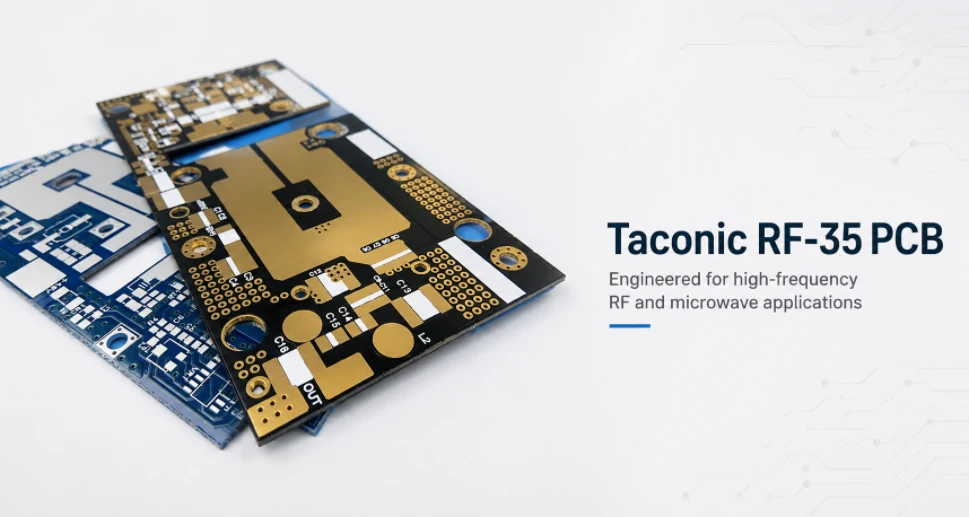
Figure 2. Taconic RF-35 PCB manufacturing
4. Manufacturing Process Overview — From Laminate to Finished Board
For a detailed treatment of each fabrication step, see our dedicated Taconic RF-35 PCB fabrication process page. This section covers the high-level flow.
Process sequence
- Material incoming inspection: Dk verification on received RF-35 laminate using resonant cavity or split-post method. Moisture content check.
- Inner layer imaging: photolithography on inner copper layers. RF-35’s dimensional stability gives better registration than pure PTFE.
- Lamination: multi-step press cycle with controlled ramp rate. RF-35 / FR-4 hybrid stackups require a blended lamination profile to accommodate both resin systems.
- Drilling: 130° point carbide drills with 32–35° helix angle. PTFE-ceramic composites require sharp tooling and controlled chip evacuation. No chip-breaker router bits.
- Desmear: standard permanganate or plasma desmear — no sodium etch required (unlike pure PTFE). This is a significant cost and process simplification.
- Electroless copper and panel plating: standard electroless copper deposition followed by electrolytic copper plating.
- Outer layer imaging and etching: standard photolithography and etch process.
- Surface finish: ENIG, immersion silver, immersion tin, OSP, or bare copper per design requirement.
- Electrical test: flying probe or bed-of-nails per IPC-9252.
- Impedance verification: TDR measurement on dedicated test coupons per controlled impedance requirements.
5. Applications Served by RF-35 PCBs
RF-35’s combination of low loss, tight Dk tolerance, high Tg, and FR-4-like processability makes it the default choice for a wide range of commercial and industrial high frequency PCB applications.
Commercial wireless and telecom
- Base-station filters and duplexers: cavity-backed microstrip filters where Dk stability determines center-frequency accuracy.
- Tower-mounted amplifiers (TMA): low-noise amplifier and filter stages on RF-35 with power amplifier on RF-35TC or RF-35HTC.
- Small-cell and DAS nodes: compact 5G and LTE radio units where board cost matters at volume.
- Repeaters and boosters: broadband amplification stages requiring flat loss across 700 MHz to 3.5 GHz.
Radar and defense
- Automotive radar: 24 GHz and 77 GHz automotive radar PCBs using RF-35 on antenna and feed layers.
- Marine and weather radar: X-band and S-band radar modules.
- Electronic warfare: broadband receiver front-ends on RF-35 with military-grade workmanship.
Passive RF components
- Couplers and splitters: Wilkinson dividers, hybrid couplers, directional couplers.
- Combiners and mixers: broadband combiners for multi-carrier systems.
- Patch antennas: single-element and array antennas for GPS, WLAN, and cellular.
6. Why RF-35 Instead of specialty low-loss laminate or Standard PTFE
Engineers often compare RF-35 against a specialty low-loss laminate, a specialty low-loss laminate, and pure PTFE options like Taconic TLY. The decision depends on frequency, volume, and cost sensitivity.
RF-35 vs a specialty low-loss laminate
- Dk: RF-35 at 3.50 versus a specialty low-loss laminate at 3.48 — functionally equivalent for most designs.
- Df: RF-35 at 0.0018 versus a specialty low-loss laminate at 0.0037 — RF-35 has lower loss at the same frequency.
- Cost: RF-35 is typically 15–30% less expensive per panel than a specialty low-loss laminate, with better availability in Asia-Pacific.
- Processing: both process on standard FR-4 equipment. RF-35 requires slightly different drill parameters due to its PTFE content.
RF-35 vs pure PTFE (TLY, TLX)
- Dk: pure PTFE offers lower Dk (2.1–2.6) for applications needing wider trace widths or specific impedance targets.
- Processability: RF-35 is dramatically easier to fabricate — no sodium etch, standard desmear, better drill quality, and reliable hybrid bonding with FR-4.
- Cost: RF-35 is less expensive to fabricate due to simpler processing, even when material cost is similar.
For most commercial RF designs operating below 30 GHz, RF-35 offers the best cost-performance balance. When designs move above 40 GHz or require Dk below 3.0, pure PTFE or specialty low-loss laminate alternatives become necessary.
7. One Factory for Every RF-35 Board Type
Highleap manufactures all RF-35 family variants in a single facility. This eliminates the common problem of splitting orders across multiple suppliers — one for simple double-sided RF-35 boards, another for hybrid multilayers, a third for PCBA. A single factory means one engineering contact, one quality system, one set of DFM rules, and one logistics stream.
Board types manufactured in-house
- Double-sided RF-35: 10 mil to 60 mil core, 0.5–2 oz copper, all standard surface finishes.
- Multilayer all-RF-35: 4 to 10 layers with RF-35 cores and Taconic bonding films.
- Hybrid RF-35 / FR-4: RF-35 on signal layers, FR-4 on ground and power planes, bonded with appropriate prepreg.
- RF-35 with back-drilling: controlled-depth back-drill to remove via stubs on high-speed signal paths.
- RF-35 with blind and buried vias: sequential lamination for complex routing requirements.
- Turnkey PCBA: board fabrication plus SMT assembly, through-hole insertion, and functional test — all under one roof.
8. IP Protection, NDA, and Confidentiality
RF designs often involve proprietary filter topologies, antenna patterns, or impedance-matching networks that represent significant engineering investment. Highleap operates under strict IP protection protocols.
- Customer NDA: executed before any design files are received. Covers design data, manufacturing specifications, volume information, and pricing.
- File access control: Gerber and drill files are stored in an access-controlled system. Only assigned CAM engineers and production personnel can view design data for a given project.
- Physical segregation: prototype and low-volume orders are processed in dedicated work cells with restricted access.
- No cross-customer disclosure: design parameters, stackup configurations, and manufacturing specifications for one customer are never shared with another.
- Data retention policy: design files retained per customer agreement and purged on request after program completion.
9. Get a Taconic RF-35 PCB Manufacturing Quote
To request a Taconic RF-35 PCB manufacturing quote, submit your design files through our online quote portal. Include the following for fastest turnaround:
- Gerber files: RS-274X or ODB++ format with drill files and stackup drawing.
- Material specification: which RF-35 family variant — RF-35, RF-35A, RF-35A2, RF-35TC, or RF-35HTC.
- Layer count and stackup: all-RF-35 or hybrid with FR-4. If hybrid, indicate which layers are RF-35.
- Impedance requirements: target impedance values and tolerance for controlled-impedance traces.
- Surface finish: ENIG, immersion silver, or other preference.
- Quantity and schedule: prototype quantity, production forecast, and required delivery date.
- Assembly scope: board-only or turnkey PCBA with BOM and placement files.
Our engineering team reviews every RF-35 quote for DFM issues before pricing and flags potential manufacturing risks — drill aspect ratio, impedance feasibility, hybrid bonding compatibility — so you get an accurate quote and avoid surprises in production. For related technical content, visit our pages on Taconic PCB materials, high frequency PCB materials, RF PCB design, and microwave PCB.

Recommended Posts
TMM4 Filter PCB Manufacturing
TMM4 filter PCB manufacturing is controlled by the...
TMM3 PCB Manufacturing for RF Modules
TMM3 PCB manufacturing is most useful where the RF module...
TMM6 PCB Fabrication
TMM6 fabrication is the process-control page for a mid-Dk...
TMM10 PCB Manufacturing for Compact RF Designs
Table of contentsHow TMM10 Shrinks RF StructuresTMM10 vs...
How to get a quote for PCBs
Let‘s run DFM/DFA analysis for you and get back to you with a report. You can upload your files securely through our website. We require the following information in order to give you a quote:
-
- Gerber, ODB++, or .pcb, spec.
- BOM list if you require assembly
- Quantity
- Turn time
For PCBA services, please provide your BOM (Bill of Materials) and any specific assembly instructions. We also offer DFM/DFA analysis to optimize your designs for manufacturability and assembly, ensuring a smooth production process.