
CSP Package: A Technical Guide to Chip Scale Packaging

Figure 1. Chip Scale Package
1. Introduction: Why CSP Matters in Modern Electronics
Consumer electronics, wearables, and mobile devices continue to shrink while demanding more functionality. This trend drives IC packaging toward higher I/O density within smaller footprints. Traditional packages such as QFP and TQFP, constrained by peripheral lead frames, struggle to meet these requirements. Their package-to-die size ratios remain large, consuming valuable PCB real estate.
The CSP package emerged as a critical solution bridging bare die and conventional packaging. It delivers near-die-size form factors while maintaining the manufacturability, testability, and reliability that production environments require.
2. What Is a CSP Package?
2.1 Standard Definition
A CSP package is defined primarily by its size ratio to the silicon die. The industry-accepted criterion states that CSP package dimensions should not exceed 1.2 times the die area. This geometric definition distinguishes CSP from larger conventional packages, regardless of the internal interconnect technology used.
2.2 Engineering Perspective
From an engineering standpoint, the CSP package provides a solderable, testable, and production-ready format while minimizing the footprint penalty over bare silicon. It enables standard SMT assembly processes without requiring the specialized handling that bare die mounting demands.
2.3 Boundary Clarification
The CSP package occupies a distinct position in the packaging hierarchy. It differs from bare die, which lacks protective encapsulation and requires specialized assembly. It also differs from standard BGA packages that may be several times larger than their die. CSP represents a size classification, not a single packaging structure.

Figure 2. CSP Package Sideview
3. Key Characteristics of CSP Packages
3.1 Compact Footprint
The defining feature of any CSP package is its minimal size overhead. With package dimensions approaching the die itself, CSP enables significantly higher component density on PCB layouts. This proves essential when board area is constrained by product form factor requirements.
3.2 Short Electrical Interconnects
CSP packages inherently feature shorter signal paths between die and PCB. Reduced interconnect length lowers parasitic inductance and resistance, improving signal integrity for high-speed applications and reducing power losses in battery-operated devices.
3.3 Improved Thermal Performance
The compact structure of CSP packages creates more direct thermal paths from die to board. Without extensive lead frames or large substrates acting as thermal barriers, heat dissipation efficiency improves compared to traditional leaded packages.
3.4 High I/O Density
Most CSP packages utilize area-array interconnects rather than peripheral leads. This arrangement—typically solder balls or bumps distributed across the package bottom—allows higher I/O counts within the constrained footprint that defines CSP technology.
4. Common Types of CSP Packages
CSP is a classification framework encompassing multiple implementation approaches. The primary variants differ in their interconnect methods and manufacturing sequences.
4.1 Wire Bond CSP
Wire bond CSP uses traditional gold or copper wire bonding to connect die pads to a miniaturized substrate. This approach offers lower manufacturing costs and leverages established production infrastructure. However, wire bond CSP faces limitations in I/O count and high-frequency performance due to wire inductance.
4.2 Flip-Chip CSP (FC-CSP)
FC-CSP inverts the die orientation, connecting active-side bumps directly to the substrate. This flip-chip approach eliminates wire loops, providing superior electrical and thermal performance. FC-CSP packages are preferred for high-performance processors and RF applications where signal integrity is paramount.
4.3 Wafer-Level CSP (WLCSP)
WLCSP completes all packaging steps at the wafer level before singulation. The resulting package is essentially the die itself with redistribution layers and solder balls applied. WLCSP achieves the smallest possible CSP package size but demands tighter PCB design rules and assembly process control.
It is essential to understand that WLCSP is a subset of CSP—not all CSP packages are wafer-level, though all WLCSP qualifies as CSP by definition.

Figure 3. Flip Chip CSP
5. CSP vs Other IC Package Types
Understanding how CSP relates to other package families helps clarify selection criteria for specific applications.
5.1 CSP vs BGA
CSP defines a size category; BGA describes a structural format. A ball grid array package qualifies as CSP only when its dimensions meet the 1.2× die size criterion. Large BGAs with substantial substrates fall outside CSP classification despite sharing the same interconnect style.
5.2 CSP vs QFN
QFN packages use peripheral pads constrained to the package edge. This limits I/O scaling and requires larger packages for higher pin counts. CSP packages with area-array interconnects offer superior I/O density scaling and smaller footprints for equivalent functionality.
5.3 CSP vs WLCSP
This comparison addresses a common misconception. WLCSP represents one manufacturing approach within the broader CSP category. Other CSP types—including wire bond and flip-chip variants—use substrate-based construction completed after wafer dicing. CSP encompasses all these approaches; WLCSP is specifically the wafer-level subset.
6. Manufacturing and Assembly Considerations for CSP Packages
6.1 PCB Pad Design
CSP packages require precise pad geometries with tight tolerances. Solder mask openings, pad dimensions, and via-in-pad configurations must align with the specific CSP package requirements. Non-solder mask defined (NSMD) pads are commonly specified to improve solder joint reliability.
6.2 Soldering Challenges
The fine-pitch solder balls on CSP packages demand well-controlled reflow profiles. Insufficient heating causes incomplete wetting; excessive temperatures risk die damage. Paste volume consistency becomes critical as ball sizes decrease, making stencil design and print parameters essential process variables.
6.3 Inspection Limitations
Visual inspection cannot verify solder joints hidden beneath CSP packages. X-ray inspection is effectively mandatory for production quality assurance. Automated X-ray systems must resolve individual joints and detect defects such as voids, bridges, and head-in-pillow conditions.
6.4 Reliability Concerns
CSP packages present specific reliability considerations including thermal cycling stress, drop-test performance, and package warpage interaction with PCB flatness. The direct die-to-board connection means coefficient of thermal expansion mismatches transmit more directly to solder joints than in packages with compliant lead frames.
7. Typical Applications of CSP Packages
Application selection for CSP packages follows from their technical characteristics rather than general industry categories.
7.1 Mobile and Wearable Devices
Size constraints in smartphones, smartwatches, and earbuds make CSP packages essential. The minimal footprint directly translates to smaller products or increased functionality within fixed dimensions. Low-power operation benefits from reduced interconnect losses.
7.2 High-Speed Memory and Processors
Signal integrity requirements in DDR memory, application processors, and high-speed interfaces favor CSP implementations. Short interconnects reduce signal degradation, enabling higher data rates without compromising timing margins.
7.3 Space-Constrained Consumer Electronics
Products where PCB area is severely limited—such as IoT sensors, medical implants, and miniature cameras—leverage CSP packages to achieve required functionality. The high I/O density enables complex devices within stringent size budgets.
8. Advantages and Limitations of CSP Packages
8.1 Advantages
CSP packages deliver measurable benefits in size reduction, electrical performance, and integration density. The smaller footprint enables product miniaturization. Shorter signal paths improve high-frequency behavior. Area-array interconnects support higher I/O counts than peripheral-lead alternatives of similar size.
8.2 Limitations
CSP adoption involves engineering tradeoffs. Assembly requires tighter process controls and more sophisticated inspection equipment. Rework becomes difficult or impractical for some CSP variants. PCB fabrication must support finer features. Total system cost optimization—not just component cost—determines whether CSP delivers overall value.
9. Conclusion: Understanding CSP Package Technology Correctly
Three key points summarize the correct technical understanding of CSP packages.
First, CSP is fundamentally a size-based classification. The 1.2× die area criterion defines the category, not any specific interconnect technology or manufacturing process.
Second, multiple distinct package types fall under the CSP umbrella. Wire bond, flip-chip, and wafer-level implementations each qualify as CSP when they meet the size criterion, despite significant differences in construction and performance.
Third, CSP selection should result from system-level engineering analysis. The decision involves PCB capability, assembly process maturity, reliability requirements, and total cost of ownership—not simply the assumption that smaller packaging is inherently superior.
Understanding these distinctions enables appropriate CSP package selection based on actual application requirements rather than generalized assumptions about packaging technology.

Recommended Posts
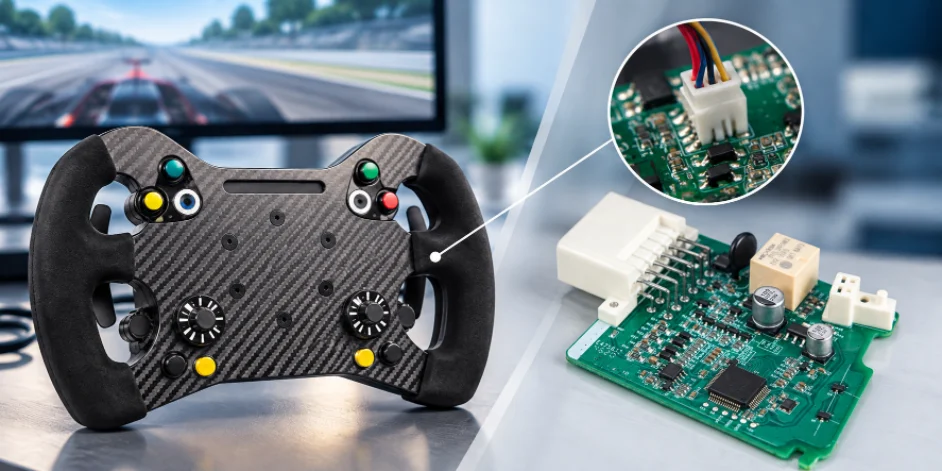
Racing Wheel Controller PCB Manufacturing & Assembly for Force-Feedback and Direct-Drive Gaming Systems
Highleap Electronics provides PCB fabrication and PCBA for...

FR4 Dielectric Constant Calculator and PCB Design Guide
How to get a quote for PCBs Let's run DFM/DFA analysis for...
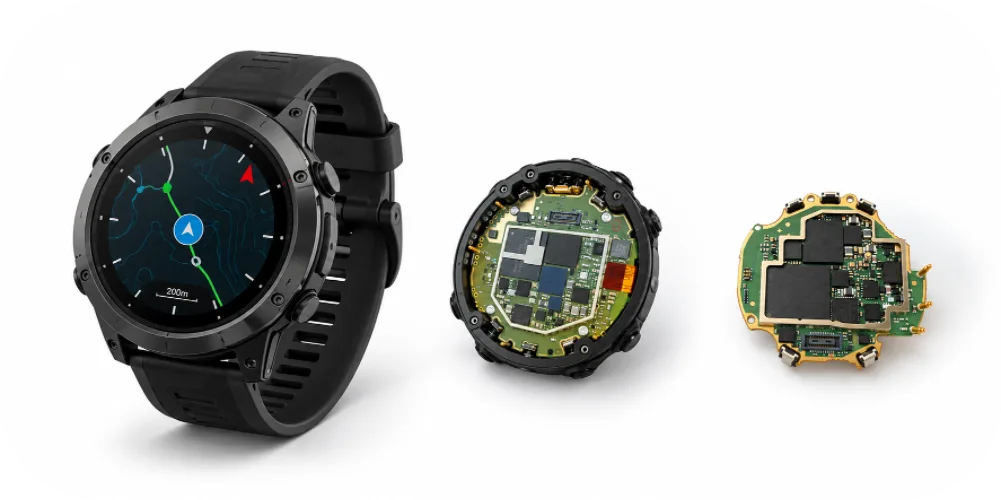
GPS Sports Watch PCB Design: GNSS, RF, Sensors and PCBA Manufacturing
Turning a compact GPS sports watch controller from an...
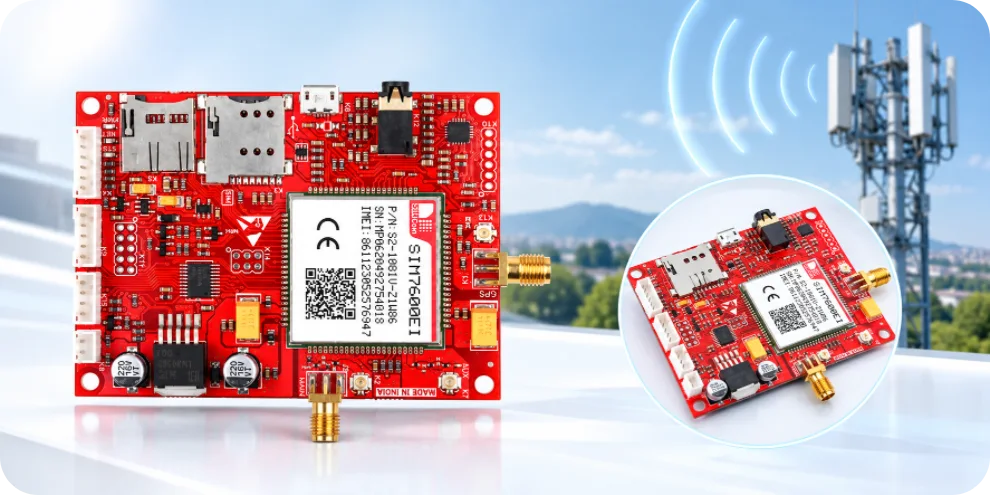
Cellular Modem PCB: From Module Carriers to PCBA
Need a manufacturer for a cellular modem PCB or a fully...
How to get a quote for PCBs
Let‘s run DFM/DFA analysis for you and get back to you with a report. You can upload your files securely through our website. We require the following information in order to give you a quote:
-
- Gerber, ODB++, or .pcb, spec.
- BOM list if you require assembly
- Quantity
- Turn time
In addition to PCB manufacturing, we offer a comprehensive range of electronic services, including PCB design, PCBA, and turnkey solutions. Whether you need help with prototyping, design verification, component sourcing, or mass production, we provide end-to-end support to ensure your project’s success.
For PCBA services, please provide your BOM (Bill of Materials) and any specific assembly instructions. We also offer DFM/DFA analysis to optimize your designs for manufacturability and assembly, ensuring a smooth production process.