
Flip-Chip Package: Structure, Process, and Engineering Considerations

Figure 1. Flip-Chip Package PCB
1. What Is a Flip-Chip Package?
A flip-chip package is a die-level interconnection technology where the semiconductor die is mounted face-down, with its active surface oriented toward the substrate. Unlike wire bonding, which routes signals from the die edge, flip-chip interconnection uses solder bumps or micro bumps deposited directly on the I/O pads.
These bumps form the electrical and mechanical connection between the die and the substrate or PCB. This direct bump-to-pad architecture fundamentally shortens the signal path and eliminates the parasitic inductance inherent in wire loops.
2. Basic Structure of a Flip-Chip Package
Silicon Die and I/O Pads
The silicon die contains all active circuitry, with aluminum or copper I/O pads distributed across the active surface. In flip-chip configuration, these pads are not confined to the die periphery. Area-array pad layouts enable significantly higher I/O counts within the same die footprint, directly supporting the density requirements of modern processors and ASICs.
Solder Bumps
Solder bumps, commonly C4 (Controlled Collapse Chip Connection) or micro bumps, serve as both electrical conductors and mechanical anchors. Bump pitch determines the achievable I/O density; current advanced packages operate at pitches below 100 µm. The bump metallurgy typically involves lead-free alloys such as SnAgCu, selected for reliability and environmental compliance.
Underfill Material
Underfill is an epoxy-based material dispensed into the gap between the die and substrate after reflow. It redistributes thermomechanical stress across the entire die area rather than concentrating it at individual solder joints. Without underfill, CTE mismatch between silicon and organic substrates would induce rapid solder fatigue failure under thermal cycling.
Substrate and External Interconnects
The package substrate provides signal routing, power distribution, and mechanical support. In FCBGA configurations, solder balls on the substrate bottom connect to the system PCB. Substrate materials such as BT resin or ABF (Ajinomoto Build-up Film) are selected based on dielectric properties, layer count requirements, and thermal performance.

Figure 2. Flip-Chip Package Structure
3. Flip-Chip Package vs Traditional Wire Bonding
Interconnection Length and Electrical Parasitics
Wire bonds introduce millimeter-scale loop lengths with associated inductance and resistance. Flip-chip bumps measure tens of micrometers in height, reducing interconnect inductance by an order of magnitude. This difference directly impacts signal integrity at GHz frequencies and power delivery efficiency under high-current loads.
I/O Density and Thermal Path
Wire bonding constrains I/O to the die periphery, limiting density scaling. Flip-chip enables full area-array utilization, supporting thousands of I/O connections. Thermally, the die backside in flip-chip packages can be directly attached to a heat spreader, providing a low-resistance thermal path that wire-bonded packages cannot match without additional complexity.
Position in Packaging Selection
Flip-chip is not a universal replacement for wire bonding. It addresses specific requirements: high I/O count, stringent signal integrity, and elevated thermal dissipation. Wire bonding remains cost-effective for lower-complexity devices where these parameters are less critical.
4. Flip-Chip Packaging Process
Bump Formation
Bumps are formed at wafer level through electroplating or evaporation processes. C4 solder bumps remain standard for many applications, while Cu pillar bumps with solder caps address finer pitch requirements. The bump formation process defines the critical dimensions that determine assembly yield and long-term reliability.
Wafer Dicing
After bumping, the wafer is singulated into individual die. Dicing must preserve bump integrity and avoid edge chipping that could compromise die strength. Blade dicing and laser dicing are selected based on wafer thickness, bump configuration, and throughput requirements.
Die Placement and Reflow
The die is flipped and placed onto the substrate with bumps aligned to corresponding pads. During reflow, solder surface tension provides self-alignment, compensating for minor placement errors. Reflow profiles must balance complete solder wetting against excessive intermetallic growth.
Underfill Dispensing and Curing
Capillary underfill is dispensed along the die edge and drawn into the gap by capillary action. Complete fill without voids is essential; trapped air pockets become stress concentrators and corrosion initiation sites. Thermal curing cross-links the epoxy, establishing the final mechanical properties.
Final Package Assembly
For BGA-type flip-chip packages, solder balls are attached to the substrate bottom and reflowed. The completed package undergoes electrical testing and visual inspection before shipment. Process controls at each step determine overall assembly yield.
5. Key Materials in Flip-Chip Packaging
Solder Alloys
Lead-free solder alloys, predominantly SnAgCu (SAC), have become industry standard. Alloy composition affects melting point, wetting behavior, and mechanical properties. Higher silver content improves fatigue resistance but increases cost; alloy selection balances reliability requirements against economic constraints.
Underfill Materials
Underfill formulations are engineered to match the CTE of the solder and substrate system. Filler particle size and loading affect flow characteristics and final modulus. Reworkable underfills exist but sacrifice some reliability performance compared to standard formulations.
Substrate and RDL Materials
Organic substrates use BT resin or ABF build-up layers depending on layer count and feature size requirements. Redistribution layers (RDL) on the die or substrate fan out fine-pitch bump connections to coarser substrate features. Material selection directly influences electrical performance, warpage behavior, and manufacturing yield.
6. Electrical and Thermal Performance of Flip-Chip Packages
Signal Integrity Advantages
Reduced interconnect length translates to lower inductance and improved impedance control. High-frequency signals experience less attenuation and reflection. These characteristics make flip-chip packaging essential for processors operating at multi-GHz clock frequencies and high-speed serial interfaces.
Power Delivery and Thermal Dissipation
Multiple power and ground bumps distributed across the die area reduce resistive voltage drop. The exposed die backside enables direct heat spreader attachment, providing thermal resistance values unachievable with wire-bonded configurations. High-power processors and GPUs depend on this thermal architecture.
7. Flip-Chip Package: Mechanical and Manufacturing Challenges
CTE Mismatch and Solder Fatigue
Silicon (CTE ~3 ppm/°C) and organic substrates (CTE ~15-17 ppm/°C) expand at different rates during thermal excursions. This mismatch induces shear stress in solder joints, leading to fatigue crack initiation and propagation. Underfill mitigates but does not eliminate this fundamental reliability concern.
Underfill Process Control
Incomplete underfill coverage or void entrapment creates reliability weak points. Dispensing parameters, substrate temperature, and underfill viscosity must be tightly controlled. Voiding rates increase as bump pitch decreases, presenting ongoing process engineering challenges at advanced nodes.
Warpage and Yield Sensitivity
Package warpage affects both assembly yield and board-level reliability. Large die on thin substrates are particularly susceptible. Fine-pitch bumps demand tighter placement accuracy and coplanarity tolerances, amplifying the yield impact of any process variation.

Figure 3. FCCSP
8. Common Types of Flip-Chip Packages
FCOB and FCCSP
Flip-Chip on Board (FCOB) mounts the die directly to the system PCB without an intermediate package substrate, minimizing size and cost for appropriate applications. Flip-Chip Chip Scale Package (FCCSP) uses a minimal substrate, maintaining near-die-size footprint while providing some routing flexibility.
FCBGA
Flip-Chip Ball Grid Array (FCBGA) combines flip-chip die attach with a BGA substrate interface. This configuration supports complex multi-layer routing, integrated passives, and high I/O counts. FCBGA dominates high-performance computing applications including server processors and networking ASICs.

Figure 4. Flip-Chip Ball Grid Array
9. Typical Applications of Flip-Chip Packaging
High-Performance Computing
CPUs, GPUs, and high-end FPGAs universally employ flip-chip packaging. The combination of high I/O density, superior electrical performance, and efficient thermal dissipation addresses the simultaneous requirements of these devices. Data center and AI accelerator applications drive continued flip-chip technology advancement.
Networking, RF, and Automotive
Network switch ASICs and RF power amplifiers benefit from flip-chip’s low-inductance interconnects. Automotive electronics increasingly adopt flip-chip for advanced driver assistance systems where signal integrity and thermal management are critical. Consumer devices such as smartphones use FCCSP for application processors.
10. Flip-Chip Package Reliability and Inspection
Common Failure Modes
Solder bump cracking from thermomechanical fatigue represents the primary wear-out mechanism. Underfill delamination from the die or substrate surface exposes solder joints to accelerated stress. Electromigration in high-current bumps can cause open failures in power delivery paths.
Inspection Methods
X-ray inspection reveals bump voids, misalignment, and bridging defects. Scanning acoustic microscopy (SAM) detects underfill voids and delamination. Electrical testing validates connectivity and parametric performance. These methods combine to screen defective units and monitor process capability.
11. When Should Engineers Choose a Flip-Chip Package?
Decision Criteria
Flip-chip packaging is warranted when I/O count exceeds wire bonding practical limits, typically above 500-700 connections. Signal frequencies in the GHz range benefit from reduced interconnect parasitics. Thermal dissipation requirements above 10-15W favor the direct thermal path flip-chip provides.
Infrastructure and Cost Considerations
Flip-chip assembly requires specialized equipment for placement, reflow, and underfill. Substrate costs exceed leadframe alternatives. Engineers must evaluate whether performance requirements justify the cost premium and verify that assembly partners possess the necessary process capability and quality systems.

Recommended Posts
Racing Wheel Controller PCB Manufacturing & Assembly for Force-Feedback and Direct-Drive Gaming Systems
Highleap Electronics provides PCB fabrication and PCBA for...
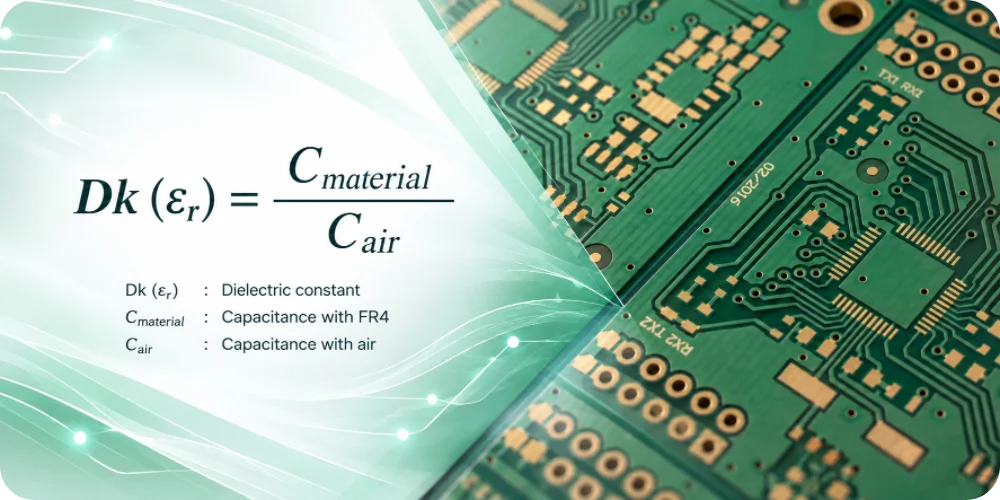
FR4 Dielectric Constant Calculator and PCB Design Guide
How to get a quote for PCBs Let's run DFM/DFA analysis for...
GPS Sports Watch PCB Design: GNSS, RF, Sensors and PCBA Manufacturing
Turning a compact GPS sports watch controller from an...
Cellular Modem PCB: From Module Carriers to PCBA
Need a manufacturer for a cellular modem PCB or a fully...
How to get a quote for PCBs
Let‘s run DFM/DFA analysis for you and get back to you with a report. You can upload your files securely through our website. We require the following information in order to give you a quote:
-
- Gerber, ODB++, or .pcb, spec.
- BOM list if you require assembly
- Quantity
- Turn time
In addition to PCB manufacturing, we offer a comprehensive range of electronic services, including PCB design, PCBA, and turnkey solutions. Whether you need help with prototyping, design verification, component sourcing, or mass production, we provide end-to-end support to ensure your project’s success.
For PCBA services, please provide your BOM (Bill of Materials) and any specific assembly instructions. We also offer DFM/DFA analysis to optimize your designs for manufacturability and assembly, ensuring a smooth production process.