
Heavy Copper PCB for Aerospace and Defense Power Modules

Introduction: Meeting High-Power and High-Reliability Requirements
Aerospace and defense electronics demand power modules capable of sustaining high current loads under extreme environmental conditions. Applications such as radar systems, electric propulsion controls, satellite power distribution units, and weapon system power management require exceptional reliability and thermal stability.
Heavy Copper PCB for aerospace and defense power modules addresses these critical requirements by providing enhanced current-carrying capability, superior heat dissipation, and robust mechanical integrity. These specialized circuit boards form the backbone of mission-critical systems where failure is not an option.
Application Scenarios for Heavy Copper PCB in Defense Systems
Typical Aerospace and Defense Applications
Power distribution boards in aircraft electrical systems must handle currents exceeding 30A while maintaining signal integrity across multiple channels. Missile control power units require compact designs that withstand launch acceleration forces and rapid thermal transitions. Radar and communication power amplifiers demand precise thermal management to maintain output stability during extended operation cycles.
Common Performance Challenges
High current transmission requirements often exceed 20A per trace, creating significant thermal loads that conventional PCB designs cannot adequately manage. Operating temperature ranges from -55°C to +150°C subject materials to severe thermal cycling stress. Vibration frequencies from 10Hz to 2000Hz and shock loads up to 100G test mechanical connections continuously. Defense power electronics must incorporate redundancy and fault tolerance while minimizing weight and volume constraints.

Aerospace PCBs
Why Heavy Copper PCB Outperforms Standard Designs
Enhanced Current Carrying Capability
Heavy copper PCB construction utilizes copper thickness ranging from 2oz to 10oz, compared to standard 1oz designs. This increased conductor mass directly supports higher current density while reducing resistive losses and voltage drops. The superior thermal conductivity of thick copper layers functions as integrated heat spreaders that distribute thermal energy across the board structure, preventing localized hotspots.
Mechanical Robustness and Reliability
Thicker copper traces exhibit greater mechanical strength, resisting stress-induced failures from vibration and thermal expansion mismatches. Heavy copper PCB for aerospace and defense power modules minimizes interconnection points by supporting wider, more robust current paths. This approach reduces via burnout risks and trace lifting failures common in high-power applications under cyclic loading conditions.
Design and Manufacturing Considerations for Heavy Copper PCB
Copper Thickness Control and Layer Stack-up
Heavy copper PCB manufacturing requires precise plating uniformity to achieve thickness tolerances within ±10%. Electroplating processes must compensate for current distribution variations across panel geometries to ensure consistent copper deposition. Aerospace-grade PCB design demands symmetric copper distribution throughout the layer stack to prevent warpage during thermal processing.
Base material selection between high-Tg FR4, polyimide, and metal-core substrates depends on specific thermal and mechanical requirements. The coefficient of thermal expansion matching between copper and substrate materials becomes critical in heavy copper constructions to maintain dimensional stability.
Manufacturing Process Optimization
Etching precision becomes critical when processing thick copper layers, as undercut control and sidewall angles directly affect trace impedance and current density distribution. Lamination parameters must account for increased copper mass thermal capacity to ensure complete resin flow and void elimination. MIL-STD compliant PCB fabrication processes incorporate specialized drilling techniques to manage the increased mechanical resistance of thick copper layers without compromising hole quality.
Reliability Verification Testing
Aerospace PCB quality control protocols follow rigorous environmental and mechanical testing standards:
-
Thermal cycling – -55°C to +125°C for minimum 500 cycles per IPC-6012DS Class 3 requirements validates material compatibility and solder joint integrity.
-
Vibration testing – MIL-STD-810 profiles covering operational frequency ranges confirm trace adhesion and component mounting reliability.
-
Shock testing – Acceleration loads up to 100G verify structural integrity under launch and impact conditions.
-
Environmental protection – Conformal coating application and ENIG or OSP surface finishes provide moisture resistance and solderability retention.

Heavy Copper PCBs
Thermal and Mechanical Reliability in Heavy Copper PCB
Thermal Performance Optimization
Thermal reliability in aerospace PCBs depends on effective heat spreading from high-power components to heat sinking interfaces. Heavy copper layers create low-resistance thermal pathways that reduce peak junction temperatures and temperature gradients significantly. Finite element thermal modeling demonstrates that 5oz copper thickness reduces hotspot temperatures by 15-25°C compared to 2oz designs in typical radar power amplifier modules.
This temperature reduction directly extends component operational life and improves system mean time between failures. Heavy copper PCB for aerospace and defense power modules enables higher power density designs without compromising thermal margins.
Vibration Resistance and Fatigue Life
Vibration-resistant PCB design leverages the increased mechanical stiffness of heavy copper construction to withstand harsh operational environments. Thicker traces exhibit higher natural frequencies, reducing resonant amplitude responses in critical vibration bands where standard PCBs experience fatigue failures. Solder joint reliability improves as reduced PCB flexure decreases cyclic strain accumulation during vibration exposure.
Finite element mechanical analysis validates that properly designed heavy copper structures maintain integrity through qualification-level vibration exposure without crack initiation. The enhanced mechanical properties directly translate to extended service life in defense applications where equipment operates under continuous vibration stress.
Quality Control and Certification for Defense PCB
Industry Standards and Compliance
Defense PCB inspection procedures implement IPC-6012DS space and military avionics addendum specifications for class 3 reliability requirements. AS9100 certified PCB manufacturer quality systems ensure traceability from raw materials through final acceptance testing. Automated optical inspection systems verify trace geometry, spacing, and surface finish uniformity across production panels.
X-ray inspection confirms via fill quality and internal layer alignment in multilayer constructions, identifying potential defects invisible to visual inspection. These comprehensive inspection protocols ensure heavy copper PCB for aerospace and defense power modules meets stringent quality requirements.
Testing and Documentation
Electrical performance testing validates design specifications through controlled measurements:
-
Impedance control – Verification within ±10% tolerance ensures signal integrity in mixed-signal power modules.
-
Insulation resistance – Minimum 100MΩ confirms adequate dielectric performance under operational voltage stress.
-
Current capacity – Thermal rise testing validates conductor sizing against maximum current specifications.
-
Continuity testing – One hundred percent flying probe testing eliminates opens and shorts before assembly.
Complete lot traceability systems maintain material certifications, process parameters, and test results for configuration management and failure analysis support throughout the product lifecycle.
Conclusion
Heavy copper PCB for aerospace and defense power modules delivers proven advantages in current capacity, thermal management, and mechanical reliability for mission-critical applications. The combination of robust copper structures ranging from 2oz to 10oz thickness, precision manufacturing processes, and rigorous quality verification ensures consistent performance under extreme operational conditions from -55°C to +150°C. These capabilities directly support system designers in achieving weight reduction, improved efficiency, and enhanced mission assurance across military and space platforms.
Highleap Electronics Advanced Manufacturing Capabilities:
-
Heavy copper fabrication – Copper thickness up to 10oz with precise thickness control and uniform plating distribution.
-
Thermal analysis support – Comprehensive finite element modeling to optimize heat distribution and validate thermal performance.
-
Full aerospace compliance – AS9100 certification, IPC-6012DS Class 3 adherence, and MIL-STD testing protocols.
-
Complete traceability – Material certifications, process documentation, and test records for configuration management.
Contact Highleap Electronics to discuss how our advanced heavy copper PCB technology can enhance the reliability and performance of your defense and aerospace power systems.

Recommended Posts
How to Select Tg180 PCB Materials for Custom Boards
Choosing a Tg180 PCB involves more than selecting a...
Tg170 PCB Manufacturing and Assembly for Industrial Electronics
A Tg170 PCB may be specified for industrial electronics,...
Racing Wheel Controller PCB Manufacturing & Assembly for Force-Feedback and Direct-Drive Gaming Systems
Highleap Electronics provides PCB fabrication and PCBA for...
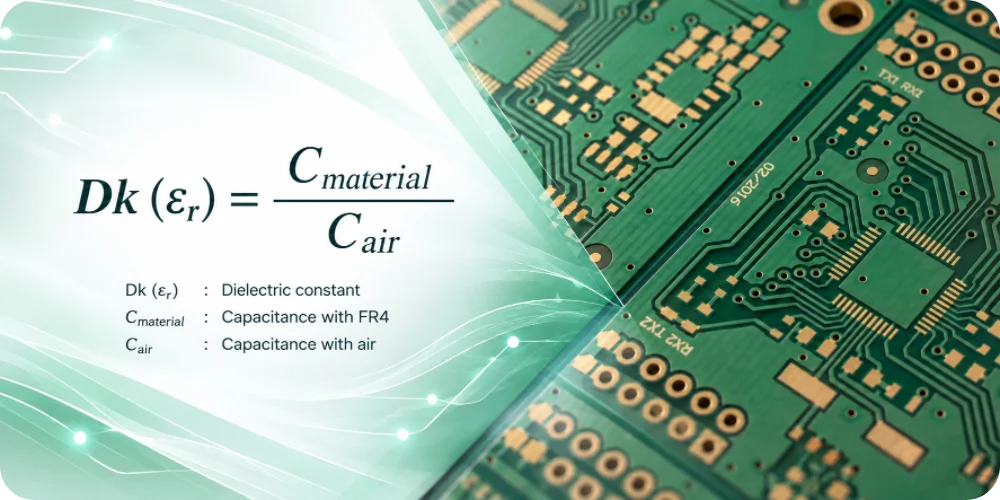
FR4 Dielectric Constant Calculator and PCB Design Guide
How to get a quote for PCBs Let's run DFM/DFA analysis for...
How to get a quote for PCBs
Let‘s run DFM/DFA analysis for you and get back to you with a report. You can upload your files securely through our website. We require the following information in order to give you a quote:
-
- Gerber, ODB++, or .pcb, spec.
- BOM list if you require assembly
- Quantity
- Turn time
In addition to PCB manufacturing, we offer a comprehensive range of electronic services, including PCB design, PCBA, and turnkey solutions. Whether you need help with prototyping, design verification, component sourcing, or mass production, we provide end-to-end support to ensure your project’s success.
For PCBA services, please provide your BOM (Bill of Materials) and any specific assembly instructions. We also offer DFM/DFA analysis to optimize your designs for manufacturability and assembly, ensuring a smooth production process.