
Heavy Copper PCB Manufacturing for Power Electronics

When your electronic design demands exceptional current-carrying capacity and superior thermal management, heavy copper PCBs become the cornerstone of reliable performance. At Highleap Electronics, we specialize in manufacturing and assembling a wide range of PCBs, including standard and heavy copper types, to meet the most demanding industry requirements.
As a leading PCB manufacturer and assembly provider, we have witnessed the growing demand for heavy copper PCBs across various industries, including automotive, renewable energy systems, power electronics, and more. Our state-of-the-art facilities and expertise allow us to produce high-performance PCBs that meet the rigorous standards of industries that require robust electrical conductivity, excellent heat dissipation, and long-term reliability.
Whether you’re developing high-current power electronics, electric vehicle systems, or cutting-edge renewable energy solutions, Highleap Electronics has the experience and technology to deliver the highest quality PCBs tailored to your project’s needs. Our comprehensive services cover everything from design consultation to manufacturing, and assembly, ensuring your project is completed with precision, on time, and within budget.
Understanding Heavy Copper PCB Technology
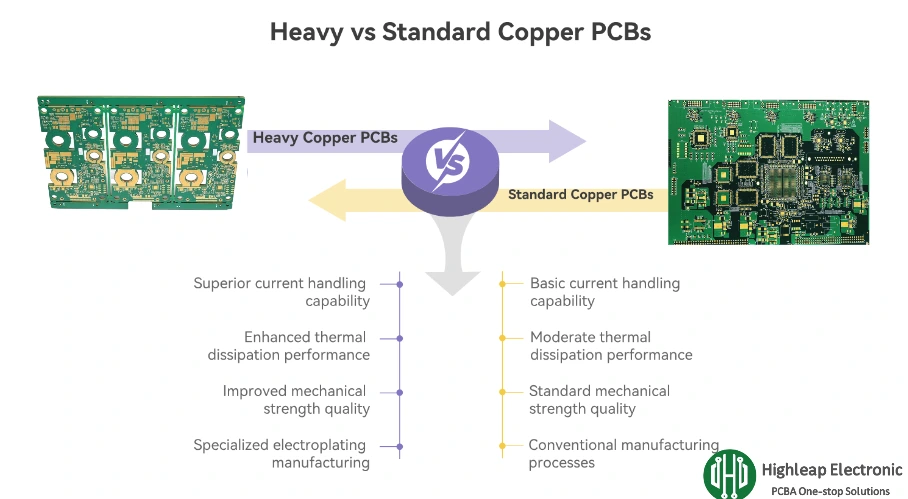
Heavy copper PCBs feature copper trace thickness ranging from 3 oz to 30 oz per square foot, compared to the standard 1 oz copper. This substantial copper weight enables superior current handling, enhanced thermal dissipation, and improved mechanical strength. The manufacturing process involves specialized electroplating techniques to build up copper layers while maintaining precise trace geometry and spacing.
Heavy vs Standard Copper PCBs
While both heavy and standard copper PCBs are used for different applications, the key difference lies in the copper thickness and their respective capabilities:
- Standard Copper PCBs: Typically use copper thicknesses ranging from 1 oz to 2 oz per square foot. These boards are ideal for low to moderate current applications and are commonly found in consumer electronics and signal transmission circuits.
- Heavy Copper PCBs: Use copper thicknesses ranging from 3 oz to 30 oz per square foot, making them suitable for high-current and high-power applications. These are commonly used in industries such as power electronics, automotive, and renewable energy systems, where high thermal and electrical performance is required.
Key Advantages of Heavy Copper PCBs:
-
High Current Capacity: Can support 10-200+ amperes depending on copper weight and trace width.
-
Excellent Heat Dissipation: Reduces hot spots and improves overall thermal management.
-
Enhanced Durability: Provides mechanical robustness for harsh operating environments.
-
Low Impedance: Minimizes voltage drops in power distribution networks.
Heavy Copper PCB Manufacturing Process: A Step-by-Step Guide (Double-Sided)
Heavy copper PCBs are essential for applications requiring high current-carrying capacity and effective thermal management. The following is a step-by-step manufacturing process for a double-sided heavy copper PCB, detailing each crucial stage in the production flow.
Manufacturing Process Flow
- Cutting
The base material (usually FR4) is cut to the specified dimensions as per the design requirements. This sets the stage for the rest of the manufacturing process. - Baking After Cutting
After cutting, the PCB material is baked to remove any residual moisture, preventing potential issues like delamination or oxidation during the production stages. - Drilling (Aluminum Sheet Drilling, Slot Milling with Metallization)
Precision drilling is performed to create holes (vias and component holes). Slot milling is used to create additional features such as slots or large holes. Metallization is done in the drilled holes to ensure electrical conductivity between layers, especially for double-sided PCBs. - Deburring
After drilling, any burrs or rough edges around the holes are removed to ensure smooth and clean edges, preventing issues in the soldering or assembly stages. - Electroless Copper Plating
A thin layer of copper is deposited in the drilled holes via an electroless copper plating process. This is a critical step to ensure that the vias are conductive, allowing electrical signals to pass between the two PCB layers. - Copper Plating
The next step involves copper electroplating, which thickens the copper on the surface and inside the holes. This ensures the PCB can carry the required high current without overheating. - Outer Layer Dry Film
A photosensitive dry film is applied to the outer surfaces of the PCB. This film will later be exposed to UV light to transfer the circuit design onto the copper surface. - Dry Film Inspection
The dry film is inspected for any defects such as air bubbles or cracks to ensure that it adheres properly and will function correctly in the next stages of the photolithography process. - Pattern Plating
The circuit design is transferred onto the dry film using UV light exposure. Once the circuit is exposed, the pattern plating process is used to deposit copper onto the desired regions of the PCB to form the traces and pads for components. - Outer Layer Etching (Thiourea Cleaning)
The excess copper is etched away using a thiourea cleaning solution, leaving behind the copper traces that form the final circuit pattern. - Outer Layer AOI (Automated Optical Inspection)
An Automated Optical Inspection (AOI) is performed to check for any defects in the outer layer, such as open circuits, short circuits, or misalignments, ensuring the design is correctly implemented. - Brushing
After etching and AOI, the PCB is brushed to remove any residues left from the etching process, ensuring the surface is clean and smooth for further processing. - Solder Mask Plugging
Non-plated holes that do not require electrical connections are plugged with solder mask. This is done to prevent solder from entering these holes during assembly. - Solder Mask Application
A layer of solder mask is applied to the PCB to cover areas that are not meant to be soldered. This layer protects the board from oxidation and prevents short circuits. - Solder Mask Inspection
After the solder mask application, a detailed inspection is carried out to ensure that the mask is uniformly applied and that there are no overflows into areas that require soldering. - Silkscreen Printing
Silkscreen printing is performed to add component labels, part numbers, and other necessary markings on the PCB. This step ensures that the assembly process can proceed smoothly. - Surface Finish (HASL, ENIG)
Surface finishes, such as HASL (Hot Air Solder Leveling) or ENIG (Electroless Nickel Immersion Gold), are applied to ensure a clean, solderable surface for the component placement and soldering process. - Impedance Testing (If Applicable)
For high-frequency or high-speed applications, impedance testing is performed to ensure the PCB meets the required impedance for signal integrity. - Electrical Testing
Comprehensive electrical testing is performed to verify that all the circuits are functional, including checking for open or short circuits and confirming that the board meets its electrical specifications. - Second Drilling, V-Cut
Second drilling is performed for non-metallic holes that were not suitable for the first drilling process. These holes are typically non-electrical vias that need to be drilled separately.
V-Cut is performed to score the PCB along the panel, making it easier to separate individual boards later. - Routing
The PCB is routed to its final shape and dimensions, ensuring the edges are smooth and conform to the design specifications. - Functional Testing
Functional testing is performed to ensure that the PCB operates correctly under real-world conditions, verifying that all circuits and components perform as expected. - Final Inspection
A final inspection is conducted to check for any defects in both the physical and electrical characteristics of the PCB. This step ensures the PCB meets all quality standards. - Packaging
The finished PCBs are carefully packaged to protect them during transport and handling. The packaging is designed to prevent damage, such as physical deformation or electrostatic discharge (ESD). - Finished Goods Warehouse
After packaging, the PCBs are stored in a finished goods warehouse, awaiting shipment to customers or for further assembly.
Design Considerations for Heavy Copper PCBs
Designing heavy copper PCBs requires careful attention to specific factors to ensure the PCB performs as intended. Below are key considerations:
- Copper Thickness: Heavy copper is typically defined by its thickness (measured in ounces per square foot). The copper weight selection directly impacts the PCB’s current-carrying capacity. For applications involving high power, thicker copper layers are essential to prevent overheating and ensure reliability.
- Thermal Management: Heavy copper PCBs are often used in high-power applications that generate heat. Integrating thermal vias, heat sinks, and thermal relief into the design can significantly improve the PCB’s thermal dissipation capacity.
- Trace Width and Spacing: The current-carrying capacity of a trace is dependent on its width and the thickness of the copper layer. Designers must carefully calculate the trace width and spacing to handle the required current while preventing excessive heat buildup.
- Via Design: For multi-layer PCBs, the via design is crucial. Through-hole vias are generally preferred for their reliability in heavy copper applications, while blind and buried vias can be used for more compact designs.
- Component Placement: High-current components should be placed in areas where they can dissipate heat efficiently. Component placement should also minimize signal interference and ensure proper thermal management.
Best Practices for Heavy Copper PCB Manufacturing
To ensure optimal performance and quality, following these best practices during the manufacturing of heavy copper PCBs is essential:
- Use High-Quality Materials: Always select materials that can withstand the demands of heavy copper applications, ensuring the base material supports the thickness of the copper and provides good thermal stability.
- Control Process Parameters: Tightly control the copper plating, etching, and drilling parameters to ensure uniformity and consistency across the entire board. Variations in these processes can lead to performance issues.
- Test Thoroughly: Perform rigorous electrical testing, thermal cycling tests, and impedance tests to ensure that the PCB can handle high-current and high-power applications without failure.
- Ensure Proper Design for Manufacturing (DFM): Collaborate with manufacturers early in the design phase to ensure that the PCB is designed for manufacturability. This helps avoid costly design errors that may arise during the manufacturing process.
- Work with Experienced Manufacturers: Partner with PCB manufacturers who have experience in heavy copper and high-power applications to ensure that the board is produced to the highest standards.
By following these considerations and best practices, you can ensure that the heavy copper PCB meets the necessary electrical, mechanical, and thermal requirements, and performs reliably in high-power applications.
Heavy Copper PCB Assembly Considerations
Component Selection and Placement Strategy
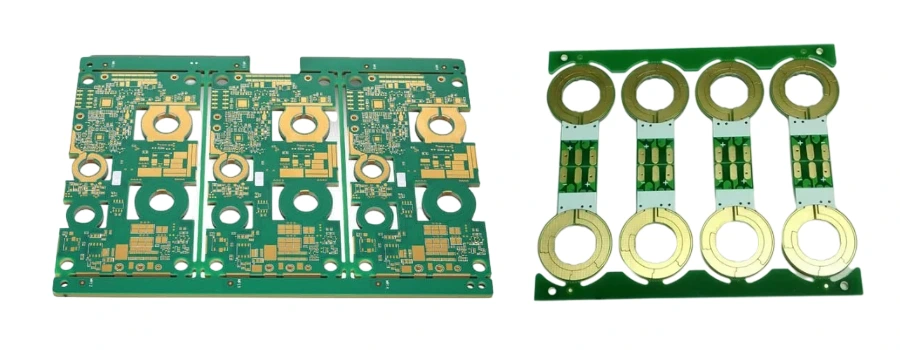
Heavy copper PCB assembly presents unique challenges that require specialized expertise. The increased copper mass affects thermal profiles during soldering, necessitating adjusted reflow parameters and potentially different solder alloys.
Power electronic components such as MOSFETs, IGBTs, and large capacitors are often used in heavy copper assemblies. These components require careful thermal management planning and may necessitate additional cooling solutions like thermal vias, heat sinks, or even liquid cooling interfaces.
Key Assembly Considerations:
-
Solder Paste Application: Modified stencil designs to accommodate increased copper thickness and ensure proper solder paste volume.
-
Reflow Profile Optimization: The increased thermal mass of heavy copper necessitates longer heating times and potentially higher peak temperatures.
-
Component Mounting Pressure: Heavier components and substantial copper mass require adjusted mounting pressures to ensure proper joint formation.
Shipping and Logistics Considerations
One often overlooked aspect of heavy copper PCB assembly projects involves shipping regulations and logistics planning. Large capacitors, commonly used in power electronic assemblies, may be subject to transportation restrictions, especially in air freight. These components may be classified as dangerous goods due to their energy storage potential.
Shipping Best Practices:
-
Pre-Assembly Planning: We recommend early consultation with logistics partners to understand shipping limitations and plan alternative routing if necessary.
-
Documentation Requirements: Proper documentation for high-capacity components ensures smooth customs clearance and regulatory compliance.
-
Packaging Considerations: Heavy copper assemblies require robust packaging to prevent damage during transportation, adding to shipping costs and delivery timelines.
Partner with Highleap Electronics for Your Heavy Copper PCB Needs
At Highleap Electronics, we take a holistic approach to heavy copper PCB manufacturing and assembly. From initial design consultation to final testing and logistics coordination, we ensure every aspect of your project is handled with precision and expertise. With years of experience, we understand the critical nature of heavy copper applications and prioritize reliability to ensure your product performs flawlessly in high-power environments.
Why Choose Highleap Electronics?
-
Advanced Manufacturing Capabilities
Our state-of-the-art facilities are equipped to handle copper weights up to 30 oz, with strict precision control and a robust quality assurance process. We ensure that every board meets the highest standards for performance and durability. -
Specialized Assembly Expertise
We specialize in heavy copper PCB assembly, optimizing processes for high-power components and ensuring that your board performs efficiently in even the most demanding applications. -
Comprehensive Logistics Support
We manage the entire shipping process, including regulatory compliance for restricted components, ensuring smooth and timely delivery. No matter your location, we can coordinate the logistics to meet your needs. -
Design Optimization and Engineering Support
Our expert engineers work closely with you to optimize your heavy copper PCB design, ensuring that it is not only manufacturable but also optimized for performance and efficiency.
Conclusion
Heavy copper PCB manufacturing and assembly require specialized expertise that extends far beyond traditional PCB processes. From managing complex manufacturing parameters to navigating shipping restrictions for high-power components, success depends on partnering with an experienced manufacturer who understands these unique challenges.
At Highleap Electronics, we’ve built our reputation on delivering heavy copper solutions that meet the demanding requirements of power electronics applications. Our integrated approach to PCB manufacturing and PCB assembly, combined with comprehensive logistics support, ensures your heavy copper PCB project achieves its performance objectives while meeting schedule and budget requirements.
Contact our engineering team today to discuss your heavy copper PCB requirements and discover how our expertise can contribute to your project’s success.

Recommended Posts
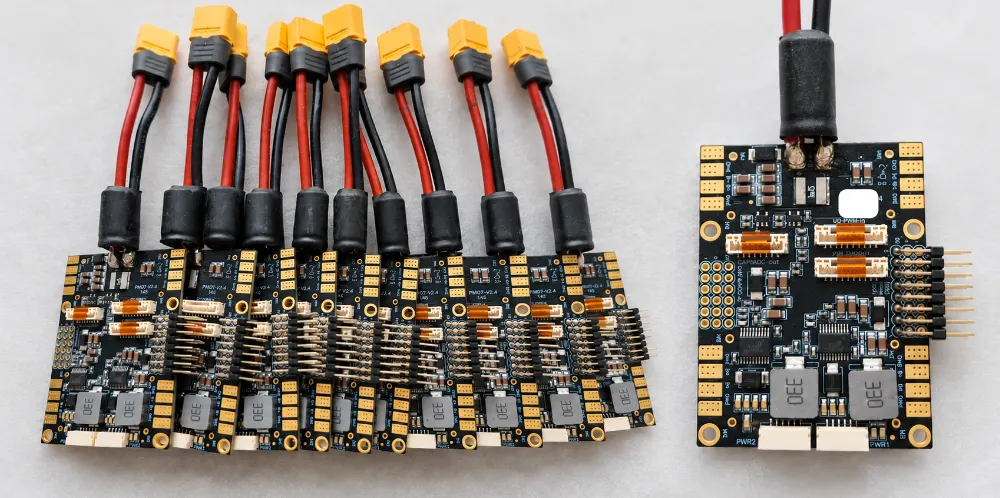
Drone Flight Control Power Distribution Board
Figure 1. Drone Flight Control Power Distribution BoardIf...
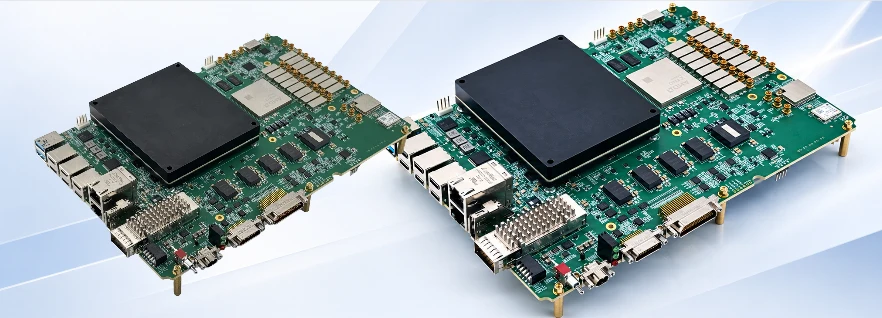
High-Speed RFSoC PCB Manufacturing and Assembly: Key Engineering Considerations
How to get a quote for PCBs Let's run DFM/DFA analysis for...
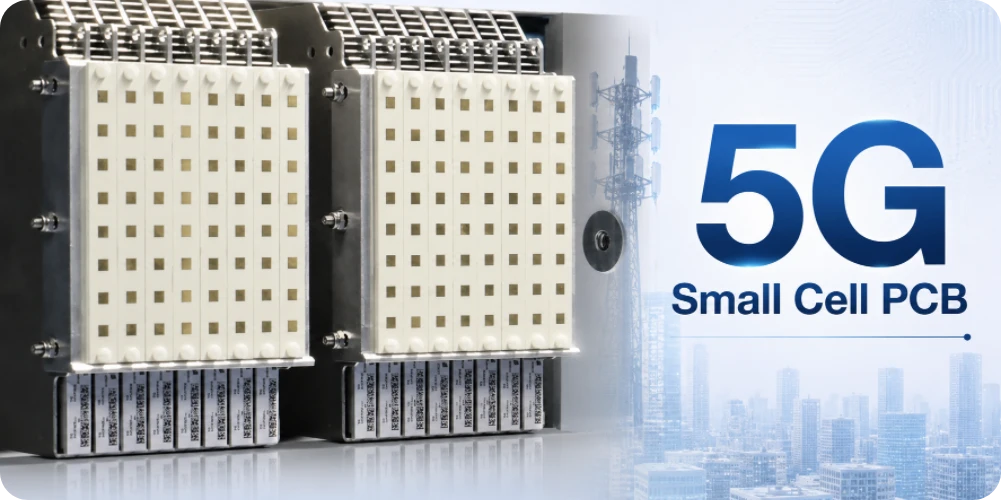
5G Small Cell PCB Manufacturing for RF and Telecom Infrastructure
Table of Contents 5G Small Cell PCB Requirements Depend on...
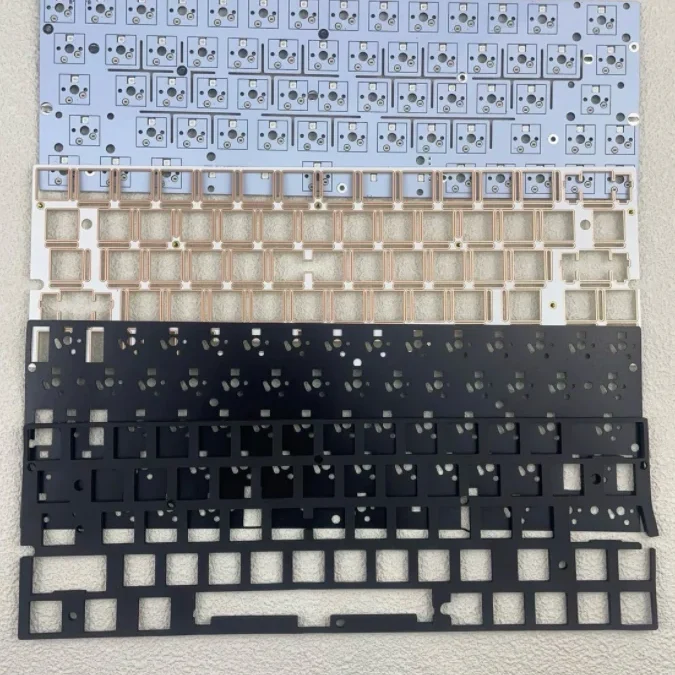
Custom 65% Keyboard PCB and PCBA Manufacturing
Table of contents 1. From Design Files to Production-Ready...
How to get a quote for PCBs
Let‘s run DFM/DFA analysis for you and get back to you with a report. You can upload your files securely through our website. We require the following information in order to give you a quote:
-
- Gerber, ODB++, or .pcb, spec.
- BOM list if you require assembly
- Quantity
- Turn time
In addition to PCB manufacturing, we offer a comprehensive range of electronic services, including PCB design, PCBA, and turnkey solutions. Whether you need help with prototyping, design verification, component sourcing, or mass production, we provide end-to-end support to ensure your project’s success.
For PCBA services, please provide your BOM (Bill of Materials) and any specific assembly instructions. We also offer DFM/DFA analysis to optimize your designs for manufacturability and assembly, ensuring a smooth production process.