
WLCSP: Wafer-Level Chip-Scale Packaging Technology Explained

Figure 1. WLCSP
Introduction to WLCSP
As electronic devices continue to shrink while demanding higher performance, IC packaging technology has become a critical enabler of innovation. WLCSP (Wafer-Level Chip-Scale Packaging) represents a significant advancement in semiconductor packaging, offering a compact solution that meets the stringent requirements of modern electronics.
This packaging approach eliminates traditional substrates and lead frames, enabling direct chip-to-PCB connections. In the following sections, we examine the definition, structure, manufacturing process, and practical applications of WLCSP technology.
Definition of WLCSP
What is WLCSP?
WLCSP stands for Wafer-Level Chip-Scale Packaging. Unlike conventional packaging methods where chips are first singulated and then individually packaged, WLCSP completes all packaging steps while the die remains on the wafer. The final package size is essentially equal to the silicon die itself, meeting the chip-scale package criterion of being no larger than 1.2 times the die dimensions.
WLCSP vs Traditional Packaging
Traditional packaging formats such as BGA and QFN require an intermediate substrate or lead frame between the chip and the PCB. WLCSP eliminates these layers entirely. The result is a true chip-scale solution where solder balls are formed directly on the wafer surface, and dicing occurs as the final step. This approach fundamentally changes the packaging paradigm from chip-then-package to package-then-dice.

Figure 2. WLCSP Structure
WLCSP Structure and Characteristics
Typical WLCSP Structure
A standard WLCSP consists of the silicon die with a redistribution layer (RDL) that routes bond pad connections to a uniform ball grid array. Solder bumps are deposited directly onto the RDL, providing the electrical and mechanical interface to the PCB. A passivation or protective layer covers the active circuitry. No wire bonds, lead frames, or packaging substrates are present in this minimalist architecture.
Key Structural Characteristics
The WLCSP format achieves exceptional miniaturization and high interconnect density. Package thickness is determined primarily by the wafer thickness plus solder ball height, typically resulting in profiles under 0.5mm. The direct die-to-board connection creates the shortest possible electrical path, which is particularly advantageous for high-frequency applications requiring minimal parasitic inductance and capacitance.
WLCSP Manufacturing Process
Wafer Preparation and RDL Formation
WLCSP fabrication begins with completed wafers from the front-end process. A dielectric layer is deposited, followed by metal redistribution layer patterning that fans out the original bond pad locations to a standardized ball grid pitch. This RDL step is critical for accommodating various die designs into a uniform package footprint suitable for SMT assembly.
Solder Bump Formation
Under-bump metallization (UBM) is applied to prepare surfaces for solder attachment. Solder balls are then placed or solder paste is deposited at each connection point, followed by reflow to form uniform spherical bumps. Ball pitch typically ranges from 0.3mm to 0.5mm depending on I/O count and application requirements. Quality inspection ensures bump coplanarity and dimensional consistency.
Testing and Singulation
Wafer-level testing is performed to identify known-good-die before singulation. The wafer is then diced into individual WLCSP units using blade or laser cutting. Each singulated device is a complete package ready for board-level assembly. This batch processing approach at wafer level offers significant throughput advantages over traditional single-chip packaging methods.
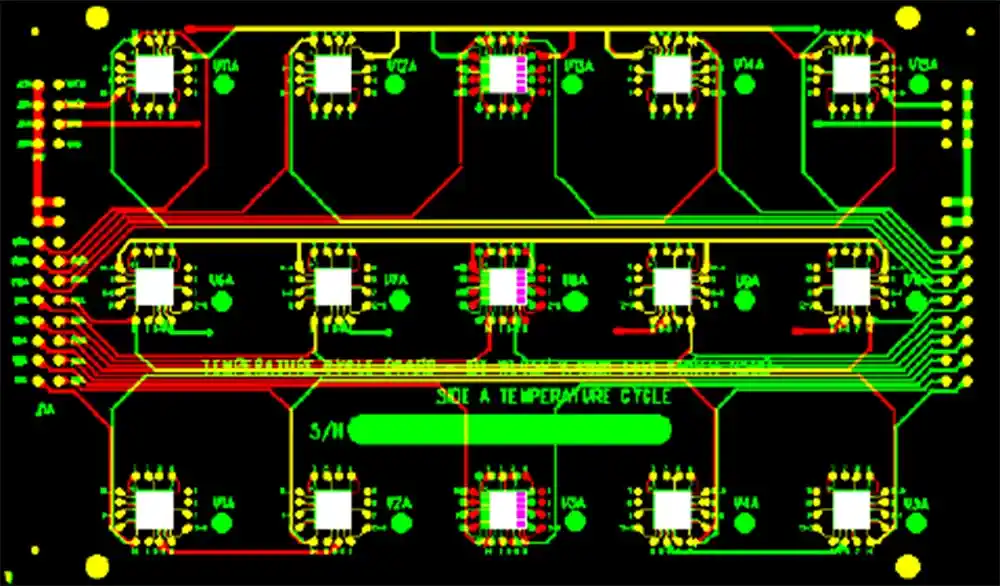
Figure 3. PCB Layout Design for WLCSP Components
Advantages of WLCSP
Size and Electrical Performance
WLCSP delivers the smallest possible package footprint, enabling higher component density on PCB designs. The elimination of bond wires and substrate layers dramatically reduces parasitic resistance, inductance, and capacitance. These electrical characteristics make WLCSP ideal for RF, power management, and high-speed digital applications where signal integrity is paramount.
Thermal Performance and Assembly
Direct die attachment to the PCB provides an efficient thermal path for heat dissipation. The silicon die conducts heat through solder balls directly to board-level thermal management features. WLCSP is fully compatible with standard SMT reflow processes, requiring no specialized assembly equipment. This compatibility simplifies integration into existing production lines.
WLCSP Limitations and Challenges
PCB Design Requirements
Successful WLCSP implementation demands precise PCB design and fabrication. Fine-pitch solder ball arrays require tight pad registration tolerances and controlled solder paste deposition. PCB trace routing beneath WLCSP footprints must accommodate via placement constraints. Design teams must account for these factors during schematic capture and layout phases.
Mechanical and Reliability Considerations
Without an encapsulant or protective substrate, WLCSP packages exhibit limited mechanical robustness compared to molded alternatives. CTE mismatch between silicon and FR-4 substrates creates stress on solder joints during thermal cycling. Board-level reliability assessment is essential, particularly for applications experiencing mechanical shock or wide temperature excursions. Underfill application may be required for enhanced reliability.
Testing and Rework Challenges
Post-assembly inspection of WLCSP joints requires X-ray imaging due to hidden solder connections beneath the die. Rework of failed WLCSP components is technically challenging and risks collateral damage to adjacent components on dense assemblies. These factors emphasize the importance of robust process controls throughout SMT assembly to achieve high first-pass yield.
WLCSP Applications
Mobile and Consumer Electronics
WLCSP has become the preferred package for smartphones and tablets where board real estate is at a premium. Power management ICs, audio codecs, sensors, and connectivity modules commonly adopt this format. The thin profile supports slim device designs while maintaining excellent electrical performance for RF and mixed-signal functions.
Wearables and IoT Devices
Wearable technology and IoT applications leverage WLCSP for extreme miniaturization requirements. Fitness trackers, smartwatches, and wireless sensor nodes benefit from the compact form factor. Low-power microcontrollers, MEMS sensors, and wireless transceivers in WLCSP enable product designs previously impossible with conventional packaging solutions.
Conclusion
WLCSP represents a mature and essential packaging technology for space-constrained, high-performance electronic designs. Its wafer-level processing approach delivers true chip-scale dimensions with superior electrical characteristics. While PCB design precision and reliability management require careful attention, the benefits of WLCSP—minimal footprint, excellent signal integrity, and efficient thermal performance—make it indispensable for modern portable electronics. As device miniaturization continues, WLCSP will remain a cornerstone technology in advanced PCB assembly and electronic manufacturing.

Recommended Posts
Racing Wheel Controller PCB Manufacturing & Assembly for Force-Feedback and Direct-Drive Gaming Systems
Highleap Electronics provides PCB fabrication and PCBA for...
FR4 Dielectric Constant Calculator and PCB Design Guide
How to get a quote for PCBs Let's run DFM/DFA analysis for...
GPS Sports Watch PCB Design: GNSS, RF, Sensors and PCBA Manufacturing
Turning a compact GPS sports watch controller from an...
Cellular Modem PCB: From Module Carriers to PCBA
Need a manufacturer for a cellular modem PCB or a fully...
How to get a quote for PCBs
Let‘s run DFM/DFA analysis for you and get back to you with a report. You can upload your files securely through our website. We require the following information in order to give you a quote:
-
- Gerber, ODB++, or .pcb, spec.
- BOM list if you require assembly
- Quantity
- Turn time
In addition to PCB manufacturing, we offer a comprehensive range of electronic services, including PCB design, PCBA, and turnkey solutions. Whether you need help with prototyping, design verification, component sourcing, or mass production, we provide end-to-end support to ensure your project’s success.
For PCBA services, please provide your BOM (Bill of Materials) and any specific assembly instructions. We also offer DFM/DFA analysis to optimize your designs for manufacturability and assembly, ensuring a smooth production process.