
Ceramic PCBs for Power Electronics | High-Performance Solutions

Introduction
In power electronics and high-brightness LED systems, efficient heat management is crucial for performance and reliability. Ceramic PCBs for power electronics offers superior thermal conductivity and insulation compared to traditional FR4 or metal-based PCBs, making it ideal for demanding environments such as IGBT modules, power converters, and LED lighting systems.
As power densities continue to increase in modern electronic devices, the limitations of conventional substrates become increasingly apparent. Ceramic substrates address these challenges by combining excellent thermal properties with robust electrical insulation and mechanical stability, enabling engineers to push performance boundaries while maintaining long-term reliability.
Why Thermal Management Matters in Power Electronics
Power semiconductor devices such as MOSFETs, IGBTs, and high-power LEDs convert a significant portion of electrical energy into heat during operation. In IGBT modules, switching losses and conduction losses can generate heat densities exceeding 100 W/cm², while LED chips convert over 50% of their input power into thermal energy rather than visible light.
Without adequate thermal management, junction temperatures can exceed safe operating limits, leading to parametric drift, reduced switching speeds, and ultimately catastrophic failure. Ceramic PCBs for power electronics provides the essential thermal pathway to dissipate this heat efficiently, maintaining junction temperatures within acceptable ranges and ensuring consistent performance over the product lifetime.
Core Properties of Ceramic PCBs for Power Electronics & LED Applications
The superior performance of ceramic PCBs for power electronics stems from several fundamental material properties that directly address the thermal and electrical challenges in high-power applications:
| Property | Typical Value | Relevance |
|---|---|---|
| Thermal Conductivity | 24 W/m·K (Al₂O₃) 170 W/m·K (AlN) 90 W/m·K (Si₃N₄) |
Heat dissipation efficiency |
| Dielectric Strength | >15 kV/mm | Electrical insulation safety |
| Coefficient of Thermal Expansion (CTE) | 6–8 ppm/°C | Thermal stress matching with Si chips |
| Temperature Resistance | Up to 350°C | High-power reliability and operating range |
Thermal Performance Advantages
Aluminum nitride (AlN) substrates deliver exceptional thermal conductivity approaching 170 W/m·K, making them the preferred choice for ultra-high-power modules where maximum heat spreading is essential. Silicon nitride (Si₃N₄) combines good thermal performance with outstanding mechanical strength and fracture toughness, particularly valuable in automotive and industrial applications subjected to thermal cycling and mechanical shock.
CTE Matching and Electrical Insulation
The low coefficient of thermal expansion in ceramic materials closely matches that of silicon semiconductor chips, minimizing thermomechanical stress during temperature excursions. This CTE compatibility reduces solder joint fatigue and prevents delamination failures that commonly plague metal-core PCBs with mismatched expansion rates. The high dielectric strength enables safe operation at elevated voltages while maintaining compact spacing between high-potential traces.

Ceramic PCBs for LED Systems
Ceramic PCBs for LED Lighting Systems
LED chips present unique thermal challenges due to their concentrated heat generation in small junction areas. Modern high-brightness LEDs convert more than 50% of input electrical power into heat, with junction temperatures directly affecting light output, color stability, and operational lifetime. Traditional FR4 substrates offer thermal conductivity below 0.5 W/m·K, creating severe thermal bottlenecks.
Thermal Performance in LED Applications
Ceramic PCBs for power electronics addresses these limitations by providing thermal conductivity up to 340 times higher than FR4, enabling rapid heat extraction from LED junctions to external heat sinks. The superior heat spreading reduces junction temperatures by 30-50°C compared to metal-core PCBs, significantly extending lumen maintenance and color consistency.
LED Application Domains
Application domains for ceramic LED substrates include:
- Automotive forward lighting – High-intensity headlamps and adaptive lighting systems requiring maximum thermal performance and vibration resistance.
- Outdoor display panels – Large-format LED screens operating in extreme temperature environments with direct sunlight exposure.
- UV LED systems – Curing equipment and sterilization applications where AlN substrates enable high-power UV operation.
- Horticultural grow lights – High-efficiency plant cultivation systems demanding consistent spectral output over extended operating periods.
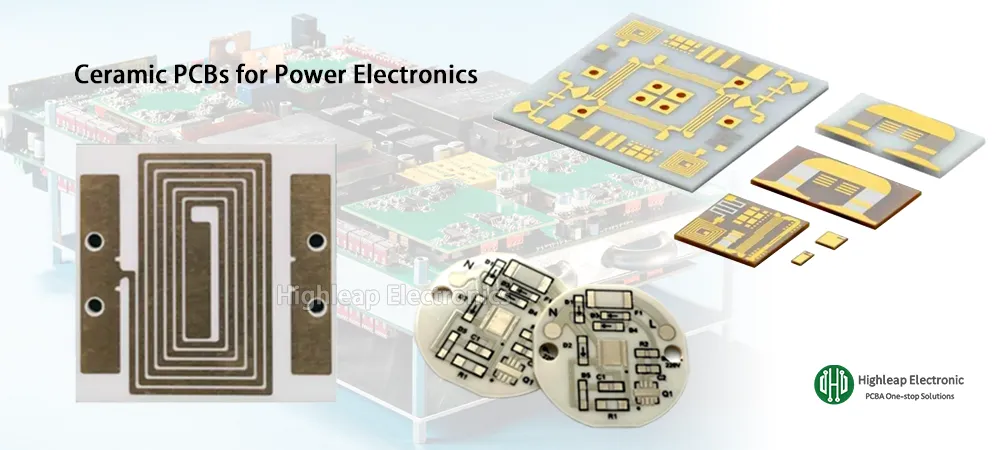
Ceramic PCBs for Power Electronics
Ceramic PCBs for Power Electronics and IGBT Modules
IGBT and power MOSFET modules represent the most demanding application for ceramic PCB technology, with power densities ranging from several hundred watts to kilowatt levels in compact packages. In these assemblies, ceramic substrates serve three critical functions: providing the primary thermal conduction path, maintaining electrical insulation between high-voltage circuits and grounded cooling interfaces, and supplying mechanical support for die attach and wire bonding processes.
Silicon Nitride Performance Advantages
Silicon nitride ceramic PCB excels in power module applications due to its exceptional combination of thermal conductivity, mechanical strength, and thermal shock resistance. The material withstands repeated power cycling without developing microcracks, a common failure mode in alumina substrates under severe thermal gradients.
Power Module Applications
Typical applications for ceramic PCB in power electronics include traction inverters for electric and hybrid vehicles, industrial motor drives, solar inverters, charging infrastructure, uninterruptible power supplies, and welding equipment. The substrates enable compact module designs by eliminating intermediate thermal interface materials and reducing thermal resistance between the semiconductor junction and cooling system.
Material Comparison: Ceramic PCB Substrate Selection
| Property | Al₂O₃ | AlN | Si₃N₄ |
|---|---|---|---|
| Thermal Conductivity | 24 W/m·K | 170 W/m·K | 90 W/m·K |
| Relative Cost | Low | High | Medium-high |
| Mechanical Strength | Moderate | Moderate | Excellent |
| Primary Application | LED lighting, moderate power | Ultra-high-power modules | Automotive IGBT, harsh environments |
Alumina Substrates
Alumina substrates offer the most economical solution for applications where power dissipation remains below 50 W/cm² and operating temperatures stay below 200°C, making them suitable for LED drivers, lower-power converters, and consumer electronics.
Aluminum Nitride Substrates
Aluminum nitride becomes necessary when thermal conductivity drives the design, particularly in densely packed power modules or high-brightness LED arrays where junction temperature must be minimized. The sevenfold improvement in thermal conductivity over alumina justifies the cost premium in applications where reliability and performance are paramount.
Silicon Nitride Substrates
Silicon nitride provides substantially better thermal performance than alumina with superior mechanical properties that resist fracture under thermal shock and mechanical stress, making it the preferred choice for automotive and industrial power modules where robustness is critical.
Design and Assembly Considerations for Ceramic PCB
Manufacturing ceramic PCBs for power electronics employs two primary metallization technologies: Direct Bonded Copper (DBC) and Direct Plated Copper (DPC). DBC technology bonds thick copper foils to ceramic substrates through a high-temperature oxidation process, typically achieving copper thicknesses from 200 to 400 micrometers suitable for high-current applications.
Thermal Expansion Management
Thermal expansion matching between materials throughout the assembly stack requires careful attention during design. While ceramic substrates closely match silicon chip CTE, the bonded copper layers introduce mismatch that generates shear stress during temperature cycling. Designers must account for this stress through appropriate copper thickness selection, die attach material choice, and assembly process optimization.
Engineering Support and Validation
Highleap Electronics provides comprehensive design-for-manufacturability review for ceramic PCB projects, evaluating thermal simulation results, copper pattern layouts, and assembly process compatibility before prototype fabrication. Our engineering support includes material selection guidance, prototype validation with thermal imaging and reliability testing, and process optimization for volume production.
Conclusion
Ceramic PCBs for power electronics represents the essential enabling technology for modern high-power and LED applications where conventional substrates cannot meet thermal management requirements. The superior thermal conductivity, excellent electrical insulation, and robust high-temperature capability of ceramic materials directly translate into improved system reliability, enhanced performance, and extended operational lifetime.
Highleap Electronics Ceramic PCB Capabilities
- Multi-material expertise – Complete ceramic substrate solutions including alumina, aluminum nitride, and silicon nitride for diverse thermal and mechanical requirements.
- Advanced metallization – Both DBC and DPC technologies with copper thicknesses from 35 to 400 micrometers for optimal current-carrying capacity.
- Engineering collaboration – DFM review, thermal simulation validation, material selection guidance, and reliability testing support throughout development.
- Volume manufacturing – Scalable production from prototype to high-volume with consistent quality and rigorous process controls.
Contact Highleap Electronics to discuss how ceramic PCB technology can enhance your power electronics design and accelerate your product development timeline with our comprehensive manufacturing and engineering support.

Recommended Posts
TG140 PCB Material Selection and Fabrication
Table of Contents TG140 PCB Materials and Selection...
How to Select Tg180 PCB Materials for Custom Boards
Choosing a Tg180 PCB involves more than selecting a...
Tg170 PCB Manufacturing and Assembly for Industrial Electronics
A Tg170 PCB may be specified for industrial electronics,...
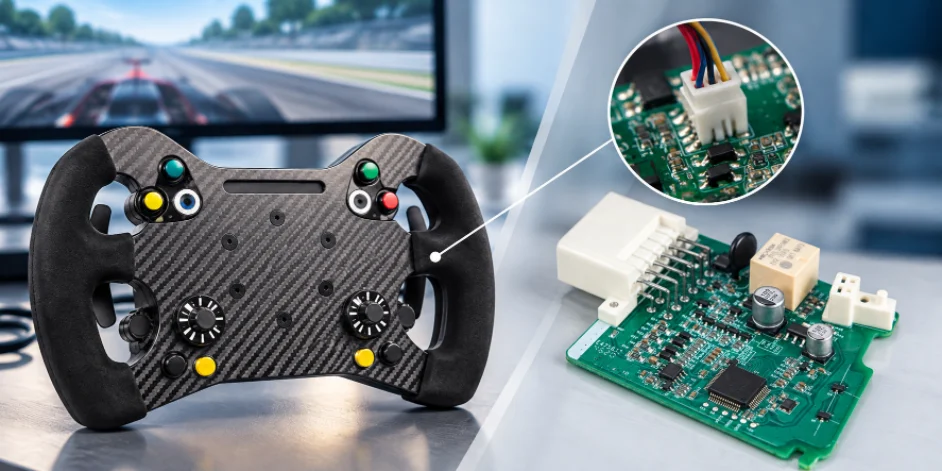
Racing Wheel Controller PCB Manufacturing & Assembly for Force-Feedback and Direct-Drive Gaming Systems
Highleap Electronics provides PCB fabrication and PCBA for...
How to get a quote for PCBs
Let‘s run DFM/DFA analysis for you and get back to you with a report. You can upload your files securely through our website. We require the following information in order to give you a quote:
-
- Gerber, ODB++, or .pcb, spec.
- BOM list if you require assembly
- Quantity
- Turn time
In addition to PCB manufacturing, we offer a comprehensive range of electronic services, including PCB design, PCBA, and turnkey solutions. Whether you need help with prototyping, design verification, component sourcing, or mass production, we provide end-to-end support to ensure your project’s success.
For PCBA services, please provide your BOM (Bill of Materials) and any specific assembly instructions. We also offer DFM/DFA analysis to optimize your designs for manufacturability and assembly, ensuring a smooth production process.