
Silicon Nitride Ceramic PCB | High-Strength Substrate for Power Modules

Introduction
Silicon nitride ceramic PCB represents a significant advancement in substrate technology for high-power electronic systems. As power densities continue to increase in electric vehicles, industrial drives, and renewable energy applications, the demands placed on circuit board materials have intensified dramatically. Silicon nitride (Si₃N₄) ceramic substrates address these challenges through exceptional thermal conductivity, mechanical strength, and insulation stability, enabling efficient thermal management for next-generation power modules and automotive inverters.
What is Silicon Nitride Ceramic PCB?
Silicon nitride ceramic PCB substrates are engineered from silicon nitride, an advanced ceramic material with a crystalline structure that provides unique mechanical and thermal properties. The material is produced through hot-press or gas pressure sintering processes that create a dense, uniform substrate with minimal porosity, resulting in thermal conductivity ranging from 70 to 90 W/m·K for effective heat dissipation from power semiconductor devices.
The substrate typically incorporates copper circuitry bonded through Direct Bonded Copper (DBC) or Active Metal Brazing (AMB) techniques. These metallization methods create a strong metallurgical bond between the copper layer and ceramic substrate without requiring intermediate adhesive materials, maintaining electrical insulation properties while providing low thermal resistance paths for heat removal from critical components.
Silicon Nitride Ceramic PCB vs. Traditional Ceramic Substrates
When evaluated against traditional ceramic substrates, silicon nitride ceramic PCB materials demonstrate distinct performance characteristics that make them suitable for demanding power electronics applications.
Property
Si₃N₄
AlN
Al₂O₃
Property
Si₃N₄
AlN
Al₂O₃
Property
Si₃N₄
AlN
Al₂O₃
Property
Si₃N₄
AlN
Al₂O₃
Property
Si₃N₄
AlN
Al₂O₃
Silicon nitride ceramic PCB substrates bridge performance gaps between alumina and aluminum nitride. While thermal conductivity falls between these materials, silicon nitride delivers exceptional flexural strength approaching 800 MPa. This mechanical robustness, combined with outstanding thermal shock resistance, enables silicon nitride ceramic PCB assemblies to withstand repeated thermal cycling and mechanical stress that would compromise alternative substrates.
Key Advantages of Silicon Nitride Ceramic PCB
Silicon nitride ceramic PCB technology delivers multiple technical advantages that address the critical challenges in modern power electronics. The material’s unique property combination stems from its crystalline structure and manufacturing process, resulting in performance characteristics particularly suited to high-reliability applications. Mechanical and thermal benefits include:
- Exceptional mechanical strength – Flexural strength near 800 MPa resists thermal cycling stress and prevents substrate cracking during assembly operations.
- Superior thermal shock resistance – Withstands rapid temperature changes from -55°C to 150°C without developing microcracks or delamination.
- Stable electrical insulation – Maintains high dielectric strength and low dielectric constant across wide temperature ranges, preventing voltage breakdown in high-voltage applications.
- Enhanced environmental durability – Resists chemical corrosion and maintains dimensional stability under vibration, humidity, and temperature extremes.
These combined properties make silicon nitride ceramic PCBs a preferred choice for applications demanding both mechanical robustness and thermal reliability under extreme operating conditions.
Design Guidelines for Silicon Nitride Ceramic PCB
Thermal Management Considerations
Thermal management design for silicon nitride ceramic PCB assemblies requires careful attention to copper thickness and circuit layout. The coefficient of thermal expansion mismatch between copper and silicon nitride necessitates appropriate copper thickness selection to manage thermal stress during temperature cycling. Designers typically specify copper layers between 0.3 and 0.6 millimeters thick, balancing current carrying capacity against mechanical stress considerations for optimal silicon nitride ceramic PCB performance.
Assembly Process Requirements
Soldering and attachment processes demand controlled thermal profiles to prevent excessive stress accumulation in silicon nitride ceramic PCB assemblies. Reflow soldering profiles should incorporate gradual heating and cooling ramps that allow stress relaxation within the assembly structure. Lead-free solder alloys with appropriate melting points and mechanical properties minimize thermal cycling damage while maintaining reliable electrical connections.
Cost-Performance Optimization
Cost factors influence material selection decisions, as silicon nitride ceramic PCB substrates command premium pricing compared to aluminum oxide alternatives. Applications requiring maximum reliability and extended operational lifetime justify this investment through reduced warranty expenses and improved system performance. Design teams should evaluate total cost of ownership rather than substrate cost alone when selecting materials for critical power electronics applications.
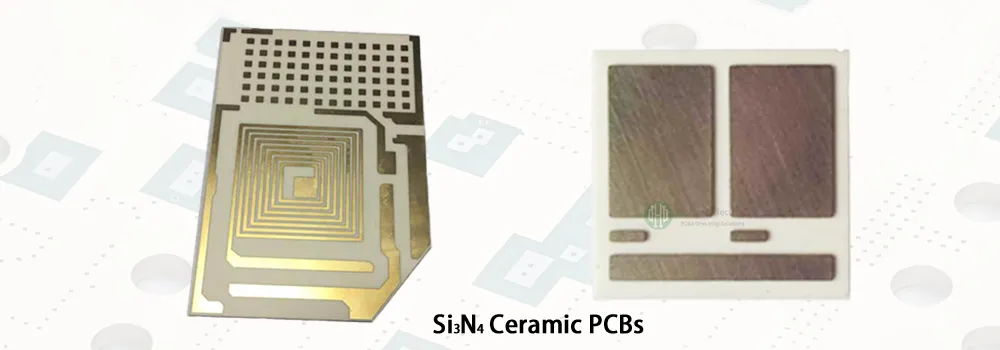
Manufacturing Process for Silicon Nitride Ceramic PCB
Substrate Fabrication
The production of silicon nitride ceramic PCB substrates begins with powder preparation and forming operations. Silicon nitride powder is combined with sintering aids and pressed into green bodies with precise dimensional control. These substrates undergo sintering at elevated temperatures under controlled atmospheres, typically using hot-press or gas pressure sintering methods to achieve full densification and the mechanical strength required for power electronics applications.
Copper Metallization
Copper circuit layers are bonded to the sintered ceramic substrate through specialized metallization processes. Direct Bonded Copper technology requires precise temperature control around 1080°C to establish metallurgical adhesion without compromising substrate integrity. Active Metal Brazing employs active metal layers that chemically bond to the ceramic surface, providing an alternative approach for specific silicon nitride ceramic PCB applications.
Circuit Patterning and Quality Control
Surface treatment and circuit patterning follow copper bonding operations. Photolithographic techniques define circuit patterns, and etching processes remove unwanted copper to create the final circuit geometry. Quality control procedures verify thermal resistance, insulation voltage, copper adhesion strength, and dimensional accuracy before silicon nitride ceramic PCB assemblies are released for power module integration.
Primary Applications for Silicon Nitride Ceramic PCB
Electric Vehicle Power Electronics
Silicon nitride ceramic PCB substrates have become integral to electric vehicle propulsion inverters and onboard charging systems. These applications demand substrates that withstand continuous thermal cycling while maintaining electrical insulation under high operating voltages. The mechanical strength prevents damage during vehicle vibration and road shock, ensuring consistent performance throughout vehicle lifetime.
IGBT and Power Semiconductor Modules
IGBT and silicon carbide MOSFET modules increasingly incorporate silicon nitride ceramic PCB substrates to improve thermal management and reliability. The substrate’s thermal properties enable higher current densities while maintaining junction temperatures within acceptable limits, supporting advanced packaging configurations that minimize parasitic inductance and thermal resistance.
Industrial Motor Drives
Variable frequency drives for industrial motors operate under harsh factory environments with temperature fluctuations, vibration, and electrical noise. Silicon nitride ceramic PCB assemblies provide the reliability and thermal performance necessary for continuous operation in these demanding conditions, preventing failures in high-voltage motor control applications while supporting compact drive designs.
Aerospace Power Systems
Aircraft power distribution systems, radar transmitters, and defense electronics require power modules that function reliably across extreme temperature ranges. Silicon nitride ceramic PCB technology meets these requirements through exceptional thermal shock resistance and mechanical strength, with material stability under radiation exposure extending applicability to space-based power systems.
Conclusion
Silicon nitride ceramic PCB technology has established itself as a premier substrate solution for demanding power electronics applications. The material’s combination of mechanical strength, thermal shock resistance, and reliable electrical insulation addresses the challenges posed by increasing power densities and harsh operating environments. As electric vehicles, renewable energy systems, and industrial automation continue advancing, silicon nitride ceramic PCB assemblies will play an increasingly important role in enabling robust, efficient power conversion.
Highleap Electronics delivers comprehensive silicon nitride ceramic PCB manufacturing capabilities:
- Advanced ceramic substrate processing – Precision DBC and AMB metallization for optimal thermal and mechanical performance
- Quality assurance expertise – Rigorous testing protocols for thermal resistance, insulation voltage, and copper adhesion verification
- Engineering support services – Design consultation for thermal management optimization and material selection guidance
- High-reliability manufacturing – Process controls tailored for automotive, aerospace, and industrial power electronics requirements

Recommended Posts
Hard Gold Finger PCB Manufacturing: Plating and Beveling
Hard gold finger PCB manufacturing is used when a circuit...
Small PCB Panelization: Array Design and Depaneling
Imagine a 26 × 18 mm circuit that must pass through...
PCB Panelization for Volume Production: Cost and Yield
A fabrication panel that holds more boards is not...
PCB SET Delivery and Panelization: Quantities and Acceptance
A purchase order for “500 SET” looks straightforward until...
How to get a quote for PCBs
Let‘s run DFM/DFA analysis for you and get back to you with a report. You can upload your files securely through our website. We require the following information in order to give you a quote:
-
- Gerber, ODB++, or .pcb, spec.
- BOM list if you require assembly
- Quantity
- Turn time
In addition to PCB manufacturing, we offer a comprehensive range of electronic services, including PCB design, PCBA, and turnkey solutions. Whether you need help with prototyping, design verification, component sourcing, or mass production, we provide end-to-end support to ensure your project’s success.
For PCBA services, please provide your BOM (Bill of Materials) and any specific assembly instructions. We also offer DFM/DFA analysis to optimize your designs for manufacturability and assembly, ensuring a smooth production process.