
Heavy Copper PCB Quality Control: Ensuring Reliability Under High Current Loads

Introduction
Heavy Copper PCB Quality Control is essential for ensuring consistent reliability under high current and thermal stress conditions. Heavy copper PCBs serve critical functions in power converters, automotive electronics, and industrial control systems where current loads exceed conventional circuit board capabilities. Their reliability directly depends on precise copper thickness control, lamination integrity, and inspection accuracy throughout the manufacturing process. Any deviation in copper uniformity, via filling quality, or structural integrity can lead to thermal hotspots, current path failures, or premature board degradation.
Key Stages in Heavy Copper PCB Quality Control
Quality control for heavy copper PCB manufacturing follows a structured approach spanning material receipt through final validation. Each production stage requires specific inspection protocols that verify dimensional accuracy, structural integrity, and electrical performance before boards advance to subsequent operations.
Incoming Material Inspection
Material verification confirms copper foil thickness tolerances, prepreg resin content consistency, and substrate flatness before fabrication begins. Base material quality directly affects lamination outcomes and copper adhesion strength, making this initial checkpoint critical for preventing systemic defects that would only surface during final testing or field operation.
In-Process Control
Real-time monitoring tracks trace width accuracy, etching precision, plating uniformity, and layer-to-layer registration during production. Continuous measurement generates data points that indicate process stability and enable immediate correction when parameters drift toward specification limits, preventing defect propagation across entire production panels.
Final Inspection and Validation
Comprehensive inspection combines automated optical analysis, X-ray imaging, electrical continuity testing, and environmental stress screening. This multi-method approach validates that finished boards meet design specifications and can withstand operational conditions including sustained current flow and thermal cycling.

Automated Optical Inspection Equipment
AOI and Visual Inspection in Heavy Copper PCB Quality Control
Automated Optical Inspection
AOI systems detect conductor defects that compromise current-carrying capacity and circuit integrity:
- Open circuits and incomplete traces – Identifies etching defects that create high-resistance paths or complete breaks in conductor routing.
- Short circuits between adjacent traces – Detects copper bridging or insufficient clearance that causes unintended current paths.
- Over-etching and dimensional variations – Verifies that trace widths remain within tolerance for specified current ratings.
- Copper burrs and surface irregularities – Locates edge defects that may penetrate solder mask or create sharp protrusions.
Detection algorithms require calibration for copper weights of 3 oz or greater, as thicker traces present different optical signatures than standard copper. Camera resolution and illumination angles must accommodate the dimensional characteristics and reflective properties of heavy copper features.
Visual Inspection Verification
Manual inspection identifies surface anomalies that automated systems may misclassify, particularly solder mask adhesion quality, surface finish uniformity, and transition zones where thick copper meets finer features. This secondary verification creates redundancy that improves overall defect detection rates.
X-ray Inspection for Internal Quality Control
Via Filling and Internal Structure
X-ray imaging reveals defects invisible to surface inspection, particularly in multilayer constructions exceeding 6 oz copper weight. The technology verifies via barrel integrity, plated through-hole filling, and inner-layer alignment without destructive cross-sectioning that only samples limited board locations.
Incomplete via fills create resistance discontinuities that generate localized heating under current flow. X-ray inspection confirms solid copper continuity through the entire via barrel, from entry pad to exit pad, ensuring reliable current conduction and heat transfer across board layers.
Plating Void Detection
Internal voids within plated through-holes or blind vias compromise structural integrity and current-carrying capacity. X-ray analysis detects these defects by showing variations in material density that indicate incomplete copper deposition. Early detection prevents field failures that occur when thermal expansion stress concentrates at void boundaries, propagating cracks through via barrels.
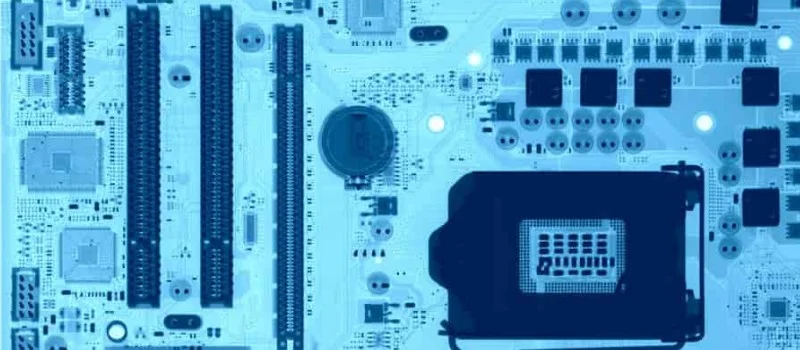
X-ray Inspection
Copper Thickness Measurement for Quality Assurance
Cross-Section Analysis
Microsection preparation exposes internal board structure for direct thickness measurement across inner and outer layers. Sample points span board corners, center regions, and high-density areas to characterize copper distribution uniformity. This destructive method provides reference standards that validate non-destructive measurement accuracy and verify that electroplating achieves specified copper weights.
Non-Destructive Thickness Verification
Eddy current sensors enable 100% panel screening rather than sample-based verification, detecting thickness variations that indicate plating process drift. Contact probe measurements at defined grid points confirm uniformity across production panels, ensuring even current distribution during operation and balanced thermal performance that prevents localized stress concentrations.
Reliability Testing Under High Current Loads
Environmental stress screening validates heavy copper PCB quality control by simulating operational conditions that accelerate latent defect manifestation. Testing protocols confirm that boards withstand electrical, thermal, and mechanical stress throughout their service lifetime.
Thermal Cycling Test
Temperature excursions between -40°C and +125°C simulate power-on and power-off transitions that create expansion and contraction cycles. Repeated cycling reveals via barrel micro-cracks, copper-to-substrate delamination, and solder joint degradation before boards enter service:
- Plated through-hole integrity – Verifies that via barrels maintain electrical continuity without developing cracks from differential expansion between copper and substrate.
- Copper adhesion strength – Confirms that heavy copper layers remain bonded to substrate material under thermal stress cycles.
- Solder joint reliability – Validates component attachment integrity when board expansion rates differ from component package coefficients.
Boards designed for high-current applications must complete hundreds or thousands of cycles without electrical parameter degradation or visible structural damage.
Vibration and Shock Testing
Mechanical stress testing addresses automotive and aerospace requirements where boards experience sustained vibration or periodic shock loads. Test protocols evaluate whether heavy copper weight and structural reinforcement maintain integrity at mounting holes, component attachment points, and trace width transition zones.
Current Load Testing
Continuous operation under rated current conditions monitors temperature distribution and validates thermal management effectiveness. Extended testing reveals inadequate copper thickness, poor via filling, or insufficient heat dissipation that standard electrical testing cannot detect, confirming that temperature rise remains within design limits under sustained current flow.
Data Traceability and Statistical Process Control
Real-Time Process Monitoring
Statistical process control tracks critical parameters including plating bath chemistry, lamination temperature profiles, and drill bit wear patterns. Control charts identify trends approaching specification limits, enabling corrective action before defective products generate. This proactive approach maintains process capability while minimizing scrap generation and rework requirements.
Traceability Systems
Unique identifiers link each production panel to measured parameters throughout manufacturing, creating complete process history accessible through QR codes or lot numbers. Traceability enables rapid root cause analysis when field failures occur, validating that corrective actions effectively address identified process weaknesses and prevent recurrence.
Conclusion
Reliable heavy copper PCB manufacturing requires systematic quality control spanning material verification, in-process monitoring, final inspection, and reliability testing. Each control point validates specific aspects of board construction that collectively ensure performance under high current and thermal loads throughout operational lifetime.
At Highleap Electronics, our heavy copper PCB quality control systems deliver consistent reliability through:
- Advanced inspection technology – AOI systems calibrated for thick copper detection and X-ray imaging that reveals internal defects invisible to surface inspection.
- Comprehensive thickness verification – Cross-section analysis combined with non-destructive measurement ensures copper uniformity across production panels.
- Environmental stress screening – Thermal cycling, vibration testing, and current load validation confirm operational reliability before shipment.
- Statistical process control – Real-time monitoring with full traceability enables proactive correction and rapid root cause analysis.
Contact our engineering team to discuss how our quality assurance protocols support your high-power PCB requirements with documented process capability and reliability validation.

Recommended Posts
TG150 PCB Manufacturer for Fabrication and Assembly
Highleap Electronics manufactures TG150 PCB boards to...
TG140 PCB Material Selection and Fabrication
Table of Contents TG140 PCB Materials and Selection...
How to Select Tg180 PCB Materials for Custom Boards
Choosing a Tg180 PCB involves more than selecting a...
Tg170 PCB Manufacturing and Assembly for Industrial Electronics
A Tg170 PCB may be specified for industrial electronics,...
How to get a quote for PCBs
Let‘s run DFM/DFA analysis for you and get back to you with a report. You can upload your files securely through our website. We require the following information in order to give you a quote:
-
- Gerber, ODB++, or .pcb, spec.
- BOM list if you require assembly
- Quantity
- Turn time
In addition to PCB manufacturing, we offer a comprehensive range of electronic services, including PCB design, PCBA, and turnkey solutions. Whether you need help with prototyping, design verification, component sourcing, or mass production, we provide end-to-end support to ensure your project’s success.
For PCBA services, please provide your BOM (Bill of Materials) and any specific assembly instructions. We also offer DFM/DFA analysis to optimize your designs for manufacturability and assembly, ensuring a smooth production process.