
5 Best Practices for Reliable PCB Design and Assembly

Highleap Electronics specializes in Reliable PCB Design and Reliable PCB Assembly, helping engineers and product teams create circuit boards that perform consistently under real-world conditions. Our expertise ensures that every PCB is not only functional in the lab but also durable, fault-tolerant, and able to withstand electrical, thermal, and environmental stresses over time.
In this article, we explore five essential areas for achieving high reliability in PCB projects—from simplified architecture and careful component selection to effective thermal management, robust electrical design, and environmental protection. These best practices reflect thousands of hours of engineering experience and proven industry standards in building truly reliable PCBs.
1. Reliable PCB Design — Simplifying System Architecture for High Reliability
Prioritize Reliability Over Performance
In high-reliability industries, engineers often focus on speed, features, or cost—but the first priority in Reliable PCB Design should be system integrity. At Highleap Electronics, we guide customers to define target reliability metrics, such as MTBF or FIT, early in the design process. These metrics then shape the PCB layout, component selection, and assembly strategies to ensure high-reliability PCBs that perform consistently in the field.
Simplify Your PCB Architecture
Reducing complexity is key to improving PCB reliability. A cleaner, minimal design lowers the risk of soldering defects, connector fatigue, and trace-level failures. Best practices include:
- Minimize layer count without sacrificing functionality.
- Limit high-stress signal crossings and long nets.
- Avoid “just-in-case” features that add complexity but little practical benefit.
Fewer components and connections mean fewer points of failure—critical for fault-tolerant PCB assemblies in industrial or extreme environments.
Maintainability = Reliability
PCBs that are difficult to test or repair increase downtime and replacement costs. To improve Industrial PCB Assembly outcomes, include:
- Clearly marked test points and diagnostic headers.
- Socketed components for microcontrollers or memory modules.
- Modular subsystem layouts to simplify assembly and maintenance.
By following these PCB manufacturing best practices, Highleap Electronics helps customers create designs that are easier to assemble, diagnose, and maintain, ensuring long-term reliability in real-world applications.
2. Reliable PCB Assembly — Component Selection and Derating
The components you place on your PCB are not just electronic—they’re also mechanical and thermal stress points. Poor choices here are among the top causes of early product failures.
Use High-Reliability, Traceable Components
Components are not only electronic—they also endure mechanical and thermal stress. Poor selection is a leading cause of early failures in Reliable PCB Assembly. At Highleap Electronics, we source only traceable, certified components and avoid gray-market parts. Every component undergoes thorough inspection, with full PCB BOM validation before assembly.
- Capacitors, ICs, connectors, and inductors must be temperature-rated and application-appropriate.
- For industrial PCB assembly, we often recommend automotive-grade or military-grade components.
Apply Realistic Derating
No component should operate near its maximum limits. Component derating reduces thermal and electrical stress, enhancing PCB reliability and preventing common field failures such as capacitor bulging, IC breakdown, or thermal drift.
- Capacitors: Operate at ≤ 70% rated voltage.
- Resistors: Use at ≤ 60–80% of rated power.
- Semiconductors: Reduce junction temp to 25°C below max.
When your PCB manufacturer applies these rules consistently, you avoid the most common field failures like capacitor bulging, IC breakdown, or thermal drift.
Streamline Component Variety
Reducing component variety simplifies sourcing, improves inventory management, and enables tighter control in PCB assembly quality assurance. At Highleap, we help clients select standardized values and footprint-compatible parts for long-term manufacturability and field support.

3. Reliable PCB Design — Thermal Design and Heat Dissipation Strategies
Heat is a slow killer. Even when a component doesn’t fail outright, operating near thermal limits accelerates aging, resistance drift, dielectric breakdown, and mechanical fatigue.
Start with Low-Power Circuit Design
Effective Reliable PCB Design begins at the schematic stage. Choosing efficient switching regulators, low-Rds(on) MOSFETs, and microcontrollers with minimal active and sleep current reduces overall heat generation and supports thermal design PCB best practices.
- Consider current-sharing for power FETs to balance heat.
- Use wide copper pours to spread thermal load across the PCB.
These strategies improve efficiency and can reduce the need for active cooling in compact or high-density industrial PCB assembly applications.
Use Proper PCB Heat Management Techniques
At Highleap Electronics, we incorporate thermal design best practices during both PCB fabrication and assembly:
- Use thermal vias to draw heat from hot components to inner or bottom copper layers.
- Mount high-wattage components on metal-core PCBs or aluminum-backed substrates.
- Apply thermal pads and heatsinks where necessary.
- Implement board-level airflow planning in enclosure design.
For multi-layer PCB fabrication, we recommend placing ground and power planes near heat sources to enhance thermal conduction.
Protect Against Thermal Cycling
Rapid temperature changes or long-term thermal exposure can crack solder joints and delaminate board materials. Our engineering team conducts thermal simulation and works with designers to avoid component placement near temperature gradients or airflow-blocked zones.
For automotive or outdoor PCB projects, we recommend materials rated for –40°C to +125°C and use potting or conformal coating when needed.
4. Reliable PCB Design — Circuit Robustness and Fault Tolerance
Even in well-controlled environments, electrical anomalies are common. Power surges, reverse polarity, connector mismatch, and even static discharge can damage a poorly protected PCB in milliseconds.
Design for Overvoltage, ESD, and Transients
In Reliable PCB Design, every I/O line should be protected, especially in Industrial PCB Assembly where external connections are vulnerable.
- Use TVS (transient voltage suppression) diodes at all I/O pins.
- Add input resistors to limit inrush current.
- Include common-mode chokes for long cable runs or USB/RS485 lines.
Implement Redundancy for Critical Functions
For systems where failure is unacceptable, redundancy is essential in Reliable PCB Assembly:
- Use dual power inputs with automatic switching.
- Add secondary crystal oscillators for MCU timing fallback.
- Implement watchdog timers for software recovery.
Highleap Electronics applies these strategies in high-reliability PCB projects for military, transportation, and aerospace applications.
Stable Operation Across All Conditions
A reliable board doesn’t just work in a test lab—it works at voltage extremes, during brownouts, or with aged components. Use low-drift voltage references, temperature-compensated resistors, and circuits that operate correctly across all tolerances.
5. Reliable PCB Assembly — Environmental and EMC Protection
Real-world conditions are often the silent enemy of electronic reliability. Moisture, vibration, salt spray, and electromagnetic noise slowly degrade PCBs—unless they’re designed to resist them.
Moisture and Dust Protection
Our PCB assembly process includes conformal coating options (silicone, acrylic, parylene) that insulate against condensation and airborne particulates. We also offer:
- Encapsulation for sensor PCBs and exposed circuits.
- Sealed enclosures with breathable membranes to equalize pressure.
For marine or offshore electronics, we use anti-corrosive finishes like ENIG (Electroless Nickel Immersion Gold) and high-tin alloy plating.
Mechanical and Vibration Design
In vibration-heavy environments (vehicles, drones, industrial machinery), mechanical stress weakens solder joints and connectors over time.
Highleap’s design engineers assist in:
- Selecting vibration-damping board mounts.
- Reinforcing heavy components like transformers or relays.
- Shortening lead lengths and using underfill or epoxy to absorb shock.
We also follow IPC-9701 guidelines for solder joint fatigue testing in dynamic environments.
EMC and Grounding Strategy
Electromagnetic interference is a hidden but potent threat to board stability. Our approach to EMC-compliant PCB layout includes:
- Solid ground planes with low-impedance return paths.
- Segregation of high-speed and analog sections.
- Shielded connectors and filtered inputs for power lines.
For high-speed digital PCB designs, we apply matched differential pair routing, impedance-controlled traces, and simulation-based signal integrity verification.
Conclusion: Achieving Reliable PCB Design and Assembly
At Highleap Electronics, reliability is an engineering discipline, not just a marketing term. Every PCB we design and assemble follows best practices in Reliable PCB Design and Reliable PCB Assembly, ensuring long-lasting, fault-tolerant performance in real-world applications.
By integrating reliability into system architecture, component selection, thermal management, fault protection, and environmental shielding, we help clients build high-reliability PCBs that excel in demanding conditions—whether on a factory floor, in aerospace systems, or inside medical-grade devices.

Recommended Posts

HDI PCB Assembly | One-Stop HDI PCB Service
Figure 1. HDI PCB Assembly with Black Solder MaskHDI PCB...
Contract Manufacturing Transfer Without PCBA Supply Disruption
Table of contents Why PCB Assembly Transfers Fail The...
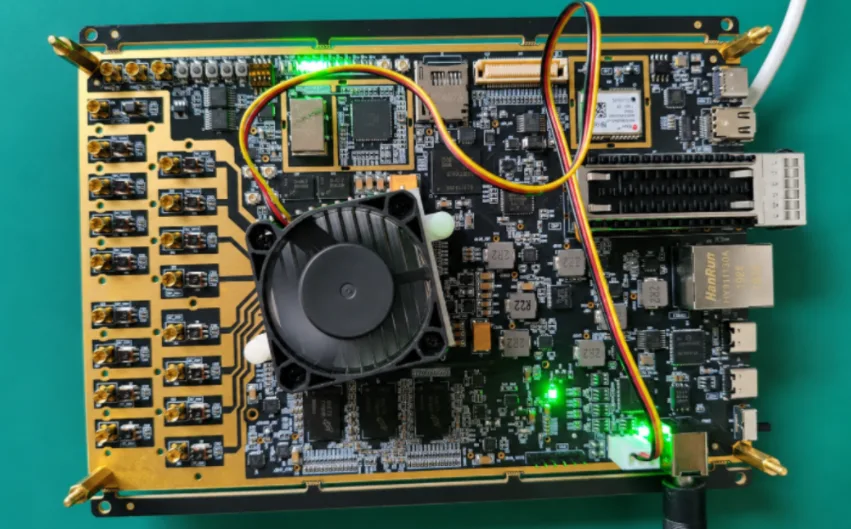
RFSoC Board PCB Manufacturing and Assembly One-Stop Service
Table of contentsReference RFSOC Board Project: 115 × 175...
Robot PCB Thermal Management for Motors, Power Rails and Compute
Robot PCB thermal management affects service life, field...
How to get a quote for PCBs
Let‘s run DFM/DFA analysis for you and get back to you with a report. You can upload your files securely through our website. We require the following information in order to give you a quote:
-
- Gerber, ODB++, or .pcb, spec.
- BOM list if you require assembly
- Quantity
- Turn time
In addition to PCB manufacturing, we offer a comprehensive range of electronic services, including PCB design, PCBA, and turnkey solutions. Whether you need help with prototyping, design verification, component sourcing, or mass production, we provide end-to-end support to ensure your project’s success.
For PCBA services, please provide your BOM (Bill of Materials) and any specific assembly instructions. We also offer DFM/DFA analysis to optimize your designs for manufacturability and assembly, ensuring a smooth production process.