
Turnkey Ceramic PCB Supplier for Fabrication and Assembly

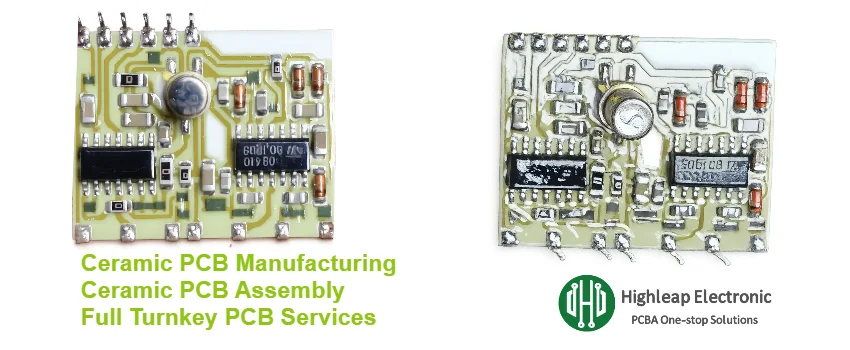
Turnkey ceramic PCB manufacturing is an end-to-end service where one supplier takes responsibility for the full build—ceramic substrate fabrication, BOM sourcing, assembly, testing, and delivery—under a single controlled process. For ceramic boards (DBC/AMB/thick-film), this matters more than FR4 because substrate metallurgy, surface finish, flatness, and thermal mass directly impact solder wetting, die attach, wire bonding, and overall yield. This article explains what “turnkey” should include, the real cost of splitting fab and assembly, how to verify true capability, and what to send in an RFQ for a fast, accurate quote.
Table of Contents
A turnkey ceramic PCB supplier manages the entire production chain—from ceramic substrate build through component procurement, assembly, test, and shipment—so your project runs under one engineering plan, one quality system, and one accountable owner. For ceramic assemblies, that single-owner model reduces delays and ambiguity when you’re pushing power density, temperature cycling, or tight reliability targets.
This guide explains what turnkey service actually covers for ceramic PCBs, where it delivers measurable schedule and risk benefits, and how to confirm whether a supplier’s turnkey claim is supported by real in-house process control.
1. What “Turnkey” Means in Ceramic PCB Production
In ceramic PCB projects, “turnkey” is not just “we can assemble your boards.” A true turnkey supplier controls both sides of the equation:
- Substrate-side variables: ceramic type, metallization system, surface finish condition, flatness/warpage, handling controls
- Assembly-side variables: paste/flux selection, profile tuning, die attach method, wire bonding window, inspection gates, rework limits
When one team owns these coupled variables, you get faster DFM feedback, cleaner root-cause analysis, and more stable yields—especially on DBC/AMB substrates where thermal behavior and surface condition drive assembly results.
1.1 Full Turnkey vs. Partial Turnkey
| Service Level | What’s Included | Customer Provides |
|---|---|---|
| Fabrication only | Bare ceramic PCB to your spec | Components, assembly, test |
| Partial turnkey | Fabrication + assembly (consigned parts) | Components (you supply) |
| Full turnkey | Fabrication + sourcing + assembly + testing | Files + specifications only |
For ceramic boards, full turnkey usually provides the biggest advantage because the supplier can optimize surface finish, cleanliness controls, and assembly profiles as a single system—rather than trying to “make it work” after the substrate has already shipped from another factory.
1.2 The Turnkey Workflow
- DFM/DFA review: ceramic-specific manufacturability review for both fabrication and assembly
- Ceramic substrate fabrication: DBC/AMB/thick-film build, patterning, and finishing
- BOM procurement: sourcing plan, alternates approval, lead-time confirmation
- Assembly: SMT plus ceramic-compatible processes (as required), such as die attach and wire bonding
- Test & inspection: AOI/X-ray/ICT plus functional testing when specified
- Packaging: ESD-safe packaging and mechanical protection for ceramic assemblies
2. The Cost of Splitting Ceramic PCB Fabrication and Assembly
Splitting ceramic PCB fabrication and assembly across vendors often looks cheaper initially, but it increases risk and slows iteration. The real cost shows up in scrap, schedule slips, and engineering time—especially for power electronics where yield and reliability are sensitive to substrate condition.
2.1 Hidden Costs in Multi-Vendor Approaches
- Handling and transport scrap: ceramic panels are more fragile than FR4. Even with careful packaging, transfers increase the risk of cracking, chipping, or micro-damage that becomes visible after reflow.
- Profiling and wetting uncertainty: assembly teams may need extra time to tune profiles for your ceramic thermal mass and metallization system when they don’t control the substrate process.
- Root-cause ambiguity: if wetting, bond strength, or delamination issues appear, two-vendor builds can turn one defect into weeks of back-and-forth.
- Compounded lead time: fab lead time + transit + incoming inspection + queueing + assembly is rarely competitive with a coordinated turnkey flow.
2.2 When the Numbers Make Sense
Turnkey is typically worth it when your project has any of the following: tight thermal margins, qualification/reliability requirements, multiple build iterations, or schedule-driven milestones. In these cases, reducing transfer risk and shortening troubleshooting loops produces a measurable ROI.
| Factor | Split Vendors | Turnkey |
|---|---|---|
| Schedule certainty | Lower (handoffs + queueing) | Higher (single workflow) |
| Defect ownership | Ambiguous | Clear (one accountable supplier) |
| Iteration speed | Slower | Faster |
| Handling risk | Higher | Lower |
3. What a Turnkey Ceramic PCB Order Includes
A strong turnkey supplier makes it easy to move from files to build: clear inputs, fast manufacturability feedback, transparent sourcing decisions, and documentation that procurement and engineering can both rely on.
3.1 Documentation You Provide
- Gerbers and mechanical outline (DXF preferred if available)
- BOM with MPNs, approved alternates, and quantities
- Pick-and-place/centroid file and assembly drawing
- Fabrication spec (ceramic type, thickness, copper/metallization, finish)
- Test requirements (electrical/functional/reliability)
3.2 What the Supplier Delivers
- DFM/DFA feedback with specific risk notes and recommendations
- Sourcing summary with lead times, alternates, and traceability options
- Finished ceramic PCB assemblies packed for safe transport
- Inspection/test records aligned to your requirements
- CoC and lot traceability documents when requested
4. Evaluating Turnkey Capability: Questions to Ask
Many suppliers advertise “turnkey,” but ceramic turnkey requires process ownership, not just project coordination. Use this checklist to confirm capability:
- ☐ Is ceramic substrate fabrication performed in-house or outsourced?
- ☐ Which ceramic technologies are supported (DBC, AMB, thick-film, thin-film)?
- ☐ Can you support die attach and wire bonding, or only standard SMT?
- ☐ What are the default inspection gates (AOI, X-ray, ICT), and what can be added?
- ☐ How are component sourcing and alternates controlled, and what traceability can you provide?
- ☐ How are engineering changes managed after DFM approval?
5. When Turnkey Is Worth It — and When It Is Not
5.1 Strong Fit for Turnkey
- DBC/AMB power substrates with die attach and wire bonding
- Programs with reliability qualification or tight documentation requirements
- Prototype → pilot → volume ramps where iteration speed matters
- Projects where schedule risk costs more than small unit savings
5.2 Cases Where Fab-Only May Be Better
- You already have a qualified ceramic assembly line and only need bare substrates
- Assembly must be performed in-house due to proprietary test or process constraints
- Extremely high volumes where dedicated separated lines are already optimized
6. Highleap’s Turnkey Ceramic PCB Services
Highleap Electronics supports turnkey ceramic PCB builds through one coordinated workflow—keeping substrate fabrication, parts sourcing, assembly, and verification aligned under a single accountable team.
- Engineering alignment: a ceramic-focused manufacturability check up front to confirm key items such as pad/clearance rules, finish compatibility, and process constraints before release.
- Material + parts readiness: component sourcing via components sourcing, including lead-time confirmation and alternates approval to prevent mid-build shortages.
- Assembly + verification: controlled build execution with inspection gates, plus optional functional testing when required by your specification.
- Documentation + delivery: build records and traceability documentation available on request, with packaging designed to protect ceramic assemblies in transit.
To get an accurate quote quickly, share your Gerbers, BOM (with alternates if available), ceramic specification (material/thickness/finish), target quantities (prototype and expected volume), and test requirements. Our team will review the package and respond with pricing, lead time, and any DFM notes needed to keep the build on track.
Sabrina has over 18 years of experience in the PCB industry, with a strong background in CAM engineering and PCB file review. She supports PCB projects from prototype to volume production, focusing on manufacturability and process reliability. Her work helps engineering teams reduce production risk and achieve stable, high-quality PCB manufacturing results.

Recommended Posts
Tg170 PCB Manufacturing and Assembly for Industrial Electronics
A Tg170 PCB may be specified for industrial electronics,...
Racing Wheel Controller PCB Manufacturing & Assembly for Force-Feedback and Direct-Drive Gaming Systems
Highleap Electronics provides PCB fabrication and PCBA for...
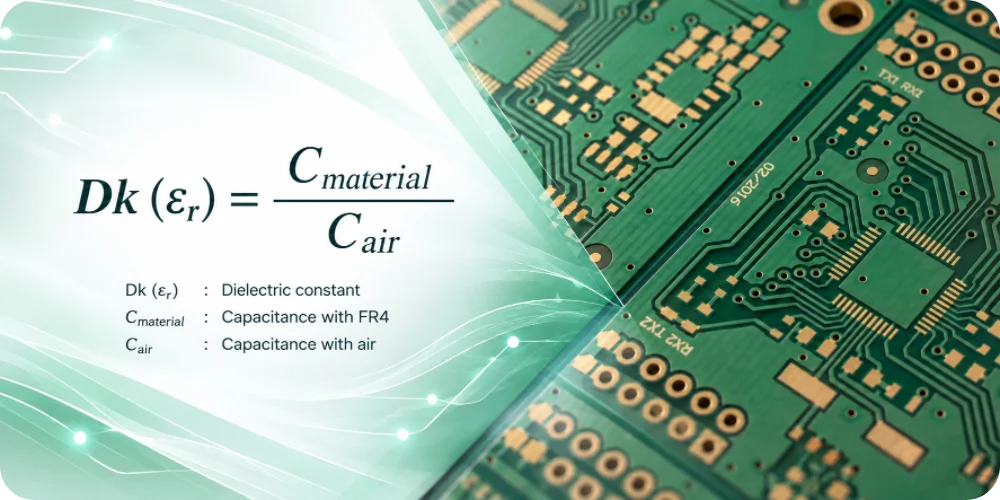
FR4 Dielectric Constant Calculator and PCB Design Guide
How to get a quote for PCBs Let's run DFM/DFA analysis for...
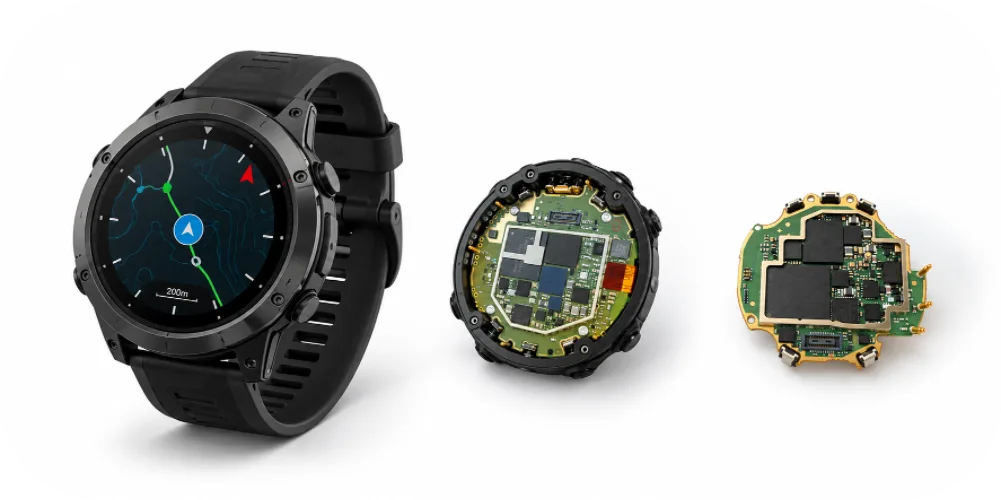
GPS Sports Watch PCB Design: GNSS, RF, Sensors and PCBA Manufacturing
Turning a compact GPS sports watch controller from an...
How to get a quote for PCBs
Let us run DFM/DFA analysis for you and get back to you with a report.
You can upload your files securely through our website.
We require the following information in order to give you a quote:
-
- Gerber, ODB++, or .pcb, spec.
- BOM list if you require assembly
- Quantity
- Turn time
In addition to PCB manufacturing, we offer a comprehensive range of electronic services, including PCB design, PCBA (Printed Circuit Board Assembly), and turnkey solutions. Whether you need help with prototyping, design verification, component sourcing, or mass production, we provide end-to-end support to ensure your project’s success. For PCBA services, please provide your BOM (Bill of Materials) and any specific assembly instructions. We also offer DFM/DFA analysis to optimize your designs for manufacturability and assembly, ensuring a smooth production process.