
PCB Assembly Supply Chain Management
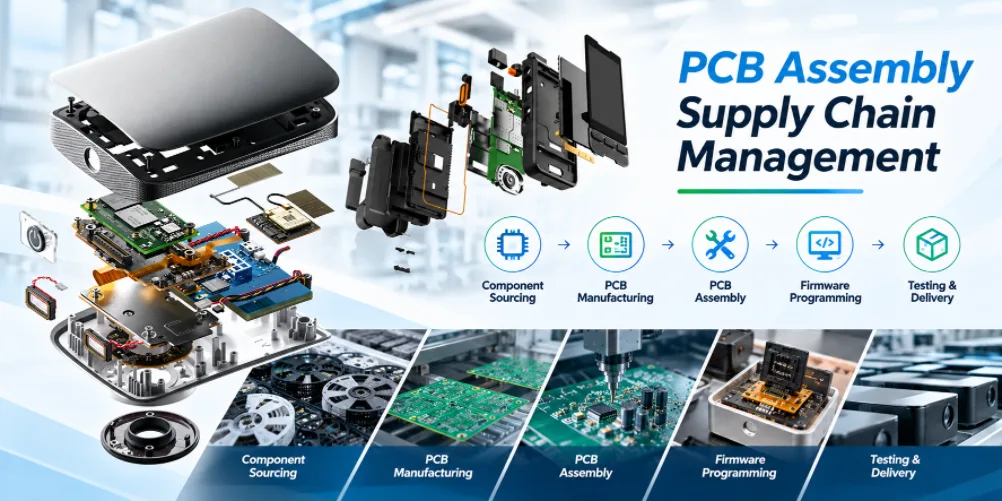
Highleap Electronics supports PCB assembly supply chain management by coordinating bare-board fabrication, component procurement, SMT and through-hole assembly, inspection, and project-defined testing through one manufacturing program in China. For an OEM procurement team, the value is not simply placing fewer purchase orders. It is knowing which BOM lines are available, who owns shortage decisions, when materials will be ready for assembly, and which hardware revision will actually ship.
We work with OEMs and ODMs that need prototype-to-production continuity, turnkey PCB assembly with component sourcing, or a hybrid model using customer-supplied critical parts. Rather than treating the BOM as a static shopping list, we review material availability and manufacturing requirements together. Component substitutions, buffer stock, traceability records, inspection scope, and shipping schedules are agreed according to the product and purchasing arrangement—not assumed to be included in every order.
One Supply Chain for PCB Fabrication, Component Sourcing and Assembly
PCB assembly supply chain management works best when fabrication data, purchased components, assembly instructions and test requirements share one approved revision. If the bare-board supplier works from one release while the purchasing team orders components for another, the resulting mismatch can delay production even when every individual vendor delivers on time.
Highleap combines multilayer and specialty PCB fabrication with component procurement and population. This allows our engineering and manufacturing teams to review board finish, pad geometry, panelization, component packages and placement data alongside material availability. Such coordination matters particularly for fine-pitch BGAs, HDI structures, mixed SMT/THT assemblies, industrial connectors and designs requiring a specific laminate or surface finish.
Choose the procurement model before the BOM is purchased
There is no universally best sourcing model. A full turnkey arrangement may simplify accountability, while an OEM with negotiated semiconductor contracts may prefer to consign selected ICs. We can discuss full-turnkey PCB manufacturing and assembly or a clearly divided purchasing scope during RFQ review.
| Supply model | Who sources components? | Best fit | Control to agree |
|---|---|---|---|
| Full turnkey PCBA | Manufacturer purchases the agreed BOM | OEMs seeking one coordinated PCB + component + assembly order | Approved vendor list, substitutions, procurement approval and stock ownership |
| Partial turnkey | Manufacturer and OEM divide sourcing by BOM line | Programs with proprietary ICs or OEM-negotiated parts | Who supplies shortages, overage, attrition and replacement parts |
| Consigned assembly | OEM supplies most or all production parts | Buyers retaining direct control of critical inventory | Incoming counts, handling, storage, shortages and return of unused material |
For all three models, the handoff into SMT and through-hole production must be based on released component identities and complete assembly files. A lower component price is not a saving if the delivered device has an incompatible footprint, an unapproved temperature grade or the wrong firmware-capable memory variant.
Buyer takeaway: ask for a responsibility matrix showing who approves parts, who pays for excess stock, who controls engineering changes, and when the build is considered materially ready. That is more useful than a generic claim of “end-to-end supply chain management.”
BOM Risk Management: Shortages, Approved Alternatives and Component Authenticity
A production-ready PCB assembly BOM identifies exact parts, sourcing permissions and exceptions before a purchase order is placed. The most expensive delays often begin with a seemingly small ambiguity: a missing manufacturer part number, an obsolete connector, an IC with multiple temperature grades, or a replacement that fits the pads but changes electrical behavior.
Check availability and lifecycle exposure at the BOM-line level
Our electronic component procurement support can be used to review manufacturer part numbers, packaging, purchasing channels, availability concerns and proposed alternatives. A useful BOM risk review flags parts that are end-of-life (EOL), not recommended for new designs (NRND), allocation-prone, sole-source, or subject to a long replenishment time. Availability is time-sensitive; an in-stock indication at quotation does not reserve stock unless a purchasing arrangement says so.
A complete sourceable BOM should provide manufacturer and exact MPN, reference designators, quantities per board, package, value and ratings, do-not-populate (DNP) status, approved alternates and the owner of any customer-supplied material. For critical devices, add permitted distributors, traceability requirements, moisture-sensitivity handling notes, and whether the design owner must approve every substitution.
A proposed alternative is not an approved alternative
Consider a 24 V industrial gateway using an isolated communication transceiver. An alternate may match the footprint but differ in isolation rating, common-mode range, failsafe behavior, operating temperature, qualification status or software timing. A substitute should be reviewed against the schematic and product requirements, then approved in writing before purchasing or placement. The same principle applies to MCU silicon revisions, precision references, power MOSFETs, connectors and memory components.
Linking BOM risk review to PCB and assembly manufacturability checks can uncover a second class of problems: a supposedly available replacement may need a different footprint, stencil pattern or thermal process. Purchasing and engineering therefore need a shared change-approval procedure—not two disconnected email threads.
| Supply-chain issue | Action before purchasing | Decision owner |
|---|---|---|
| Long-lead or allocation-risk IC | Check availability; review approved alternates or planned material commitment | OEM procurement + engineering |
| NRND / EOL component | Assess lifecycle and replacement path before scaling a repeat order | OEM design owner |
| Unverified or broker-sourced lot | Require agreed sourcing authorization, provenance and risk-based authentication controls | Buyer under agreed quality plan |
| Part substitution affects footprint or function | Hold procurement or assembly until the revised BOM and design are approved | OEM engineering authority |
| Consigned-part shortage | Agree attrition allowance, replacement responsibility and revised kitting date | Owner specified in the supply agreement |
Authenticity cannot be guaranteed by the words “original components” alone. Authorized-channel purchasing, incoming inspections and documented lot provenance can reduce risk, while any additional tests for unusually high-risk parts must be defined in the customer-approved control plan. Highleap’s supply-chain role is to make these decisions visible before they interrupt the assembly schedule.
PCB Assembly Lead-Time and Inventory Planning for Repeat Orders
PCBA lead time is controlled by the critical path: the latest essential material or approved production requirement to become ready, followed by the remaining assembly and test work. Ordering the bare PCB quickly does not create a fast turnkey build if a critical IC or connector is still unavailable.
A realistic schedule needs separate visibility into PCB fabrication, component purchasing, incoming inspection, material kitting, SMT/THT operations, programming or coating if specified, functional testing and packing. Our discussion of PCB assembly lead-time planning explains why those activities must be coordinated rather than summarized as one unsupported delivery promise.
Material-ready is not the same as purchase-order placed
Before a production slot is released, a useful material-readiness review confirms that the correct board revision, required components, stencils, tooling and test resources can support the intended lot. Shortage reporting should distinguish on-hand stock, confirmed incoming quantities, approved alternatives and uncommitted sourcing requests. “Parts ordered” is not enough if the parts have not passed receiving checks or the approved lot is insufficient after placement attrition.
For a repeat OEM program, forecast sharing can support a more deliberate purchasing plan. Rolling forecasts, blanket orders, staged releases, customer-owned inventory, or agreed safety stock are possible arrangements, but none should be assumed without contract terms on stock ownership, cancellation exposure, shelf-life, minimum order quantities and excess/obsolete inventory.
Plan prototype, pilot and production replenishment differently
Low-volume and pilot PCB assembly needs flexibility for changing BOMs and test procedures. A pilot batch should confirm the approved materials and production process before anyone commits to long-term inventory. For repeat orders, a stable BOM, consumption forecast and defined release quantities may justify more formal replenishment planning.
For example, if an OEM expects three releases of 500 assemblies, procurement should assess not just the total demand of 1,500 boards, but the release dates, minimum purchasing quantities, component shelf-life, test capacity and the risk that the hardware revision will change between lots. That example is a planning scenario, not a promised factory capacity or delivery schedule.
Buyer takeaway: request a quotation with the component assumptions, material-ready milestone, production/test scope and an explicit definition of when the lead-time clock starts. This makes competing PCBA quotes more comparable and reduces surprises after the purchase order.
Traceability, Quality Gates and Engineering Change Control
Supply-chain traceability for PCB assembly means being able to relate an accepted product or production lot to the correct design, purchased materials and verification results at the level agreed with the customer. It should not be reduced to printing a barcode on the PCB. The necessary granularity depends on the product and contractual requirements: lot-level records may be enough for one program, while another requires board-level serial numbers and detailed electronic test logs.
Typical records may include the PCB fabrication lot, approved BOM revision, critical component supplier/lot information, process and inspection results, firmware version where applicable, functional-test outcome, nonconformance disposition and shipment identifier. Highleap offers AOI, X-ray and electrical or functional inspection; the exact coverage and reporting for a particular assembly need to be written into the build package. Product-specific PCBA functional test requirements should identify inputs, output limits, required fixtures and whether results are stored per unit or per lot.
Three release controls that prevent costly repeat-order mistakes
- Revision alignment: Gerber/ODB++ data, BOM, centroid/CPL, assembly drawing, firmware file and test procedure should identify the same approved build configuration.
- First-article and process approval: before repeating a build, resolve findings from assembly inspection, hidden-joint evaluation where applicable, programming, test fixtures and customer-specific acceptance checks.
- Engineering change control: record proposed replacements, PCN/EOL responses, board spins and test changes, including who authorized them and which production lot uses the new release.
Scaling into repeat or high-volume PCBA manufacturing increases the cost of a poorly controlled revision. A small change to one connector, flash device or resistor option can trigger purchasing, tooling, firmware, inspection and packaging updates. Where a part has already entered production, an agreed deviation or engineering-change notice helps prevent mixed configurations reaching the same delivery lot.
AOI, X-ray and in-circuit or functional testing have different purposes. AOI reviews visible assembly features; X-ray can help assess hidden solder joints; functional testing checks specified board behavior. None automatically certifies environmental reliability or regulatory compliance. If an OEM needs IPC workmanship criteria, product-specific qualification, RoHS/REACH documentation or enhanced traceability, the scope, applicable standard revision and required evidence should be defined before release.
How to Quote a Long-Term PCB Assembly Supply Chain with Highleap
To evaluate Highleap as a China PCB assembly supply chain partner, send a revision-controlled manufacturing package, the sourcing model, and a demand plan—not just a target price per board. We can review the requested PCB fabrication, component sourcing, assembly, testing and shipping scope and identify items requiring engineering or commercial approval before a quote is finalized.
What procurement and engineering teams should include
- PCB package: Gerber, ODB++ or equivalent manufacturing files; stack-up; fabrication drawing; copper weights; board thickness; surface finish; drill or impedance requirements.
- PCBA package: BOM with exact MPNs, quantities and DNP status; approved vendor/alternate list; pick-and-place/CPL; assembly drawing; process restrictions and test instructions.
- Sourcing responsibility: full turnkey, partial turnkey or consigned; critical no-substitution parts; customer-owned stock; authorized sourcing rules and approval route for alternates.
- Forecast and releases: engineering samples, pilot lot, expected annual usage, shipment lot sizes, requested dates and whether rolling forecasts or safety stock are under consideration.
- Quality and traceability: workmanship requirements, critical part lot records, first-article reports, functional-test coverage, firmware control and required packing/label data.
- Commercial terms: destination, delivery terms, warranty/returns expectations, responsibility for excess or obsolete material, and any confidentiality or supply-agreement requirements.
A useful supplier response should clarify the costed BOM and its validity period, identified shortage risks, the sourcing split, one-time tooling or test expenses, recurring PCBA cost, material commitment assumptions, and the proposed production/inspection scope. A cheap assembly-only line item can be misleading if it excludes purchasing, board fabrication, fixtures, programming, test or excess stock.
Frequently asked procurement questions
Can Highleap manage PCB fabrication and component sourcing in one order? Yes. Highleap publicly offers PCB manufacturing, component sourcing and turnkey assembly. The exact purchasing, manufacturing and inspection responsibilities are defined per project.
Does turnkey PCB assembly eliminate component shortages? No. It makes responsibility and escalation more coordinated, but availability still depends on the BOM, approved sources, inventory and purchasing commitments. Early shortage review is more effective than a guarantee unsupported by live supply data.
Can we supply proprietary chips while Highleap buys the rest? A partial-turnkey or consigned-material model can be discussed. The RFQ must establish receiving checks, packaging, handling, shortage allowance and ownership of unused parts.
Can Highleap support repeat orders and long product lifecycles? Its service offering covers prototypes through production assembly. For a long-running program, forecast cadence, part lifecycle monitoring, material reservation, revision traceability and change approval should be agreed in the purchasing arrangement.
What is the fastest way to receive a meaningful supply-chain quotation? Submit a sourceable BOM, current fabrication/assembly data, target quantities and dates, then mark critical components and any no-substitution or traceability rules. This gives the engineering and purchasing teams a specific build to evaluate.
Discuss Your PCB Assembly Supply Chain with Highleap Electronics
If you are consolidating PCB fabrication and assembly suppliers, preparing an OEM production transfer, or trying to stabilize a repeat-order BOM, send Highleap your manufacturing files, sourcing constraints and forecast. We will assess the requested manufacturing scope and identify the information needed for a project-specific quotation.
Engineering and procurement note: Component prices and availability, approved sourcing channels, inventory commitments, inspection coverage, traceability, lead times and compliance documents depend on the specific design and commercial agreement. Proposed substitutions or process deviations require the appropriate customer approval before production release.

Recommended Posts
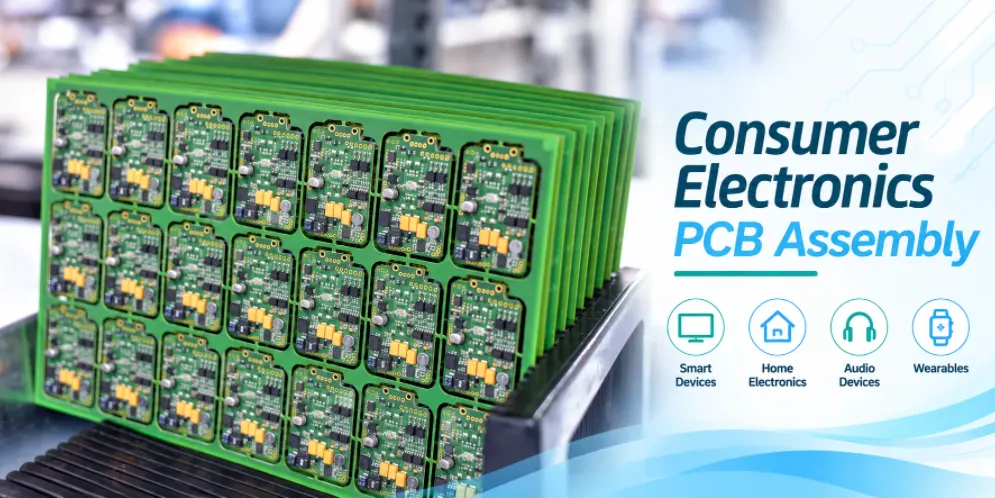
Consumer Electronics PCB Assembly
Highleap Electronics provides consumer electronics PCB...
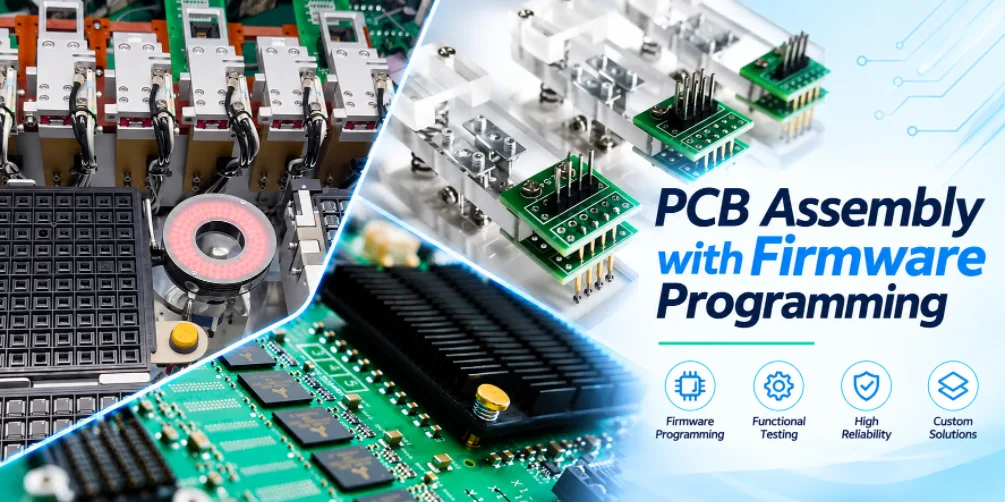
PCB Assembly with Firmware Programming
Highleap Electronics provides PCB assembly with firmware...
24 Layer PCB Manufacturer in China
How to get a quote for PCBs Let‘s run DFM/DFA analysis for...

Ultra Fine Line PCB Manufacturing for High-Density Routing
How to get a quote for PCBs Let‘s run DFM/DFA analysis for...
How to get a quote for PCBs
Let‘s run DFM/DFA analysis for you and get back to you with a report. You can upload your files securely through our website. We require the following information in order to give you a quote:
-
- Gerber, ODB++, or .pcb, spec.
- BOM list if you require assembly
- Quantity
- Turn time
In addition to PCB manufacturing, we offer a comprehensive range of electronic services, including PCB design, PCBA, and turnkey solutions. Whether you need help with prototyping, design verification, component sourcing, or mass production, we provide end-to-end support to ensure your project’s success.
For PCBA services, please provide your BOM (Bill of Materials) and any specific assembly instructions. We also offer DFM/DFA analysis to optimize your designs for manufacturability and assembly, ensuring a smooth production process.