
What is Design for Assembly (DFA)

At Highleap Electronics, we prioritize efficiency and cost-effectiveness in every step of the PCB manufacturing and assembly process. One key practice that significantly influences both the quality and cost of your PCBs is Design for Assembly (DFA). DFA ensures that your PCB design is optimized for easy and efficient assembly, minimizing errors, reducing production time, and cutting manufacturing costs. In this article, we will delve into the core principles of DFA, its importance during PCB development, and how to implement it to create streamlined, reliable, and high-quality products.
What is Design for Assembly (DFA)?
Design for Assembly (DFA) is a methodology aimed at optimizing the product design to simplify the assembly process. The goal is to reduce complexity during production, which in turn lowers the cost of manufacturing while increasing the speed and quality of the assembly process. DFA principles can be applied at various stages of the design, from initial prototyping to high-volume production, ensuring that each PCB is not only functional but also easy to assemble and maintain.
For PCB manufacturing, DFA includes considerations such as:
- Component placement and orientation
- Ease of automated assembly
- Simplification of rework and repair
- Optimal use of space on the board
By addressing these factors early in the design phase, you can avoid costly errors and inefficiencies that often arise during assembly.
Why DFA Matters in PCB Design
Incorporating DFA principles into the design phase is crucial for several reasons:
1. Cost Reduction
Optimizing your PCB design for assembly reduces the need for manual labor and rework. Efficient layouts, streamlined component placement, and the elimination of unnecessary complexities help minimize the assembly time, which directly cuts down labor costs. This is especially important in high-volume production where cost-efficiency is essential.
2. Improved Quality
When a PCB is designed with assembly in mind, there is less chance of errors during the assembly process. Proper component orientation, correct spacing, and easy-to-follow assembly instructions all contribute to a higher-quality final product. DFA ensures that the final product is free from the common defects that may arise from improper assembly.
3. Faster Time-to-Market
The easier and quicker it is to assemble a PCB, the faster it can reach the market. By applying DFA principles, you streamline the production process, speeding up your time-to-market. This is a competitive advantage in industries where innovation and speed are crucial.
4. Increased Reliability
DFA helps ensure that the components are placed correctly, reducing the chances of faulty connections or heat-induced failures. Proper design makes it easier for automatic assembly machines to place components with precision, which leads to fewer defects and higher reliability.
5. Simplified Rework and Repair
PCBs designed with DFA in mind are easier to repair or replace. Test points, clear component markings, and logical layouts allow for quicker troubleshooting. This is particularly important in high-reliability industries where serviceability is key.
Key Considerations for DFA in PCB Design
To ensure the successful application of DFA in PCB design, several factors must be considered during the design phase:
Component Placement and Orientation
Optimal component placement not only improves the ease of assembly but also contributes to the overall functionality of the PCB. Components should be placed logically and with enough space to allow for efficient manual or automated placement. Ensuring that components are oriented consistently also reduces the risk of assembly errors, such as incorrectly oriented components.
Ease of Testing
Designing PCBs with accessible test points ensures that all critical signals can be easily tested during the manufacturing process. Proper test point placement facilitates quick and efficient in-circuit testing (ICT) and functional testing, which helps detect potential issues early.
Thermal Management
The placement of heat-sensitive and heat-generating components should be done carefully to prevent overheating or thermal interference. Thermal management plays an essential role in improving both the reliability and performance of your PCB, particularly in applications requiring high power.
Panelization for Automated Assembly
For mass production, panelization is a critical DFA consideration. Panelizing your PCB design optimizes it for pick-and-place machines and reflow soldering. This step ensures that the PCB is assembled efficiently in large batches, maximizing production output while minimizing handling time and cost.
Minimizing the Number of Assembly Steps
Reducing the number of steps required for assembly is a core principle of DFA. This can be achieved by simplifying the PCB layout, minimizing the use of mixed technologies (like combining through-hole and surface-mount components), and reducing the number of components used. The more straightforward the assembly process, the less room there is for error.

Implementing DFA During Prototyping
During the prototyping phase, applying DFA principles is vital for identifying potential assembly challenges early on. This phase allows you to test the design’s manufacturability and assess whether any changes are needed before mass production. Some key actions during the prototyping phase include:
- Testing Component Placement: Ensure that components are logically placed and spaced adequately for assembly. This will help identify any issues early, preventing problems during later production stages.
- Improving Access for Automated Assembly: If automated assembly will be used, ensure the design accommodates the requirements of pick-and-place machines and other automated tools.
- Addressing Thermal and Electrical Challenges: Use prototypes to test the thermal management and electrical performance of your design to prevent failures during production.
DFA Considerations in Mass Production
As you move from prototype to mass production, DFA becomes even more critical due to the shift toward automated assembly lines. Key production-phase DFA considerations include:
- Component Compatibility with Automated Equipment: Choose components that can be easily handled by automated assembly machines to reduce labor costs.
- Component Spacing for Automated Assembly: Ensure that there is enough space for the pick-and-place machines to operate effectively without interference from adjacent components.
- Reflow Soldering Compatibility: Make sure all components are compatible with the reflow soldering profile to avoid defects in the solder joints.
- Design for Testability: Ensure that the design allows for thorough testing using in-circuit testing (ICT) and functional testing (FCT) techniques. This may include providing access to test points or programming interfaces.
Benefits of Implementing DFA Principles
Implementing DFA principles throughout the PCB design and manufacturing process leads to several significant advantages:
- Cost Savings: DFA reduces the time and labor required for assembly, resulting in substantial cost savings, especially during high-volume production runs.
- Higher Product Quality: A well-designed PCB that is optimized for assembly reduces the risk of defects, ensuring a higher-quality final product.
- Faster Production: By simplifying assembly processes, DFA helps streamline the production cycle, allowing products to be delivered faster to the market.
- Improved Reliability: DFA principles such as proper component placement and thermal management improve the overall reliability and performance of the PCB.
- Scalability: A design optimized for assembly is easier to scale up for mass production, ensuring consistency and quality during larger production runs.
Conclusion
At Highleap Electronics, we emphasize the importance of Design for Assembly (DFA) in every stage of the PCB manufacturing process. By incorporating DFA principles into the design phase, we ensure that each product is not only functional but also efficient and cost-effective to produce. This focus on design optimization minimizes assembly errors, reduces costs, accelerates production timelines, and enhances product reliability, making it an indispensable part of the PCB development process. Whether you’re in the prototyping phase or moving to large-scale production, implementing DFA will improve your PCB design’s manufacturability and ensure success in the competitive electronics market.
Get a Free PCB & PCBA Quote

Recommended Posts

PCB Current Calculator: Sizing Trace Width and Vias with the IPC-2221 Formula
Figure 1. Pcb Current Calculator reference image for PCB...

Microphone PCB Design: How the Board Itself Shapes Your Audio Quality
Figure 1. Microphone Pcb reference image for PCB...

Board-to-Board Connector: Types, Specifications, and How to Select One
Figure 1. Board To Board Connector reference image for PCB...
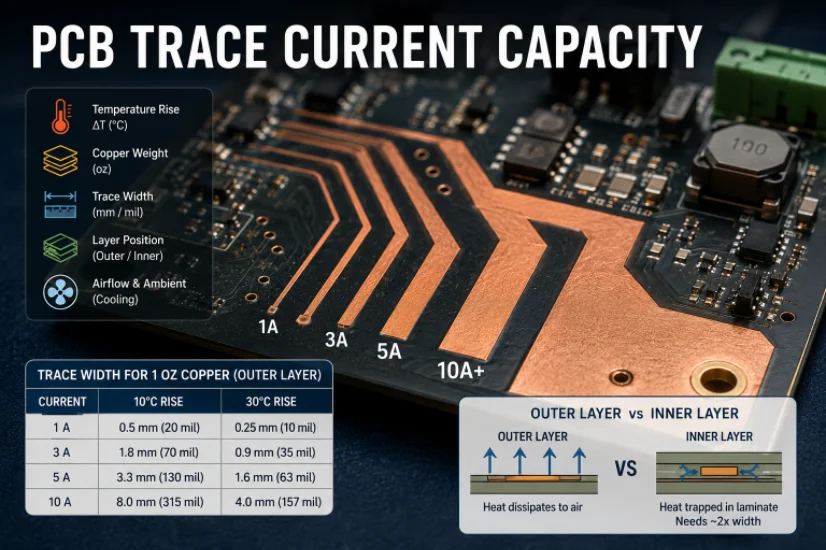
PCB Trace Width Calculator: How to Size Traces for Current, Voltage Drop, and Impedance
Figure 1. A PCB trace width calculator is a starting point...
How to get a quote for PCBs
Let us run DFM/DFA analysis for you and get back to you with a report.
You can upload your files securely through our website.
We require the following information in order to give you a quote:
-
- Gerber, ODB++, or .pcb, spec.
- BOM list if you require assembly
- Quantity
- Turn time
In addition to PCB manufacturing, we offer a comprehensive range of electronic services, including PCB design, PCBA (Printed Circuit Board Assembly), and turnkey solutions. Whether you need help with prototyping, design verification, component sourcing, or mass production, we provide end-to-end support to ensure your project’s success. For PCBA services, please provide your BOM (Bill of Materials) and any specific assembly instructions. We also offer DFM/DFA analysis to optimize your designs for manufacturability and assembly, ensuring a smooth production process.