
Microwave PCB for Satellite Communication: Design and Reliability Requirements

Introduction
Microwave PCB for satellite communication systems plays a crucial role in maintaining signal integrity and reliability across L-, S-, C-, Ku-, and Ka-band frequencies. As satellites operate in harsh thermal and vacuum environments, PCB materials and structures must ensure minimal loss, stable dielectric performance, and long-term durability. The microwave frequency spectrum presents unique challenges where even minor variations in substrate properties or fabrication tolerances can result in significant signal degradation.
In satellite applications, these printed circuit boards must withstand extreme temperature cycling, radiation exposure, and mechanical stress while maintaining precise impedance control and phase stability over operational lifetimes exceeding fifteen years.
Frequency Bands in Satellite Communication
Satellite communication systems utilize distinct frequency bands, each presenting specific requirements for microwave PCB design. Lower frequency bands including L-band and S-band support navigation systems and telemetry applications where moderate loss characteristics and stable dielectric constants suffice. C-band frequencies serve ground station communications and medium-capacity data transmission, requiring tighter impedance control and material consistency.
Higher frequency Ku-band and Ka-band systems enable high-speed broadband communications and video broadcasting, demanding ultra-low loss materials and precision fabrication techniques to minimize insertion loss and phase distortion.
| Band | Frequency Range | Typical Use | PCB Design Implications |
|---|---|---|---|
| L/S | 1–4 GHz | GPS, telemetry | Moderate loss, stable dielectric |
| C | 4–8 GHz | Ground communication | Controlled impedance |
| Ku | 12–18 GHz | TV broadcast, broadband | Low-loss materials required |
| Ka | 26–40 GHz | High-speed data | Precision fabrication, surface smoothness |
As operating frequencies increase, microwave PCB design constraints become progressively stringent. Ka-band applications require substrate materials with dissipation factors below 0.002 and dimensional tolerances within ±0.05 mm to maintain acceptable signal quality.
Key Design Considerations for Microwave PCB in Satellite Systems
Dielectric Stability and Material Selection
Dielectric constant stability across temperature extremes defines the performance baseline for satellite microwave PCB applications. PTFE-based laminates including a PTFE-based low-loss laminate and a low-Dk PTFE laminate provide stable dielectric properties with temperature coefficients below 50 ppm/°C.
Ceramic-filled PTFE composites offer enhanced dimensional stability and reduced thermal expansion, critical for maintaining phase coherence in phased array antenna systems. Material selection for microwave PCB fabrication must account for dielectric constant consistency across the frequency spectrum, ensuring predictable electrical performance from L-band through Ka-band operation.
Impedance Control and Signal Integrity
Transmission line impedance control becomes increasingly critical as microwave frequencies increase. At Ka-band frequencies, geometric variations of even 10 micrometers can introduce measurable phase errors and impedance mismatches. Microwave PCB designs require multilayer stackup optimization with precisely controlled dielectric thickness and copper weight specifications.
Critical design parameters include:
- Tight coupling tolerances – Differential impedance pairs maintain common-mode rejection and minimize crosstalk through controlled trace spacing.
- Ground plane continuity – Uninterrupted reference planes ensure consistent impedance and minimize electromagnetic interference.
- Strategic via placement – Through-hole positioning optimizes signal return paths and field distribution across multilayer structures.
Loss Tangent and Conductor Surface Quality
Dielectric loss tangent directly determines signal attenuation in microwave PCB transmission lines. Materials with dissipation factors below 0.001 become necessary for Ka-band satellite applications where link budgets constrain acceptable losses.
Conductor surface roughness contributes significantly to insertion loss at microwave frequencies through the skin effect. Electrodeposited copper foils with reduced surface profiles minimize high-frequency losses compared to standard rolled annealed copper. The transition from rough to smooth copper surfaces can reduce insertion loss by 20-30% in Ku-band and Ka-band circuits.
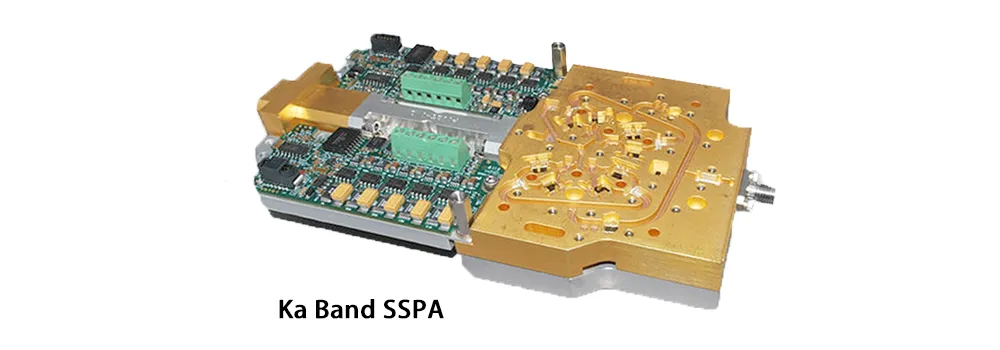
Thermal Management in Microwave PCB for Satellite Applications
Vacuum Environment Heat Dissipation
Satellite microwave PCB assemblies operate in vacuum environments where convective heat transfer is absent, relying exclusively on conduction and radiation for thermal management. Power amplifier modules generating 50-100 watts of heat require efficient thermal pathways to prevent junction temperature excursions that degrade reliability.
Metal-core printed circuit boards with aluminum or copper substrates provide enhanced thermal conductivity compared to standard PTFE laminates. Thermal vias strategically placed beneath high-power components create conductive paths through low-thermal-conductivity dielectric layers, improving heat spreading to chassis-mounted heat sinks.
Coefficient of Thermal Expansion Matching
Coefficient of thermal expansion mismatches between microwave PCB substrates, copper conductors, and component packages generate thermomechanical stress during temperature cycling. Satellite systems experience temperature swings from -55°C during eclipse periods to +125°C under direct solar illumination.
PTFE-based materials exhibit CTE values of 50-70 ppm/°C in the Z-axis, significantly higher than copper at 17 ppm/°C and ceramic packages at 6-8 ppm/°C. This mismatch drives plated through-hole barrel cracking and solder joint fatigue over thousands of thermal cycles. Ceramic-filled composites reduce CTE to 30-40 ppm/°C, improving long-term reliability.
Thermal Interface Optimization
Microwave PCB assemblies require optimized thermal interfaces between substrates and heat-spreading structures. Thermal interface materials must maintain performance in vacuum environments with outgassing characteristics meeting ASTM E595 requirements.
Key thermal management solutions include:
- Graphite-based thermal pads – Compliant interfaces accommodate thermal expansion differentials while maintaining conductivity above 5 W/mK.
- Phase-change materials – Temperature-activated compounds conform to surface irregularities for improved thermal contact.
- Direct substrate bonding – Epoxy adhesives create permanent thermal pathways to metal carriers with enhanced heat transfer efficiency.
Reliability and Space-Grade Requirements
Space-qualified microwave PCB materials undergo rigorous testing including thermal vacuum cycling, vibration qualification, and outgassing characterization. Materials must demonstrate total mass loss below 1% and collected volatile condensable material below 0.1% per ASTM E595 standards to prevent contamination of optical systems and thermal radiators.
Surface finishes including electroless nickel electroless palladium immersion gold provide oxidation resistance and extended shelf life exceeding ten years. The harsh radiation environment in geostationary and medium Earth orbits requires materials resistant to atomic oxygen and ultraviolet degradation. Design qualification testing verifies microwave PCB performance across minimum 15-year mission durations with appropriate safety margins.
Manufacturing and Testing Considerations for Microwave PCB
Precision Fabrication Requirements
Microwave PCB fabrication demands precision drilling with positional tolerances within ±25 micrometers and controlled depth drilling for blind vias in multilayer constructions. Lamination processes require precise pressure and temperature profiles to achieve target dielectric thickness while minimizing voids and resin flow variations.
High-frequency substrate materials present unique machining challenges due to their softness and tendency toward delamination during drilling operations. Specialized tooling and optimized cutting parameters prevent material damage and maintain dimensional accuracy.
Electrical Testing and Validation
Network analyzer measurements verify S-parameters including insertion loss, return loss, and group delay across operational frequency ranges. Flying probe testing validates circuit continuity while avoiding fixture-induced resonances that compromise measurement accuracy at microwave frequencies.
Testing protocols include:
- S-parameter characterization – Vector network analysis confirms impedance matching and transmission quality from DC to Ka-band.
- Time-domain reflectometry – Identifies impedance discontinuities and locates manufacturing defects in transmission lines.
- Thermal cycling validation – Verifies solder joint integrity and material stability across operational temperature extremes.
Typical Applications in Satellite Systems
Microwave PCB technology enables critical satellite communication subsystems including antenna feed networks that distribute signals to array elements with controlled amplitude and phase relationships. Waveguide-to-microstrip transition circuits interface between rectangular waveguide components and planar transmission lines on printed circuit boards.
Power amplifier modules integrate high-power transistors with impedance matching networks and bias control circuitry on thermally enhanced substrates. Transmit-receive modules combine low-noise amplifiers, phase shifters, and switching networks in compact assemblies supporting phased array antenna systems.
Conclusion
Advanced microwave PCB design serves as a critical foundation for reliable satellite communication systems operating from the L-band to Ka-band frequency ranges. Achieving optimal performance requires a balanced integration of low-loss materials, efficient thermal management, and precision fabrication — ensuring consistent operation throughout long-duration missions.
At Highleap Electronics, we specialize in:
-
Low-loss dielectric materials for stable signal integrity across wide frequency bands.
-
Precision multilayer lamination and tight impedance control for complex RF architectures.
-
Enhanced thermal reliability through advanced heat dissipation and via design strategies.
-
Comprehensive engineering support from design consultation to qualification testing.
Through these capabilities, we help satellite communication developers realize compact, high-frequency PCB solutions that meet demanding performance and reliability standards. Contact Highleap Electronics today to discuss your next satellite or microwave PCB project.

Recommended Posts
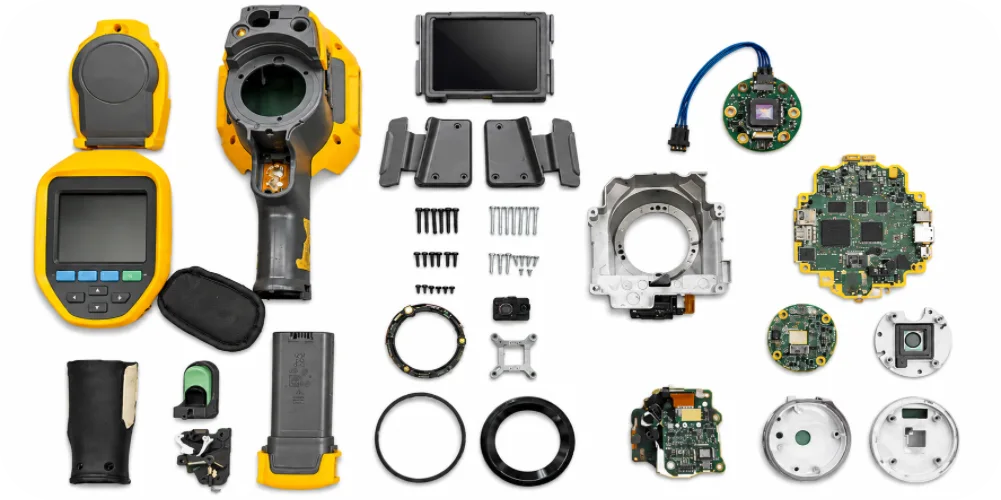
Portable Thermal Camera PCB Design and PCBA Manufacturing Guide
The thermal imaging module is often the part of a handheld...
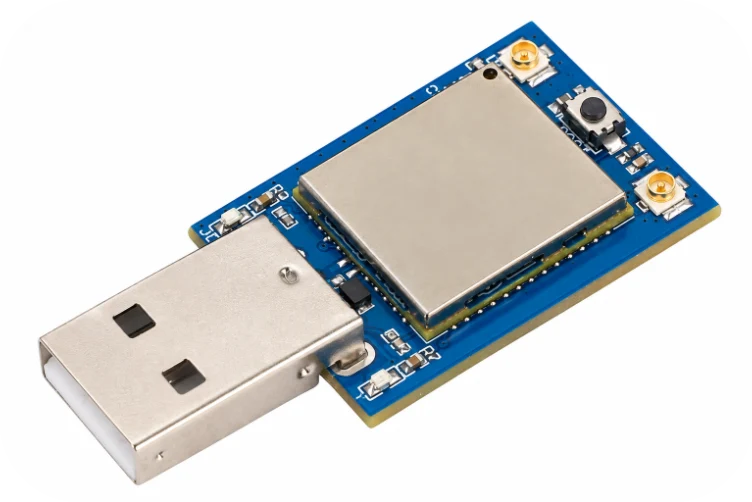
USB Modem PCB Manufacturing & PCBA for LTE/5G Dongles and Data Adapters
USB Modem PCB fabrication and assembly involves a compact...

Custom Smart Motorcycle Helmet PCB for Connected Riding
A smart motorcycle helmet may combine an intercom,...
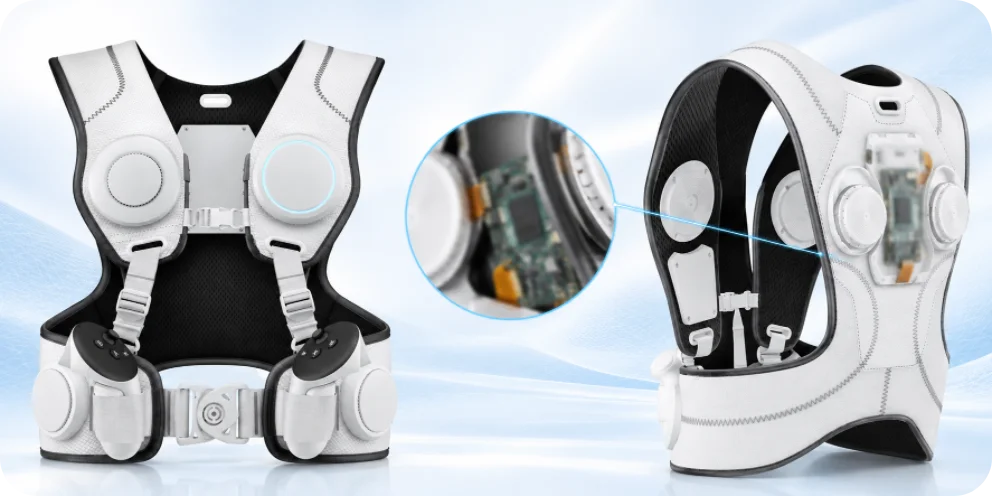
Wearable Haptic Vest PCB Manufacturing & Assembly for Multi-Zone Haptic OEMs
In a wearable haptic vest, the wearer notices the...
How to get a quote for PCBs
Let‘s run DFM/DFA analysis for you and get back to you with a report. You can upload your files securely through our website. We require the following information in order to give you a quote:
-
- Gerber, ODB++, or .pcb, spec.
- BOM list if you require assembly
- Quantity
- Turn time
In addition to PCB manufacturing, we offer a comprehensive range of electronic services, including PCB design, PCBA, and turnkey solutions. Whether you need help with prototyping, design verification, component sourcing, or mass production, we provide end-to-end support to ensure your project’s success.
For PCBA services, please provide your BOM (Bill of Materials) and any specific assembly instructions. We also offer DFM/DFA analysis to optimize your designs for manufacturability and assembly, ensuring a smooth production process.