
The Great Component Price Wave of 2026

Dateline: March 27, 2026. DRAM contract prices surged 90–95% quarter-over-quarter in Q1 2026 — and PC DRAM specifically rose 105–110% QoQ, effectively more than doubling in a single quarter. High Bandwidth Memory (HBM) is completely sold out through end-2026. TSMC raised foundry prices 3–10% on January 1 and has announced the same for four consecutive years through 2029. From Texas Instruments (+15–85% effective April 1) to Panasonic tantalum capacitors (+15–30%), Omron (+5–50%), TE Connectivity (+30%), and ROHM (March 1), the most comprehensive component price wave since the 2021–22 chip shortage is fully underway.
For PCB assembly operations and OEM product teams, the timing and breadth of the current price increases present a challenge qualitatively different from raw material inflation. Raw material costs flow through the supply chain over weeks and months. Component price increases are immediate: orders placed after an effective date face the new pricing. And when multiple major suppliers implement increases on the same April 1 date, the cumulative BOM cost impact can be severe — arriving faster than engineering teams can evaluate design alternatives or procurement teams can secure pre-increase inventory.
This report maps the full scope of the Q1–Q2 2026 component price wave, explains the structural drivers behind each product category, and provides specific data on effective dates and magnitude so that procurement teams can prioritise action. The root cause is consistent across categories: the AI infrastructure buildout is consuming global manufacturing capacity at a pace that is structurally outpacing supply, pulling resources away from consumer and standard industrial components while driving price inflation across the entire electronic components ecosystem.
The Memory Crisis: “RAMmageddon” — Structural Reallocation, Not a Cycle
IDC’s February 2026 analysis describes what is happening in the memory market as “not just a cyclical shortage driven by a mismatch in supply and demand, but a potentially permanent, strategic reallocation of the world’s silicon wafer capacity.” For decades, DRAM and NAND production for smartphones and PCs was the primary volume driver. Today, that dynamic has inverted.
The voracious demand for High Bandwidth Memory (HBM) by Microsoft, Google, Meta, and Amazon — to power NVIDIA, AMD, and custom AI accelerators — has forced Samsung Electronics, SK Hynix, and Micron Technology to pivot their limited cleanroom space and capital expenditure toward higher-margin enterprise-grade products. This is a zero-sum game: every wafer allocated to an HBM stack for an NVIDIA GPU is a wafer denied to the LPDDR5X module of a smartphone or the SSD of a consumer laptop.
TrendForce’s February 2026 revised forecasts are stark: conventional DRAM contract prices revised upward from the initial +55–60% QoQ estimate to +90–95% QoQ for Q1 2026. NAND Flash prices similarly revised from +33–38% to +55–60% QoQ. Enterprise SSD prices are forecast at +53–58% QoQ. “Further upward adjustments may still occur,” TrendForce warned. Counterpoint Research confirmed in February 2026 that memory and NAND prices surged 80–90% in Q1 2026 compared to Q4 2025. HBM is completely sold out through end-2026 on allocation-only basis.
Memory Price Surge — Q1 2026 vs Q4 2025
| Product | QoQ Price Change |
|---|---|
| Conventional DRAM | +90–95% |
| PC DRAM (LPDDR4X/5X) | +105–110% |
| Server DRAM (DDR5) | >+60% |
| NAND Flash (all types) | +55–60% |
| Enterprise SSD | +53–58% |
| Client SSD | >+40% |
| HBM | SOLD OUT through 2026 |
Sources: TrendForce Jan & Feb 2026; Counterpoint Feb 9, 2026; J2 Sourcing March 2026
Executive Statements on the Memory Crisis (2025–2026)
“We’ve never witnessed costs escalating at the current pace — tighter availability across DRAM, hard drives, and NAND flash memory.”
— Jeff Clarke, COO, Dell Technologies, November 2025 analyst call
“Memory costs account for 35% of PC build materials — up from 15–18% the prior quarter.”
— HP Q1 2026 earnings call (reported Wikipedia memory shortage article)
“The cost surge is unprecedented. Our memory inventories are approximately 50% above normal levels.”
— Winston Cheng, CFO, Lenovo
TSMC: Four Consecutive Years of Price Hikes, Effective January 1, 2026
Taiwan Semiconductor Manufacturing Company, which captured a record 70.2% global foundry market share in Q2 2025, has implemented the most consequential semiconductor pricing action in years. According to Economic Daily News and confirmed by DigiTimes, TSMC notified clients in late 2025 that it would implement annual price increases on advanced nodes for four consecutive years, from 2026 through 2029. The 2026 increases — effective January 1 — cover all processes below 5nm, with the magnitude varying by node and customer profile:
| TSMC Process Node | 2026 Price Increase | Wafer Price (approx.) | Primary Applications Affected |
|---|---|---|---|
| 5nm / 4nm (N5/N4) | +5–7% | ~$16,000/wafer | Smartphones, mid-range AI chips |
| 3nm (N3) | +3–5% | ~$20,000–$25,000/wafer | Apple A-series, AMD CPUs |
| 2nm (N2) — new in 2025 | +10%+ | >$30,000/wafer | NVIDIA AI, Apple A20 (secured 50% of capacity) |
| HPC / AI chips (all advanced nodes) | +10% | Premium pricing applies | AI accelerators, data center ASICs |
Sources: TechSpot; AnalyticsInsight; TrendForce; WCCFTech; DigiTimes — all Nov 2025–Mar 2026
The rationale is multi-layered. TSMC’s overseas fabs — particularly the Arizona facilities — carry a 20% cost premium versus Taiwan production (per AMD CEO Lisa Su). These higher costs are now flowing through to customers. TSMC also cited supply chain disruptions, the appreciating New Taiwan dollar, and the structural need to maintain gross margins above 53%. With sub-3nm capacity booked through end-2026, customers have limited alternatives — and they appear willing to pay. Digitimes confirmed in a March 4, 2026 report that TSMC is leading foundry price hikes as “second-tier firms see profit rebound.”
Passive Components and Discretes: The Q1–Q2 2026 Price Notification Wave

Beyond memory and foundry, the broader component supply chain is experiencing what ESCATEC’s March 2026 Electronic Component Market Review describes as a synchronised price adjustment cycle. The Lytica February 2026 State of the Electronic Components Market shows the basket-level price index up +8.4% month-over-month for memory, with the broader semiconductor category up +2.9% and capacitors up +2.4%. The following table summarises all confirmed supplier price actions as of March 27, 2026:
| Supplier | Product Category | Price Increase | Effective Date | Notes |
|---|---|---|---|---|
| Texas Instruments | Semiconductors (multiple) | +15–85% | April 1, 2026 | Applies to new orders and backlog after Apr 1 |
| Panasonic | Tantalum capacitors | +15–30% | February 1, 2026 | Affects several dozen specifications; same rate for distributors and direct |
| Kemet (Yageo) | Tantalum capacitors | Up to +30% | Q1 2026 | High-reliability passive components |
| TE Connectivity | Global connector portfolio | +5–12% (Jan); +30% (Mar) | Jan 5 + Mar 2, 2026 | Two rounds; metals cost inflation cited |
| Omron | PLCs, robots, sensors, relays | +5–50% | February 7, 2026 | Broadest product-range increase in automation |
| Onsemi | Multiple product lines | TBD | April 1, 2026 | EV and industrial demand; applies to orders and backlog |
| Alpha & Omega Semi | Multiple product families | TBD | April 1, 2026 | Announced March 9, 2026; raw material + energy cited |
| NXP Semiconductors | Select product portfolio | TBD | April 1, 2026 | Automotive and IoT focus |
| Infineon | Multiple product lines | TBD | April 1, 2026 | New orders + existing backlog affected |
| ROHM | Select semiconductor products | TBD | March 1, 2026 | Rising raw material costs since 2023 |
| Molex | Select products | TBD | February 1, 2026 | Rising metals costs in manufacturing |
| Walsin Technology | Resistors (partial portfolio) | TBD | February 1, 2026 | Resistor availability at 77.6% in-stock (Lytica) |
| Analog Devices | Full portfolio | ~+15% | February 2026 | Portfolio-wide average (ESCATEC) |
| Samsung (NAND) | NAND flash | Another significant hike Q2 2026 | Q2 2026 | Following Q1 “notable adjustment”; demand reallocated to enterprise |
Sources: Freedom USA electronics supply chain update (Mar 26, 2026); ESCATEC electronic component market review (Mar 2026); Win Source Electronics 2026 price surge analysis; Lytica Feb 2026 state of market
MLCCs: Murata Evaluating Increases as Rare Earth Inputs Tighten
Multilayer ceramic capacitors (MLCCs) — the ubiquitous passive components that appear in quantities of 1,000+ units on a typical smartphone PCB and up to 15,000+ on an EV battery management board — face a distinct pressure vector. Murata Manufacturing, the global MLCC leader, has stated that it is “considering increases to the prices of its premium MLCCs due to a surge in demand driven by AI infrastructure investments,” targeting a decision by Q4 2026. The root cause is rare earth materials, particularly Yttrium — a critical ceramic dielectric precursor that remains heavily supply-restricted.
China’s dominance of rare earth refining — and its 2024 export controls on gallium and germanium — has created structural supply risk for ceramic components. Any disruption quickly restricts availability and makes lead times less forgiving. ESCATEC’s March 2026 component review notes that optoelectronic components have dropped to only 56.4% in-stock availability — the lowest in the Lytica basket by a wide margin — suggesting genuine supply constraints rather than price-only pressure. Storage devices show 75.0% in-stock and resistors 77.6%, both below comfortable procurement levels.
“Price hikes are no longer confined to specific sectors, but have expanded from design to packaging, memory, and passive components. The entire supply chain is experiencing escalating price pressure. The supply shortage of HBM and enterprise SSDs has driven related price increases, reshaping the memory market.”
MCU Lead Times Return to Crisis Levels: STMicroelectronics at 55 Weeks
Microcontroller unit (MCU) lead times have returned to levels not seen since the 2021–2022 component crisis — and in some segments, surpassed those peaks. J2 Sourcing’s March 2026 Electronic Component Shortage Update confirmed that STMicroelectronics is quoting lead times of up to 55 weeks for TSX-series and automotive-grade MCUs as of March 2026. Purchase orders placed today should not be expected before Q1–Q2 2027.
The automotive and industrial MCU segments are experiencing the most severe constraints. Nexperia continues suffering on certain product lines with Chinese country-of-origin (COO) that are transferring to other manufacturing locations following wafer viability concerns in 2025, with disruption and allocation expected throughout 2026. The impacted products include select discrete and power semiconductors. Legacy node exposure requires careful monitoring for any PCB design that specifies older-generation Nexperia components.
The Cumulative Impact on PCBA: BOM Cost Escalation by Product Category
AI Server Boards
Memory (HBM, DDR5) now allocation-only. Processor wafer costs up 10%. PCB itself up 30–50% YoY. CCL costs rising 15–30%. Net BOM cost for an AI server PCBA is estimated to have increased 25–40% compared to equivalent designs in H2 2025. Customers accept the increases because supply alternatives are limited.
PC / Laptop
Memory now 35% of PC BOM (up from 15–18%). PC DRAM +105–110% QoQ. Major brands (Dell, HP, Lenovo, ASUS, Acer) signal retail price increases of 15–20%. IDC forecasts global PC shipments declining 2.4% in 2026 as demand is suppressed by price increases.
Smartphone
LPDDR4X and LPDDR5X contract prices both surging ~90% QoQ. Low-end smartphones expected to return to 4GB base RAM in 2026 — a downgrade from 2025 baselines. Android brands targeting mid- and low-end segments are compelled to raise launch prices and modify existing model pricing.
Automotive Electronics
STMicro automotive MCU lead times at 55 weeks. TE Connectivity connectors +30%. Tantalum capacitors (used in safety-critical filters) up 30%. BMW stated tariffs and component costs will reduce automotive margin by 1.25 percentage points in 2026. Every ECU and ADAS module faces higher BOM.
Industrial Controls / IoT
Omron PLC, sensor, and relay prices up 5–50% from February 7. NXP MCUs for IoT applications subject to April 1 increases. Rare earth supply constraints are hitting sensor components. Industrial designs with long product cycles face difficult choices: absorb costs, redesign to alternative components, or pass through to end customers.
Consumer Electronics
Memory costs spiralling across all consumer applications. In Tokyo’s Akihabara electronics district, retailers began limiting purchases of memory products to prevent hoarding, with DDR5 module prices more than doubling in some cases. Western Digital’s hard disk supply for 2026 was booked for enterprise applications before February 2026.
Action Guide for PCBA Procurement Teams — April 2026 Deadline
- Pre-purchase Q2–Q3 DRAM and NAND requirements before further price escalation: TrendForce warns that DRAM prices are projected to rise further in Q2 2026. Pre-purchasing before Q2 contracts finalise represents a material cost-avoidance opportunity. “Current pricing may represent a high point in the short term, but allocation risk for H2 2026 is real” (J2 Sourcing, March 2026).
- Confirm BOM exposure to April 1 price effective dates: Texas Instruments, Onsemi, NXP, Infineon, and Alpha & Omega all move to new pricing on April 1. Review your BOM for components from these suppliers and confirm whether open orders will be covered at current pricing.
- Engage specialist component brokers for HBM and allocation-constrained products: Authorised independent distributors with manufacturer relationships can provide access to allocated inventory not visible on open market platforms.
- Review MCU specifications for STMicro automotive grade: 55-week lead times mean orders today arrive Q1–Q2 2027. If your product design relies on STMicro TSX-series automotive MCUs, place bridging orders now or initiate an alternative component qualification.
- Build buffer stock in MLCCs and passive components: With Murata evaluating MLCC increases and rare earth supply restricted, passive components priced today may be materially cheaper than in H2 2026.
About Highleap Electronics: Highleap Electronics provides PCB fabrication and PCBA assembly including component procurement, SMT assembly, and complete turnkey services. We monitor component market conditions continuously to support our customers’ supply chain planning. Contact us about PCBA turnkey services →
Sources: TrendForce memory price forecasts Jan 5 & Feb 2, 2026; Counterpoint Research memory price tracker Feb 9, 2026; IDC Global Memory Shortage Crisis Feb 10, 2026; The Register Feb 2, 2026; J2 Sourcing Electronic Component Shortage Update March 2026; Freedom USA Electronics Supply Chain Price Increases March 26, 2026; ESCATEC Electronic Component Market Review March 2026; Win Source Electronics 2026 price surge analysis; Lytica State of Electronic Components Market Feb 2026; TechSpot TSMC price hike Sep 2025; DigiTimes TSMC foundry March 4, 2026; AnalyticsInsight TSMC Dec 29, 2025; WCCFTech DRAM Feb 2026; Wikipedia 2024–2026 global memory shortage.

Recommended Posts

Custom Smart Motorcycle Helmet PCB for Connected Riding
A smart motorcycle helmet may combine an intercom,...
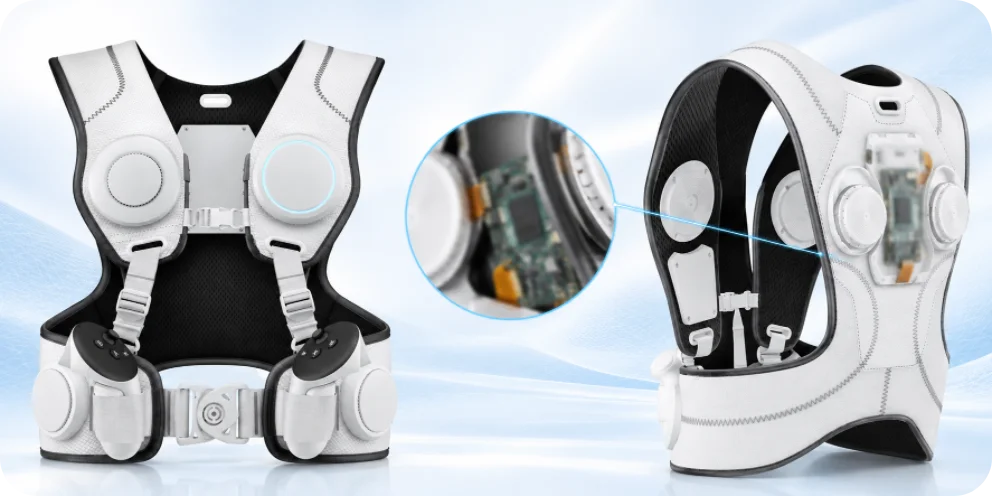
Wearable Haptic Vest PCB Manufacturing & Assembly for Multi-Zone Haptic OEMs
In a wearable haptic vest, the wearer notices the...
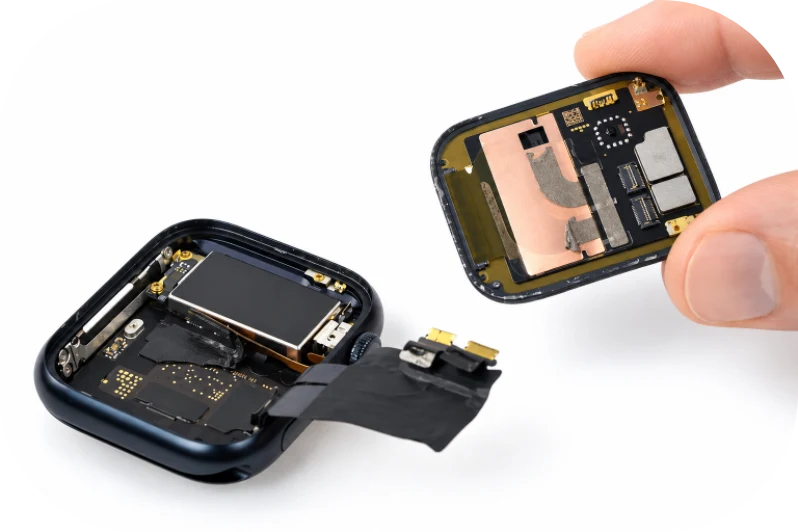
Wearable Temperature Logger PCB Manufacturing & Assembly for BLE Sensor OEMs
A wearable temperature logger PCB is the electronic board...
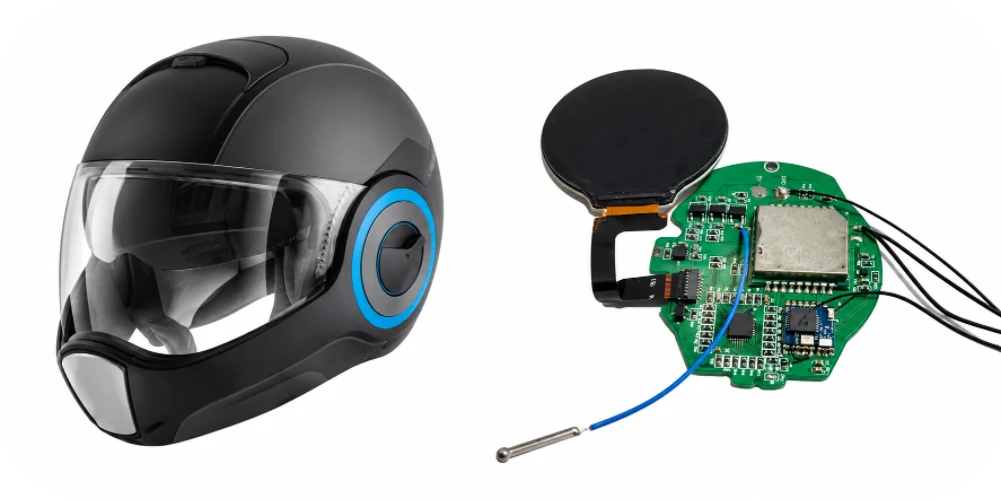
Connected Safety Helmet PCB Manufacturing & Assembly for Industrial IoT OEMs
A Connected Safety Helmet PCB is an industrial IoT...
How to get a quote for PCBs
Let us run DFM/DFA analysis for you and get back to you with a report.
You can upload your files securely through our website.
We require the following information in order to give you a quote:
-
- Gerber, ODB++, or .pcb, spec.
- BOM list if you require assembly
- Quantity
- Turn time