
Quick Turn PCB China: Lead Times, Urgent Orders, and Quality Standards

The phrase quick turn PCB China covers a wide range of actual manufacturing realities — from genuine 24-hour bare board production on dedicated fast-lane lines to “quick turn” marketing that applies to 5-day or 7-day schedules that are unremarkable by any standard. For engineers working under real deadline pressure, the ability to distinguish what China PCB factories can genuinely deliver fast from what they cannot — and what trade-offs are unavoidable at different speed tiers — is the difference between a prototype that arrives in time and one that does not.
This guide covers the real mechanics of quick turn PCB production in China: what lead time tiers are genuinely achievable, which specifications can be run fast without quality compromise, where speed and quality genuinely conflict, and how to structure your order to get the fastest legitimate delivery for your specific requirements.
Quick Turn PCB China — Lead Time Reality Check
- 24 hours: Achievable for 1–4 layer standard FR-4, specific standard specs only, small panel, premium charge applies. Not achievable for multilayer, specialty laminate, or HDI.
- 48 hours: Achievable for 2–6 layer FR-4, standard surface finish (ENIG or lead-free HASL), no special processes. Most technically sound quick-turn option.
- 5 business days: Achievable for up to 10-layer boards, controlled impedance with TDR verification, ENIG finish, standard design rules. The sweet spot for quality + speed.
- DHL shipping to Europe/USA: Add 3–5 business days transit. Total door-to-door time for a 48h board: 6–8 working days from file submission to receipt.
- What cannot be rushed: specialty low-loss laminate/PTFE laminate (material availability), polyimide, 12+ layers with tight impedance tolerances, blind/buried via HDI, flex and rigid-flex.
Table of Contents
- How Quick Turn PCB Production Actually Works
- Lead Time Tiers: What Each Speed Level Covers and Costs
- Quality Standards on Quick Turn Boards — What Is and Isn’t Compromised
- What Can Be Made Fast and What Cannot
- Shipping from China: Real Door-to-Door Transit Times
- How to Structure Your Order for Maximum Speed
- Quick Turn PCBA from China — Assembled Boards Fast
- Frequently Asked Questions
How Quick Turn PCB Production Actually Works
Quick turn PCB service works by pre-positioning resources to eliminate the queuing and scheduling delays that govern standard production. Standard production queuing allows a factory to maximize panel utilization — grouping multiple orders onto the same production panel, scheduling press cycles to run full loads, and batching chemical processes for efficiency. This maximizes cost efficiency but introduces waiting time: your order may sit for 3–5 days before the production panel is assembled and processing begins.
Quick turn bypasses this queuing by running your order on a dedicated fast-lane panel — typically a smaller panel with lower utilization efficiency, but one that moves immediately into production without waiting for other orders to fill the batch. The factory absorbs the efficiency loss and passes the cost premium to the customer. This is the fundamental mechanism: speed is purchased by paying for the utilization loss of a dedicated fast panel run.
Additional speed comes from pre-stocking fast-lane materials. A genuine quick turn operation keeps common CCL grades (standard FR-4 1.6mm in popular copper weights, a few standard thicknesses) in ready inventory, available for immediate press loading. No CCL procurement lead time, no waiting for material from a supplier. This is why quick turn is effectively limited to standard material grades — the ready inventory cannot extend to every specialty laminate.
The third element is staff scheduling. Fast-turn orders move through engineering review, imaging, plating, and inspection at accelerated pace, which requires either dedicated fast-lane staff or a scheduling system that prioritizes quick-turn orders across the production flow. This adds labor overhead that contributes to the price premium.
Lead Time Tiers: What Each Speed Level Covers and Costs
The 24-hour tier: what it actually means
Genuine 24-hour PCB production from file submission to shipped board exists in China — but it applies to a narrow specification window. Typically: 2-layer boards, standard 1.6mm FR-4, specific copper weight and board size combinations that match pre-loaded production panel formats, HASL or OSP surface finish, and no controlled-impedance requirement. The price premium is real — typically 3–5× the standard production price — and the quantity is limited to what fits on a small fast-lane panel, often 1–10 boards.
For 4-layer boards, genuine 24-hour delivery is possible at some factories with dedicated fast-lane multilayer capacity, but it requires confirming availability before commitment. Most factories that advertise “24-hour PCB” are referring to production start time, not delivery — the board still needs 3–5 days of DHL shipping after production.
The 48-hour to 5-day tier: the practical sweet spot
For most prototype and design verification work, the 48-hour to 5-day lead time window represents the practical combination of acceptable speed and genuine technical quality. Within this window, 4-layer and 6-layer ENIG boards with standard design rules and standard FR-4 can be produced at full quality — flying probe test, AOI, proper ENIG process. This is where genuine quick turn PCB service from China delivers real value without the quality compromises of the 24-hour extreme.
Quality Standards on Quick Turn Boards — What Is and Isn’t Compromised
A common concern about quick turn PCB production is whether speed comes at the expense of quality. The answer is nuanced: within appropriate specification limits, quality is not compromised on quick turn boards. Outside those limits, speed and quality genuinely conflict.
What is not compromised on fast-turn boards
Electrical testing (flying probe) is standard on all quick turn bare boards — this is not a time-intensive step and is not omitted for speed. AOI inspection after outer layer imaging is standard at reputable quick turn factories. ENIG surface finish quality is not compromised by speed — the ENIG chemical process has defined timing, and the process is the same on a fast-turn board as a standard board. IPC Class 2 inspection standards are achievable on quick turn production without compromise.
What may be limited on fast-turn boards
Controlled-impedance TDR coupon measurement requires coupon routing, measurement, and documentation steps that add time. On very short lead times (24–48 hours), TDR measurement is typically not included; impedance is controlled by process parameters only. For designs where impedance is specified but tolerance margins are generous, this is acceptable. For designs where ±10% impedance tolerance is critical — DDR5, PCIe Gen 4/5, 5G RF paths — do not use 24-hour or 48-hour service; use 5-day or longer to allow TDR verification.
Microsection cross-section inspection (required for IPC Class 3 via barrel quality verification) is a destructive test requiring sample boards from the lot and an additional processing step. This is not available at 24-hour lead times. If IPC Class 3 is required for your application, use standard or 7-10 day lead time.
What Can Be Made Fast and What Cannot
Shipping from China: Real Door-to-Door Transit Times
Production lead time is only half of the total delivery equation. Shipping from China to the final destination adds a fixed block of time that cannot be compressed regardless of how fast the boards are produced.
DHL Express and FedEx International Priority from Shenzhen typically deliver to major US cities (Los Angeles, New York, San Jose) in 3–4 business days from ship date. European destinations (Germany, UK, Netherlands) typically take 3–5 business days. The key variable is customs clearance, which can add 0–2 business days depending on the destination country and whether the shipping documents are complete and accurate. A commercial invoice with HS code 8534 (printed circuits), correct declared value, and complete shipper/consignee information clears customs faster than documents with errors.
Total door-to-door calculation for a quick turn PCB order from China: 48-hour production + 1-day export packing/pickup = shipping start on day 3; 3–4 days DHL transit = delivery on days 6–7 from file submission. For European destinations: 3–5 days transit = delivery on days 6–8. These are realistic estimates for straightforward orders with correct shipping documentation. Add 1–2 days buffer for any unusual circumstances.
Shipping cost adds meaningfully to the total for small quick-turn orders. DHL Express from Shenzhen to the US or Europe typically costs $40–$80 for a small package (under 2 kg). This is a significant fraction of the total cost of a 5-board quick turn prototype order and should be factored into the cost comparison against local suppliers.

How to Structure Your Order for Maximum Speed
The actions that actually reduce total delivery time are mostly on the customer side — specifically in how design files and order information are submitted.
Submit complete, DFM-clean Gerber files
The single largest source of delay on quick turn orders is the engineering review cycle triggered by incomplete or non-standard design files. A Gerber package that is missing the board outline layer, has paste mask layers not matching the copper, or has drill files in a non-standard format will generate a DFM query that stops production until resolved. The response-to-query cycle adds 4–12 hours minimum on a quick turn order — potentially erasing most of the speed advantage. Submit RS-274X Gerber files with all layers explicitly labeled, an Excellon drill file, a board outline in a dedicated mechanical layer, and a fabrication note specifying all requirements including surface finish, copper weight, board thickness, and IPC class.
Choose a standard specification within the quick turn window
Non-standard specifications trigger longer engineering review and often require material procurement that eliminates the quick turn timeline. If the design can be produced in standard 1.6mm FR-4 with standard copper weights, standard hole sizes, and standard surface finish, use those parameters for prototypes. Substitute non-standard specifications only when the design genuinely requires them.
Specify impedance requirements clearly or omit them for 24–48h orders
If the design has impedance-controlled traces and you need 24–48h production, specify the trace geometry (width and spacing) explicitly rather than an impedance target — this allows the factory to produce to the specified geometry without the TDR measurement step. You can verify impedance independently with a TDR probe on the received boards if needed. If impedance measurement is required in the factory documentation, use a 5-day or longer lead time.
Pre-clear customs documentation
Provide the shipping address, import customs details (EORI number for EU importers, Customs Entry Number if available), and any required end-use declarations at the time of order, not when the board is ready to ship. Late customs documentation delays shipping by 24–48 hours.
Quick Turn PCBA from China — Assembled Boards Fast
Quick turn PCB assembly (PCBA) from China is significantly more constrained than bare board quick turn because component availability adds an independent time variable. The fastest quick turn PCBA scenario requires all components to be in-stock at the factory before production begins. When components must be ordered, even express component delivery adds 2–5 business days minimum before assembly can start.
For quick turn PCBA: the fastest delivery is achieved with consigned components — you purchase components locally and ship them to the factory along with the design files. This removes the component procurement variable from the factory’s timeline. Some factories stock common commodity components (standard resistors, capacitors, specific common MCUs) for immediate use on quick turn PCBA orders, but stock coverage is never complete.
Realistic quick turn PCBA timelines: 3–5 business days for assembly with components in-hand (bare board production + SMT + AOI + functional test), 7–10 business days if standard components need to be ordered (procurement + bare board + assembly + test). For complex BGA assemblies requiring X-ray inspection: add 1–2 days.
Our quick turn PCBA service supports both consigned component assembly and turnkey assembly with our component sourcing. We provide AOI inspection on all SMT assemblies, 3D X-ray for BGA packages, and functional testing per client specification. For quick turn enquiries, submit Gerber files, BOM, and component placement files together — a complete submission enables same-day DFM review and production scheduling.
Highleap Electronics — Quick Turn PCB and PCBA from China
We offer quick turn PCB fabrication with production lead times from 48 hours (standard FR-4, 2–6 layers) to 5 business days (up to 10 layers with TDR impedance verification) and 7–10 days for higher complexity. All quick turn orders include flying probe electrical test and AOI. DHL Express shipping to US and European destinations in 3–5 business days after production. Submit your Gerber files for a same-day quote with confirmed lead time.
Frequently Asked Questions
How fast can China make and ship a PCB?
The fastest realistic total delivery time from file submission to receipt in the US or Europe is 6–8 business days: 48-hour production + 4–5 business days DHL Express shipping. This applies to 2–6 layer standard FR-4 boards with standard specifications. Boards requiring specialty materials (specialty low-loss laminate, polyimide), more than 6 layers, or controlled-impedance TDR verification require longer production time — minimum 5–7 business days in production, plus 4–5 days shipping.
Is 24-hour PCB service from China actually possible?
Genuine 24-hour production is possible but applies only to 2-layer (sometimes 4-layer) standard FR-4 boards with specific standard specifications. It does not include controlled-impedance verification, specialty laminate, more than 4 layers, or quantities above approximately 10 boards. The price premium is real — typically 3–5× standard production pricing. The board still requires 3–5 days DHL shipping to reach US or European destinations after production.
Does quick turn PCB from China mean lower quality?
Not inherently. Within the specification limits that are achievable at quick turn speeds, quality is not compromised: electrical testing, AOI, and IPC Class 2 inspection are standard on quick turn production. What may be limited at very short lead times (24–48h) is controlled-impedance TDR coupon measurement, microsection inspection (IPC Class 3), and documentation completeness. For designs requiring these quality elements, use 5-day or longer lead time rather than 24–48h quick turn.
What is the total cost of a quick turn PCB from China including shipping?
Total cost = quick turn board price (1.5–5× standard depending on speed tier) + DHL Express shipping ($40–$80 for typical small prototype package to US or Europe). For a 10-board, 4-layer FR-4 prototype on 48-hour production, total typical cost is $150–$350 for boards plus $50–$80 shipping. These numbers vary significantly by board complexity, size, and exact specification. The correct comparison with a domestic quick turn supplier should include total delivery time, not just board price — the shipping time from China often makes domestic quick turn the correct choice for truly urgent (same-week) requirements.
How should I submit files for quick turn PCB production?
Submit: RS-274X Gerber files with all layers explicitly labeled (copper layers, solder mask, silkscreen, board outline as separate file), Excellon drill file with tool sizes, and a written fabrication note specifying board thickness, copper weight (all layers), surface finish, IPC inspection class, and any impedance requirements. Submit all files as a single compressed ZIP archive. A complete, clean submission enables same-day engineering review and production scheduling; incomplete submissions trigger queries that delay start by 4–12 hours minimum.

Recommended Posts
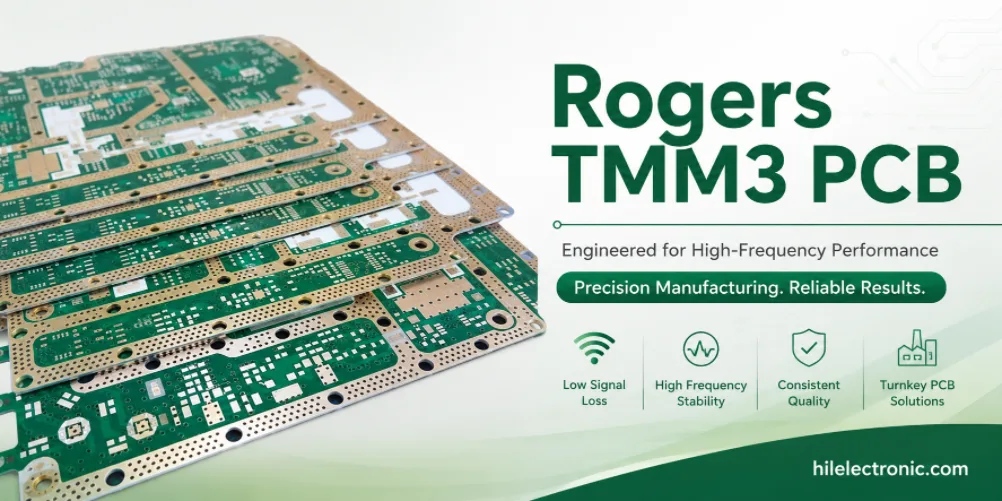
TMM3 PCB Manufacturing for RF Modules
TMM3 PCB manufacturing is most useful where the RF module...
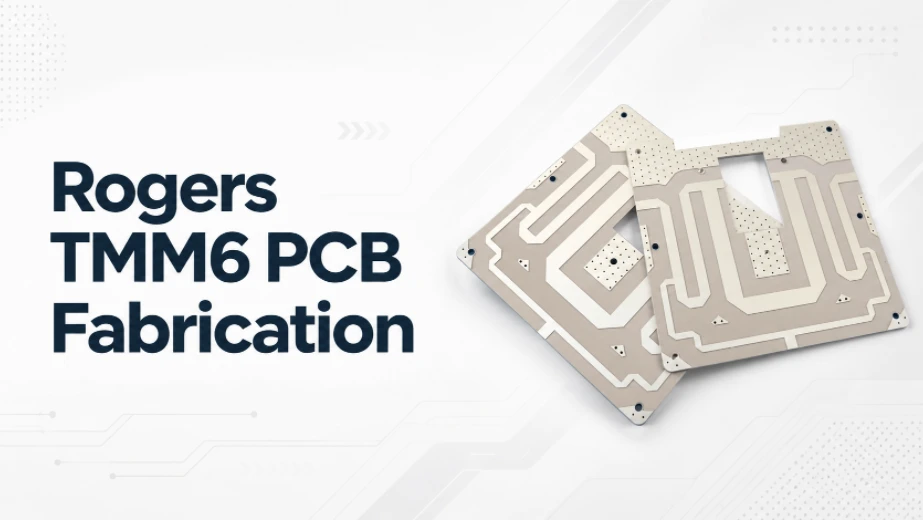
TMM6 PCB Fabrication
TMM6 fabrication is the process-control page for a mid-Dk...
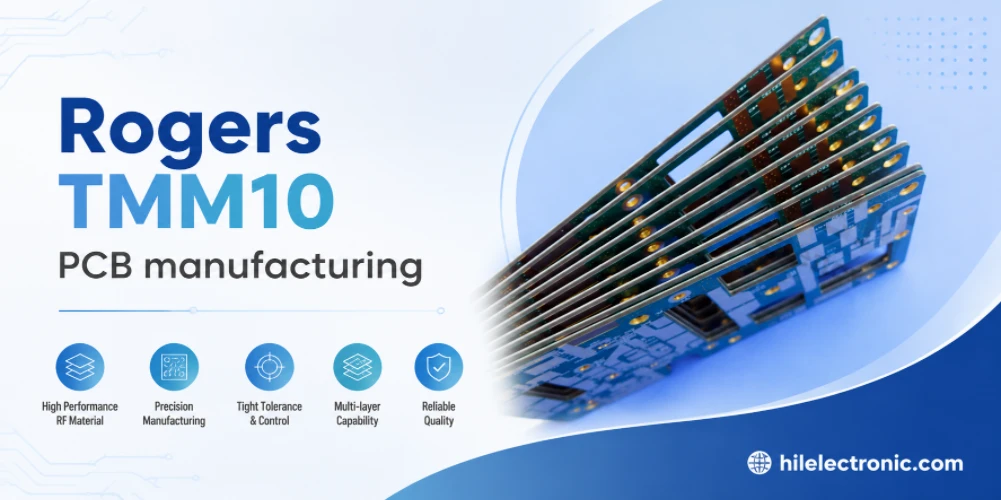
TMM10 PCB Manufacturing for Compact RF Designs
Table of contentsHow TMM10 Shrinks RF StructuresTMM10 vs...

TMM10i PCB Fabrication and DFM
TMM10i PCB fabrication has a stronger DFM emphasis because...
How to get a quote for PCBs
Let us run DFM/DFA analysis for you and get back to you with a report.
You can upload your files securely through our website.
We require the following information in order to give you a quote:
-
- Gerber, ODB++, or .pcb, spec.
- BOM list if you require assembly
- Quantity
- Turn time