
The Ultimate Guide to PCB Manufacturers in China: Finding the Right Factory

China is home to more than 3,000 PCB fabrication facilities, producing over 55% of the world’s printed circuit boards by output value. PCB manufacturers in China range from commodity board shops producing single-layer consumer electronics panels at scale to highly specialized technical factories building 20-layer HDI substrates, RF microwave boards, and heavy copper power electronics for industrial and aerospace applications. For engineers and procurement teams sourcing PCBs, the critical insight is that these factories are not interchangeable. The factory that builds your product correctly — at the right quality level, with the right engineering support, on the right schedule — depends on matching your specific project requirements to the right segment of the Chinese PCB manufacturing industry.
This article provides a structural overview of PCB manufacturers in China: how the industry is organized, what different factory types actually specialize in, which production capabilities distinguish technical-grade factories from commodity producers, and how to use that structure to identify the right manufacturing partner for your project.
China PCB Industry — Key Facts for Sourcing Teams
- Global share: China accounts for 55%+ of global PCB output by value in 2025–2026 (Prismark data)
- Factory count: Over 3,000 active PCB fabricators — but the top 20% produce over 80% of value-added output
- Geographic concentration: Guangdong province (Shenzhen/Dongguan/Zhuhai) hosts the densest cluster; secondary clusters in Jiangsu (Suzhou/Kunshan) and Zhejiang (Hangzhou)
- Capability range: Single-layer paper-phenolic boards to 60-layer high-density interconnect substrates for AI server applications
- Integrated supply chain: 90%+ of CCL, copper foil, plating chemicals, and PCB equipment supply chains are within China — the density advantage is structural, not cyclical
Get a Quote from a Direct China PCB Factory →
Table of Contents
- Why China PCB Manufacturing Dominates Global Supply
- The Three Factory Types: Mass Production, Technical Specialty, and Quick-Turn
- Capability Tiers: What Separates Technical-Grade from Commodity Producers
- Project-to-Factory Matching Matrix
- Geographic Clusters: Shenzhen, Jiangsu, and Beyond
- PCB + PCBA Integration: Why Single-Source Matters
- Frequently Asked Questions
Why China PCB Manufacturing Dominates Global Supply
China’s position in PCB manufacturing was not built on low wages alone — the modern PCB fabrication industry is highly automated, and direct labor represents only 8–15% of total manufacturing cost depending on product type. The structural advantage is supply chain integration and geographic density. The Pearl River Delta manufacturing cluster — centered on Shenzhen and extending through Dongguan, Zhuhai, and Guangzhou — contains not just PCB factories but the entire upstream supply chain: copper-clad laminate producers, copper foil mills, glass fiber weavers, plating chemical suppliers, photoresist manufacturers, and precision CNC equipment builders, all within logistics range of each other.
This integration means a PCB factory in Shenzhen can receive same-day or next-day delivery of materials from multiple qualified suppliers — a logistics reality that factories in Europe, North America, or Southeast Asia cannot match because the equivalent supply chain infrastructure does not exist at the same density elsewhere. When copper prices spike, a Chinese PCB factory has multiple qualified laminate suppliers to negotiate with. When a drill bit specification changes, replacement tooling arrives the same day. This operational agility compounds into cost advantages that are durable and structural.
Three decades of concentrated PCB manufacturing has also produced a deep pool of process engineering talent in China. Process engineers with 15–20 years of PCB-specific experience — managing controlled-impedance programs, qualifying new laminate materials, troubleshooting delamination in multilayer builds — are concentrated in the Guangdong and Jiangsu manufacturing clusters in a way that is not easily replicated elsewhere.
The Three Factory Types: Mass Production, Technical Specialty, and Quick-Turn
The 3,000+ PCB manufacturers in China are not a uniform population. They cluster into three functionally distinct types, and choosing the wrong type for your project creates problems that price alone cannot solve.
Type 1: Mass production volume factories
These are large-footprint factories optimized for high-volume production of standardized board types — primarily 2-layer and 4-layer FR-4 boards for consumer electronics, home appliances, LED lighting, and commodity industrial applications. Their competitive advantage is cost-per-panel at volume; they achieve this through maximum panel utilization, optimized material flow, high automation, and minimal engineering overhead per order. They typically run 500,000 to several million panel-equivalents per month.
What they are good at: very high volumes of simple, well-defined board types; cost leadership on commodity specifications; fast order processing for repeat production runs with no engineering changes.
What they are not good at: complex technical specifications requiring significant engineering judgment; low-to-medium volumes where their per-order overhead relative to order value is unfavorable; quick response to design changes or technical questions that require engineering review. For hardware products that are in stable high-volume production and well-characterized, these factories offer genuine cost advantages. For products in development or with complex technical requirements, they are typically the wrong match.
Type 2: Technical specialty factories
Technical specialty factories invest in advanced process capability: HDI multilayer fabrication, controlled-impedance verification programs, specialty laminate processing (specialty low-loss laminate, polyimide, heavy copper), fine-pitch BGA assembly, 3D X-ray inspection, and functional test capability. They serve industrial automation, automotive, telecommunications infrastructure, medical devices, and military/aerospace applications where board complexity and reliability requirements exceed what commodity factories can deliver.
These factories are characterized by higher process engineering headcount relative to production volume, deeper investment in measurement and verification equipment, and genuine capability to discuss and solve technical problems with the customer’s engineering team. Per-unit cost is higher than mass-production factories; the value delivered is reliability, correct first-article execution, and technical support that prevents expensive failures in the field.
Highleap Electronics operates in the technical specialty category: our production capability spans 2-layer through 20-layer, covers HDI multilayer construction, high-frequency laminate processing, and heavy copper power electronics boards, with controlled-impedance verification on every impedance-specified order.
Type 3: Quick-turn prototype factories
Quick-turn factories are optimized for fast delivery of small quantities — typically 1–50 boards with 24-hour to 5-day lead times. They achieve speed through dedicated fast-lane production lines pre-loaded with standard materials, simplified engineering review processes, and small-panel production methods that allow a single order to move through the facility without waiting for a full production panel to fill. Their competitive advantage is lead time, not cost efficiency at volume.
These factories are the right choice for design iteration and prototype validation stages. They are typically not the right long-term production partner for volume production because their cost structure is optimized for small-quantity fast delivery, not production efficiency.

Capability Tiers: What Separates Technical-Grade from Commodity Producers
Within the technical specialty segment, factories vary significantly in their actual process capability. The following parameters define the difference between genuine technical capability and claimed capability.
Layer count and multilayer stack-up
Producing a 12-layer board is not simply doing 6 times the work of a 2-layer board. Multilayer construction requires precise registration between layers, controlled lamination parameters that prevent warpage and delamination, via drilling that maintains position accuracy across all layers, and impedance management across a complex stack-up. The number of layers a factory can reliably produce at production yield above 95% is a real capability indicator. Ask for yield data at your target layer count, not just whether they can technically produce that layer count.
HDI and microvia capability
HDI (High Density Interconnect) boards use laser-drilled microvias — holes with diameters of 0.1–0.15mm — that cannot be produced by mechanical drilling. HDI capability requires a CO₂ or UV laser drill with the positioning accuracy and maintenance program to sustain microvia quality in production. Not all factories in China claiming HDI capability have the laser drill equipment in-house; some sub-contract this step, creating quality control gaps. Ask whether the laser drill is in-house and request microvia cross-section microsection data to confirm diameter and fill quality.
Controlled-impedance verification
Controlled impedance in PCB manufacturing means the trace geometry, laminate dielectric constant, and copper weight are all controlled to produce a specific impedance value — typically 50Ω for single-ended signals or 100Ω differential. The critical distinction between factories is whether impedance is verified by TDR coupon measurement or only by process control (checking that the parameters are within spec rather than measuring the output). TDR coupon measurement with results included in the delivery documentation is the standard for technical-grade PCB production. Our impedance-controlled PCB fabrication provides TDR measurement data with every impedance-specified order.
Surface finish capability
The full range of PCB surface finishes — HASL, lead-free HASL, ENIG, ENEPIG, immersion silver, immersion tin, hard gold (electrolytic gold for edge connectors), OSP — requires different chemical processes and different process control expertise. Factories that offer only HASL and ENIG are limited in the products they can correctly produce. Verify that the surface finish specified for your design is one the factory produces routinely in production, not occasionally on request. Specific capability in advanced PCB surface finishes is a meaningful differentiator between factory tiers.
Project-to-Factory Matching Matrix
Use this matrix to identify which type of China PCB manufacturer fits your project at each stage of development and at each production volume.
Geographic Clusters: Shenzhen, Jiangsu, and Beyond
Guangdong Province — Pearl River Delta (Shenzhen / Dongguan / Zhuhai)
This is the world’s most concentrated electronics manufacturing cluster. Shenzhen alone has hundreds of PCB fabricators, and the surrounding cities of Dongguan, Huizhou, Zhuhai, and Guangzhou add hundreds more. The cluster hosts factories across all three types — mass production, technical specialty, and quick-turn — along with the full upstream supply chain for CCL, copper foil, chemicals, and equipment. The concentration means the fastest logistics for materials and components; a factory in Shenzhen can source most materials same-day or next-day. Most of the leading technically capable PCB manufacturers in China are located in this cluster.
Jiangsu Province — Yangtze River Delta (Suzhou / Kunshan / Jiangyin)
Jiangsu hosts a substantial PCB manufacturing cluster, particularly for automotive-grade and industrial boards. Several large PCB manufacturers focusing on automotive qualification (IATF 16949) and industrial applications are located in the Suzhou/Kunshan area. Logistics to Shanghai port is convenient for European and North American export. The Jiangsu cluster tends toward larger factories with higher automation ratios, somewhat different from the smaller-factory density of Shenzhen.
Zhejiang Province (Hangzhou / Huzhou / Jiaxing)
A growing cluster, partly driven by proximity to Shanghai and the Yangtze River Delta electronics supply chain. Zhejiang PCB manufacturers include several factories focusing on specific verticals including LED lighting, home appliance controllers, and medium-complexity industrial boards.
PCB + PCBA Integration: Why Single-Source Matters
Many hardware companies source bare board fabrication from one factory and PCB assembly from another, either because they found separate specialists or because a trading company arranged two separate suppliers. The operational consequences of split-source PCB and PCBA manufacturing are significant and consistently underestimated.
When bare board fabrication and PCBA are at different factories: bare boards must be shipped between facilities, adding transit time, inspection steps, and the risk of damage; DFM issues that affect both fabrication and assembly cannot be caught in a single integrated review; yield problems that cross the fabrication-assembly boundary — bare board warpage affecting paste deposition accuracy, for example — have no single owner accountable for resolution; and the documentation chain for compliance, inspection records, and traceability crosses two quality systems.
Single-source PCB and PCBA from a factory with in-house fabrication and assembly capability eliminates these friction points. The DFM review covers both fabrication and assembly simultaneously. Yield issues are resolved within a single quality system. Documentation is complete and consistent. At Highleap Electronics, our in-house PCB fabrication and PCB assembly operate under a single quality system, with DFM reviews covering both processes and a single documentation package for the completed PCBA.
Highleap Electronics — Technical Specialty PCB Manufacturer in China
We are a technical specialty PCB manufacturer and PCBA factory in the Guangdong manufacturing cluster, with in-house fabrication and assembly under a single quality system. Our capability covers 2–20 layer rigid PCBs, HDI, high-frequency (specialty low-loss laminate/PTFE), heavy copper, and controlled-impedance boards across IPC Class 2 and Class 3. We provide DFM reviews, TDR impedance data, and full compliance documentation on every order.
Frequently Asked Questions
How many PCB manufacturers are in China?
China has over 3,000 active PCB fabrication facilities. However, the distribution of capability and output is highly concentrated: the top 20% of factories by revenue account for over 80% of industry value-added output. The remaining factories are primarily smaller commodity producers serving domestic consumer electronics and home appliance markets. For international buyers sourcing technically complex boards, the relevant pool of qualified suppliers is significantly smaller than the total factory count suggests.
What is the best region in China for PCB manufacturing?
The Pearl River Delta (Guangdong Province) — centered on Shenzhen and extending through Dongguan, Zhuhai, and Guangzhou — is the world’s most concentrated electronics manufacturing cluster and hosts the largest population of technically capable PCB manufacturers. The Yangtze River Delta (Jiangsu Province, Suzhou/Kunshan area) is the second major cluster with particular strength in automotive-grade and industrial production. For most buyers sourcing technically complex boards, Guangdong factories offer the most complete combination of technical capability, supply chain access, and engineering talent.
What types of PCBs can Chinese factories produce?
The capability range across PCB manufacturers in China covers essentially all PCB types produced globally: single-layer through 60-layer multilayer; standard FR-4, high-Tg, specialty low-loss laminate/PTFE, and polyimide laminates; rigid, flexible, and rigid-flex constructions; HDI with laser-drilled microvias; heavy copper (2–6 oz) for power electronics; controlled-impedance boards for high-speed digital and RF; gold finger edge connectors; and any standard surface finish including ENIG, ENEPIG, hard gold, immersion silver, immersion tin, OSP, and HASL. The capability to produce each type correctly at production yield varies by factory — selecting the right factory for the specific board type is the critical sourcing decision.
Is Chinese PCB quality good enough for industrial and automotive applications?
Yes, for the correct factory tier. Chinese PCB manufacturers supply PCBs for automotive OEMs, industrial automation leaders, aerospace systems, and medical devices globally. The qualification criteria for these applications — IATF 16949, IPC Class 3, automotive-grade laminate certification, AEC-Q200 component sourcing — are met by a subset of Chinese factories that have made the investment in process capability and quality systems required. The mistake is assuming all Chinese PCB factories meet these standards; they do not. The correct approach is identifying the factories within the technical specialty tier that are specifically qualified for your application.

Recommended Posts
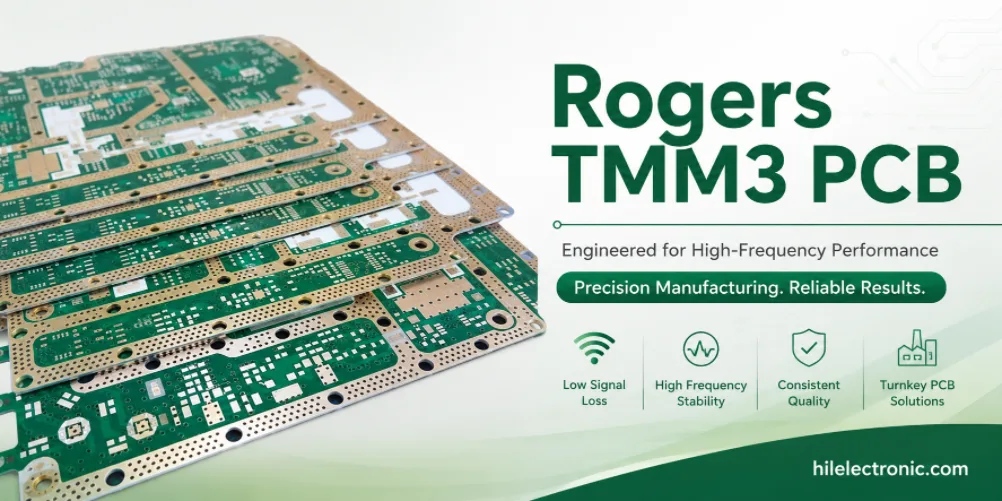
TMM3 PCB Manufacturing for RF Modules
TMM3 PCB manufacturing is most useful where the RF module...
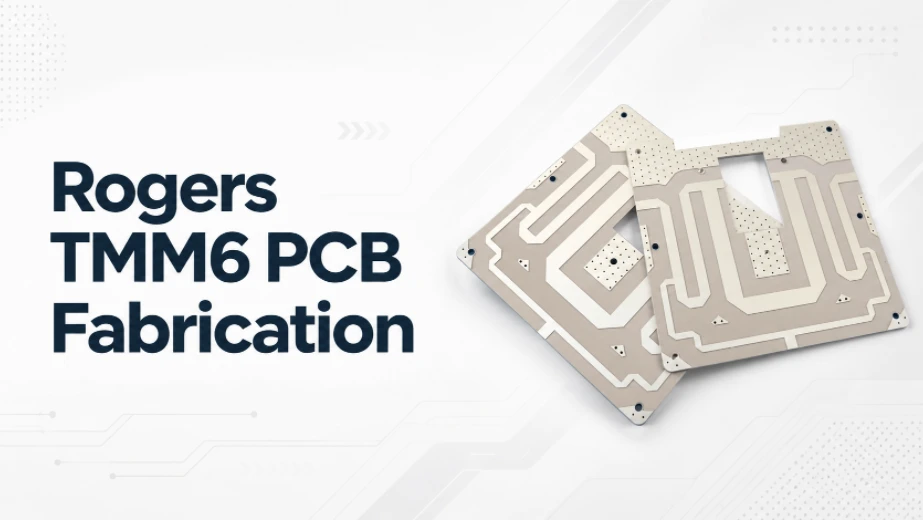
TMM6 PCB Fabrication
TMM6 fabrication is the process-control page for a mid-Dk...
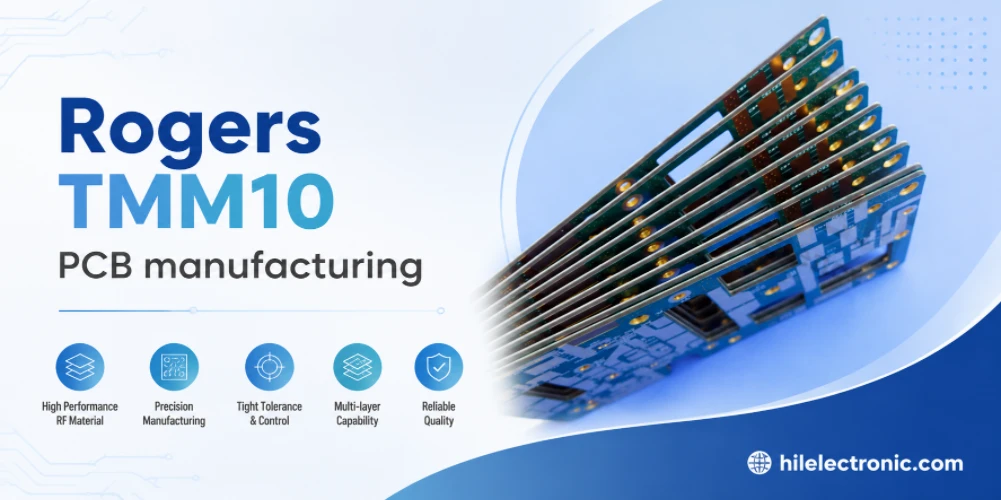
TMM10 PCB Manufacturing for Compact RF Designs
Table of contentsHow TMM10 Shrinks RF StructuresTMM10 vs...

TMM10i PCB Fabrication and DFM
TMM10i PCB fabrication has a stronger DFM emphasis because...
How to get a quote for PCBs
Let us run DFM/DFA analysis for you and get back to you with a report.
You can upload your files securely through our website.
We require the following information in order to give you a quote:
-
- Gerber, ODB++, or .pcb, spec.
- BOM list if you require assembly
- Quantity
- Turn time