
China PCB Manufacturer: A Procurement Engineer’s Guide to Evaluation, Qualification, and Long-Term Sourcing

The decision to source from a China PCB manufacturer is easy. The decision of which China PCB manufacturer to source from is where most procurement teams make expensive mistakes. The Chinese PCB manufacturing industry spans thousands of factories with capabilities ranging from single-layer consumer boards to 40-layer HDI substrates for AI server hardware — and the price difference between a factory that can genuinely execute your specification and one that will approximate it while claiming compliance is not always visible in the initial quote. This guide provides a structured evaluation framework for procurement engineers and hardware companies sourcing PCBs from China for the first time or reviewing existing supplier relationships.
Why China PCB Sourcing Goes Wrong — The Five Most Common Failures
- Unverified IPC class: The factory quoted Class 2 but produced to Class 1 standards — defect rates discovered only at functional testing
- Surface finish substitution: ENIG specified, HASL delivered — justified as “equivalent” without engineering approval
- Sub-contracting without disclosure: The factory you audited is not the factory that produced your boards
- No DFM review: Design errors passed through to production — rework cost exceeds material savings
- Component substitution: In turnkey PCBA, unauthorized component substitutions cause field failures traced back to procurement
Request a Qualified China PCB Quote →
Table of Contents
- Why China Remains the World’s Dominant PCB Manufacturing Base in 2026
- Step 1: Verify Certifications — What Matters and What Doesn’t
- Step 2: Assess Manufacturing Capability Against Your Specific Specification
- Step 3: Evaluate DFM and Engineering Support
- Step 4: Audit the Quality Control Process
- Step 5: Assess IP Protection and Confidentiality Controls
- Step 6: Understand the Real Pricing Structure
- Step 7: Evaluate Long-Term Supply Continuity
- Frequently Asked Questions
Why China Remains the World’s Dominant PCB Manufacturing Base in 2026
China accounts for over 55% of global PCB production output by value — a position built over three decades of concentrated investment in equipment, process capability, supply chain density, and engineering talent. Understanding why this concentration exists explains what you are actually accessing when you source from a China PCB manufacturer, and what you are not.
The structural advantage of Chinese PCB manufacturing is not primarily labor cost — PCB fabrication is highly automated, and direct labor represents a modest fraction of total cost. The genuine advantage is supply chain density. The Pearl River Delta region (Guangdong province, centered on Shenzhen) hosts the world’s highest concentration of PCB fabricators, laminate suppliers, copper foil producers, chemical suppliers, and precision equipment manufacturers within a geographic radius small enough for same-day logistics. A PCB factory in Shenzhen can receive fresh CCL, drill bits, plating chemicals, and replacement laser equipment faster and cheaper than equivalent factories in Europe or North America. This supply chain density creates cost advantages that are structural, not cyclical.
The capability range within Chinese PCB manufacturing is enormous. Mass-production board shops that build 500,000 panels per month of commodity 2-layer consumer boards operate completely differently from specialty fabricators building 20-layer HDI boards for AI server applications. Evaluating a China PCB manufacturer correctly means evaluating whether its specific capabilities match your specific requirements — not making a blanket assessment of Chinese PCB quality.
Step 1: Verify Certifications — What Matters and What Doesn’t
Certifications from a China PCB manufacturer fall into two categories: those that verify genuine process capability, and those that verify administrative procedures. Both matter, but they verify different things.
Certifications that verify process capability
IPC-A-610 and IPC-6012 compliance records demonstrate that the factory’s inspection and production processes meet a defined, internationally audited standard for PCB quality and acceptability. A factory that claims IPC Class 2 or Class 3 production should be able to provide specific inspection records, microsection data, and first-article inspection reports that demonstrate compliance — not just a statement that they follow IPC standards.
UL recognition means the factory’s laminate materials and finished boards have been evaluated by UL and found to meet flammability and safety standards. This matters for products requiring UL listing in North American markets. Request the specific UL file number and verify it against UL’s online database — UL recognition can expire and is not always current.
RoHS and REACH compliance declarations are required for EU market products. Verify that compliance declarations cover the entire BOM, not just the bare board, and that they include material declarations from laminate and component suppliers, not just a factory-level assertion.
Certifications that verify administrative systems
ISO 9001:2015 certifies that the factory has a documented quality management system — not that specific quality metrics are met. A factory with ISO 9001 certification has defined processes and procedures, but the certification does not tell you whether those processes produce boards that meet your specification. It is necessary but not sufficient.
IATF 16949 (automotive quality management) is more demanding than ISO 9001 for automotive-supply factories and includes process capability requirements. If your application is automotive, IATF 16949 is a meaningful discriminator.
What to verify during supplier qualification
Request the actual certificate documents with validity dates. Call or email the certifying body to confirm the certificate is current — expired certificates are occasionally presented as valid. For IPC compliance, request a sample first-article inspection report from a recent job with similar specifications to yours. The detail and rigor of that report tells you more about the factory’s genuine IPC compliance than the certificate itself.
Step 2: Assess Manufacturing Capability Against Your Specific Specification
The most common evaluation error is asking a factory “can you make this?” and accepting “yes” as sufficient answer. The correct question is “what is your production yield, defect rate, and measurement capability for this specific specification?”
For your target specification, ask specifically:
Minimum trace/space that the factory produces at production yields above 95% (not engineering limits). A factory that claims 2 mil trace/space capability but achieves it only at 60% yield is not a viable production partner for that specification. Layer count and the factory’s actual experience at that layer count — a factory that primarily produces 4–8 layer boards but claims capability to 20 layers should provide yield data and reference customers at the higher layer counts. Controlled-impedance capability and the measurement method used — coupon-based TDR measurement with results included in shipping documentation is the correct standard; factories that rely on process settings without measurement verification are not genuinely providing controlled impedance. HDI capability if required — blind/buried vias, microvias, via-in-pad — and the laser drill specifications used.
For PCBA, ask: what is the minimum component pitch your pick-and-place equipment can place reliably in production? What is your solder paste printer accuracy? Do you have inline SPI (solder paste inspection) before pick-and-place? What percentage of boards undergo 3D X-ray inspection for BGA packages?
Step 3: Evaluate DFM and Engineering Support
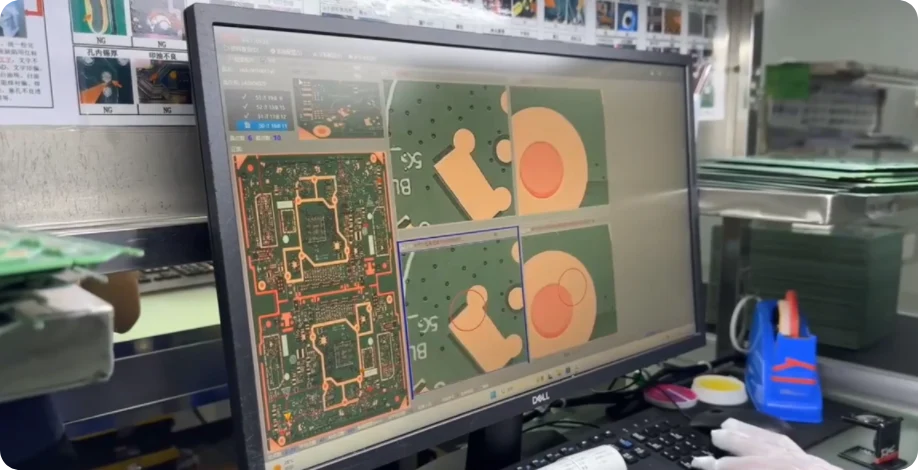
Design for Manufacturing review is one of the most commercially significant services a China PCB manufacturer can provide — and one of the most variable in quality. A genuine DFM review by a knowledgeable CAM engineer before production prevents the rework, scrap, and program delays that result from design errors discovered during or after production.
Evaluate DFM capability by requesting a trial DFM review on a sample design. The quality of the returned feedback tells you more about the factory’s engineering capability than any marketing material. A minimal DFM response checks for file completeness and basic DRC violations. A genuine DFM review identifies impedance stack-up issues, copper weight inadequacy for current-carrying requirements, via aspect ratio concerns for through-hole reliability, pad-to-trace clearance issues for isolation requirements, and panelization recommendations. The depth of the DFM report is a direct indicator of the engineering support you will receive when problems arise in production.
Step 4: Audit the Quality Control Process
Request a description of the quality control steps applied to a production run of your board type. The response should describe specific instruments and methods, not general statements about quality commitment.
For bare board fabrication: automated optical inspection (AOI) after inner layer imaging and after outer layer; flying probe or bed-of-nails electrical test for every board; controlled-impedance TDR measurement for impedance-specified boards; microsection cross-section samples for via barrel quality verification on IPC Class 3 production. For PCBA: inline solder paste inspection (SPI) before placement; AOI after reflow; 3D X-ray for BGA and QFN packages; functional circuit testing per your test specification.
Ask specifically: “What happens when a board fails AOI?” The answer reveals whether the quality system is catching and addressing defects, or passing them to the next stage. “What documentation do you include in the delivery package?” The answer should include fabrication certificates, inspection records, TDR data, and material certificates — not just a packing list.
Step 5: Assess IP Protection and Confidentiality Controls
IP protection in Chinese PCB manufacturing is a legitimate and frequently raised concern. The practical risk structure is different from the perceived risk: reputable China PCB manufacturers have strong commercial incentives not to copy or disclose client designs. The realistic risks are careless sub-contracting, inadequate file access controls, and exposure through staff turnover — management failures, not malicious intent.
Evaluate IP protection on three levels: contractual (does the factory execute a mutual NDA before receiving files, and does that NDA specifically cover production sub-contracting and cross-project use?), procedural (are design files stored in access-controlled systems with permissions limited to staff assigned to the specific project?), and operational (does the factory sub-contract any part of the fabrication or assembly process, and if so, to whom and under what NDA terms?).
For hardware companies with significant design investment, establish IP protection requirements before any file transfer. Request the factory’s standard NDA and review it specifically for provisions against sub-contracting disclosure. At Highleap Electronics, all fabrication and assembly is performed in-house — we do not sub-contract production — and all client design files are stored in access-controlled systems with project-specific permissions. Our PCBA service includes NDA execution before file sharing as a standard account procedure.
Step 6: Understand the Real Pricing Structure
PCB pricing from a China manufacturer is more transparent when you understand what each cost element covers and where variation between suppliers actually originates.
Bare board fabrication cost is driven by: panel utilization (how many boards fit on a standard production panel), layer count and stack-up complexity, laminate material grade, copper weight, surface finish, hole count and minimum drill size, inspection class, and special processes (controlled impedance, blind/buried vias, back-drilling). A quote that is significantly cheaper than others for the same specification usually reflects either unstated specification differences (wrong inspection class, cheaper laminate grade) or genuine process limitations that will manifest as defects.
For turnkey PCBA, the BOM component cost is typically the largest line item — often exceeding bare board cost for feature-rich boards. Request itemized quotes that show fabrication, components by category, assembly labor, testing, and finishing separately. A factory that provides only a total number is obscuring where the cost is concentrated and preventing you from evaluating specification trade-offs.
The price floor for legitimate PCB production does exist. A quote that seems inexplicably low against a complete, fully specified request is either missing something in the specification or cutting corners in a way that will appear later.
Step 7: Evaluate Long-Term Supply Continuity
For production programs that will run for years, supply continuity matters as much as initial price. A China PCB manufacturer’s ability to provide supply continuity over a 5–10 year product lifecycle involves: production record archiving (can they reproduce your board from archived production files 5 years later?), component lifecycle management for PCBA accounts (do they monitor your BOM for EOL components and notify you proactively?), and financial stability (is the factory a viable business partner for the duration of your product’s commercial life?).
Highleap Electronics — Direct China PCB Manufacturer and PCBA Factory
Highleap Electronics is a direct PCB fabrication and assembly factory based in China — not a trading company or broker. All fabrication and assembly is performed in-house. We provide IPC-A-610 Class 2 and Class 3 production, written DFM reviews on every order, mutual NDA before file sharing, and production record archiving for all active accounts. For procurement teams evaluating China PCB manufacturers, we welcome factory audits and formal supplier qualification.
Frequently Asked Questions
What certifications should a China PCB manufacturer have?
At minimum: ISO 9001:2015 (quality management system), IPC-A-610 and IPC-6012 compliance capability (with verifiable inspection records), UL recognition for laminate materials (if UL listing is required for your product), and RoHS/REACH compliance declarations. For automotive applications, IATF 16949 is additionally required. Request original certificate documents with validity dates and verify them directly with the certifying body — do not rely on scanned copies alone.
Is it safe to source PCBs from China for IP-sensitive designs?
Yes, with appropriate controls. The realistic risk in China PCB sourcing is not intentional IP theft by the manufacturer — reputable factories have strong commercial incentives against this. The realistic risks are sub-contracting without disclosure, inadequate file access controls, and exposure through staff turnover. Mitigate these by executing a mutual NDA before file sharing (with provisions specifically addressing sub-contracting), confirming that production is performed in-house, and sharing only the manufacturing files required for production — Gerber files, BOM, and assembly drawings — not schematics or firmware.
How do I know if a China PCB factory is genuinely direct or just a broker?
Ask specific operational questions: What is the panel size of your production press? What laser drill equipment do you use for blind via drilling? What is your annular ring tolerance on your production lines? Direct factories answer these with specifics. Brokers typically cannot answer equipment-level questions accurately. Also ask whether you can conduct a factory visit — a genuine manufacturer welcomes visits; a broker either refuses or arranges a visit to a facility they don’t control.
Why is there such a large price range between China PCB manufacturers?
Large price variations reflect three things: genuine differences in manufacturing capability and process control (which affect yield, defect rates, and reliability); unstated specification differences (different IPC class, cheaper laminate grade, different testing scope); and different business models (direct factory vs. trading company with broker margin). When comparing quotes, ensure all quotes are for an identical, fully specified product. Significant price outliers almost always reflect a capability or specification difference.

Recommended Posts
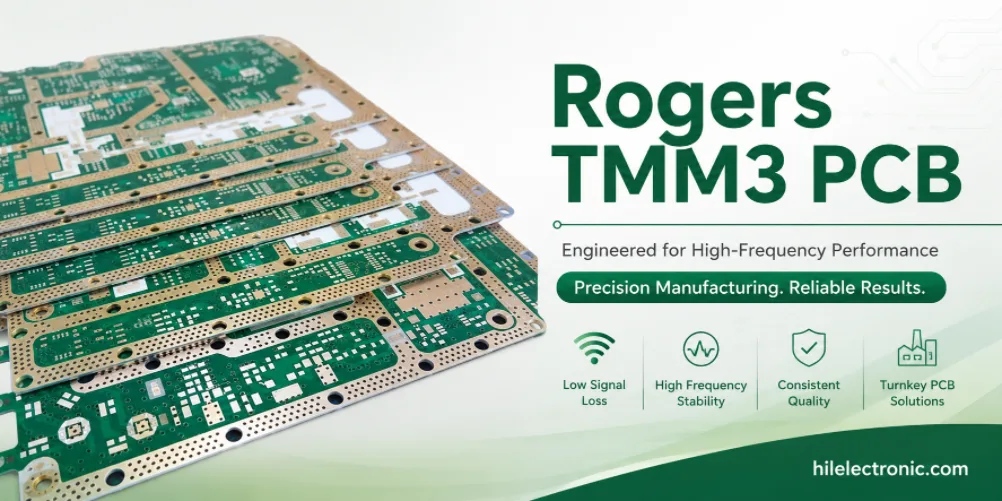
TMM3 PCB Manufacturing for RF Modules
TMM3 PCB manufacturing is most useful where the RF module...
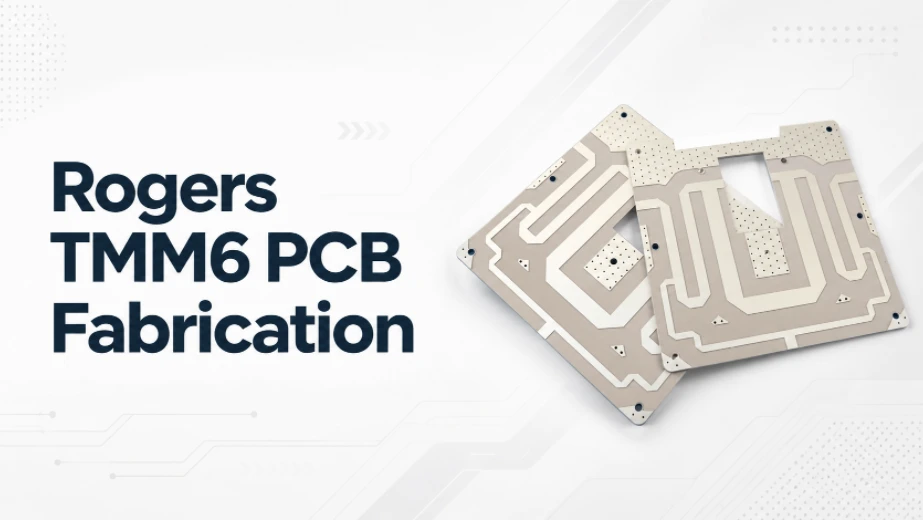
TMM6 PCB Fabrication
TMM6 fabrication is the process-control page for a mid-Dk...
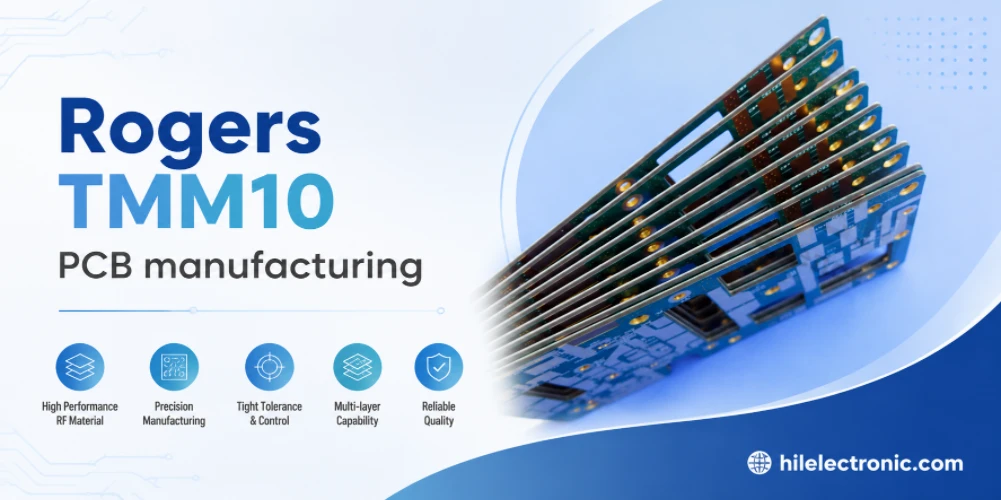
TMM10 PCB Manufacturing for Compact RF Designs
Table of contentsHow TMM10 Shrinks RF StructuresTMM10 vs...

TMM10i PCB Fabrication and DFM
TMM10i PCB fabrication has a stronger DFM emphasis because...
How to get a quote for PCBs
Let us run DFM/DFA analysis for you and get back to you with a report.
You can upload your files securely through our website.
We require the following information in order to give you a quote:
-
- Gerber, ODB++, or .pcb, spec.
- BOM list if you require assembly
- Quantity
- Turn time