
RO4835 PCB Fabrication and Assembly

RO4835 production is treated as a combined fabrication and assembly route. The bare board review covers stackup and RF geometry, while the assembly side adds component placement, soldering, inspection and mechanical handling around the RF-critical regions.
Figure 1. Rogers RO4835 PCB
RO4835 PCB fabrication and assembly is best handled as one controlled build when the RF board also contains digital or power components. The stackup, copper and RF geometry set the bare-board target, while the assembly process must preserve those same constraints. Material scope: Highleap Electronics manufactures and assembles the finished PCB. The Rogers grade named on this page identifies the specified laminate; Highleap does not manufacture or sell Rogers laminates.
Rogers RO4835 PCB is a low-loss, high-frequency circuit board solution designed for RF, microwave, radar, antenna, sensor and high-reliability electronic designs that require stable electrical performance, improved oxidation resistance and cost-effective fabrication.
Highleap Electronics manufactures Rogers RO4835 PCBs according to customer drawings, stackup requirements, material callouts, impedance notes and assembly specifications. We are a PCB manufacturing and PCB assembly factory, not a Rogers laminate producer. Our role is to help customers convert RO4835 material requirements into reliable PCB fabrication, SMT assembly, inspection and production documentation.
RO4835 is part of the Rogers RO4000 series. It offers electrical performance close to RO4350B while adding improved oxidation resistance for long-term stability. For projects that need low insertion loss, controlled impedance, lead-free processing and stable high-frequency behavior, Rogers RO4835 can be a practical material choice.
Rogers RO4835 PCB Material Overview
Rogers RO4835 is a hydrocarbon ceramic laminate developed for high-frequency PCB applications. It is designed to provide low loss, stable dielectric performance and improved oxidation resistance while remaining compatible with standard epoxy/glass PCB fabrication processes. This makes RO4835 attractive for RF PCB, microwave PCB, radar PCB, antenna PCB and high-frequency sensor board manufacturing.
Compared with PTFE-based RF laminates, RO4835 is easier to fabricate because it can be processed more like FR-4-compatible high-frequency material. Compared with standard FR-4, RO4835 provides much better high-frequency electrical behavior and tighter dielectric control. This balance is the reason many RF engineers consider RO4835 when they need stable impedance and low insertion loss without moving to a more difficult PTFE material system.
Key Rogers RO4835 PCB Properties
| Property | Typical Value / Feature | PCB Manufacturing Meaning |
|---|---|---|
| Dielectric Constant | 3.48 ± 0.05 | Supports controlled impedance lines and stable RF circuit geometry. |
| Dissipation Factor | 0.0037 at 10 GHz | Helps reduce insertion loss in RF and microwave transmission lines. |
| Thermal Conductivity | Around 0.66 W/mK | Provides better heat spreading than many standard FR-4 materials. |
| CTE | Low X/Y expansion and controlled Z-axis expansion | Supports plated through-hole reliability and dimensional stability. |
| Compliance | IPC-4103, RoHS, UL 94 V-0 support | Useful for regulated RF, automotive, industrial and communication products. |
| Copper Option | Available with LoPro reverse-treated copper foil | Helps reduce conductor loss when low insertion loss is important. |
The most important feature of RO4835 is not only its low loss. Its stronger oxidation resistance makes it suitable for designs where long-term stability is important. For customers building RF boards that must remain reliable over years of service, this difference can be more important than a small change in dielectric value.
Rogers RO4835 vs RO4350B: What Changes in PCB Design?
Rogers RO4350B and RO4835 are often compared because their electrical values are close and both belong to the RO4000 high-frequency laminate family. In many RF PCB designs, the transmission-line geometry of RO4835 can be very similar to RO4350B. The main reason to choose RO4835 is improved oxidation resistance and long-term material stability.
RO4350B is widely used because it is low loss, cost-effective and compatible with standard PCB fabrication processes. RO4835 keeps a similar manufacturing advantage but improves material stability at elevated temperature and oxidation exposure. For designs that already use RO4350B, RO4835 may be considered when reliability margin, environmental exposure or long service life is a concern.
RO4835 vs RO4350B Comparison
| Item | RO4350B | RO4835 | Design Meaning |
|---|---|---|---|
| Material Position | General high-frequency RO4000 laminate | RO4000 laminate with improved oxidation resistance | RO4835 is preferred when long-term stability is more important. |
| Dk | Close to 3.48 | 3.48 ± 0.05 | Similar transmission-line geometry in many designs. |
| Loss | Low loss | Low loss, Df 0.0037 at 10 GHz | Both are suitable for many RF and microwave PCBs. |
| Oxidation Resistance | Standard thermoset laminate behavior | Improved oxidation resistance | RO4835 is stronger for long-life or elevated-temperature designs. |
| Manufacturing | FR-4-process-compatible high-frequency fabrication | FR-4-process-compatible high-frequency fabrication | Both are easier to fabricate than PTFE-based RF materials. |
RO4835 is not automatically better for every design. If the product does not need the added oxidation resistance, RO4350B may remain a cost-effective choice. If the design needs long-term RF stability, automotive-grade reliability, elevated-temperature exposure or better environmental margin, RO4835 becomes more attractive.
Rogers RO4835 PCB Stackup and Impedance Planning
A Rogers RO4835 PCB quote should start with stackup review. The material name alone is not enough to is intended to support RF performance. The final impedance depends on dielectric thickness, copper thickness, copper profile, solder mask opening, surface finish, etching tolerance and whether the line is microstrip, stripline or coplanar waveguide.
Highleap reviews the RO4835 stackup before production to confirm that the board can be manufactured according to the customer’s impedance, thickness, copper weight and assembly requirements. For RF and microwave boards, even small changes in dielectric height or trace width can shift the impedance and affect measured performance.
Typical Rogers RO4835 PCB Stackup Options
- Single-layer or double-sided RO4835 PCB: common for antenna, RF filter, sensor and microwave transmission-line boards.
- RO4835 multilayer PCB: used when RF layers, ground planes, control signals and power routing need to be combined in one board.
- RO4835 + FR-4 hybrid PCB: RO4835 is used for RF layers, while FR-4 can be used for low-speed control or mechanical support layers.
- RO4835 with LoPro copper: selected when lower conductor loss is required for microwave signal paths.
- RO4835 controlled impedance PCB: requires impedance notes, reference planes and stackup approval before production.
Stackup Items Highleap Reviews
| Stackup Item | Review Focus | Why It Matters |
|---|---|---|
| RO4835 Thickness | Core thickness, tolerance and final board thickness. | Controls impedance, line width and mechanical fit. |
| Copper Weight | Finished copper, base copper and plating allowance. | Affects impedance, etching compensation and current capacity. |
| Copper Profile | Standard copper, reverse-treated copper or LoPro copper. | Lower-profile copper helps reduce conductor loss. |
| Transmission Line Type | Microstrip, stripline, grounded coplanar waveguide or RF launch. | Defines impedance model and manufacturing tolerance. |
| Solder Mask | Mask over trace or mask opening around RF lines. | Solder mask can change RF impedance and effective dielectric behavior. |
For critical RF lines, many designers keep solder mask away from transmission lines, RF launches, matching networks and antenna areas. Highleap can follow customer mask-opening rules or review the drawing when the solder mask condition is not clearly defined.
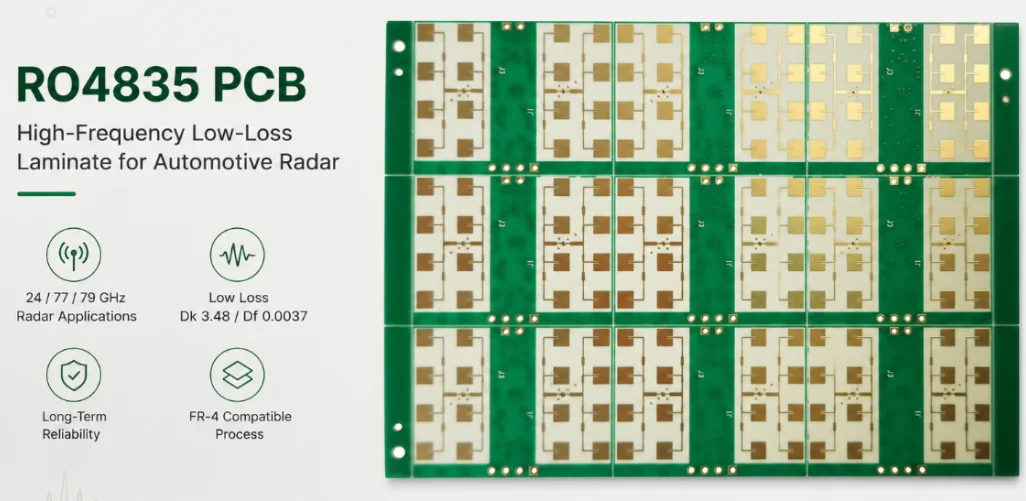
Figure 2. Rogers RO4835 PCB Manufacturing
Rogers RO4835 PCB Fabrication Process at Highleap
Rogers RO4835 is easier to process than PTFE-based RF laminates because it is compatible with standard epoxy/glass PCB fabrication methods. However, it is still a high-frequency laminate, so process control must be tighter than ordinary FR-4 production.
Highleap focuses on material verification, lamination control, drilling quality, plating reliability, etching compensation, impedance control, solder mask registration and final inspection for each RO4835 PCB manufacturing project.
Material Handling and Lamination
Before production, Highleap checks the RO4835 material callout, dielectric thickness, copper type, stackup and customer fabrication notes. For multilayer or hybrid boards, lamination balance and material compatibility are reviewed before tooling.
- Material verification: RO4835 core and copper type are checked against the approved stackup.
- Layup control: layer order, copper orientation and tooling alignment are reviewed before pressing.
- Hybrid stackup review: RO4835 and FR-4 combinations are checked for thickness, bonding and dimensional stability.
- Post-lamination inspection: thickness, surface quality, registration, bow and twist are checked before drilling.
Drilling, Plating and PTH Reliability
RO4835 supports reliable plated through-hole construction when drilling, desmear and copper plating are properly controlled. For RF boards, via quality is important not only for electrical continuity but also for grounding, shielding, via fences and RF launch structures.
- Drilling: hole size, aspect ratio, hole density and registration are reviewed before production.
- Desmear: hole-wall preparation supports copper adhesion and inner-layer connection quality.
- Electroless copper: creates initial conductive coverage in drilled holes.
- Electrolytic copper: builds the required copper thickness on hole walls and board surfaces.
- Microsection: cross-section inspection can verify plating thickness and hole-wall quality when required.
Etching and RF Geometry Control
Trace geometry is critical in Rogers RO4835 PCB fabrication. RF lines, antenna patterns, filters and matching circuits are sensitive to line width, spacing, copper thickness and etching compensation. Highleap reviews the copper weight and minimum line/space before production so that the finished trace geometry can meet design intent.
For controlled impedance RO4835 PCBs, impedance coupons or RF test coupons can be added according to customer requirements. For simple RF boards, 100% electrical testing is still recommended to verify open and short performance before shipment.
Surface Finish, PCB Assembly and Quality Control
Highleap supports both Rogers RO4835 bare PCB fabrication and PCB assembly. Surface finish should be selected according to RF performance, solderability, storage life, wire bonding needs and assembly process. For RF boards, the surface finish can influence conductor loss and solder joint quality, so it should not be treated as an afterthought.
Surface Finish Options for RO4835 PCB
| Surface Finish | Best Use | Review Point |
|---|---|---|
| ENIG | General RF PCB assembly, flat pads and longer shelf life. | Nickel layer may affect very high-frequency loss; confirm with design needs. |
| Immersion Silver | Low-loss RF transmission lines and microwave circuits. | Storage and handling must be controlled to prevent tarnish. |
| ENEPIG | Mixed soldering and wire bonding requirements. | Higher cost but useful for advanced assembly flows. |
| OSP | Cost-sensitive assembly with short storage time. | Less common for long-storage RF PCB programs. |
Rogers RO4835 PCB Assembly Support
For RO4835 PCB assembly projects, Highleap can support SMT assembly, RF component placement, connector assembly, BGA assembly, component sourcing, solder paste process review, AOI inspection, X-ray inspection when required and functional test support according to customer procedures.
- BOM review: part number, quantity, package, polarity and sourcing status are checked before assembly.
- Pick and Place review: centroid data and component rotation are checked against the assembly drawing.
- RF area review: solder mask opening, RF launch clearance and component footprint details are checked when needed.
- Reflow support: reflow profile is selected according to board structure, copper weight, finish and component requirement.
- Inspection: AOI, visual inspection, X-ray and functional test can be used according to assembly complexity.
Quality Control and Documentation
RO4835 PCB quality control should be defined before production. Highleap reviews customer fabrication notes, IPC class, impedance requirements, surface finish, inspection requirements and documentation needs during quotation and engineering review.
- Electrical test report
- Controlled impedance test report when required
- Microsection report when required
- Material certificate or Rogers lot reference when required
- Final visual inspection report
- Assembly inspection report for PCBA projects
- RoHS / REACH compliance declaration when applicable
Rogers RO4835 PCB Quote and Engineering Support
Highleap Electronics provides Rogers RO4835 PCB prototype, small-batch production, volume manufacturing and turnkey PCB assembly. For most bare PCB quotations, Gerber and drill files are the best starting point. If the board requires controlled impedance, special RF stackup, hybrid RO4835 + FR-4 construction, LoPro copper, RF test coupons or special quality documentation, include the related notes when available. Highleap reviews the fabrication and PCBA data together where the project requires turnkey delivery. Controlled-impedance areas, fine-pitch packages, thermal pads and test points are resolved before production so the assembled board does not invalidate the bare-board design assumptions. Exact material property values should be checked against the current supplier documentation for the specified grade and construction.
If PCB assembly is required, BOM and Pick and Place files help Highleap review component sourcing, SMT assembly and inspection requirements. If you are not sure which files to provide, contact Highleap directly. We provide one-on-one engineering support, and our engineers can help confirm the required files, fabrication details and PCBA quotation requirements.
Useful Information for a Faster Quote
- Gerber and drill files: preferred for Rogers RO4835 PCB fabrication quotation.
- Stackup or material notes: helpful for RO4835 thickness, copper weight, impedance and hybrid structures.
- Controlled impedance requirement: single-ended or differential impedance values, tolerance and reference layers.
- Surface finish: ENIG, immersion silver, ENEPIG, OSP or customer-specified finish.
- Assembly files: BOM and Pick and Place files when turnkey PCBA is required.
- Testing requirement: electrical test, impedance report, functional test, AOI, X-ray or RF inspection notes when needed.
Need Rogers RO4835 PCB manufacturing or PCB assembly? Send your Gerber files first, or contact our engineering team if the project is still at the design stage. Highleap can review your RO4835 PCB requirements and provide a practical PCB fabrication or turnkey PCBA quotation. For quotation, send Gerber or ODB++, BOM, placement data, assembly drawing, test requirements and the released stackup. That gives the manufacturer one consistent source for both fabrication and assembly pricing.

Recommended Posts
TMM4 Filter PCB Manufacturing
TMM4 filter PCB manufacturing is controlled by the...
TMM3 PCB Manufacturing for RF Modules
TMM3 PCB manufacturing is most useful where the RF module...
TMM6 PCB Fabrication
TMM6 fabrication is the process-control page for a mid-Dk...
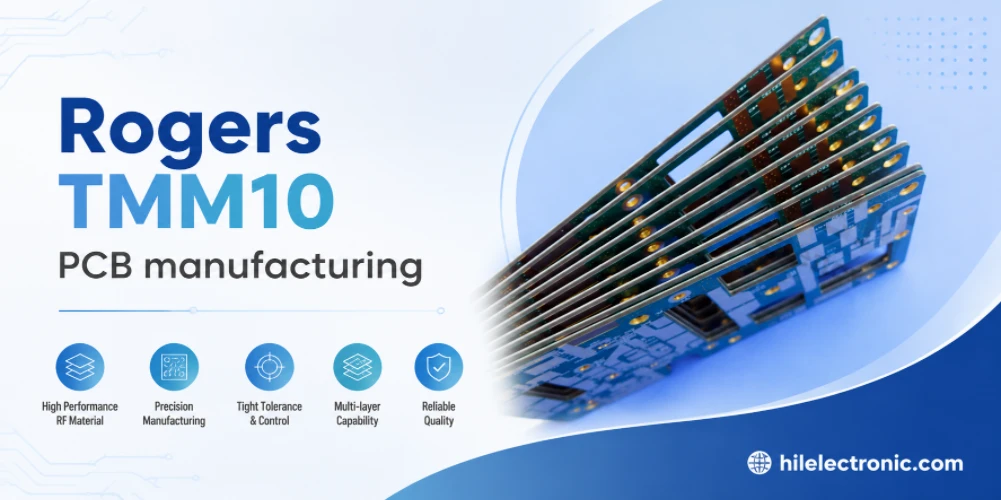
TMM10 PCB Manufacturing for Compact RF Designs
Table of contentsHow TMM10 Shrinks RF StructuresTMM10 vs...
How to get a quote for PCBs
Let’s run DFM/DFA analysis for you and get back to you with a report. You can upload your files securely through our website. We require the following information in order to give you a quote:
-
- Gerber, ODB++, or .pcb, spec.
- BOM list if you require assembly
- Quantity
- Turn time
For PCBA services, please provide your BOM (Bill of Materials) and any specific assembly instructions. We also offer DFM/DFA analysis to optimize your designs for manufacturability and assembly, ensuring a smooth production process.