
Small-Batch High-Mix PCB Assembly for Repeat Orders
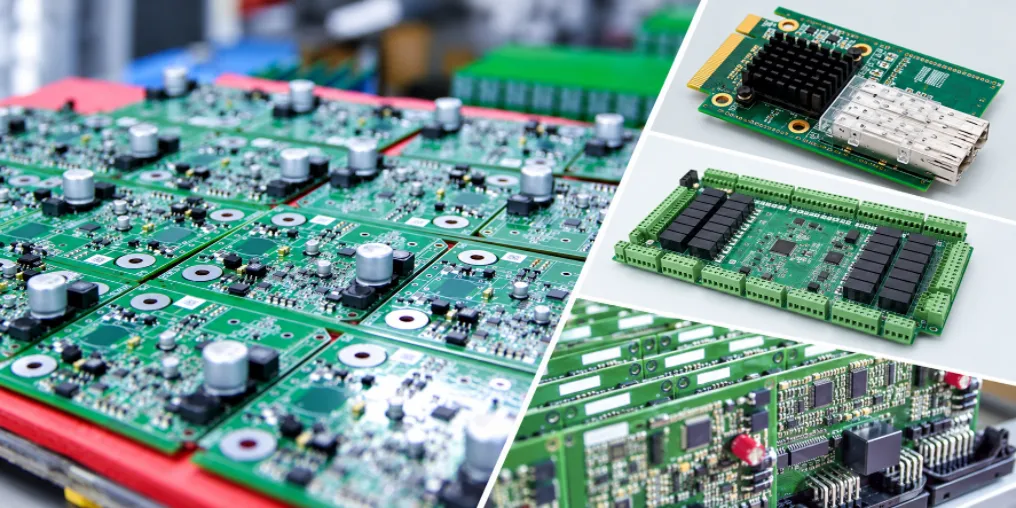
Highleap Electronics provides small-batch, high-mix PCB assembly for high-mix, low-volume (HMLV) programs where OEMs build many different boards in small, recurring quantities: industrial controllers with regional variants, test and measurement instruments, medical equipment, robotics, power electronics and spare-part programs that must stay available for years. Orders typically range from 5 to a few hundred boards per part number, repeated across many part numbers.
For this kind of program the unit price on a single quotation matters less than what happens across fifty orders: whether each repeat lot is built to the right revision, whether setup cost is charged again every time, whether a shared component runs short across three products at once, and whether the board built this quarter matches the one approved two years ago. This page covers how small-batch, high-mix PCB assembly is managed, what drives its cost, and what to check when choosing a supplier for it.
Table of contents
- What Makes Small-Batch High-Mix PCB Assembly Different from Volume Production
- Small-Batch High-Mix PCB Assembly Cost Structure
- Revision Control for Repeat Orders
- Component Strategy Across Many Part Numbers
- Test and Inspection Strategy for Small Lots
- Evaluating a Small-Batch High-Mix PCB Assembly Supplier
- Small-Batch High-Mix PCB Assembly FAQ
SMALL BATCH HIGH MIX PCBA
Consolidating Multiple Board Types?
Send a list of part numbers with annual quantities and typical lot sizes. We quote each board and point out shared components and setup savings.
Request a Small-Batch PCB Assembly Quote →What Makes Small-Batch High-Mix PCB Assembly Different from Volume Production
A high-volume line is optimized to run one product for days. This type of HMLV program changes products several times per shift, so the efficiency of the operation depends on changeover, data control and material management rather than placement speed.
| Factor | High-volume production | High mix, low volume |
|---|---|---|
| Main cost driver | Material and placement time per board | Setup, changeover and engineering time per lot |
| Main quality risk | Process drift over a long run | Wrong revision, wrong feeder, first-board errors repeated across a small lot |
| Test approach | Dedicated ICT fixtures and automated functional test | Fixtureless electrical test, shared or simple functional test fixtures |
| Material planning | Forecast-driven reels for one product | Shared parts across products, reel minimums larger than lot needs, excess risk |
| Documentation load | One controlled package, few changes | Many packages, frequent ECOs, variants built from one bare board |
When a product grows into steady volumes, the right line setup changes too. Our high-volume PCB assembly work is organized around throughput; Small-batch production is organized around getting each lot right the first time.
Small-Batch High-Mix PCB Assembly Cost Structure
A quotation for 20 boards and one for 2,000 boards contain the same cost categories in very different proportions. Understanding which ones are one-time and which repeat on every lot is the basis for negotiating a high-mix small-batch program.
- One-time engineering (NRE): data review, machine programming, stencil, AOI program and test fixture. Charged when a part number or revision is first built.
- Per-lot setup: kitting, feeder setup, first-article verification and line changeover. Repeats every order regardless of quantity.
- Per-board cost: bare PCB, components, placement, soldering, inspection and test time.
- Material overhead: reel and tray minimums, attrition on small lots, and any excess inventory left after the build.
How Can Small-Batch High-Mix PCB Assembly Cost Be Reduced?
Reduce how often fixed costs are incurred, not the process steps themselves. Practical levers include consolidating orders for the same board into fewer, larger releases; combining variants that share a bare PCB into one build with different population; using a blanket order with scheduled releases so components can be bought at better quantity breaks; and standardizing passives across product families so reels are shared. Requesting a quotation at several quantity breaks (for example 10, 50 and 200 pieces) shows where setup cost stops dominating. For more on how assembly pricing is calculated, see our PCB assembly cost guide.
Revision Control for Repeat Orders
In these high-mix programs the most damaging failure is not a solder defect, it is a lot built to the wrong revision. A repeat order placed by purchasing against an old part number, a BOM updated on the engineering side but not sent to the manufacturer, or a variant built with the population of its sister board will pass every workmanship inspection and still be wrong.
The safeguard is to release every build against a defined data set: board revision, BOM revision, assembly drawing revision and, where applicable, firmware version. A repeat order should be compared with the last released set before materials are kitted, and any difference raised as a question rather than assumed. State the revision set on each purchase order so Highleap can confirm it at order review. To make this work across many part numbers, we recommend:
- A part number scheme in which the assembly revision changes whenever the BOM, the bare board or the firmware changes.
- Variants defined as one base BOM plus explicit population differences, not as separate edited copies of a spreadsheet.
- Engineering change orders that state the effectivity: which order, which serial number, and what happens to work in progress and existing stock.
- Build records that link each lot to its revision set, so a field return can be traced back to the exact build. Our PCB traceability page describes what can be recorded.
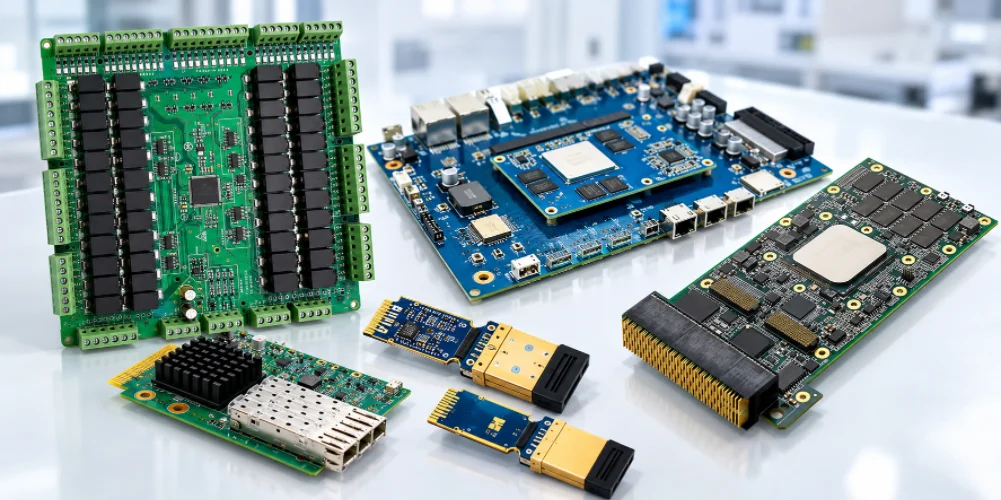
High-mix circuit board assemblies with varied components and connectors
Component Strategy Across Many Part Numbers
Component availability is the most common cause of late small-batch orders. A small lot often needs only a few pieces of a part that is sold only by the reel, and the same part may appear on several boards ordered at different times.
| Approach | How it works | Trade-off |
|---|---|---|
| Buy per order | Components purchased for each lot | Lowest inventory commitment; exposed to stock changes and reel minimums on every order |
| Customer-owned buffer stock | Long-lead or shared parts bought ahead and held for your program | Protects lead time; requires an agreement on ownership of excess |
| Partial consignment | You supply the expensive or controlled parts, we buy commodity parts | Good control of critical parts; you manage their supply |
Whichever approach you use, a BOM review across the whole product family is worth doing once. It identifies parts used on several boards, single-source parts, and parts with end-of-life notices, so they can be bought or replaced before they stop an order. Our component sourcing team purchases through authorized distribution and reports lifecycle status with the quotation. For long-life industrial and medical products, approving alternates for passives and common logic in advance prevents many small-lot delays.
PRODUCT FAMILY BOM REVIEW
Find Shared and At-Risk Parts Across Your Boards
Send the BOMs for the boards you build in small lots. We report shared components, lifecycle risks and lines that drive reel-minimum cost.
Include annual quantities and typical lot size.
Test and Inspection Strategy for Small Lots
Test methods that pay off at volume often cost more than they save on a 30-board lot. The test strategy is chosen per product, based on lot size, board complexity and the cost of a field failure.
Which Electrical Test Fits a Small Lot?
For most small-batch PCB assembly orders, flying probe testing is the practical choice: it needs only a program, not a fixture, and the program is reused on every repeat order. A dedicated in-circuit test fixture becomes worthwhile when annual volume for one part number is high enough to recover the fixture cost through shorter test time.
Is Functional Testing Worth It for Low Volumes?
Usually yes, because it is the only test that confirms the board does its job. The cost is in developing the procedure and fixture, not in running it. For product families, a functional test station with exchangeable adapters or a common test connector can serve several boards. If you already have a test procedure or fixture from your own lab, it can often be transferred.
Inspection on Every Lot
Each lot receives first-article verification against the released revision, AOI, and X-ray for boards with BGA or bottom-terminated components. Because lots are small, a first-board error affects a large share of the lot, so first-article checks matter more in small-batch production than in volume production. More detail is on our first article inspection page.
Evaluating a Small-Batch High-Mix PCB Assembly Supplier
Many assembly suppliers accept small orders. Fewer are organized to handle many small orders for the same customer over several years. These questions separate the two:
- Repeat-order handling: Is NRE charged again on repeat orders of an unchanged revision? Are stencils and programs retained?
- Revision control: How does the supplier confirm which revision a repeat order is built to? What happens when the purchase order and the data disagree?
- Material handling: How is customer-owned inventory recorded and reported? How are excess and shared parts handled?
- Scope under one roof: Can the supplier fabricate the bare board, assemble SMT and through-hole parts, test, coat and do box build assembly? Each handoff between suppliers adds lead time to every small order.
- Quality records per lot: Are first-article results, inspection data and test results kept by lot and available on request?
- Engineering access: Can your engineers talk to the people who review the data, or only to sales?
If your high-mix boards start as new designs, plan the transition from first build to a released, repeatable product before the first repeat order. Our overview of moving a board from prototype to production describes the planning steps involved.
Small-Batch High-Mix PCB Assembly FAQ
What quantity counts as low volume?
There is no fixed limit. Highleap accepts assembly orders from 5 pieces, and these programs commonly run from a handful to a few hundred boards per lot. The defining feature is the number of different products and the frequency of changeovers.
Can several board types be quoted together?
Yes. A program quotation that lists each part number with its annual quantity and typical lot size lets us identify shared components and suggest how to schedule releases.
Can you build variants from one bare PCB?
Yes. Provide a base BOM with population differences per variant and the variant identifier to be marked on the board. Variants of the same bare board can often be built in one setup.
Do you support both turnkey and consigned small-batch PCB assembly orders?
Yes. Programs can be fully turnkey, fully consigned or a mix, and the model can differ by part number.
Can the boards be shipped as finished assemblies?
Yes. Beyond PCBA, the scope can include conformal coating, cable and harness work, and enclosure-level box build.
SMALL BATCH HIGH MIX PCBA · RFQ
Quote Your Board Portfolio, Not Just One Order
Send Gerber files and BOMs for the boards you build in small lots, with annual quantities, lot sizes and current revision levels. We quote per part number and identify setup and material savings.
From 5 pieces per lot · Turnkey, consigned or mixed.

Recommended Posts
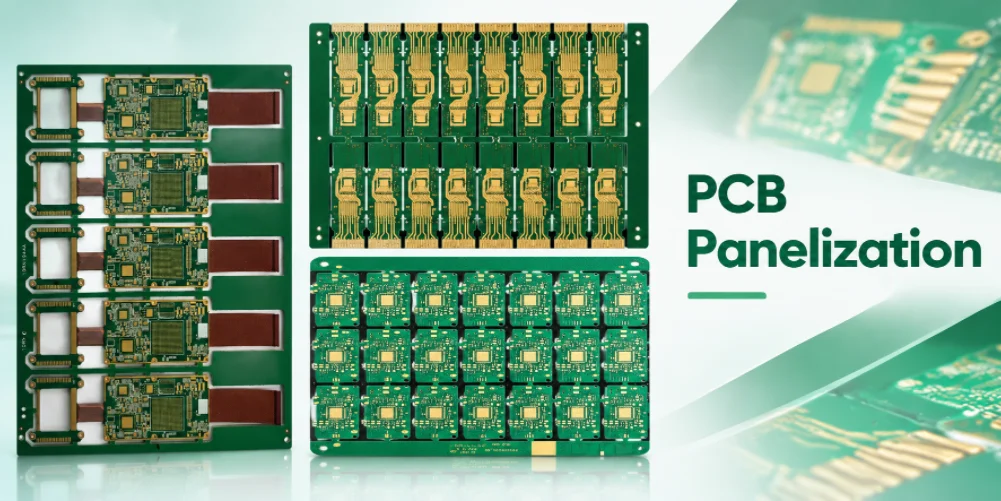
Small PCB Panelization: Array Design and Depaneling
Imagine a 26 × 18 mm circuit that must pass through...
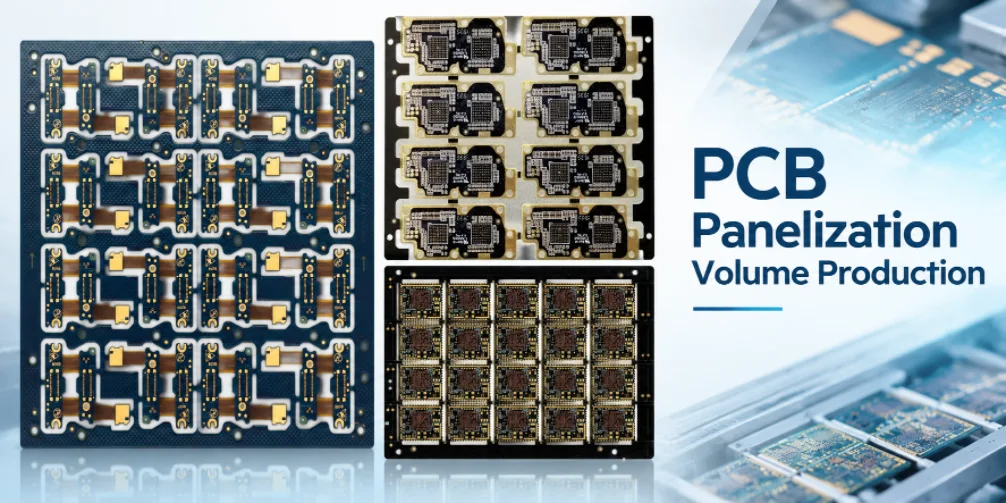
PCB Panelization for Volume Production: Cost and Yield
A fabrication panel that holds more boards is not...
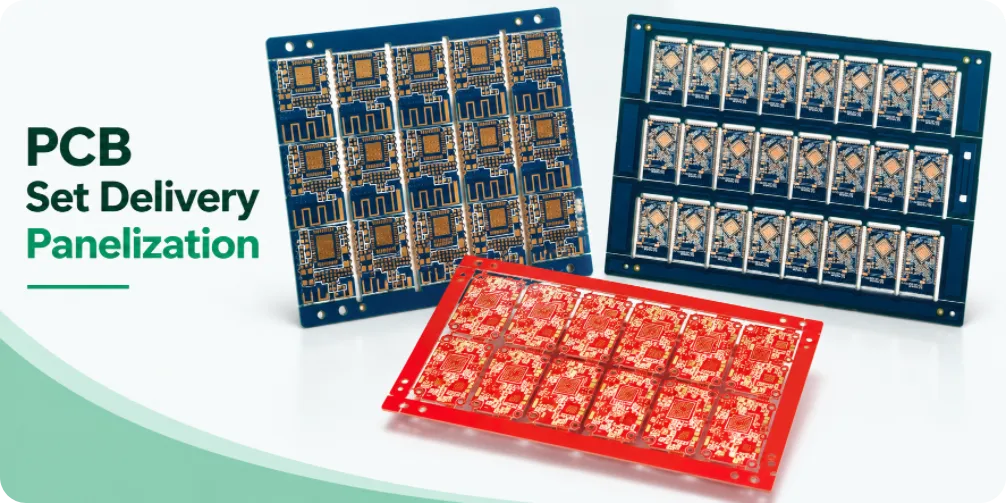
PCB SET Delivery and Panelization: Quantities and Acceptance
A purchase order for “500 SET” looks straightforward until...
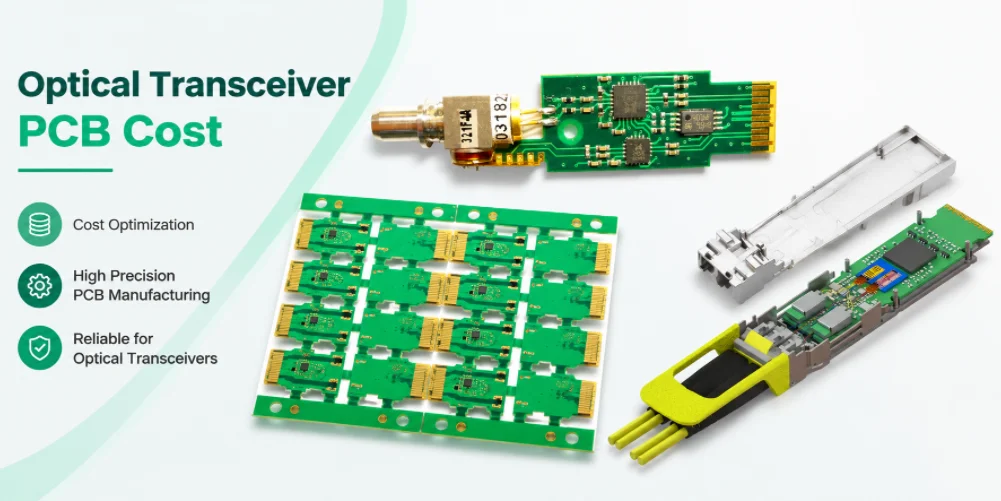
Optical Transceiver PCB Cost: Compare Equivalent Quotes
Two suppliers may quote a nominally identical six-layer...
How to get a quote for PCBs
Let‘s run DFM/DFA analysis for you and get back to you with a report. You can upload your files securely through our website. We require the following information in order to give you a quote:
-
- Gerber, ODB++, or .pcb, spec.
- BOM list if you require assembly
- Quantity
- Turn time
In addition to PCB manufacturing, we offer a comprehensive range of electronic services, including PCB design, PCBA, and turnkey solutions. Whether you need help with prototyping, design verification, component sourcing, or mass production, we provide end-to-end support to ensure your project’s success.
For PCBA services, please provide your BOM (Bill of Materials) and any specific assembly instructions. We also offer DFM/DFA analysis to optimize your designs for manufacturability and assembly, ensuring a smooth production process.