
Consigned PCB Assembly Services
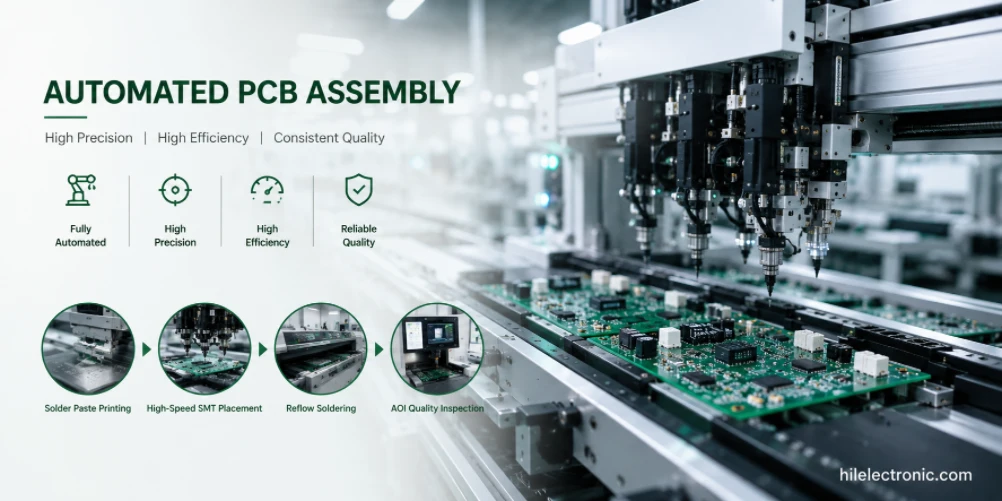
Table of Contents
Highleap Electronics provides consigned PCB assembly for customers who supply part or all of the components for their PCBA builds. In a consigned assembly project, the customer controls the component purchasing source, approved manufacturer list, component revision and delivery schedule, while Highleap focuses on manufacturing review, incoming material checking, SMT assembly, through-hole assembly, inspection, documentation and delivery of assembled boards.
This service is suitable for engineering prototypes, controlled components, allocated parts, customer-owned inventory, RF connectors, programmed devices, expensive ICs, long-lead components and projects where procurement control must stay with the customer. Highleap is a PCB manufacturing and PCB assembly company; we do not manufacture electronic components, but we assemble PCBs using customer-supplied or approved materials according to the released BOM, drawings and process requirements.
Consigned assembly is most effective when the customer controls the material source but still needs a professional assembly line, process review and inspection workflow. It can also protect projects where the customer has already approved a component vendor, negotiated a supply contract, purchased lifecycle stock or received samples from an end customer. Highleap supports the manufacturing side of that plan by checking the received materials, preparing the assembly process and reporting build issues before they become delivery problems.
Service position: Consigned PCB assembly means the customer supplies components, and Highleap assembles the boards according to approved manufacturing files and assembly requirements.
Best fit: controlled supply chains, shortage-sensitive BOMs, customer-owned parts, RF or power components, engineering samples, pilot runs and repeat builds with locked component sources.
Consigned PCB Assembly Service Scope
Consigned assembly starts from a defined assembly package. The customer provides the PCB files or finished bare boards, BOM, component kit, pick-and-place data, assembly drawing, polarity marks, special process notes and test requirements if applicable. Highleap reviews the package before build release to confirm whether the kit, PCB and assembly data can support production.
Gerbers, ODB++ or IPC-2581 files, drill files, stackup, panel notes or customer-supplied bare boards.
BOM, centroid file, assembly drawing, polarity notes, component package requirements and special soldering notes.
Customer-supplied components with labels, quantities, lot records if required, MSL information and approved substitutions.
Assembled PCBs, inspection records if specified, unused component return, shortage report and shipment packaging.
Build Types Supported
Highleap can support consigned SMT assembly, through-hole assembly, mixed-technology assembly, connector installation, shield placement, manual soldering for selected parts and small-to-medium batch builds based on project requirements. If the project also needs PCB fabrication, the bare board production and assembly plan can be coordinated together. For mixed supply responsibility, see the partial turnkey PCB assembly service.
Projects can be quoted as prototype builds, trial builds, pilot runs or repeat production. A prototype may focus on placement correctness and initial electrical bring-up. A pilot run may focus on process repeatability, inspection feedback and BOM stabilization. Repeat production should use controlled data, stable kit preparation and a defined method for returning unused customer-owned inventory.
Service Boundary
In a consigned build, component authenticity, original purchasing source and complete component availability remain primarily controlled by the customer unless a separate sourcing service is agreed. Highleap checks the received kit against the BOM and assembly package, but incoming inspection is not the same as component design validation or electrical qualification of each part. Special inspection, programming or functional testing should be stated before quotation.
This boundary should be written into the order communication for high-value projects. For example, if the customer sends a programmed microcontroller, the packing list should say whether it is already programmed, blank or requires later programming. If the customer sends RF connectors or precision analog parts, the exact manufacturer part number and assembly drawing should be included so the production team does not rely on appearance or generic description.
Customer-Supplied Component Control
This is the most important part of a consigned PCB assembly project. A consigned build can only run smoothly when the supplied components match the approved BOM, package type, polarity, quantity, moisture sensitivity and assembly method. Small errors in the kit can stop SMT production, create rework or delay shipment.
| Control item | What should be provided | Why it matters |
|---|---|---|
| Manufacturer part number | Exact MPN, manufacturer name and approved alternates. | Prevents wrong package, rating or revision from entering production. |
| Quantity | Build quantity plus attrition for SMT feeders and loss-sensitive parts. | Avoids line stoppage from insufficient overage. |
| Packaging | Reel, cut tape, tube, tray or bag, clearly labeled by line item. | Supports feeder setup and reduces manual handling errors. |
| MSL and ESD status | Moisture bag status, humidity indicator where applicable and ESD-safe packaging. | Protects moisture-sensitive and static-sensitive components. |
| Polarity and orientation | Clear markings for diodes, LEDs, electrolytic capacitors, IC pin 1 and connectors. | Prevents assembly defects and functional failures. |
Material Receipt Flow
- Package receipt: Components are received and checked against the shipment list.
- BOM matching: Line items are compared with the BOM, reference designators and package descriptions.
- Quantity check: Parts are counted or estimated according to packaging type and production need.
- Handling review: MSL, ESD, tray, tube and reel conditions are checked for assembly suitability.
- Issue report: Shortage, mismatch, damaged packaging or unclear labels are reported before production release.
Critical Component Control
Critical components should be separated from common passives and clearly identified. These may include microcontrollers, memory, RF devices, power modules, calibrated sensors, customer-programmed devices or components supplied from restricted sources. For these parts, the label should show the project name, BOM line, MPN, quantity and special note. If the component has serial number or lot traceability requirements, that requirement should be defined before assembly.
Highleap can return unused customer-supplied critical components after build completion when the return requirement is stated in advance. This is especially useful for expensive ICs, customer-owned inventory and long-lead parts reserved for follow-up builds.
BOM, AVL and Documentation Review
A consigned assembly order should have a controlled BOM. The BOM should show reference designator, quantity per board, manufacturer part number, package, value, description, approved alternates and do-not-populate items. If the project uses customer-approved substitutes, the substitute list should be included before quotation and kit preparation.
BOM Fields That Reduce Assembly Risk
- Reference designator list matching the PCB assembly drawing.
- Manufacturer part number and manufacturer name for each populated item.
- Package size and footprint name for SMT placement review.
- Polarity notes for diodes, LEDs, electrolytic capacitors and ICs.
- DNP or DNI parts clearly marked.
- Approved alternate parts listed separately from primary parts.
- Special handling notes for MSL, ESD, programmed devices and expensive parts.
Drawing and Data Alignment
The BOM, centroid file and assembly drawing should describe the same build. A common delay occurs when the BOM lists one package, the centroid file places another footprint and the drawing marks a different orientation. Highleap reviews obvious conflicts before production, but the released engineering package should remain the source of truth.
For consigned builds, revision control is just as important as part quantity. A kit prepared for PCB revision A may not be correct for PCB revision B if footprints, reference designators, connector orientation or DNP items changed. The customer should confirm that the kit revision, BOM revision and PCB revision match before shipment.
For projects where Highleap sources part of the BOM and the customer supplies critical components, partial turnkey PCB assembly may provide a better responsibility split than full consignment.
Incoming Material Inspection and Handling
Incoming material inspection is designed to verify that customer-supplied parts can be used for assembly. It normally includes part number review, package condition check, label review, quantity check and obvious damage inspection. It does not replace electrical characterization, counterfeit analysis or component qualification unless those services are separately agreed.
Correct MPN, correct quantity, clear label, assembly-ready packaging and no visible damage.
Usable parts with minor documentation gaps, customer confirmation required for production release.
MPN mismatch, unclear substitute, insufficient quantity, damaged packaging or uncertain polarity.
Missing critical parts, wrong package, unsuitable packaging or unresolved customer approval.
MSL and ESD Handling
Moisture-sensitive and ESD-sensitive components should arrive in proper packaging. When moisture-sensitive devices are supplied in opened bags or unclear condition, the project may need baking or customer confirmation before assembly. ESD-sensitive components should be packed and handled in ESD-safe materials. These controls support assembly yield and reduce avoidable damage.
Unused Component Return
Unused consigned parts can be returned with the completed boards if the customer requests it. Return packaging should keep parts identified by line item and avoid mixing different MPNs. For expensive parts, the return method should be agreed before production.
SMT and Through-Hole Assembly Process
After the kit and data are released, the assembly process follows the approved build plan. The process may include solder paste printing, SPI if specified, SMT placement, reflow soldering, AOI, through-hole insertion, selective or manual soldering, cleaning if required, inspection and packaging.
- File and BOM review.
- Incoming consigned material check.
- Stencil and SMT program preparation.
- First article or setup verification when required.
- SMT placement and reflow.
- AOI and visual inspection.
- Through-hole or mechanical assembly if required.
- Final inspection, packing and unused parts return.
Assembly Method by Component Type
- SMT components: assembled by pick-and-place when packaging and quantity support feeder setup.
- Through-hole components: assembled by wave, selective or manual soldering depending on board design and quantity.
- Connectors and mechanical parts: reviewed for fit, orientation, soldering access and mechanical strength.
- Programmed devices: handled according to customer-supplied programming status or agreed programming process.
Quality Control and Build Documentation
Quality control for consigned PCBA should match the project requirement. Standard controls can include visual inspection, AOI, polarity check and final quantity review. Additional controls may include X-ray inspection for hidden solder joints, first article inspection, functional test using customer-provided procedures or special documentation.
Documentation Options
- Build record and shipment packing list.
- Incoming shortage or mismatch report.
- AOI or inspection summary when required.
- First article confirmation when included in the order.
- Material return list for unused consigned components.
- Certificate of conformance when specified.
Consigned PCB assembly is an ideal solution for companies that prefer to control component sourcing while outsourcing manufacturing to an experienced EMS partner. Success depends on complete documentation, accurate customer-supplied material kits, and close communication throughout the project. With advanced SMT production lines, AOI and X-ray inspection, and strict quality control, Highleap Electronics helps customers turn supplied components into reliable, production-ready PCB assemblies with consistent quality and on-time delivery. Whether you need prototype builds or volume production, our engineering team is ready to support your next consigned PCB assembly project with fast quotation, professional DFM review, and dependable manufacturing services.

Recommended Posts
TMM4 Filter PCB Manufacturing
TMM4 filter PCB manufacturing is controlled by the...
TMM3 PCB Manufacturing for RF Modules
TMM3 PCB manufacturing is most useful where the RF module...
TMM6 PCB Fabrication
TMM6 fabrication is the process-control page for a mid-Dk...

TMM10 PCB Manufacturing for Compact RF Designs
Table of contentsHow TMM10 Shrinks RF StructuresTMM10 vs...
How to get a quote for PCBs
Let’s run DFM/DFA analysis for you and get back to you with a report. You can upload your files securely through our website. We require the following information in order to give you a quote:
-
- Gerber, ODB++, or .pcb, spec.
- BOM list if you require assembly
- Quantity
- Turn time
For PCBA services, please provide your BOM (Bill of Materials) and any specific assembly instructions. We also offer DFM/DFA analysis to optimize your designs for manufacturability and assembly, ensuring a smooth production process.