
Copper PCB vs Aluminum PCB: Which Is Better for Your Application?

Choosing between an aluminum PCB and a copper-core PCB is ultimately a PCB manufacturing decision. The right construction depends on your thermal target, power density, board weight, mechanical interface, electrical requirements, cost target and assembly process. Highleap Electronics manufactures metal-core PCBs and provides PCB assembly, so your PCB construction and PCBA requirements can be reviewed together before production.
Copper PCB vs Aluminum PCB: What Is the Difference?
Both are metal-core PCB constructions, but the choice of base metal changes the thermal, mechanical and commercial characteristics of the finished board.
An aluminum PCB uses an aluminum metal base beneath an electrically insulating dielectric and circuit layer. A copper-core PCB uses copper as the metal base. In both cases, the finished performance depends on more than the metal itself: dielectric thickness and thermal conductivity, circuit copper, component thermal interface, board geometry and the connection to the final cooling system all matter.
For that reason, Highleap does not treat “aluminum PCB” or “copper PCB” as a complete manufacturing specification. The base metal is one part of the stackup that must be matched to the actual product requirements.
A strong choice when thermal spreading, lower weight and cost efficiency need to be balanced.
A stronger candidate when higher base-metal thermal conductivity or demanding current/thermal requirements justify the added cost and weight.
We review the complete construction before fabrication rather than selecting the metal in isolation.
Copper Core PCB vs Aluminum PCB: Which One Has Better Thermal Performance?
Copper has substantially higher intrinsic thermal conductivity than aluminum, so a copper base has greater potential for lateral heat spreading. However, that does not mean a copper-core PCB will automatically provide a proportionally better finished-product thermal result.
In an insulated metal substrate, heat must pass through the dielectric between the circuit copper and the metal base. A high-conductivity base can only deliver its full benefit when the rest of the thermal path is designed appropriately. The component’s thermal pad, circuit copper, dielectric, base metal and external heat sink or chassis should therefore be evaluated together.
Thermal performance should be specified as a design requirement
If you can provide component power, hot-spot location, allowable temperature, cooling interface or a target thermal resistance, Highleap can evaluate the PCB construction around the actual requirement instead of simply quoting a metal type.
Copper PCB vs Aluminum PCB: Cost, Weight, and Performance Comparison
For purchasing teams, the best choice is usually the one that meets the product requirement without paying for unnecessary thermal or mechanical capability.
| Factor | Aluminum PCB | Copper-Core PCB |
|---|---|---|
| Thermal conductivity of base metal | Good thermal-spreading capability and suitable for many thermal-management applications. | Higher than aluminum for high-conductivity copper, giving greater potential for heat spreading. |
| Weight | Much lighter because aluminum density is about 2.7 g/cm³. | Much heavier because copper density is about 8.9 g/cm³. |
| Material cost | Generally the more economical metal-core option. | Generally higher because of copper material cost and the requirements of the finished construction. |
| Thermal applications | Well suited to many LED, power and industrial products. | Useful when higher thermal spreading capability is required. |
| Product weight sensitivity | Usually preferable where low mass matters. | Requires the product to accommodate the additional mass. |
| Selection approach | Use when its thermal and mechanical performance meets the specification. | Use when the additional performance justifies the weight and cost. |
The comparison should be made at the finished PCB level. A cheaper base metal with an unsuitable dielectric or thermal interface is not a cost-effective design, while an expensive copper base may be unnecessary if aluminum already meets the product’s thermal target. If the application needs a long lighting engine or large thermal panel, oversized single-layer aluminum board production introduces flatness, handling and mounting-tolerance requirements.
When Should You Use an Aluminum PCB?
Aluminum PCBs are often the practical choice when a product needs a metal-core thermal path but also benefits from lower mass and cost. They are widely used in LED lighting, power electronics, automotive lighting and industrial products where thermal management is important.
The key is to define the required thermal performance before fabrication. If the selected aluminum construction can move heat effectively enough for the component and cooling system, there may be little product-level justification for moving to a heavier copper base.
Highleap’s aluminum PCB manufacturing service supports custom aluminum-core constructions based on the customer’s electrical, thermal and mechanical requirements.
When Should You Use a Copper Core PCB?
A copper-core PCB becomes more attractive when the product has a demanding thermal-spreading requirement and the higher density and cost of copper are acceptable. Copper can also be useful where the board construction combines thermal management with demanding current-carrying requirements.
That does not make copper the automatic choice for every high-power product. If the dielectric remains the dominant thermal bottleneck, changing the base metal may not deliver the expected improvement. Highleap therefore evaluates the complete construction rather than recommending copper simply because its raw thermal conductivity is higher.
Where high-current circuit copper is also required, Highleap can review heavy copper PCB manufacturing as part of the same production discussion.
Aluminum PCB vs Copper PCB for High-Power Electronics
High-power electronics are where the copper-versus-aluminum decision becomes especially relevant. LED power stages, power supplies, motor-control electronics, power converters and other heat-generating circuits may need a metal-core PCB to improve the thermal path.
But “high power” is not a sufficient specification by itself. Two products with the same nominal power can have very different thermal requirements because of component size, power density, heat-source location, airflow, heat-sink design and operating temperature.
For projects where power density and circuit copper are major constraints, Highleap’s heavy copper PCB capability can be considered together with the metal-core construction.
How to Choose the Right Metal Core PCB for Your Application
The fastest way to select the right construction is to start with the product requirements and work backward to the PCB stackup.
Identify component power, hot spots, allowable temperature and the intended cooling path.
Confirm current, isolation, voltage and circuit-copper requirements.
Check board dimensions, thickness, mounting, weight and chassis or heat-sink interface.
Evaluate thermal performance and electrical isolation together; the dielectric is part of the heat path.
Choose the base metal that meets the complete requirement without unnecessary cost or mass.
Confirm fabrication tolerances, thermal pads, component placement, inspection and testing before release.
Highleap’s engineering team can review the proposed construction and manufacturing files before production. This is particularly useful when a project is still deciding between aluminum and copper rather than starting with a finalized MCPCB specification.
Metal Core PCB Manufacturing: What Should You Check Before Production?
A metal-core PCB should be quoted from its complete construction, not from the words “aluminum PCB” or “copper PCB” alone. Highleap reviews the factors that directly affect manufacturability, cost and finished-board performance.
| Manufacturing item | What should be confirmed? |
|---|---|
| Metal base | Material type, grade where applicable, thickness and dimensional requirements. |
| Dielectric | Type, thickness, thermal requirement and electrical isolation requirement. |
| Circuit copper | Copper weight, thermal pads, current requirements and trace geometry. |
| Board outline | Overall dimensions, holes, slots, mounting features and machining requirements. |
| Flatness and thickness | Finished-board tolerance and mechanical interface requirements. |
| Surface finish | Required finish and solderability requirements for the intended assembly process. |
| Inspection | Electrical, dimensional, visual and assembly-related inspection requirements. |
Highleap provides custom PCB fabrication for application-specific board constructions. For projects with demanding power distribution, our heavy copper PCB capability can be reviewed alongside the metal-core design. Our PCB DFM review can also identify design issues before fabrication, when changes are easier to make.
Can Aluminum and Copper PCBs Be Used for PCB Assembly?
Yes. A metal-core PCB can be supplied as a bare board or as a finished PCBA. If your project requires assembly, it is better to consider assembly constraints before the PCB is fabricated.
Thermal pads, component footprints, solder-mask openings, fiducials, board handling and inspection access can affect both the PCB design and the assembly process. Highleap provides metal core PCB assembly so the board construction and assembly requirements can be reviewed together.
For projects requiring a complete manufacturing flow, Highleap can also provide turnkey PCB assembly, covering the appropriate combination of PCB fabrication, component sourcing, SMT/THT assembly, inspection and testing.
One PCB specification. One manufacturing program.
When the same supplier handles PCB fabrication and assembly, the thermal-pad design, component placement and bare-board construction can be reviewed as one project rather than being passed between separate vendors.
Copper PCB or Aluminum PCB: Which One Should You Choose?
Choose aluminum when it meets the thermal requirement and gives your product the better balance of performance, weight and cost. Consider a copper-core PCB when the complete design genuinely benefits from higher base-metal thermal conductivity or other copper-core characteristics and the additional weight and cost are acceptable.
The most important point is that the decision should be made from the complete PCB construction. For projects that need more advanced thermal PCB structures, Highleap can also evaluate thermal PCB manufacturing requirements. Base metal, dielectric, circuit copper, thermal interface, mechanical mounting and PCB assembly all contribute to the final product.
Highleap Electronics is a PCB manufacturer and PCB assembly provider. Our PCB manufacturing workflow is built around the approved board construction and production requirements. We do not manufacture aluminum or copper raw materials. We manufacture finished PCBs from customer-specified or approved constructions and can continue into PCB assembly when required.
Need a Copper or Aluminum PCB Manufacturer?
Send Highleap your Gerber/ODB++ files, stackup, thermal requirements and preferred metal-core construction. We can review the manufacturing scope and provide a project-specific PCB or PCBA quotation.
Copper PCB vs Aluminum PCB FAQ
Is copper PCB better than aluminum PCB?
Not in every application. Copper has higher thermal conductivity, but it is also substantially heavier and generally more expensive. Aluminum can be the better production choice when it already meets the required thermal performance.
Which is cheaper, copper PCB or aluminum PCB?
Aluminum is generally the more economical metal-base option. Actual PCB pricing depends on the complete construction, including dielectric, copper, dimensions, thickness, quantity and manufacturing requirements.
Which has better heat dissipation, aluminum or copper PCB?
Copper has higher intrinsic thermal conductivity, but finished-board thermal performance depends on the entire heat path. The dielectric and component-to-board thermal interface can be critical.
What is a copper core PCB used for?
Copper-core PCBs are considered for applications where demanding thermal spreading, high-current capability or other copper-base characteristics justify the added weight and cost.
What are aluminum PCBs used for?
Aluminum PCBs are widely used for thermally managed products such as LED lighting, power electronics, automotive lighting and industrial equipment.
Can Highleap manufacture both aluminum and copper PCBs?
Yes. Highleap Electronics manufactures metal-core PCB constructions using aluminum or copper bases according to the approved project requirements.
Can Highleap assemble metal-core PCBs?
Yes. Highleap provides PCB assembly for metal-core PCB projects, allowing PCB fabrication and PCBA requirements to be managed within the same manufacturing program.

Recommended Posts
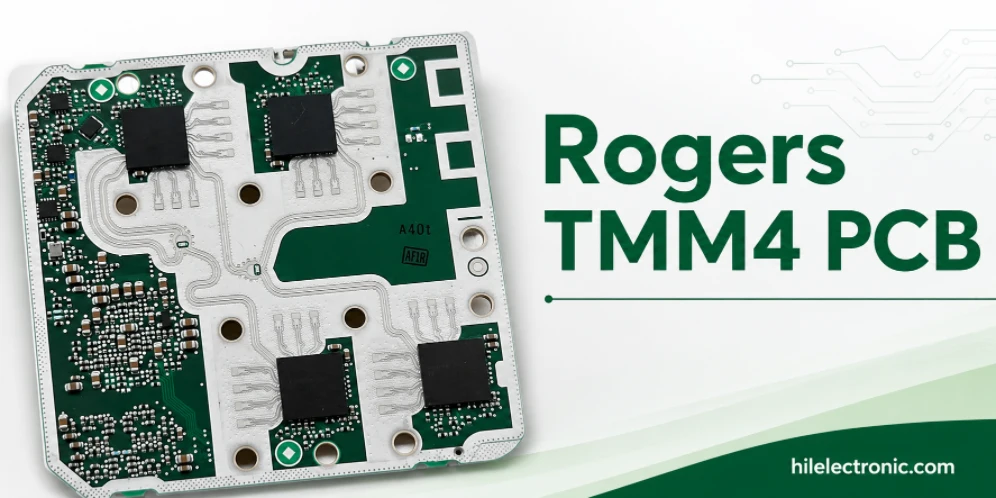
TMM4 Filter PCB Manufacturing
TMM4 filter PCB manufacturing is controlled by the...
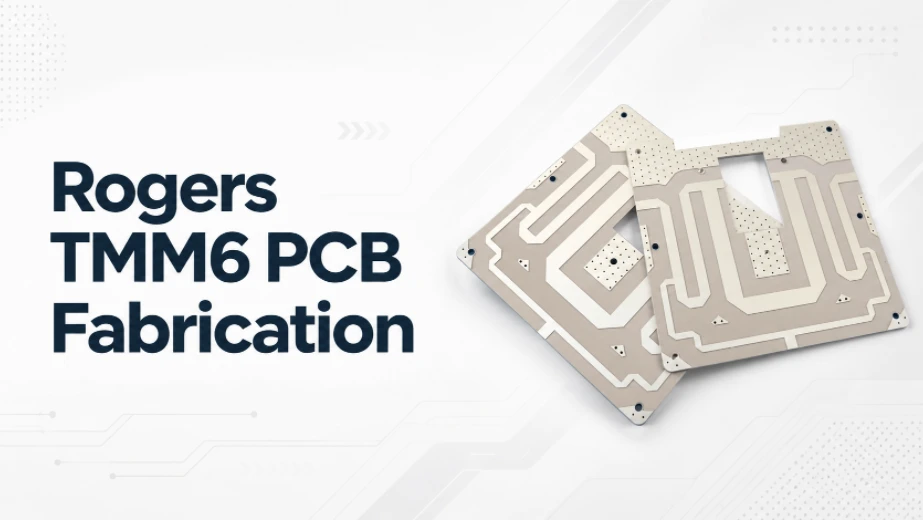
TMM6 PCB Fabrication
TMM6 fabrication is the process-control page for a mid-Dk...
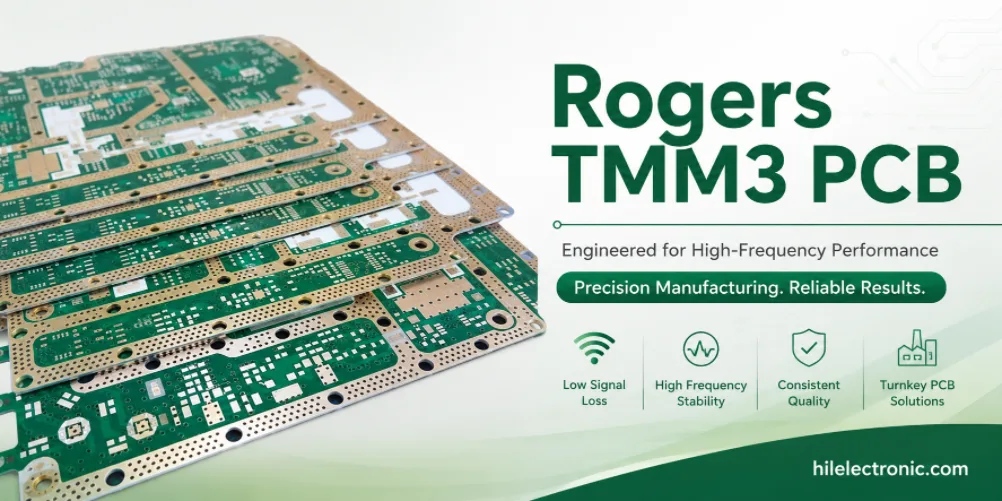
TMM3 PCB Manufacturing for RF Modules
TMM3 PCB manufacturing is most useful where the RF module...
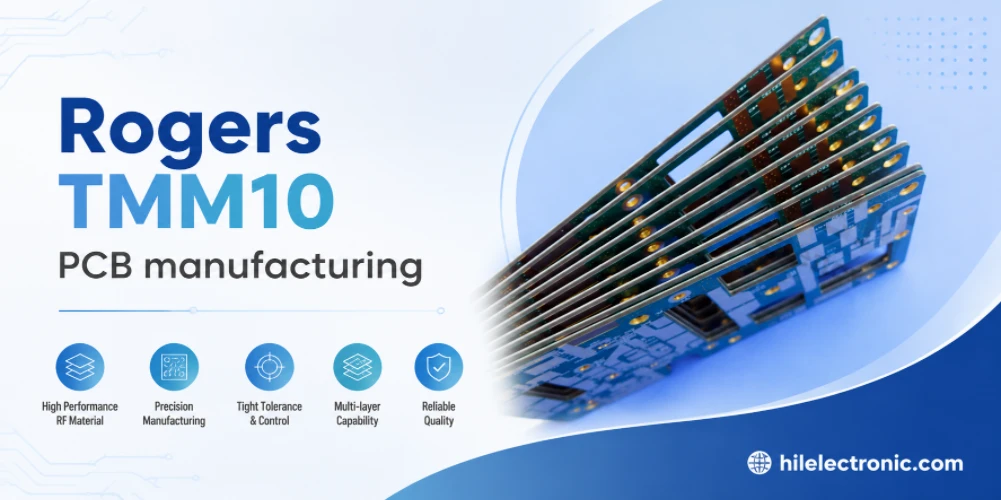
TMM10 PCB Manufacturing for Compact RF Designs
Table of contentsHow TMM10 Shrinks RF StructuresTMM10 vs...
How to get a quote for PCBs
Let’s run DFM/DFA analysis for you and get back to you with a report. You can upload your files securely through our website. We require the following information in order to give you a quote:
-
- Gerber, ODB++, or .pcb, spec.
- BOM list if you require assembly
- Quantity
- Turn time
For PCBA services, please provide your BOM (Bill of Materials) and any specific assembly instructions. We also offer DFM/DFA analysis to optimize your designs for manufacturability and assembly, ensuring a smooth production process.