
Desoldering Wick vs Pump: Which Tool for Which Job, and How to Use Each

Figure 1. desoldering wick vs pump
Last updated: May 2026 · A practical, accurate guide to choosing and using both desoldering tools
Desoldering wick and a desoldering pump solve different problems, and knowing which to reach for — and how to use each without lifting a pad — is what separates clean rework from a damaged board. This guide compares the two head to head, explains exactly how each one works, matches each tool to the right job, walks through the technique that prevents the most common damage, and looks at when a powered desoldering station finally earns its place on the bench. The aim is that you finish knowing not just which tool to buy, but how to use it correctly the first time.
Wick vs. pump at a glance
The two tools are complements, not competitors. This table shows where each one wins so the rest of the guide makes sense.
| Desoldering pump | Desoldering wick | |
|---|---|---|
| Mechanism | Spring-loaded vacuum | Capillary action in copper braid |
| Best for | Through-holes, big blobs, clearing holes | SMT pads, thin film, bridges |
| Removes a lot at once? | Yes | No — small amounts |
| Leaves pad flat? | Thin film remains | Yes — clean flat pad |
| Cost | Low, reusable | Very low, consumable |
| Pad-lift risk | Low | Higher if pressed/dragged hot |
How a desoldering pump works
A desoldering pump — often called a solder sucker — is a spring-loaded plunger inside a barrel. You prime it by pushing the plunger down until it latches, melt the target joint with your iron, place the nozzle over the molten solder, and press the release button. The plunger snaps back, and the sudden vacuum sucks the molten solder up into the barrel. It is the fast way to empty a through-hole of bulk solder.
Variants
Two common types exist: the standard manual plunger pump, and softer bulb-style suckers (squeeze, hold over the joint, release to draw the solder up). The plunger type generates a stronger, more abrupt vacuum and is the usual choice for clearing plated through-holes.
Keeping it working
A pump only works if the vacuum stays strong. Eject the collected solder regularly by pushing the plunger to clear the barrel, keep the nozzle clean and unclogged, and replace a worn or melted nozzle tip. A clogged barrel or a cracked nozzle is the most common reason a pump “stops sucking.”
The timing that makes a pump work
The pump’s effectiveness lives almost entirely in timing. The solder must be fully molten and the nozzle already in position the instant you trigger the release — any delay lets the solder begin to re-solidify and the vacuum grabs nothing. The practiced rhythm is: heat the joint with the iron until the solder pools and shines, slide the primed nozzle over it while keeping the iron in contact, then release. On a stubborn through-hole, add a little fresh solder first; counterintuitively, more molten solder transfers heat better and clears the hole more completely than trying to suck a thin, oxidized joint. Spring-loaded pumps also kick slightly when they fire, so brace your hand so the nozzle does not skate off the pad.
How desoldering wick works
Desoldering wick — also called solder braid — is finely woven copper, usually pre-coated with flux. You lay the braid flat on the joint and press your hot iron down on top of it. As the underlying solder melts, it is drawn up into the braid by capillary action, the same physics that pulls liquid up a paper towel.
What it’s best at
Wick excels at lifting thin films of solder and clearing solder bridges between fine-pitch pins, and it leaves a flat, clean pad behind — exactly the surface you want before resoldering an SMT component. Where a pump leaves a usable but slightly uneven residue, wick finishes a pad properly flat.
Using it efficiently
Only the fresh, clean braid wicks well. As the end loads up with solder it stops absorbing, so trim off the used, solder-saturated end with side cutters so fresh copper contacts the next joint. Adding a touch of flux to the braid noticeably improves how fast and cleanly it draws solder, especially on older joints.
Choosing the right braid width
Wick comes in several widths, and matching width to the job matters more than beginners expect. Narrow braid (around 1.5 mm) suits fine-pitch SMT pads and tight spaces where a wider braid would bridge to neighbouring pads; wider braid (2.5–3.5 mm) clears larger joints and ground planes faster because it holds more solder per pass. Too wide on a small pad wastes heat and braid; too narrow on a big joint means endless trimming. Keeping two widths on the bench covers nearly every situation. A useful trick on a heavy joint: press the braid with the flat of the iron tip rather than the point, so heat spreads across more of the braid and the solder wicks in one clean motion instead of several.
Which to use, by job
Matching the tool to the task is most of the skill:
- Removing a through-hole resistor, capacitor, or header pin → pump. Heat the joint, suck it clear, and repeat per pin.
- Cleaning an SMT pad after removing a chip → wick. It leaves the pad flat and ready to resolder.
- Fixing a solder bridge between fine-pitch pins → wick. Lay it across the bridge and the braid lifts the excess.
- A through-hole that won’t fully clear → pump first for the bulk, then wick for the stubborn residue in the hole.
- Removing a multi-pin IC or connector cleanly → a desoldering station or hot air, not wick or pump alone.
The recurring pattern: pump for volume and through-holes, wick for finesse and flat pads. Many jobs use both in sequence.
A combined-tool workflow for one stubborn joint
The two tools shine brightest used together on a single difficult joint. Say you are removing an old electrolytic capacitor from a double-sided board with a plated through-hole that simply will not clear. The reliable sequence is: add fresh solder to the joint to rejuvenate the oxidized old solder, heat until it is fully liquid, and fire the pump to take out the bulk; then, with most of the solder gone, lay flux-loaded wick over the residual film in the hole and press the iron to draw out what the pump left behind; finally, check the hole against light to confirm it is fully open before fitting the new part. This pump-then-wick rhythm clears holes that defeat either tool used alone, and it is gentler on the pad than repeatedly hammering the same joint with one method.
Technique that prevents lifted pads
Most desoldering damage is entirely avoidable and comes down to a few habits:
- Add fresh flux. Both tools work far better with extra flux, especially on old or oxidized joints — flux helps the solder melt and flow so it releases cleanly.
- Get the solder fully molten first. Pasty, half-melted solder will not suck or wick cleanly, and trying to drag it can tear a pad or trace off the board.
- With wick, don’t press hard or linger. Excess heat on a pad is the single biggest cause of lifted pads. Apply the braid, let it wick, and lift away promptly.
- Work in short bursts. Let the board cool briefly between attempts rather than parking a hot iron on a pad to avoid overheating the copper.
- Ventilate. Desoldering produces flux fumes, plus lead vapor when working with leaded solder; work with airflow or extraction.
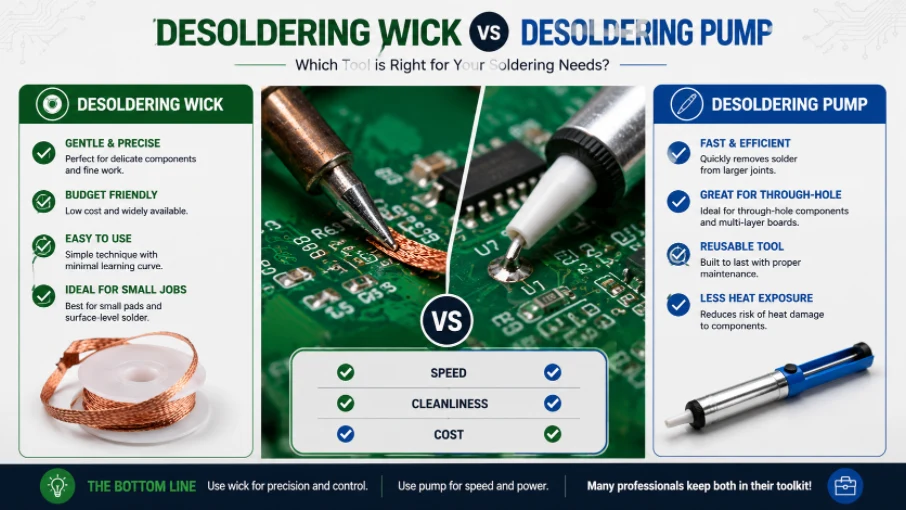
Figure 2. desoldering wick and pump PCB rework
Common desoldering mistakes
Beyond technique, a few recurring errors cause most failures:
- Using a too-cool iron. Desoldering generally wants a slightly hotter, higher-wattage iron than soldering, because you are reheating an existing joint plus the tool sitting on it; too little heat means the solder never fully liquefies.
- Letting the pump or wick get exhausted. A barrel full of solder or a saturated braid end simply won’t pick up more — clear or trim before the next joint.
- Forgetting flux on “no-clean” joints. Even pre-fluxed braid benefits from extra flux on aged joints.
- Yanking a part before the solder releases. Pulling a multi-leg part while any joint is still solid lifts pads and cracks traces — clear every joint first.
When to step up to a desoldering station
For frequent rework or for removing many-pin parts, a powered desoldering station combines a heated hollow tip with continuous vacuum in one tool. You heat the joint and the vacuum pulls the solder through the hollow tip in a single motion, so it clears through-holes far faster and more gently than a manual pump, especially across high pin counts.
When it isn’t worth it
For occasional repairs, a manual pump plus a roll of wick covers nearly everything at a small fraction of a station’s cost. Most benches keep both manual tools on hand and only add a powered station once rework volume — or the frequency of removing dense multi-pin parts — clearly justifies the investment.
A note on hot-air and hot tweezers
A desoldering station is not the only powered upgrade. Hot-air rework stations soften every joint on a part at once by blowing heated air, which is the standard way to lift QFNs, small SMT ICs, and odd-form parts without touching individual pins; hot tweezers grab and reflow both ends of a two-terminal SMT part simultaneously, removing chip resistors and capacitors in a single motion. Neither replaces wick or a pump for through-hole work, but together they round out a rework bench: pump and wick for through-hole and cleanup, hot air or tweezers for surface-mount removal, and a desoldering station when high-pin-count through-hole parts come up often.
When rework belongs at a manufacturer
Hand desoldering is excellent for repairs and prototypes, but reworking BGAs, dense fine-pitch parts, or production volumes calls for proper hot-air or infrared rework stations and post-rework inspection. Highleap Electronics handles assembly, rework, and component replacement with AOI and X-ray verification on hidden joints — the right route when a repair is beyond hand tools or when hidden BGA joints need to be confirmed.
Frequently asked questions
Which is better, desoldering wick or a solder sucker?
Neither universally — a pump for through-hole and bulk solder, wick for SMT pads and thin cleanup. Most people own both and switch between them within a single job.
Why won’t my desoldering wick pick up solder?
Usually too little heat or flux, or a saturated braid end. Add flux, ensure the iron heats the braid and joint together until the solder is fully liquid, and trim to fresh braid.
Can I reuse a desoldering pump?
Yes, indefinitely — just eject the collected solder and keep the nozzle clean and unclogged. Wick is consumable; trim the used end as it loads up.
How do I avoid lifting pads when desoldering?
Use flux, fully melt the solder, and don’t press hard or linger with the iron. Remove the heat as soon as the solder transfers into the tool.
Do I need flux if my wick is pre-fluxed?
Pre-fluxed braid helps, but a little extra flux noticeably improves results on older or oxidized joints.
What’s the best tool for removing a multi-pin IC?
A powered desoldering station or hot-air rework — manual wick or pump alone struggle to free many joints at once cleanly.
Should my iron be hotter for desoldering than soldering?
Often slightly, because you are reheating an existing joint with a tool sitting on it. Enough heat to fully liquefy the solder quickly is what protects the pad — lingering with too little heat does more damage.

Recommended Posts
TMM4 Filter PCB Manufacturing
TMM4 filter PCB manufacturing is controlled by the...
TMM3 PCB Manufacturing for RF Modules
TMM3 PCB manufacturing is most useful where the RF module...
TMM6 PCB Fabrication
TMM6 fabrication is the process-control page for a mid-Dk...

TMM10 PCB Manufacturing for Compact RF Designs
Table of contentsHow TMM10 Shrinks RF StructuresTMM10 vs...
How to get a quote for PCBs
Let‘s run DFM/DFA analysis for you and get back to you with a report. You can upload your files securely through our website. We require the following information in order to give you a quote:
-
- Gerber, ODB++, or .pcb, spec.
- BOM list if you require assembly
- Quantity
- Turn time
For PCBA services, please provide your BOM (Bill of Materials) and any specific assembly instructions. We also offer DFM/DFA analysis to optimize your designs for manufacturability and assembly, ensuring a smooth production process.