
Glass Fiber Cloth Shortage PCB Cost and Supply
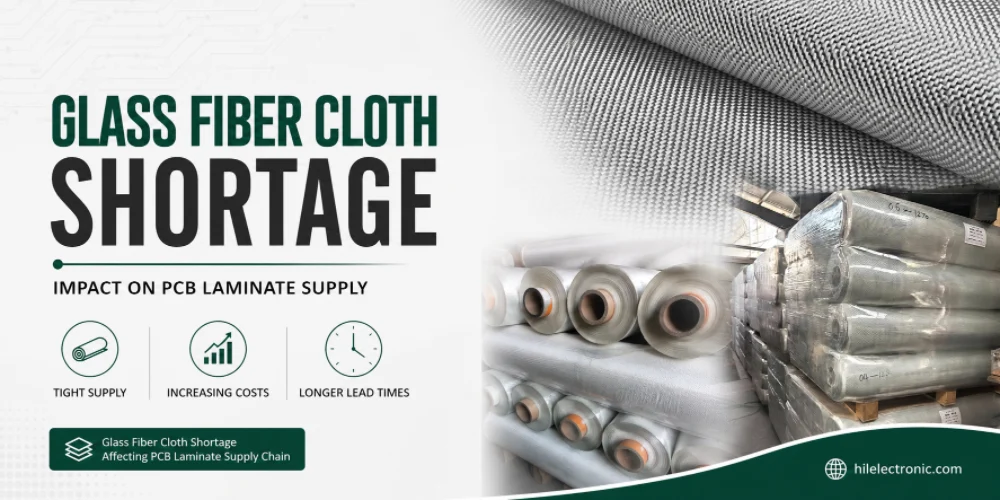
Glass fiber cloth is the structural skeleton of every printed circuit board, and in 2026 it has become one of the least visible but most binding constraints in the PCB material supply chain. Buyers tend to focus on copper and resin, but the specialty woven glass that reinforces high-speed laminates is produced by a very small number of suppliers, and when that cloth is on allocation, the laminate cannot be made regardless of how much copper or resin is available. This guide explains what glass fiber cloth does in a PCB, how its shortage flows into copper-clad laminate production, what it means for board reliability, and how to plan around it.
The Role of Glass Fiber Cloth in PCB Materials
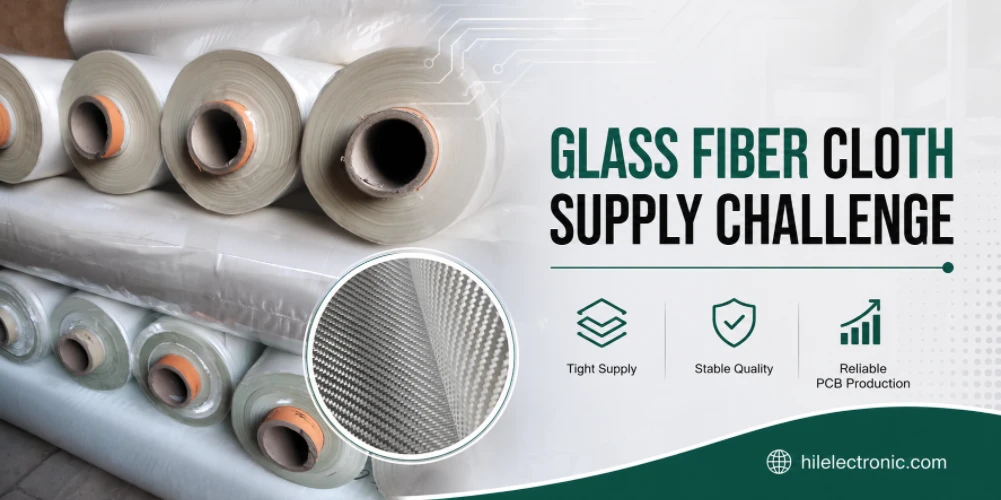
Glass fiber cloth is the woven reinforcement embedded in the resin that forms a PCB’s dielectric layers. It gives the board its mechanical strength, dimensional stability, and flatness, and it controls how the laminate behaves under heat during lamination and assembly. Without it, the resin alone would have neither the rigidity nor the stability to support fine copper features across many layers.
The cloth is not a single material but a family of grades, and the grade matters enormously for high-speed boards. Standard E-glass is adequate for conventional FR-4. High-speed and high-frequency boards, however, increasingly require low-Dk specialty glasses — most notably NE-glass and Q-glass (quartz) — because the glass itself contributes to the laminate’s overall dielectric constant and loss. Q-glass is essentially pure quartz at around 99.99% silicon dioxide, which gives the lowest and most stable dielectric performance but is also the hardest to produce. These specialty grades sit at the top of the material ladder used in the most advanced laminates, a topic covered in our high speed PCB material selection guide. The cloth’s contribution to the wider shortage is set out in our PCB material shortage overview.
How Supply Constraints Affect CCL Production
Glass cloth is one of the three primary inputs to copper-clad laminate, alongside copper foil and resin, accounting for roughly a fifth of CCL raw-material cost. The defining feature of the glass-cloth market is supply concentration: a small number of producers dominate the specialty grades, with a single supplier controlling more than half of certain high-end glass capacity such as T-glass (a high-strength grade) and the low-Dk grades used in high-speed laminates. When demand for advanced laminates surged with AI server hardware, this narrow supply base could not expand quickly, and specialty cloth moved onto allocation.
Because CCL cannot be built without its reinforcement, a glass-cloth shortage gates laminate production directly. Specialty Q-glass grades in particular have moved to allocation-only, with the most advanced laminates that depend on them quoted at 20 or more weeks and some grades placed on six-month quota systems. A laminate maker holding ample copper foil and resin still cannot ship a Q-glass grade if the quartz cloth is not allocated. This is why the glass-cloth constraint shows up most severely in laminate lead time, the subject of our PCB laminate lead time guide, and why it sits upstream of the broader CCL shortage and the resulting FR-4 PCB cost increase.
Impact on PCB Reliability
The reliability risk of a glass-cloth shortage is not only about availability — it is about the temptation to substitute. Because the glass grade is integral to a laminate’s electrical and mechanical behavior, swapping to a more available cloth changes the board’s dielectric constant, its loss characteristics, and its thermal-expansion behavior. A substitution made to dodge an allocation queue can quietly shift impedance, degrade signal integrity, or alter how the board expands and contracts through thermal cycling, with consequences that may not surface until the board is in the field.
Glass cloth also drives a well-known reliability phenomenon called the glass-weave (or fiber-weave) effect. Because the woven cloth alternates between glass-rich and resin-rich regions, two traces of identical length can see slightly different dielectric environments depending on how they sit over the weave, causing timing skew on high-speed differential pairs. The choice of cloth weave style and the rotation of the routing relative to the weave are deliberate reliability decisions on fast boards — which is exactly why an unmanaged cloth substitution is dangerous. Highleap treats glass grade and weave as locked electrical parameters, re-qualified rather than silently swapped, consistent with the discipline described in our low loss PCB fabrication guide.
Material Planning Strategies
Planning around a glass-cloth shortage starts with recognizing that the cloth, not the fabricator’s queue, may be the gating item. The most effective lever is honest grade selection: confirm that a design genuinely requires a low-Dk specialty glass before specifying one, because every board that defaults to Q-glass or NE-glass when E-glass would serve adds pressure to the scarcest supply. This judgment is part of broader high speed PCB material selection, where the glass grade is chosen alongside the resin and copper foil. For boards that truly need specialty cloth, the hybrid stack-up applies here as it does elsewhere — using the specialty-glass laminate only on the critical high-rate layers confines the allocation exposure to a few layers rather than the whole board.
Because glass cloth tightened at the same time as the other two CCL inputs, glass planning cannot be done in isolation from the copper foil shortage — a board may clear its glass allocation only to wait on the matching HVLP foil. The remaining strategies are about visibility and time. Sharing a 6–12 month rolling forecast lets a fabricator and its laminate supplier reserve specialty-cloth allocation against real demand rather than scrambling at order time. Qualifying a second laminate grade that uses a different cloth source removes single-point dependency. And material commitments for specialty-glass laminates should be placed far ahead of the production need — 16–20 weeks is now common for low-loss grades, and longer for Q-glass. Highleap Electronics performs a material-availability review that identifies glass-grade exposure before fabrication, so a constrained cloth is engineered around rather than discovered when the order is placed.
Get a Material-Aware Quote for Your PCB
Highleap Electronics is a PCB fabrication and assembly factory. Across our PCB manufacturing and multilayer PCB programs we manage glass-grade selection, weave control, and equivalent qualification so that a glass-cloth shortage does not compromise either schedule or reliability.
Glass Fiber Cloth Shortage FAQs
What does glass fiber cloth do in a PCB->
It is the woven reinforcement embedded in the dielectric layers, giving the board mechanical strength, dimensional stability, and flatness, and controlling how the laminate behaves under heat. The glass grade also contributes to the board’s dielectric constant and loss, so it is an electrical parameter on high-speed designs.
Why is glass fiber cloth in shortage->
Specialty low-Dk grades such as NE-glass and Q-glass are made by a very small number of suppliers — one producer controls more than half of certain low-Dk cloth capacity — and that narrow base could not expand quickly when AI server demand surged. Specialty cloth has moved onto allocation, with some grades on six-month quotas.
What is Q-glass and why is it hard to get->
Q-glass is quartz cloth, essentially pure silicon dioxide at around 99.99%, which gives the lowest and most stable dielectric performance for the most advanced laminates. It is also the hardest specialty glass to produce, so it is among the most allocation-constrained materials in the supply chain.
Can a fabricator substitute a different glass cloth->
Not safely without re-qualification. The glass grade and weave affect dielectric constant, loss, and thermal expansion, and an unmanaged substitution can shift impedance, degrade signal integrity, or worsen the glass-weave skew effect. Substitutions should be qualified, not made silently to dodge an allocation queue.
How should I plan around a glass-cloth shortage->
Specify low-Dk specialty glass only where the design truly needs it, use a hybrid stack-up to confine specialty-cloth dependency to critical layers, share a 6–12 month forecast so allocation can be reserved, qualify a second laminate using a different cloth source, and place material commitments 16–20 weeks or more ahead for specialty grades.

Recommended Posts
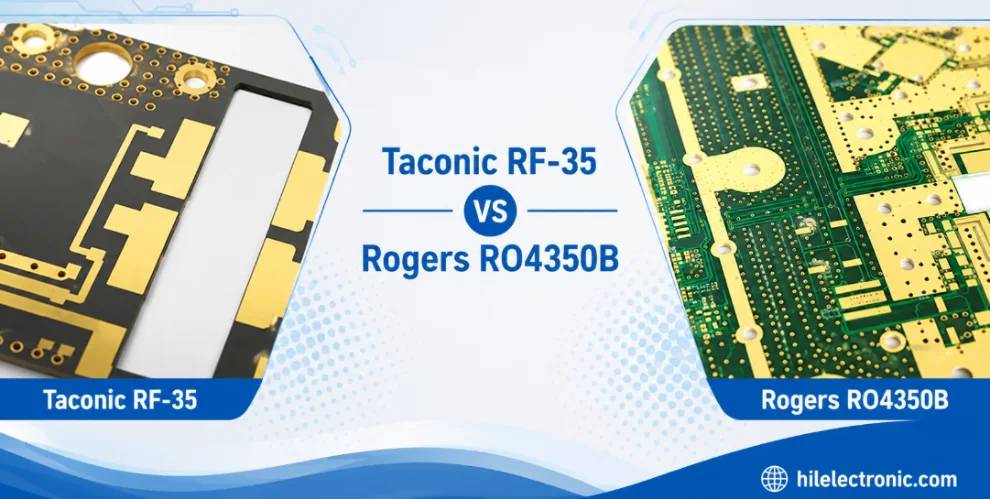
Taconic RF 35 vs RO4350B PCB
Table of contentsRF-35 vs RO4350B Procurement and...
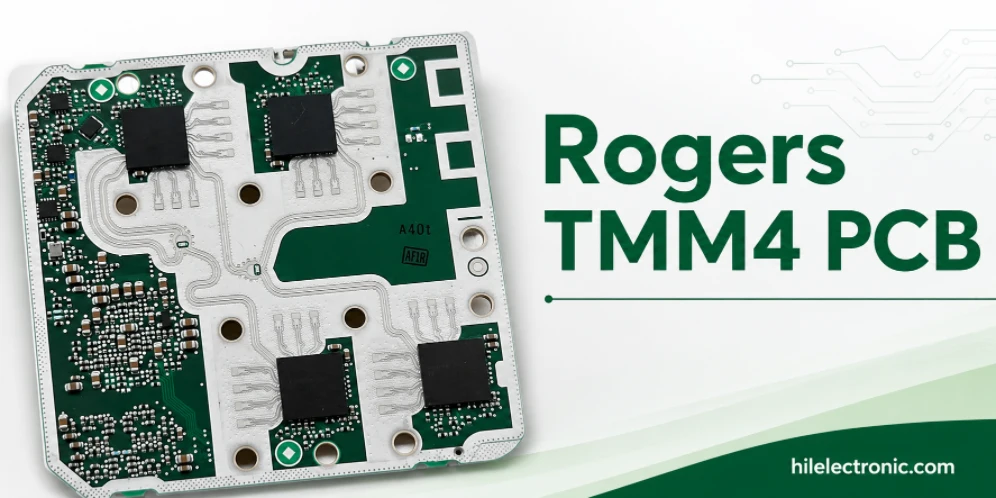
TMM4 Filter PCB Manufacturing
TMM4 filter PCB manufacturing is controlled by the...
TMM3 PCB Manufacturing for RF Modules
TMM3 PCB manufacturing is most useful where the RF module...
TMM6 PCB Fabrication
TMM6 fabrication is the process-control page for a mid-Dk...
How to get a quote for PCBs
Let’s run DFM/DFA analysis for you and get back to you with a report. You can upload your files securely through our website. We require the following information in order to give you a quote:
-
- Gerber, ODB++, or .pcb, spec.
- BOM list if you require assembly
- Quantity
- Turn time
For PCBA services, please provide your BOM (Bill of Materials) and any specific assembly instructions. We also offer DFM/DFA analysis to optimize your designs for manufacturability and assembly, ensuring a smooth production process.