
Handheld GPS Navigator PCB Manufacturing & PCBA for Portable Navigation Devices
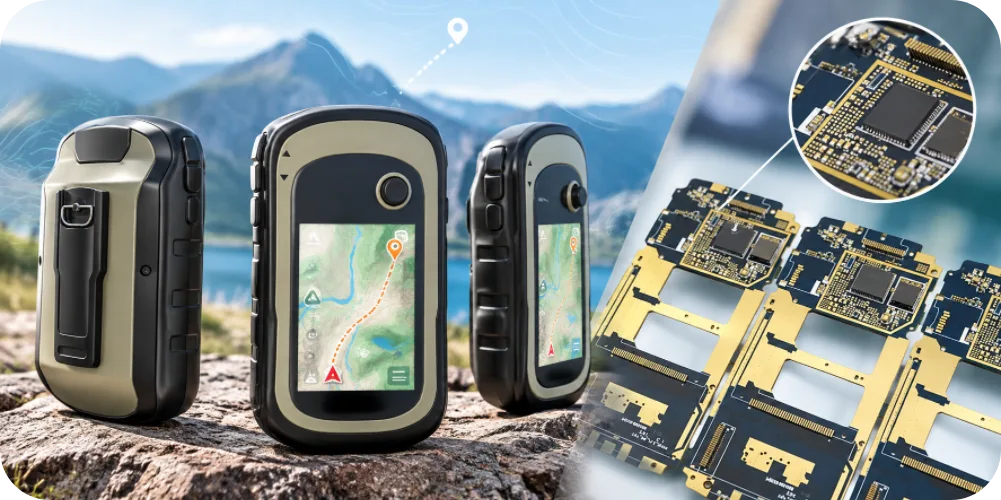

Looking for a handheld GPS navigator PCB manufacturer for an outdoor navigation device, professional field equipment or a specialized positioning product? Highleap Electronics provides PCB fabrication, PCBA, electronic component sourcing and manufacturing support for customer-designed GPS navigation electronics. We work from your released design, BOM and production requirements to support prototype builds and repeat manufacturing.
Although smartphones cover many everyday navigation needs, dedicated handheld GPS devices remain relevant in specialized outdoor navigation, field operations and equipment integration. For these OEM projects, the priority is finding a manufacturing partner that can coordinate PCB fabrication, component procurement, assembly and agreed production tests through one workflow.
Handheld GPS Navigator PCB Manufacturing and PCBA Services
Highleap Electronics manufactures customer-designed PCBs and PCB assemblies for handheld GPS navigator projects. Depending on your product architecture, the manufacturing scope may include the main controller board, GNSS receiver circuitry, antenna interface, display connections, battery management, user controls and external communication interfaces.
We support the following production requirements according to the supplied design and agreed scope:
- Handheld GPS PCB fabrication: Manufacture bare circuit boards from approved Gerber or ODB++ files, fabrication drawings and stack-up specifications.
- GPS navigator PCBA: Assemble the processor, GNSS module, memory, power-management components, connectors and other BOM-specified devices.
- RF board requirements: Follow the released stack-up, impedance requirements and antenna-feed design where specified.
- Prototype and repeat orders: Support engineering samples, pilot production and repeat builds using controlled PCB and BOM revisions.
For bare-board orders, review our PCB fabrication service. For assembled navigation electronics, our PCB assembly service is more relevant. Designs with RF-specific manufacturing requirements can also be reviewed against our high-frequency PCB manufacturing capabilities.
Highleap is a manufacturing partner for customer-designed electronics, not a retail seller of finished GPS navigators. We work from your engineering data and agreed production requirements to establish the appropriate manufacturing scope.
PCB Requirements for Outdoor and Specialized GPS Devices
Dedicated handheld GPS products can serve outdoor navigation, field surveying, remote site work, equipment tracking and other specialized applications. A recreational navigator may prioritize compact dimensions and battery operation, while a professional field device may have additional enclosure, connector, display or interface constraints.
These differences need to be reflected in the PCB and assembly package before production begins:
- GNSS receiver and antenna interface: Identify the receiver or module, antenna type, connector arrangement and relevant RF requirements.
- Board construction: Specify layer count, dimensions, thickness, copper weight, surface finish and controlled-impedance requirements where applicable.
- Display and controls: Provide display FPC details, keypad connections, button interfaces and mechanical drawings when they affect assembly.
- Battery and charging: Define the approved power-management circuit, battery connector and relevant electrical test conditions.
- Mechanical integration: Include mounting points, enclosure constraints, antenna clearances and connector access requirements.
Using a particular PCB material does not automatically make a finished device weatherproof or suitable for harsh environments. Enclosure sealing, connector protection, component selection and product-level validation depend on the complete design.
Similarly, PCB manufacturing can follow the released RF layout and specified stack-up, but GNSS sensitivity and positioning accuracy also depend on the antenna, receiver, firmware and operating environment. If these performance checks are required, define the test method and acceptance criteria before quotation.
Highleap Electronics · PCB Manufacturing & PCBA
Need a Manufacturing Partner for Your GPS Device?
Send your PCB files, BOM, GNSS module and antenna details, target quantities and testing requirements. Highleap can review your project for PCB fabrication, component sourcing and PCBA production.
✓ Consistent Quality Control
✓ Prototype to Mass Production
✓ One-Stop Manufacturing
Turnkey PCB Assembly and Electronic Component Sourcing
For an OEM developing a handheld GPS navigator, coordinating separate suppliers for bare boards, electronic components and assembly can increase purchasing workload and complicate revision control. A coordinated manufacturing workflow helps keep the approved BOM, fabrication data and assembly instructions aligned.
Highleap can support projects requiring a combination of:
- PCB fabrication and assembly: Coordinate bare-board production with component placement and soldering against the released design.
- Electronic component sourcing: Procure parts according to approved manufacturer part numbers and authorized alternatives, subject to availability.
- Assembly data review: Check the BOM, pick-and-place data, assembly drawings and connector orientation before production.
- Production coordination: Manage the agreed manufacturing scope for prototype builds and repeat orders using controlled revisions.
Our turnkey PCB assembly service is suitable for projects that require PCB fabrication, component procurement and assembly to be coordinated through one manufacturing supplier. For sourcing requirements, see our electronic component sourcing service.
Component availability can affect production planning, particularly when a design uses specific GNSS modules, processors, memory devices or specialized connectors. Include approved alternatives in the BOM wherever possible. Any proposed substitution should be reviewed for electrical, mechanical and functional compatibility rather than accepted solely because the package fits the PCB.
If your project requires a broader production scope, our electronic manufacturing services may also be relevant. Procurement responsibilities, assembly scope and testing deliverables should be agreed during quotation.
PCB Testing and Production for Handheld GPS Navigators
For GPS navigator PCBA, inspection and electrical checks are important, but they do not automatically verify the navigation performance of the complete product. The manufacturing test plan should distinguish board-level checks from tests requiring the antenna, enclosure, firmware or a satellite-signal test setup.
Depending on the design and agreed scope, production checks may include:
- Assembly inspection: Check component placement, polarity, solder joints and connectors using appropriate inspection methods, including automated optical inspection (AOI) where suitable.
- Electrical verification: Check specified power rails, connections and relevant current conditions.
- Programming: Load approved firmware or configuration files when included in the manufacturing scope.
- Interface testing: Verify defined display, USB, control and communication functions.
- GNSS-related testing: Perform agreed receiver or positioning checks when the necessary test equipment, antenna configuration and acceptance criteria are provided.
For a new design, a prototype or pilot build can help confirm connector fit, display connections, battery integration, programming and the agreed test procedure before repeat production. Once the design is approved, the PCB revision, BOM, firmware and test instructions should be controlled together.
Highleap can support manufacturing inspection and agreed testing as part of the PCB assembly process. If navigation accuracy, environmental resistance or other complete-device performance requirements are part of the project, specify how these will be validated and who supplies the required fixtures and equipment.
Handheld GPS Navigator PCB Quotes for Global OEMs
Highleap works with overseas customers that need a manufacturing supplier for customer-designed GPS navigation electronics. For OEMs and equipment developers in the United States, Canada, the United Kingdom, Germany, France, Japan, South Korea and Australia, a complete RFQ package helps clarify the manufacturing scope and reduce avoidable quotation delays.
To request a quote for handheld GPS navigator PCB fabrication or PCBA, provide the following information where available:
- PCB files: Gerber or ODB++ data, fabrication drawings, layer count, board thickness, copper requirements and surface finish.
- BOM and assembly files: Manufacturer part numbers, approved alternatives, pick-and-place data and assembly drawings.
- GNSS and antenna details: Module or receiver part number, antenna type, connector details and relevant RF specifications.
- Mechanical interfaces: Display, battery, buttons, enclosure and mounting information that affects assembly.
- Testing requirements: Programming files, diagnostic software, test fixture information and pass/fail criteria where applicable.
- Order information: Prototype quantity, expected production volume, product variants and target delivery schedule.
If some design files are not ready, send the available documentation and identify the outstanding items. This allows us to determine whether the initial quotation should cover bare PCB fabrication, assembled PCBA or a coordinated turnkey manufacturing build.
For prototype requirements, review our rapid PCB prototyping service. For established programs, our low-volume PCB assembly service and high-volume PCB assembly service can be considered according to the required quantities and production scope.
Ready to discuss your project? Submit your files through our PCB and PCBA quotation page or contact Highleap Electronics to discuss your handheld GPS navigator manufacturing requirements.

Recommended Posts
TMM4 Filter PCB Manufacturing
TMM4 filter PCB manufacturing is controlled by the...
TMM3 PCB Manufacturing for RF Modules
TMM3 PCB manufacturing is most useful where the RF module...
TMM6 PCB Fabrication
TMM6 fabrication is the process-control page for a mid-Dk...

TMM10 PCB Manufacturing for Compact RF Designs
Table of contentsHow TMM10 Shrinks RF StructuresTMM10 vs...
How to get a quote for PCBs
Let’s run DFM/DFA analysis for you and get back to you with a report. You can upload your files securely through our website. We require the following information in order to give you a quote:
-
- Gerber, ODB++, or .pcb, spec.
- BOM list if you require assembly
- Quantity
- Turn time
For PCBA services, please provide your BOM (Bill of Materials) and any specific assembly instructions. We also offer DFM/DFA analysis to optimize your designs for manufacturability and assembly, ensuring a smooth production process.