
TMM4 Filter PCB Manufacturing
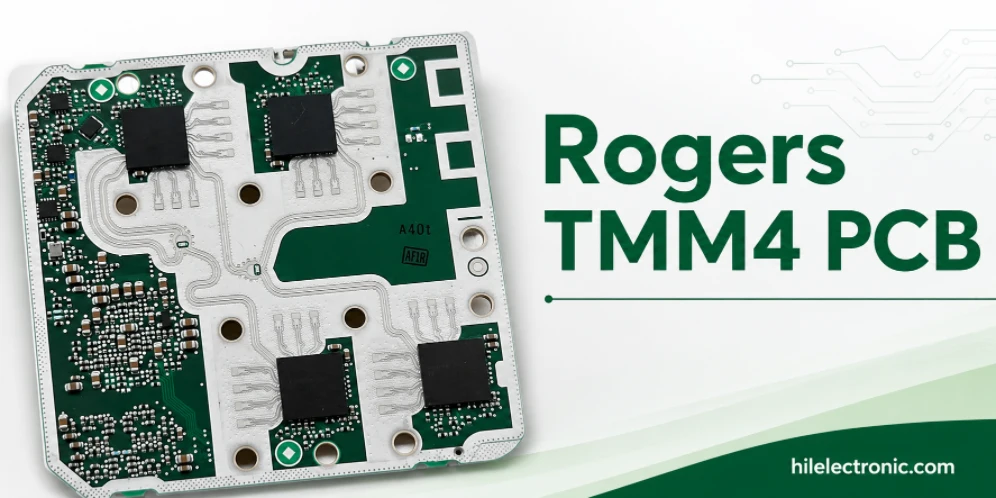
TMM4 filter PCB manufacturing is controlled by the geometry that sets the filter response. Resonators, coupled lines, cavities and plated transitions should therefore be released with explicit dimensions and tolerances. TMM4 is most useful when a microwave circuit must become smaller without moving immediately to an extreme high-Dk substrate. That makes it a practical material for compact filters, resonators, couplers, matching networks and housed RF modules where center frequency and coupling depend on finished dimensions.
Highleap Electronics manufactures TMM4 PCBs from tuned prototypes to repeat production. The work focuses on the dimensions that set the RF response, the machining and finish needed by the module, and the evidence required before volume release.
The TMM4 page owns compact microwave-filter manufacturing. Resonator dimensions, coupling structures, plated transitions and first-article RF measurements are treated as the primary production controls rather than repeating general TMM material information.
Why TMM4 Is Used for Compact Microwave Filter PCB
TMM4 occupies a middle position: it shortens distributed structures compared with TMM3 while usually preserving more manufacturable lines and gaps than very high-Dk materials. The project should define how much size reduction is actually needed, because every reduction increases the percentage impact of etch, thickness and housing variation.
Filters and couplers are controlled by finished geometry
A generic impedance note is not enough for a narrowband filter. Resonator length, coupling gap, open-end position, via wall and housing spacing may directly control center frequency, bandwidth and rejection. The drawing should identify these dimensions and state whether final plating and finish are included.
| RF feature | Primary sensitivity | Useful first-article evidence |
|---|---|---|
| Resonator | Length, width, dielectric thickness | Finished dimensions and frequency response |
| Coupling gap | Etch and plating variation | Optical inspection and S-parameter correlation |
| Grounded via wall | Pitch, hole size, plating | Drill report, microsection and RF test |
| Housing clearance | Mechanical alignment and lid spacing | Common-datum inspection in the assembled state |
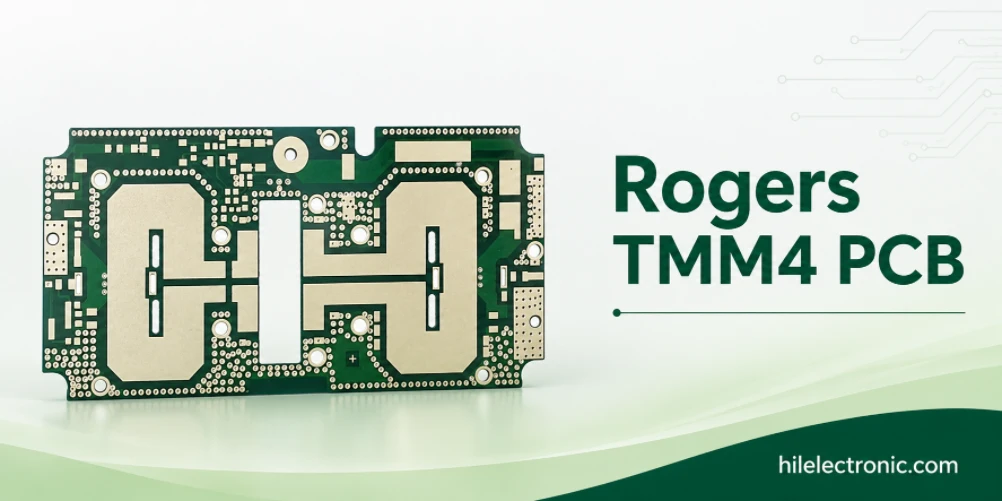
Material scope: This page concerns PCB fabrication using the specified Rogers material. Highleap Electronics manufactures the finished board and PCBA; laminate manufacturing and material sales are outside our service scope.
From Simulation to a Tuned TMM4 Prototype
The first prototype should be designed as a learning build, not simply a pass/fail order. Highleap can measure agreed critical dimensions and provide fabrication records so the customer can compare them with the simulated and measured RF response. Where tuning tabs or trim features are included, the adjustment method must be repeatable enough for production.
Machining, cavities and plated holes
TMM4 modules often use routed cavities, mounting features, plated holes or metal backing. Mechanical features should reference the same datum system as the filter artwork. Hole plating and edge quality are particularly important when vias form a shielding wall or a connector launch sits near the routed outline.
Wire bonding and selective finishes
Wire-bond or die-attach areas should not receive an unspecified finish. Pad metallurgy, thickness, mask clearance and cleanliness need to match the assembly process. Highleap can coordinate the bare-board finish with wire-bond PCB assembly requirements when the module is supplied as a complete PCBA.
TMM4 Housed and Metal-Backed Module Manufacturing
Metal backing or a machined housing can provide heat spreading, stiffness and RF shielding, but it also changes the electromagnetic environment. Adhesive thickness, screw position, cavity depth and lid spacing should be included in the validation. A board that passes in free space may shift when assembled into the final enclosure.
- Identify frequency-setting dimensions instead of applying one generic tolerance to the whole board.
- Use common RF and mechanical datums.
- Define mask-free and finish-controlled areas around high-Q features.
- Confirm plated-hole and via-wall requirements before machining.
- Correlate first-article geometry with the assembled S-parameter result.
- Freeze any artwork tuning adjustment before repeat production.
For broader design and fabrication context, see RF PCB miniaturization techniques.
Moving a TMM4 Filter From Prototype to Volume
Volume readiness is demonstrated when the acceptable RF response can be connected to measurable production variables. Highleap can retain the approved stackup, material construction, tooling notes, critical-dimension report and test requirements for repeat orders. If a material, copper or finish change is proposed, it should be reviewed before fabrication because the response may move.
Production proof
The production plan may include incoming material verification, controlled etch compensation, optical inspection, microsection, electrical test and customer-defined RF test. Prototype and low-volume orders can be followed by component sourcing and module assembly where the BOM, placement and functional limits are available. Highleap reviews the filter structure, machining, plated holes and reference-plane relationships before the first article. Where tuning is expected, the prototype plan should state which dimensions can be adjusted and which are fixed by the production drawing. Exact material property values should be checked against the current supplier documentation for the specified grade and construction.
Share the TMM4 layout, frequency-setting dimensions, housing drawing and expected test limits. Highleap will review whether the proposed geometry, machining and assembly route can be repeated at the requested volume.
TMM4 filter questions
Is TMM4 always better than TMM3? No. TMM4 offers more miniaturization, while TMM3 may provide wider geometry and more broadband margin.
Should a filter be accepted by impedance coupon? Usually not by coupon alone. The filter response and critical dimensions may be more relevant. For a TMM4 filter quote, provide the filter layout, frequency band, stackup, critical dimensions, finish and quantity. Include the required RF measurement method when the filter is accepted by measured response.

Recommended Posts
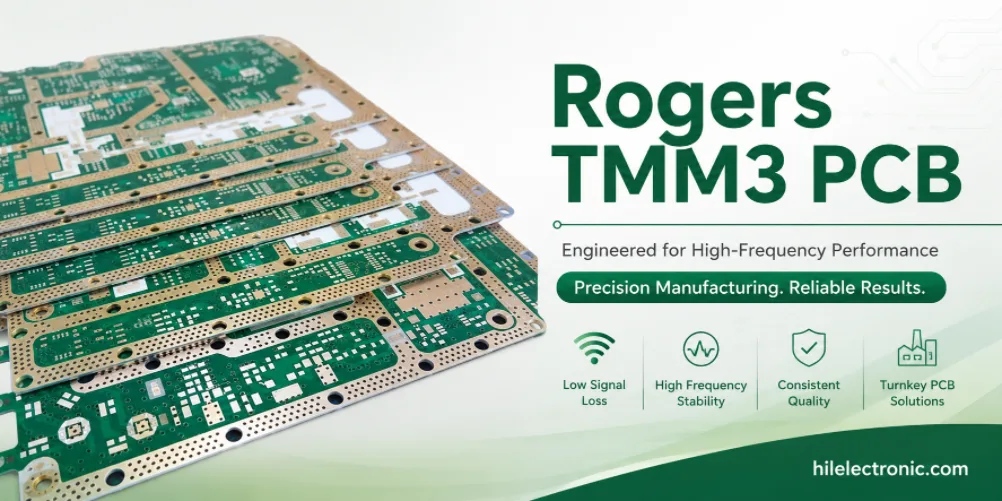
TMM3 PCB Manufacturing for RF Modules
TMM3 PCB manufacturing is most useful where the RF module...
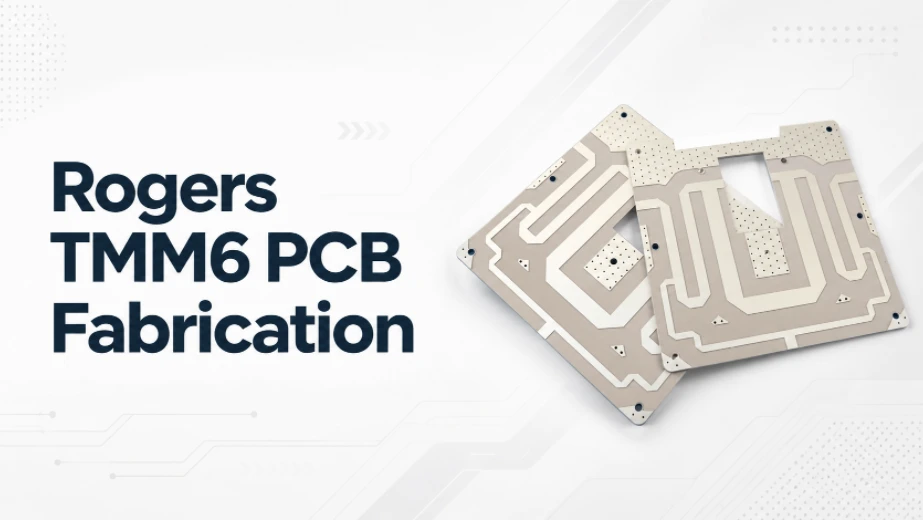
TMM6 PCB Fabrication
TMM6 fabrication is the process-control page for a mid-Dk...

TMM10 PCB Manufacturing for Compact RF Designs
Table of contentsHow TMM10 Shrinks RF StructuresTMM10 vs...

TMM10i PCB Fabrication and DFM
TMM10i PCB fabrication has a stronger DFM emphasis because...
How to get a quote for PCBs
Let’s run DFM/DFA analysis for you and get back to you with a report. You can upload your files securely through our website. We require the following information in order to give you a quote:
-
- Gerber, ODB++, or .pcb, spec.
- BOM list if you require assembly
- Quantity
- Turn time
For PCBA services, please provide your BOM (Bill of Materials) and any specific assembly instructions. We also offer DFM/DFA analysis to optimize your designs for manufacturability and assembly, ensuring a smooth production process.