
LED Linear & Strip Light PCBs: Long-Format Engines, Flexible & Rigid-Flex Boards
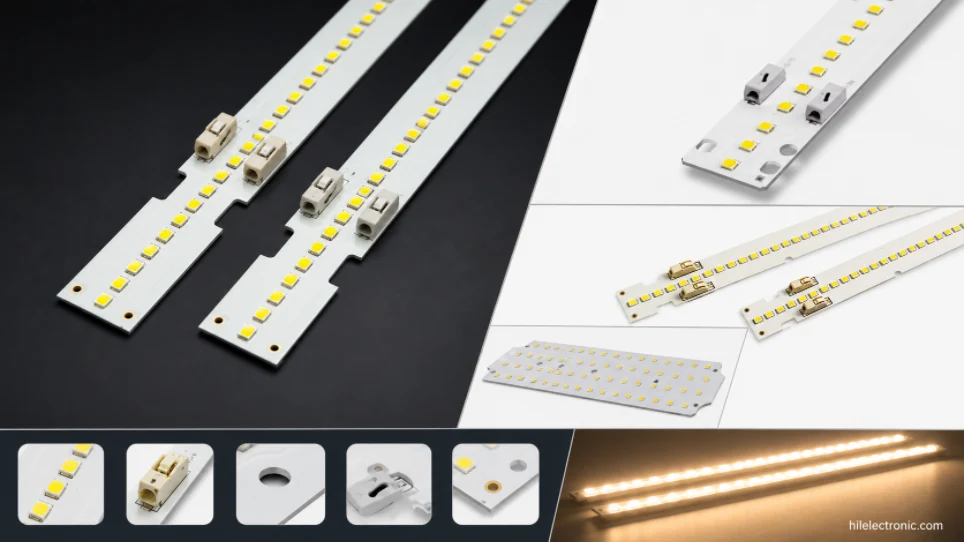
Figure 1. LED linear light PCB manufacturing reference.
Table of Contents
Linear lighting is everywhere modern architecture wants a clean line of light — cove lighting, under-cabinet strips, architectural profiles, display cases, signage, and the continuous runs that wrap a building’s edges. The defining challenge is length: a board that is centimetres wide and metres long has to deliver even brightness and even color from one end to the other, which is a real electrical and manufacturing problem, not just a longer version of a normal board.
Highleap Electronics is a full-capability custom PCB fabrication and full PCB assembly factory that builds the full range of linear formats — long rigid engines, flexible strips, and rigid-flex constructions — plus the drivers and power injection that long runs require. This guide covers what makes a linear board work over length and how to order. The wider category is on our lighting PCB factory page.
What makes a linear light board different
A linear board is defined by its aspect ratio. Being long and thin creates challenges a compact board never faces: current has to travel the length of the board through copper that has resistance, so the far end can be dimmer than the near end (voltage drop); the board may need to flex or follow a curve; and manufacturing a board that is much longer than standard panel sizes takes panelization and joining strategy.
Get the electrical design right and a linear fixture is a clean, even line of light. Get it wrong and you see the tell-tale gradient — bright at the power end, dim and color-shifted at the far end. The board design, not the LEDs, is what prevents that.
Rigid, flexible, and rigid-flex linear engines
Linear lighting comes in three board constructions, and the choice drives everything about how the fixture is built and how it performs. We manufacture all three, and the deep engineering is in making each one even over length.
Rigid linear engines. For straight architectural profiles, troffers, and linear high bay, a long rigid board — aluminum metal-core for higher power, FR-4 for low-power indoor strips — gives the best thermal performance and the straightest line. The engineering centers on voltage drop and panelization:
- Copper sizing for length — wider and heavier copper buses so the current reaching the far LEDs does not sag, keeping brightness even end to end.
- Segmentation and joining — long fixtures are built from board segments joined with connectors or solder joints; we design the segments so the seams are invisible in the light output.
- Panelization — efficient layout on the manufacturing panel to build long boards economically.
Flexible strips. For cove lighting, curves, and signage, a flexible LED strip on polyimide bends to the architecture. The challenges are current distribution and durability:
- Power injection — feeding power at multiple points along a long LED strip so the middle and ends stay as bright as the feed point.
- Cut points — designed segments so the strip can be cut to length without wasting LEDs or breaking the circuit.
- Flex durability — copper and coverlay designed to survive bending during installation.
Rigid-flex. For fixtures that need both rigid LED-carrying sections and flexible interconnects — folded modules, fixtures that wrap a corner, or designs that eliminate connectors — a rigid-flex PCB combines both in one board. It removes failure-prone connectors and lets a single board follow a complex path, which is why premium architectural and signage fixtures increasingly use it.
The reason the construction choice is a deep design decision rather than a catalog pick is that each one solves the length problem differently — heavy copper buses on rigid, multi-point power injection on flexible, integrated interconnects on rigid-flex. Choosing and engineering the right one for the fixture’s shape, power, and length is exactly the kind of call we make during the DFM review, and building all three in one factory means the recommendation is driven by the design rather than by what a single-format shop happens to make.
Addressable and RGBW linear boards
Color-changing and dynamic linear lighting adds control complexity to the board. We build the full range:
- RGB and RGBW strips — multi-channel color mixing for architectural and accent schemes.
- Addressable (pixel) boards — individually controlled LEDs for chase, gradient, and video effects, a high-density LED layout with the control lines routed for signal integrity along the length.
- Tunable white linear — dual-channel warm/cool strips for adjustable architectural light.
- Signage and display modules — related LED display boards for channel letters and digital signage.
Addressable boards in particular need careful routing of data and power along the length so the signal stays clean and the color stays consistent — design work we handle as part of the build.
Drivers and power injection for long runs
Long linear runs need power delivered intelligently, not just a driver at one end. We build the drivers and design the power architecture together:
- Constant-voltage and constant-current drivers — matched to the strip or engine architecture.
- Power injection design — multiple feed points along a long run so brightness stays even, with the wiring planned into the fixture.
- Dimming and control — 0-10 V, DALI, PWM, and addressable controllers for the project’s system.
- Voltage-drop calculation — we calculate the drop over the run length and size copper and feed points to keep the far end bright.
Designing the board and the power delivery together is what keeps a 5- or 10-metre run looking like one even line instead of a gradient.
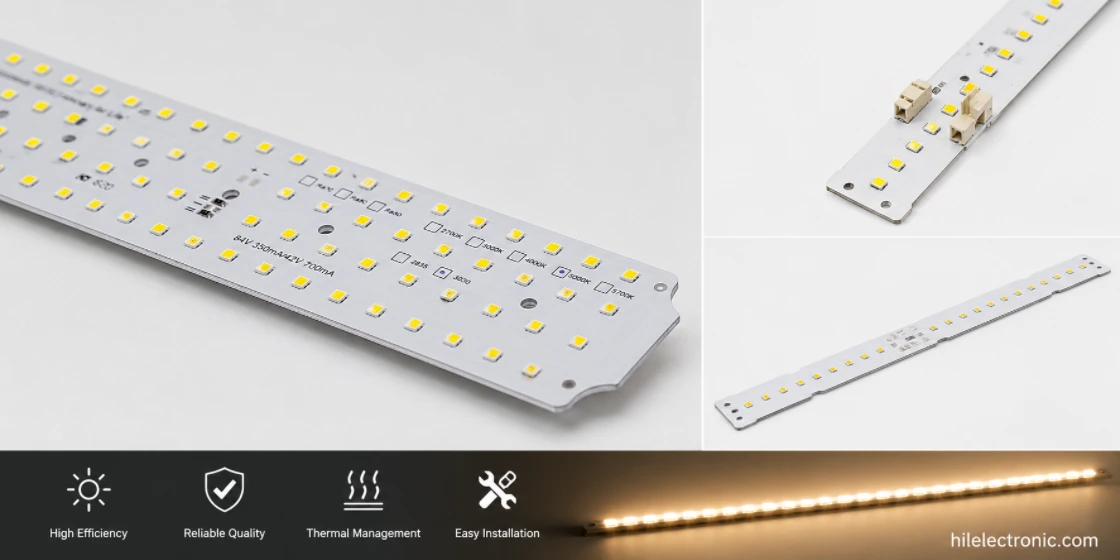
Figure 2. LED linear light PCB assembly production and assembly detail.
Linear PCB capabilities and finishes
We build linear boards across the full construction range:
| Capability | Standard | Advanced |
|---|---|---|
| Construction | Rigid FR-4, aluminum | Flexible, rigid-flex, multilayer |
| Length / panelization | Standard panel | Long-format, segmented, joined |
| Copper weight | 1-2 oz | 2 oz+ buses for low voltage drop |
| LED format | SMD 2835/3030/5050 | RGBW, addressable pixel, high-density |
| Color | Fixed white | Tunable white, RGB, RGBW, addressable |
| Power delivery | Single feed | Multi-point power injection |
| Protection | Conformal coating | IP-rated potting / silicone for wet runs |
| MOQ | 1 unit | Volume breaks from 10+ |
The construction is matched to the fixture’s shape, length, power, and environment during the free DFM review.
One factory for the strip and its electronics
An even line of light over length depends on the board, the power injection, and the driver being designed as one. A strip shop that does not build drivers, or a driver shop that does not understand voltage drop over a flexible run, leaves the uniformity problem half-solved — and the customer sees the gradient.
Highleap Electronics builds rigid, flexible, and rigid-flex linear boards, designs the power injection and voltage-drop budget, and builds the matched drivers, all in one facility, at MOQ 1. Send your profile length, power, and color requirements to our PCB assembly team for a 24-hour quote.
Linear & Strip LED PCB — Frequently Asked Questions
How do you keep a long linear or strip light even from end to end?
By engineering for voltage drop. Current loses voltage traveling through copper, so the far end of a long run dims unless the board is designed for it. We size copper buses heavier, design multi-point power injection so a long strip is fed at several places, and calculate the drop over the actual run length. That keeps brightness and color even where a single-feed, thin-copper board would show a gradient.
Do you build flexible and rigid-flex linear boards, not just rigid strips?
Yes, all three. We build rigid long-format engines (aluminum or FR-4), flexible strips on polyimide for curves and cove lighting, and rigid-flex for fixtures that need rigid LED sections joined by flexible interconnects without connectors. We recommend the construction that fits your fixture’s shape, length, and power during the DFM review.
Can you build addressable (pixel) and RGBW linear boards?
Yes. We build RGB and RGBW color-mixing strips, tunable-white dual-channel boards, and addressable pixel boards with individually controlled LEDs for chase, gradient, and video effects. Addressable boards are a high-density design where we route data and power along the length carefully so the signal stays clean and the color stays consistent over the run.
What is the minimum order for linear and strip boards?
Our minimum order is 1 unit for both fabrication and assembly, with no prototype surcharge, so you can build and evaluate a run before committing to volume. Volume price breaks apply from 10 units up, and we keep your files for fast repeat orders. Quotes come back within 24 hours of receiving your Gerbers and BOM.

Recommended Posts
TMM4 Filter PCB Manufacturing
TMM4 filter PCB manufacturing is controlled by the...
TMM3 PCB Manufacturing for RF Modules
TMM3 PCB manufacturing is most useful where the RF module...
TMM6 PCB Fabrication
TMM6 fabrication is the process-control page for a mid-Dk...
TMM10 PCB Manufacturing for Compact RF Designs
Table of contentsHow TMM10 Shrinks RF StructuresTMM10 vs...
How to get a quote for PCBs
Let’s run DFM/DFA analysis for you and get back to you with a report. You can upload your files securely through our website. We require the following information in order to give you a quote:
-
- Gerber, ODB++, or .pcb, spec.
- BOM list if you require assembly
- Quantity
- Turn time
For PCBA services, please provide your BOM (Bill of Materials) and any specific assembly instructions. We also offer DFM/DFA analysis to optimize your designs for manufacturability and assembly, ensuring a smooth production process.