
Variable Resistor: Types, Principles, and Selection Guide for PCB Applications

Introduction
A variable resistor serves as an adjustable electronic component that allows engineers to modify resistance values within a circuit dynamically. In PCB engineering, these components prove essential for prototype debugging, gain adjustment, voltage division, and signal control applications. Unlike fixed resistors that maintain constant resistance, variable resistors enable precise tuning and calibration during circuit development and production testing.
The ability to adjust resistance values makes variable resistors indispensable in applications ranging from audio volume control to sensor calibration and motor speed regulation. Understanding the distinctions between potentiometers, rheostats, and trimmer resistors allows engineers to select appropriate components for specific circuit requirements. This guide examines the types, internal structures, electrical characteristics, and selection criteria for variable resistors in modern PCB applications.
What Is a Variable Resistor?
Basic Definition and Operating Principle
A variable resistor functions as an adjustable resistance element where the resistance value changes through mechanical positioning of a sliding contact. The component operates by moving a wiper along a resistive track, creating different resistance paths between terminals. Variable resistors divide into continuous adjustment types for frequent user interaction and preset adjustable components like trimmers accessible only during installation or calibration.
Distinction from Fixed Resistors
-
Mechanical Complexity – Adjustable designs rely on sliding contacts that introduce wear and reduce long-term stability.
-
Contact Resistance Variation – Wiper interfaces may develop resistance changes over time as surfaces oxidize or degrade.
-
Lower Power Handling – Thermal constraints at the wiper and concentrated heat at the contact point limit power capability compared with fixed resistors of similar size.

Fixed Resistors vs Variable Resistors
Types of Variable Resistors
Potentiometer
A potentiometer is a three-terminal variable resistor used primarily as an adjustable voltage divider. The resistive element spans the two outer terminals, while the center terminal connects to the wiper, enabling both voltage division and resistance adjustment depending on circuit use.
Rotary potentiometers employ circular tracks and a rotating wiper controlled by a shaft. They are common in control interfaces and provide 270°–360° rotation. Key variants include:
- Linear taper – Proportional resistance change for uniform adjustment.
- Audio taper – Logarithmic curve suited for volume and perceptual controls.
- Multi-turn precision – Gear systems enabling 10–25 rotations for fine adjustment.
Slider potentiometers use straight resistive tracks with a sliding wiper, offering visual position indication. They are widely used in audio mixers and interfaces requiring multiple simultaneous adjustments

Potentiometer
Rheostat
A rheostat is a two-terminal variable resistor designed for current control. One end of the resistive element connects directly to the wiper, forming a variable series resistor that carries full circuit current.
Compared with potentiometers, rheostats feature more robust construction and greater heat dissipation capability, allowing power ratings from a few watts to several hundred watts. Typical applications include motor control, lighting dimming, and heater regulation.

Rheostat
Trimmer Resistor (Trimpot)
Trimmer resistors provide one-time or infrequent calibration on PCBs. These compact components use single-turn or multi-turn mechanisms adjusted with a screwdriver, prioritizing small size and PCB compatibility over frequent user control.
SMD trimpots support automated assembly and withstand reflow temperatures up to 260°C, while through-hole trimpots offer enhanced mechanical stability for vibration-prone environments. Multi-turn variants (12–25 turns) deliver higher resolution for precision instrumentation where fine adjustment accuracy is essential.

Trimmer Resistor
Internal Structure and Materials of Variable Resistors
Resistive Element Materials
The resistive element material fundamentally determines the variable resistor’s electrical performance and stability characteristics. Four primary material types dominate modern construction:
- Carbon composition – Economical construction combining carbon particles with binding resins, exhibiting temperature coefficients of 500 to 1500 ppm/°C
- Cermet – Ceramic-metal blends delivering improved stability with temperature coefficients of 100 to 300 ppm/°C
- Metal film – Thin resistive layers on insulating substrates offering excellent stability with temperature coefficients below 100 ppm/°C
- Conductive plastic – Polymer-based materials optimized for extended operational life, achieving millions of adjustment cycles
Wiper Contact Design
The wiper mechanism establishes electrical contact through spring-loaded metal fingers that maintain pressure against the resistive track. Contact design critically affects reliability, with multiple fingers providing redundancy against individual contact failures. Precious metal contact surfaces minimize oxidation and maintain stable contact resistance, while spring tension must balance adequate contact pressure against excessive track wear. The mechanical interface design determines both electrical noise characteristics and operational lifetime measured in adjustment cycles.
Mechanical Construction Elements
Housing assemblies protect internal components from environmental contamination while providing mounting interfaces for PCB installation or panel mounting. Multi-turn devices incorporate gear boxes that convert multiple shaft rotations into single wiper travel across the resistive element, enabling fine adjustment resolution. The mechanical precision of these assemblies directly influences adjustment accuracy and repeatability in calibration-critical applications.
Electrical Characteristics of Variable Resistors
Resistance Range and Taper
-
Wide resistance range – Variable resistors are available from 1 Ω up to 5 MΩ, with specific values tailored to different circuit needs.
-
Audio application range – Typical audio circuits use 10 kΩ to 100 kΩ devices to match common input and output impedances.
-
Linear taper behavior – A linear taper produces proportional adjustment, where 50% wiper travel results in 50% of the total resistance.
Logarithmic or audio taper types implement exponential resistance curves matching human auditory perception.
Power Rating and Dissipation
Power dissipation capacity varies dramatically across variable resistor types. Trimmer resistors typically handle 0.1 to 0.5 watts due to compact construction, panel-mount potentiometers dissipate 0.25 to 2 watts, and rheostats extend power ratings to tens or hundreds of watts through enhanced thermal design. Actual power dissipation concentrates at the wiper contact point when operating as a voltage divider, creating thermal hotspots that limit safe operating power below rated values.
Tolerance and Temperature Coefficient
Variable resistor tolerances typically range from 10 to 20 percent on total resistance value, significantly broader than fixed resistor specifications. The mechanical adjustment capability renders tight manufacturing tolerances unnecessary since users trim resistance during installation. Temperature coefficients vary with element material, ranging from several hundred ppm per degree Celsius for carbon types to under 100 ppm for metal film constructions.
Contact Resistance Variation (CRV)
Contact resistance variation quantifies the change in wiper contact resistance during adjustment, manifesting as electrical noise in signal applications. The specification becomes critical in low-noise audio circuits and precision measurement systems where even minor resistance fluctuations introduce audible artifacts or measurement errors. Quality variable resistors limit CRV through multiple wiper fingers, precious metal contacts, and optimized contact pressure design.
Applications of Variable Resistors
Variable resistors play essential roles in circuits that require continuous or periodic electrical parameter adjustment during operation or calibration.
- Audio systems – Potentiometers set volume, tone, and filter characteristics, matching circuit impedance requirements.
- Display electronics – Variable resistors regulate backlight intensity for ambient-adaptive brightness control.
- Sensor calibration – Trimmer resistors provide zero-offset and gain adjustments to ensure post-installation measurement accuracy.
- Industrial automation – Rheostats and potentiometers tune motor speed by varying armature voltage and support setpoint adjustment in temperature or pressure controllers.
- Medical instrumentation – Precision variable resistors fine-tune amplifier gain in signal-conditioning stages to accommodate sensor output variations.
- Automotive electronics – Rotary potentiometers convert mechanical displacement (e.g., throttle, pedal position) into proportional electrical signals for ECUs.
- Aerospace systems – Multi-turn precision potentiometers enable stable calibration of flight-control instrumentation under vibration and thermal extremes.
These application categories demonstrate how variable resistors provide both user-adjustable control and engineering-level calibration across consumer, industrial, and mission-critical systems.
Variable Resistor Selection Guide
Functional Requirements
The circuit application determines whether voltage division or current control dictates variable resistor selection. Voltage divider applications require three-terminal potentiometer configurations, while current control circuits employ two-terminal rheostat connections carrying load current. Adjustment frequency considerations separate continuous-adjustment types from preset trimmers, where front-panel controls demand mechanically robust designs with extended operational life specifications exceeding one million cycles.
Critical Electrical Specifications
Resistance value selection depends on circuit impedance and desired adjustment range. Power rating must exceed worst-case dissipation under all adjustment positions with appropriate derating factors. Temperature coefficient specifications become critical in precision applications where thermal drift affects circuit performance. The contact resistance variation specification determines suitability for low-noise signal applications versus less critical power control circuits where minor resistance fluctuations prove acceptable.
Mechanical and Environmental Considerations
Physical footprint and component height constrain PCB layout, particularly in compact assemblies. Through-hole mounting provides mechanical stability but complicates automated assembly, while SMD trimmer resistors enable complete surface mount processes. Operating temperature range specifications must encompass ambient conditions plus self-heating under maximum power dissipation:
- Standard range – Typically -25°C to +85°C for commercial applications
- Extended range – -40°C to +125°C for automotive and industrial environments
- Sealed construction – Essential for humidity resistance and contamination protection
PCB Manufacturing Compatibility
Reflow soldering temperature profiles impose thermal stress on variable resistor assemblies, particularly SMD types experiencing rapid temperature changes reaching 260°C peak temperatures. Component specifications must confirm lead-free soldering compatibility. Cleaning processes following soldering operations risk introducing flux residue into variable resistor mechanisms, making no-clean flux formulations preferable for sensitive applications.
Common Failure Mechanisms in Variable Resistors
Wiper Wear and Contact Degradation
Mechanical wear at the wiper-track interface represents the primary failure mechanism in variable resistors subjected to frequent adjustment. The sliding contact gradually erodes both wiper fingers and resistive element surface, increasing contact resistance and introducing intermittent connections. Contact pressure degradation occurs as wiper springs lose tension through repeated deflection cycles, allowing oxidation to form insulating films on contact surfaces that increase electrical noise.
Environmental and Thermal Stress
Dust and particulate infiltration creates insulating barriers between wiper and resistive element, causing intermittent contact and erratic resistance changes. Moisture absorption affects carbon composition elements particularly severely, causing resistance drift. Excessive power dissipation damages resistive elements through localized overheating at wiper contact points, with concentrated thermal stress degrading material properties. Thermal cycling between extreme temperature limits induces mechanical stress from differential expansion between dissimilar materials, potentially cracking resistive elements or damaging solder joints.
Resistance Drift and Electrical Overstress
Long-term resistance drift stems from gradual material property changes in resistive elements exposed to elevated temperatures and electrical stress. Carbon composition types exhibit particularly significant drift compared to cermet or metal film constructions. Electrical overstress from excessive voltage or current transiently applied causes permanent resistance changes through material damage mechanisms, shifting resistance values beyond specification limits even from brief overvoltage events.
Conclusion
Key Factors in Variable Resistor Selection
Variable resistor selection requires careful evaluation of the interplay between application requirements and component characteristics. The fundamental distinction between potentiometers for voltage division, rheostats for current control, and trimmers for preset calibration influences design choices more than any single specification parameter.
Impact of Material and Construction on Stability
Material selection strongly affects long-term stability, with metal film and cermet structures offering better performance and reduced drift compared to carbon elements, especially in precision or mission-critical applications.
Thermal and Power Dissipation Considerations
The concentration of power dissipation at the wiper interface is often overlooked and effectively limits usable power below nominal datasheet ratings. Variable resistors face greater thermal challenges than fixed resistors due to localized heating and added thermal impedance from the mechanical wiper contact.
Engineering Support for Reliable Integration
For technical consultation on variable resistor integration in your PCB assemblies, Highleap Electronics provides engineering support throughout component selection and manufacturing processes.

Recommended Posts
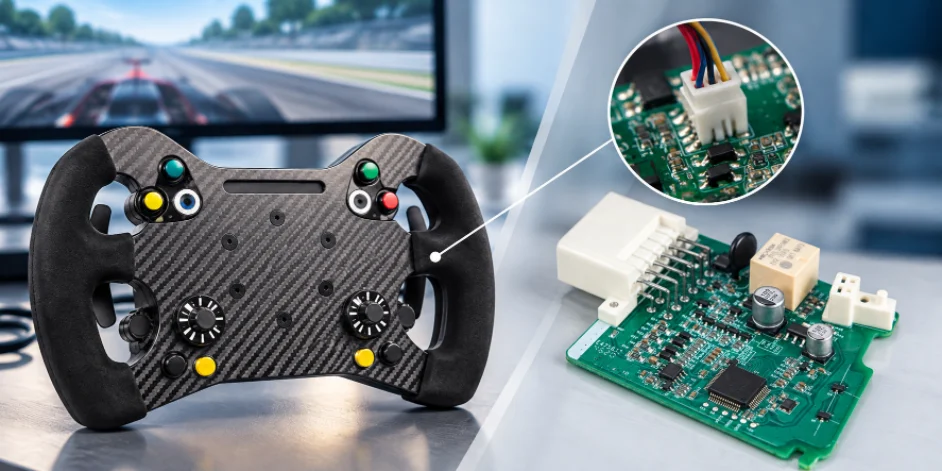
Racing Wheel Controller PCB Manufacturing & Assembly for Force-Feedback and Direct-Drive Gaming Systems
Highleap Electronics provides PCB fabrication and PCBA for...
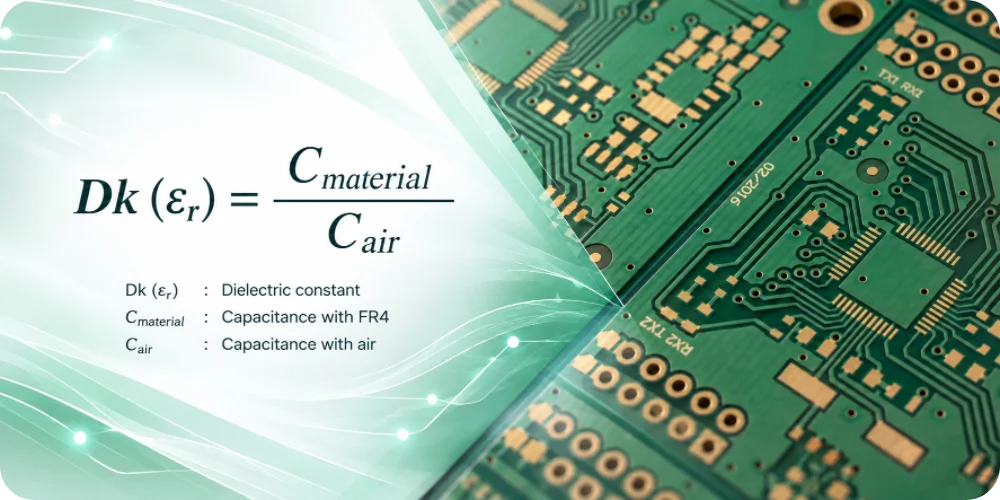
FR4 Dielectric Constant Calculator and PCB Design Guide
How to get a quote for PCBs Let's run DFM/DFA analysis for...
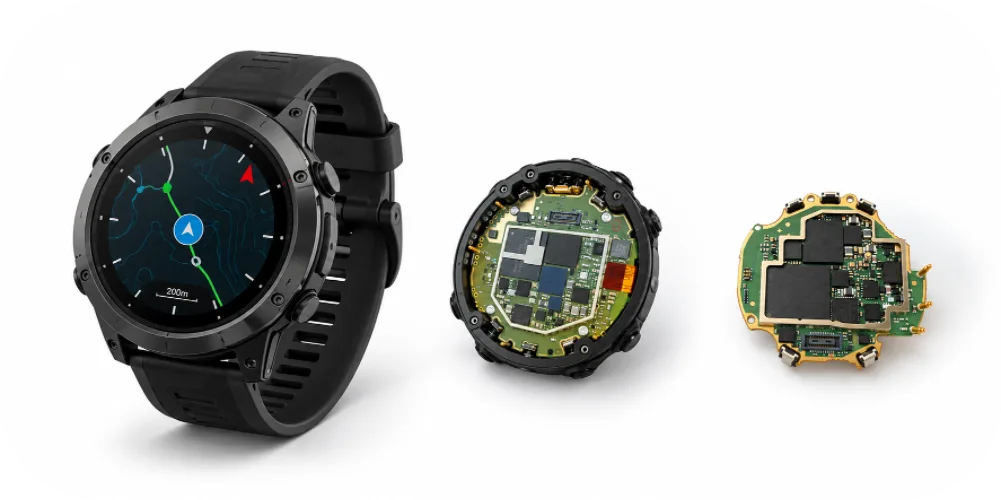
GPS Sports Watch PCB Design: GNSS, RF, Sensors and PCBA Manufacturing
Turning a compact GPS sports watch controller from an...
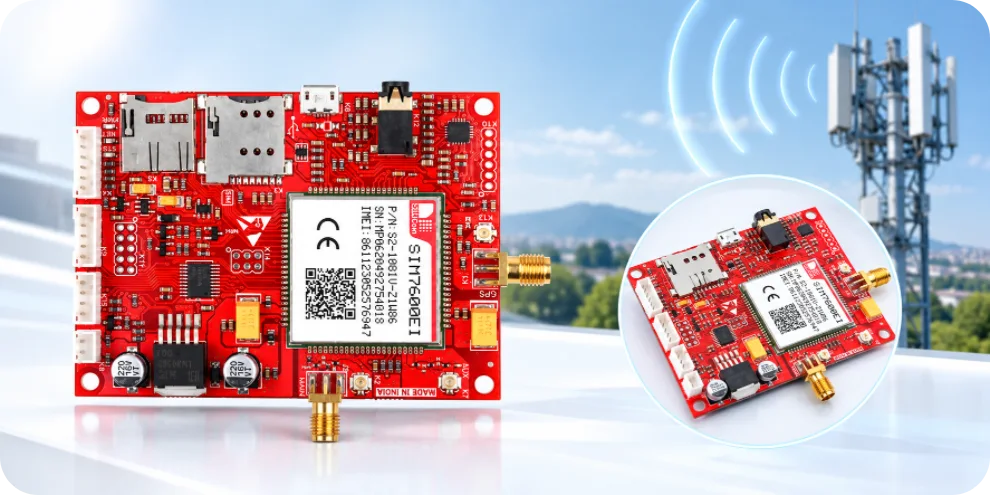
Cellular Modem PCB: From Module Carriers to PCBA
Need a manufacturer for a cellular modem PCB or a fully...
How to get a quote for PCBs
Let‘s run DFM/DFA analysis for you and get back to you with a report. You can upload your files securely through our website. We require the following information in order to give you a quote:
-
- Gerber, ODB++, or .pcb, spec.
- BOM list if you require assembly
- Quantity
- Turn time
In addition to PCB manufacturing, we offer a comprehensive range of electronic services, including PCB design, PCBA, and turnkey solutions. Whether you need help with prototyping, design verification, component sourcing, or mass production, we provide end-to-end support to ensure your project’s success.
For PCBA services, please provide your BOM (Bill of Materials) and any specific assembly instructions. We also offer DFM/DFA analysis to optimize your designs for manufacturability and assembly, ensuring a smooth production process.