
Understanding Resistor Wattage for Reliable PCB Design

Introduction
Power rating failures account for a significant percentage of field returns in PCB assemblies, yet the root cause often surprises engineers. The issue is not incorrect resistance values but inadequate resistor wattage selection. When a 1/8W resistor sits where a 1/4W component belongs, thermal stress accumulates silently until failure occurs.
Selecting appropriate resistor wattage requires understanding three interconnected factors: thermal dissipation, material limitations, and electrical load profiles. Engineers must evaluate calculated power dissipation alongside ambient temperature, PCB thermal design, and transient conditions for reliable production assemblies.

Resistors
What Is Resistor Power Rating?
Definition and Power Dissipation Fundamentals
Resistor power rating defines the maximum continuous power a resistor can dissipate without degradation or failure. This specification represents the thermal limit where the component maintains stable resistance values and structural integrity. Power dissipation occurs through I²R heating, converting electrical energy into thermal energy that must be removed from the resistor body.
Package Size and Resistor Wattage Correlation
The resistor wattage specification directly correlates with physical package dimensions and construction materials:
- 0402 package – Typically handles 1/16W (62.5mW) continuous power
- 0603 package – Supports 1/10W (100mW) under standard conditions
- 0805 package – Rated for 1/8W (125mW) nominal power
- 1206 package – Commonly supports 1/4W (250mW) dissipation
Thick-film resistors offer different thermal characteristics compared to thin-film types, affecting actual power handling capability even within identical package sizes.
Environmental Temperature Impact
Ambient temperature significantly affects resistor wattage capability. Datasheet ratings assume a 70°C ambient temperature baseline. Operating environments above this threshold require power de-rating, reducing usable wattage below the nominal specification.
Common SMD Resistor Package Sizes and Typical Power Ratings
| Package Size (Imperial) | Metric Code | Typical Power Rating (W) |
|---|---|---|
| 01005 | 0402 | 1/20 W (0.05 W) |
| 0201 | 0603 | 1/20 W – 1/16 W (0.05–0.063 W) |
| 0402 | 1005 | 1/16 W (0.063 W) |
| 0603 | 1608 | 1/10 W (0.1 W) |
| 0805 | 2012 | 1/8 W (0.125 W) |
| 1206 | 3216 | 1/4 W (0.25 W) |
| 1210 | 3225 | 1/3 W – 1/2 W |
| 2010 | 5025 | 3/4 W (0.75 W) |
| 2512 | 6332 | 1 W (some manufacturers up to 1.5 W) |
How to Calculate Power Dissipation in Resistors
Basic Power Formulas for Resistor Wattage
Two fundamental equations determine resistor power dissipation: P = I²R for current-driven circuits and P = V²/R for voltage-driven applications. Current-driven designs such as current mirrors use I²R calculations, while voltage dividers rely on V²/R for accurate resistor wattage determination.
Practical Calculation Example
Consider a 1kΩ resistor with 5V across it. Using P = V²/R yields 25mW power dissipation. A 1/16W (62.5mW) resistor provides adequate margin. However, operating at exactly the rated wattage invites thermal stress and premature failure.
Critical Safety Margin Requirements
Never design circuits where calculated power approaches rated resistor wattage. Industry best practice demands 50-200% margin depending on application criticality. High-reliability applications require conservative 200% margins, while cost-sensitive products may accept 50% margins with proper thermal validation.
Understanding Power Overload: Types & Effects on Resistor Wattage
Instantaneous Power Overload
Pulse currents and voltage surges create instantaneous power overload conditions that exceed steady-state resistor wattage ratings. These events cause resistive film cracking or immediate resistance drift. Surge protection circuits, motor startup currents, and hot-plugging scenarios frequently generate transients that standard power calculations miss.
Continuous Power Overload
Sustained operation slightly above rated resistor wattage produces gradual thermal aging rather than immediate failure. The resistor continues functioning while resistance values slowly drift, solder joints fatigue from thermal cycling, and substrate materials degrade.
Visual Indicators and Engineering Misconceptions
Discolored resistors indicate prolonged operation at unsafe temperatures, not necessarily immediate failure. Brown or blackened resistor bodies signal that resistor wattage limits have been chronically exceeded, accelerating aging even if the component still measures within tolerance.

PCB Resistors
Thermal Considerations in PCB Design for Resistor Wattage
Copper Area Impact on Heat Dissipation
PCB copper area directly affects resistor wattage handling capability. An 0805 resistor on minimal pad area dissipates heat through component leads alone, but the same component on large copper pours can handle nearly 50% additional power:
- Minimal pads – Heat extraction limited to component lead thermal conductivity alone
- Extended copper area – Distributes heat across 10-15mm radius improving dissipation by 40-50%
- Thermal vias – Connect surface copper to internal ground planes for vertical heat flow
- Copper thickness – 2oz copper provides superior thermal conductivity versus 1oz standard
Component Spacing and Thermal Coupling
Adjacent resistors create thermal coupling effects that reduce individual resistor wattage capacity. Multiple high-power resistors placed in close proximity heat each other, raising ambient temperature and triggering de-rating requirements. Maintaining 5-10mm spacing between power resistors prevents thermal interaction.
Heat Source Proximity and Mounting Considerations
Power resistors positioned near MOSFETs, inductors, or other heat-generating components experience elevated ambient temperatures that reduce effective resistor wattage. Vertical mounting provides superior convective cooling compared to horizontal placement, potentially increasing power handling by 20-30%. IPC-2152 standards provide thermal models for predicting copper temperature rise and designing appropriate thermal paths.
De-Rating: Why Rated Resistor Wattage Is Not the Real Wattage
Datasheet Rating Conditions
Manufacturers specify resistor wattage at 70°C ambient temperature under controlled test conditions. This baseline allows comparison between components but rarely matches real operating environments. Understanding these test conditions reveals that datasheet ratings represent best-case rather than typical scenarios.
Temperature De-Rating Requirements
When ambient temperature exceeds 70°C, resistor wattage must be reduced proportionally. Real-world de-rating examples show significant capacity reduction:
- 1/4W resistor at 85°C ambient – Usable power drops to approximately 0.20W (80% capacity)
- 1/4W resistor at 100°C ambient – Usable power reduces to approximately 0.15W (60% capacity)
- 1/4W resistor at 125°C ambient – Usable power falls to 0.10-0.12W (40-50% capacity)
De-rating curves in component datasheets show this temperature-power relationship graphically for precise calculations.
Real-World Power Capacity
Actual resistor wattage capacity in production assemblies often falls significantly below datasheet specifications. Enclosed equipment, high-temperature environments, and thermal coupling effects all reduce usable power ratings.

PCB Resistor
When to Use Power Resistors in PCB Design
High-Current and Current Sensing Applications
Power resistor PCB applications include high-power LED drivers, current limiting circuits, and motor control systems where standard resistors prove inadequate. Current sensing resistors in power supplies demand both low resistance values and high power handling. A 0.01Ω current sense resistor passing 10A dissipates 1W continuously, requiring specialized power resistor construction.
Pulse and Surge Protection
Applications with repetitive pulses or surge currents benefit from power resistors with higher thermal mass. Wirewound and metal film power resistors absorb transient energy without the rapid temperature excursions that damage standard thick-film types.
Construction Types for Power Resistor PCB Layouts
Metal shell power resistors mount directly to heatsinks for maximum thermal dissipation, while wirewound types handle high pulse currents. Metal film power resistors provide superior temperature coefficients compared to thick-film alternatives, each optimizing different aspects of resistor wattage handling.
PCB Layout Guidelines for High-Power Resistor Wattage
Copper Area and Thermal Via Strategy
Low-value current sensing resistors require substantial copper area for both electrical conductivity and thermal dissipation. Designers should provide copper pours extending at least 10mm beyond the component footprint, connected through multiple thermal vias to inner ground planes. Suspended resistors with minimal pad connections concentrate heat in the component body, accelerating failure.
Multi-Resistor Placement and Spacing
Multiple power resistors in parallel or series configurations require adequate spacing to prevent mutual heating:
- Minimum spacing – 8-10mm between resistors exceeding 500mW prevents thermal coupling
- Staggered placement – Offset layout rather than linear arrays improves thermal isolation
- Thermal zones – Organize high-power resistors with dedicated copper pours and via arrays
- Independent optimization – Modular thermal design allows separate tuning of each power stage
High-Voltage Clearance and DFM Considerations
High-voltage resistors require sufficient creepage distance per IPC-2221 standards to prevent arcing. Power resistors operating above 100V typically need 1-2mm clearance depending on voltage levels. At Highleap Electronics, we observe recurring resistor wattage miscalculations where engineers underestimate thermal coupling between adjacent components. Standard 1206 resistors rated at 1/4W frequently operate near limits in enclosed products, requiring minimum 1/2W packages for sustained 1/4W dissipation.

Resistors
Common Mistakes Engineers Make with Resistor Wattage
Ignoring De-Rating Curves and Peak Power
Selecting resistors based purely on package size without consulting de-rating curves causes frequent field failures. Engineers often calculate resistor wattage using average power while ignoring peak current events that cause component stress. Pulsed applications require analysis of both RMS power and instantaneous peaks that average calculations miss.
Environmental and Thermal Design Oversights
Critical mistakes in resistor wattage selection stem from environmental and thermal analysis gaps:
- Ambient temperature neglect – Charging stations and automotive applications routinely exceed 70°C baseline
- Pad thermal resistance – Small pads create bottlenecks limiting heat extraction regardless of copper area
- FR4 temperature focus – Designs overlook pad-to-component thermal resistance in thermal analysis
- Tolerance stacking – Multiple parallel resistors may not share current equally, overloading lowest-value component
These oversights cause what works on lab benches to fail in summer parking lots or factory floors where ambient conditions differ dramatically.
Conclusion
Resistor Wattage as a Thermal Boundary
Resistor wattage should be understood as a thermal limitation shaped by multiple variables, not as a fixed electrical threshold. Actual component capability depends on how power dissipation, ambient temperature, and PCB thermal design interact during real operation.
- Thermal-driven constraint – Wattage defines how much heat the resistor can safely dissipate without exceeding material temperature limits.
- Environment-dependent capability – Elevated ambient temperatures reduce usable power capacity due to accelerated heat rise.
- Layout-sensitive performance – PCB copper area, spacing, and airflow directly influence real-world thermal behavior.
Three Core Principles for Reliable Wattage Selection
- Apply true temperature-based derating – Use actual operating temperature instead of datasheet baselines to determine allowable power.
- Treat thermal design as electrical design – Pad size, copper density, via patterns, and component placement all affect heat spreading.
- Preserve meaningful safety margins – Margins must absorb uncertainties in thermal modeling, workload variation, and manufacturing tolerances.
Integrated Thermal System Behavior
Power dissipation creates a dynamic thermal system where multiple design elements interact. Long-term reliability depends on balancing component selection, PCB geometry, and environmental conditions as a unified system rather than independent factors.
- Holistic interaction – Electrical load, material limits, and PCB thermal paths jointly determine stability.
- Failure prevention – Optimizing only one variable (e.g., resistor size) without addressing thermal paths often leads to premature degradation.
- System-level reliability – Consistent performance emerges from coordinated control of heat generation, heat spreading, and heat dissipation.
At Highleap Electronics, our engineering team provides DFM-driven thermal optimization to help designers select the right resistor wattage and build more reliable PCB systems. If you need support evaluating thermal performance or choosing cost-effective components, our team is ready to assist your next project.

Recommended Posts
Racing Wheel Controller PCB Manufacturing & Assembly for Force-Feedback and Direct-Drive Gaming Systems
Highleap Electronics provides PCB fabrication and PCBA for...
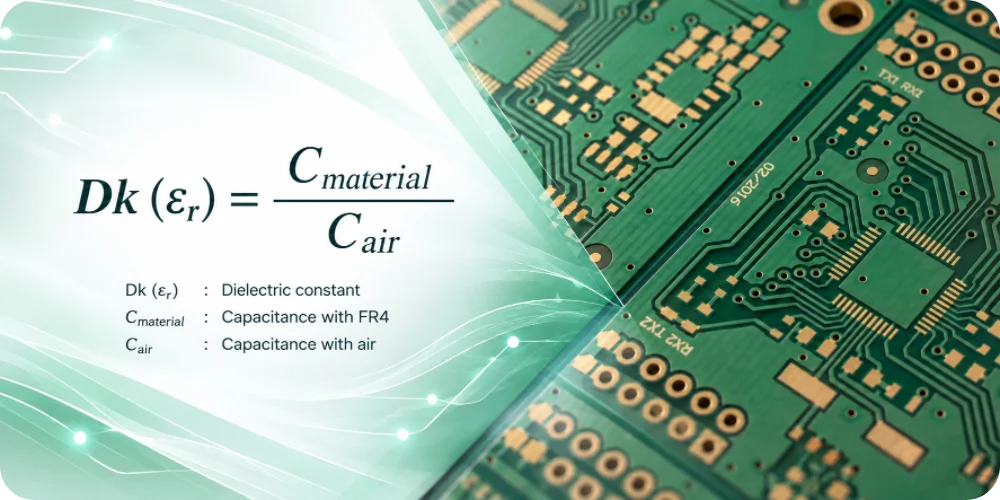
FR4 Dielectric Constant Calculator and PCB Design Guide
How to get a quote for PCBs Let's run DFM/DFA analysis for...

GPS Sports Watch PCB Design: GNSS, RF, Sensors and PCBA Manufacturing
Turning a compact GPS sports watch controller from an...
Cellular Modem PCB: From Module Carriers to PCBA
Need a manufacturer for a cellular modem PCB or a fully...
How to get a quote for PCBs
Let‘s run DFM/DFA analysis for you and get back to you with a report. You can upload your files securely through our website. We require the following information in order to give you a quote:
-
- Gerber, ODB++, or .pcb, spec.
- BOM list if you require assembly
- Quantity
- Turn time
In addition to PCB manufacturing, we offer a comprehensive range of electronic services, including PCB design, PCBA, and turnkey solutions. Whether you need help with prototyping, design verification, component sourcing, or mass production, we provide end-to-end support to ensure your project’s success.
For PCBA services, please provide your BOM (Bill of Materials) and any specific assembly instructions. We also offer DFM/DFA analysis to optimize your designs for manufacturability and assembly, ensuring a smooth production process.