
Resistor Specifications: The Complete Technical Guide for PCB Design

1. Why Resistor Specifications Matter in PCB Design
Resistors appear deceptively simple, yet their electrical behavior extends far beyond nominal resistance values. The complete resistor specifications encompass tolerance levels, power ratings, material composition, and temperature coefficients that collectively determine circuit stability under real-world conditions. Engineering failures rarely stem from incorrect resistance values—instead, 90% of resistor-related problems originate from inadequate understanding of these critical parameters.
Resistor specifications fall into four primary categories: electrical characteristics define voltage and current responses, thermal parameters govern heat dissipation, material properties determine precision and stability, and reliability metrics predict long-term performance. This guide provides PCB designers with a systematic framework for component selection.

Resistor Tolerance
2. Electrical Resistor Specifications
2.1 Nominal Resistance and E-Series Standards
Standard resistance values follow the E-series system, where E6, E12, E24, E48, and E96 series define progressively finer increments. Each series corresponds to specific tolerances: E6 offers ±20% with six values per decade, while E96 provides ±1% with ninety-six values. Surface-mount codes use three or four digits where “103” indicates 10kΩ and “4702” represents 47kΩ. Precision applications requiring exact voltage division demand E96 series to minimize cumulative errors.
2.2 Resistance Tolerance
Resistor tolerance defines permissible deviation from nominal values, expressed as percentage ranges like ±1% or ±0.1%. In voltage divider networks, individual tolerances compound multiplicatively—a 10kΩ/10kΩ divider with ±1% resistors produces potential output errors of ±2%. Precision analog circuits, ADC reference networks, and instrumentation amplifiers require ±0.1% tolerance specifications to maintain signal integrity.
Key tolerance ranges by technology:
- Thick-film resistors – ±1% to ±5% typical specifications
- Thin-film resistors – ±0.1% to ±0.5% achievable precision
- Metal foil resistors – ±0.01% for instrumentation applications
2.3 Temperature Coefficient of Resistance (TCR)
The temperature coefficient of resistance, measured in parts per million per degree Celsius (ppm/°C), quantifies resistance drift across temperature changes. A resistor with 100 ppm/°C TCR shifts 0.01% per degree Celsius, creating 1% error over a 100°C span. High-precision measurement circuits and stable reference voltages demand low-TCR components to prevent temperature-induced calibration drift.
Material selection determines TCR performance: thick-film resistors exhibit 100-200 ppm/°C, metal film achieves 25-50 ppm/°C, and metal foil variants reach below 5 ppm/°C.
2.4 Voltage Coefficient
Voltage coefficient describes resistance changes under applied electrical stress, becoming significant in high-voltage applications above 100V. Thick-film resistors demonstrate greater voltage sensitivity than thin-film alternatives due to their granular conductive paths. High-voltage divider networks must account for voltage-dependent resistance shifts that compound with tolerance and temperature effects.
2.5 Maximum Working Voltage
Maximum working voltage establishes the upper limit for safe resistor operation, determined by package dimensions, material dielectric strength, and resistance value. Standard SMD sizes correlate with voltage ratings: 0402 packages typically handle 50V, 0603 supports 75V, while 0805 and 1206 accommodate 150V and 200V respectively. High-frequency switching circuits require voltage derating to prevent dielectric breakdown.

Resistance Change Characteristics of Thick-Film Resistor
3. Power and Thermal Resistor Specifications
3.1 Power Rating
Power rating defines continuous dissipation capacity, calculated through P = I²R = V²/R relationships. Material composition significantly influences power handling—thick-film resistors offer lower thermal conductivity than metal film alternatives. Standard SMD power capabilities vary by package:
- 0402 package – 0.063W (1/16W) rated power
- 0603 package – 0.1W (1/10W) rated power
- 0805 package – 0.125W (1/8W) rated power
- 1206 package – 0.25W (1/4W) rated power
3.2 Derating Curves
Derating curves mandate power reduction at elevated ambient temperatures to prevent thermal runaway. Most SMD resistors begin derating at 70°C, reducing permissible dissipation linearly to zero at maximum rated temperature. Thick-film resistors exhibit steeper derating slopes than metal film types due to substrate thermal limitations.
Automotive and industrial applications operating above 85°C ambient require conservative derating—designers commonly apply 50% power reduction for reliability margins in these resistor specifications.
3.3 Thermal Resistance
Thermal resistance quantifies heat transfer efficiency from the resistor element to surrounding environment, primarily through PCB copper and solder pads. Smaller packages like 0402 demonstrate higher thermal resistance than 1206 variants because reduced pad area limits heat conduction pathways. Power resistors utilize specialized constructions with top-surface heat dissipation or bottom-mounted thermal vias transferring heat into internal copper planes.
3.4 Pulse and Surge Ratings
Pulse rating specifications define short-duration overload tolerance beyond continuous power limits. Thick-film resistors handle brief pulses poorly compared to wirewound constructions that withstand high-energy transients. Inrush current events during power supply startup frequently damage undersized SMD resistors in motor control and battery charging circuits.

Resistor Wattage (Power Rating)
4. Material-Based Resistor Specifications
4.1 Thick Film Resistors
Thick-film resistors dominate consumer electronics through low manufacturing costs and adequate performance for non-critical applications. These components exhibit 100-200 ppm/°C temperature coefficients, elevated noise floors, and limited pulse tolerance due to their ruthenium oxide paste construction. Circuit designers frequently misapply thick-film resistors in precision analog signal paths where their resistor specifications compromise system accuracy.
4.2 Thin Film Resistors
Thin-film technology deposits metal alloy layers through vacuum processes, achieving superior specifications compared to thick-film alternatives. These resistors provide 25-50 ppm/°C temperature coefficients, reduced Johnson noise, and tighter tolerance grades down to ±0.1%. High-frequency circuits and precision ADC reference networks benefit from thin-film stability.
4.3 Metal Film and Metal Foil
Metal film resistors offer laboratory-grade specifications with temperature coefficients reaching ±25 ppm/°C and exceptional long-term stability. Metal foil constructions achieve ±0.2 ppm/°C performance for instrumentation-grade applications requiring maximum precision. Current-sensing networks, precision voltage references, and calibration standards utilize these premium resistor specifications where measurement accuracy justifies elevated cost.
4.4 Wirewound Resistors
Wirewound resistors handle high power levels and surge currents through nichrome or similar alloy wire wound on ceramic cores. These components excel in power supplies, motor controllers, and battery management systems requiring robust pulse tolerance. High-frequency applications must avoid wirewound types because their inherent inductance creates impedance variations and potential oscillation.

SMD Resistor Types
5. Reliability and Mechanical Resistor Specifications
5.1 Package Size
Physical package dimensions directly influence power dissipation, thermal management, voltage handling, and mechanical robustness. Standard metric designations follow length×width format in millimeters: 0402 measures 1.0×0.5mm, 0603 spans 1.6×0.8mm, 0805 extends 2.0×1.25mm, while 1206 reaches 3.2×1.6mm. Larger packages provide superior heat spreading, increased pad adhesion strength, and improved voltage isolation between terminals.
5.2 Long-Term Stability
Long-term stability describes resistance value changes over extended operating periods under environmental stress. Thick-film resistors typically drift 1-2% over 1000 hours at rated conditions, while thin-film variants maintain ±0.1% stability, and metal foil types achieve ±0.005% precision. Elevated humidity, temperature cycling, and sustained high-voltage operation accelerate aging processes in resistor specifications.
5.3 Operating Temperature Range
Standard resistor specifications cover -55°C to +125°C ambient ranges for commercial applications, while AEC-Q200 automotive qualification demands -40°C to +155°C performance validation. Temperature extremes simultaneously affect TCR drift, power derating curves, and inherent noise levels through compound mechanisms.
5.4 Noise Performance
Resistor noise manifests as thermal Johnson-Nyquist noise and excess noise from material discontinuities. Thick-film constructions generate elevated noise floors that degrade low-level signal integrity in operational amplifier circuits and ADC front ends. Precision resistor designs minimize excess noise through homogeneous film deposition essential for high-resolution measurement systems.

SMD Resistors
6. Selecting Resistor Specifications for PCB Applications
6.1 Digital Circuits
Digital logic circuits tolerate standard thick-film resistors with ±1% tolerance and 100 ppm/°C temperature coefficients for pull-up, pull-down, and termination functions. Power dissipation remains minimal—0402 or 0603 packages suffice for typical signal conditioning while maintaining cost efficiency.
6.2 Precision Analog Circuits
Analog signal processing, precision voltage references, and high-resolution data acquisition demand thin-film resistors with ±0.1% tolerance and sub-50 ppm/°C temperature coefficients. Low noise floors and excellent long-term stability justify the cost premium where signal integrity directly determines system performance.
6.3 High-Power Applications
Motor control circuits, industrial automation, and power conditioning require wirewound or metal film resistors in large packages rated for continuous high-wattage dissipation. These resistor specifications prioritize pulse tolerance and thermal management—1206 or larger surface-mount packages provide necessary power handling with adequate derating margins.
6.4 High-Voltage Systems
High-voltage circuits above 100V demand resistors with appropriate voltage ratings, sufficient creepage distances, and conservative derating factors. Designers must specify larger packages like 1206 or 2010 to achieve necessary dielectric spacing while accounting for voltage coefficient effects.
6.5 Current Sensing
Current-sensing applications require ultra-low resistance values with tight tolerances—metal strip or four-terminal Kelvin connection resistors eliminate lead resistance errors. These specialized resistor specifications offer sub-1mΩ values with ±0.1% tolerance and minimal temperature coefficients essential for accurate power monitoring.
7. Conclusion: Understanding Resistor Specifications
The critical performance trio of tolerance, temperature coefficient, and power rating determines whether resistors maintain specified behavior throughout product lifetimes. Designers who evaluate only nominal resistance and package size inevitably encounter field failures from thermal stress, drift, or voltage breakdown. The compound effects of multiple specification parameters create system-level behavior that diverges significantly from simple theoretical models.
Material selection fundamentally constrains achievable performance: thick-film resistors cannot match thin-film precision regardless of package size, while wirewound constructions introduce parasitic inductance unsuitable for high-frequency applications.
Successful resistor specification requires matching component characteristics to actual circuit stress conditions including ambient temperature ranges, voltage transients, and long-term stability requirements. At Highleap Electronics, our engineering team provides design for manufacturing reviews to optimize component selections for reliability.

Recommended Posts
Racing Wheel Controller PCB Manufacturing & Assembly for Force-Feedback and Direct-Drive Gaming Systems
Highleap Electronics provides PCB fabrication and PCBA for...
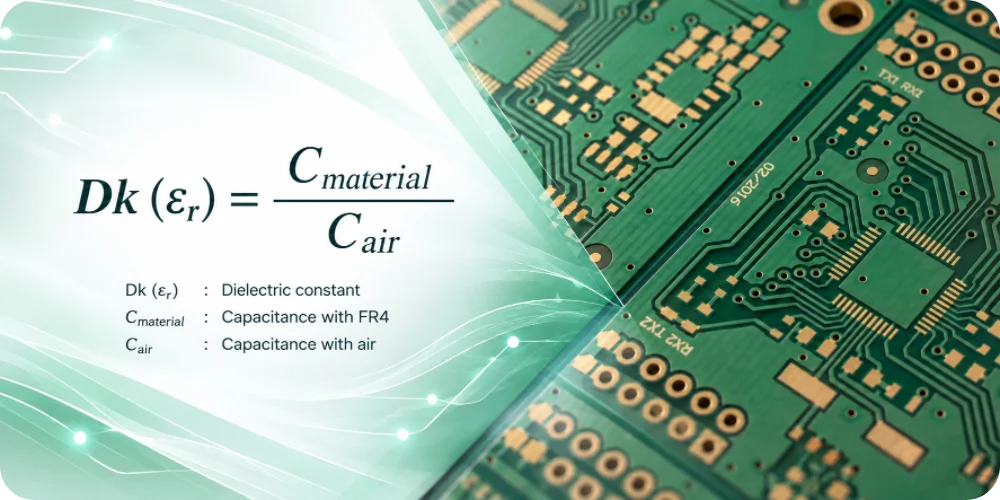
FR4 Dielectric Constant Calculator and PCB Design Guide
How to get a quote for PCBs Let's run DFM/DFA analysis for...

GPS Sports Watch PCB Design: GNSS, RF, Sensors and PCBA Manufacturing
Turning a compact GPS sports watch controller from an...
Cellular Modem PCB: From Module Carriers to PCBA
Need a manufacturer for a cellular modem PCB or a fully...
How to get a quote for PCBs
Let‘s run DFM/DFA analysis for you and get back to you with a report. You can upload your files securely through our website. We require the following information in order to give you a quote:
-
- Gerber, ODB++, or .pcb, spec.
- BOM list if you require assembly
- Quantity
- Turn time
In addition to PCB manufacturing, we offer a comprehensive range of electronic services, including PCB design, PCBA, and turnkey solutions. Whether you need help with prototyping, design verification, component sourcing, or mass production, we provide end-to-end support to ensure your project’s success.
For PCBA services, please provide your BOM (Bill of Materials) and any specific assembly instructions. We also offer DFM/DFA analysis to optimize your designs for manufacturability and assembly, ensuring a smooth production process.