
Resistor TCR Explained: Guide to Temperature Coefficient in PCB Design

What Is Resistor TCR?
The temperature coefficient of resistance (TCR) defines how a resistor‘s value shifts with temperature changes. Measured in parts per million per degree Celsius (ppm/°C), this specification directly impacts circuit stability across operating conditions. The relationship follows a straightforward formula:
ΔR = R₀ × TCR × ΔT
Where ΔR represents resistance change, R₀ is the nominal resistance at reference temperature, and ΔT indicates temperature deviation. A resistor with a TCR of ±50 ppm/°C will shift 50 ohms per megohm for each degree Celsius change. High-precision applications typically require TCR below ±25 ppm/°C, while general-purpose circuits function adequately with TCR values of ±100 to ±200 ppm/°C.
Why Resistor TCR Matters in PCB Design
Impact on High-Precision Circuits
Operational amplifiers, analog-to-digital converters, and precision sampling circuits rely on stable resistance values for accurate performance. Temperature-induced drift in resistor TCR translates directly to gain errors, offset voltages, and measurement inaccuracies. A voltage divider using 100kΩ resistors with ±100 ppm/°C TCR can experience 1% error across a 100°C temperature swing.
Real-World Performance Consequences
Active filters exhibit frequency response shifts when resistor TCR drifts with temperature. Reference voltage circuits show output wandering, compromising ADC accuracy. Power management designs face efficiency losses as sensing resistors change value under load-generated heat. These effects compound in systems operating across industrial temperature ranges of -40°C to +85°C.

Types of TCR in Resistors
Thin-Film Resistors
Thin-film technology delivers TCR values from ±5 to ±50 ppm/°C with tight tolerances. Vacuum-deposited metal layers on ceramic substrates provide excellent stability for measurement circuits, instrumentation amplifiers, and precision references. These resistors with low TCR are suitable for applications where temperature-induced error must remain minimal.
Thick-Film Resistors
Thick-film designs offer TCR specifications typically ranging from ±100 to ±200 ppm/°C. Screen-printed resistive pastes fired onto ceramic create cost-effective solutions for general PCB applications. While less stable than thin-film variants, thick-film resistors with typical TCR specifications perform adequately in digital circuits, power supplies, and consumer electronics where moderate drift is acceptable.
Metal Foil and Wirewound Resistors
Metal foil construction achieves TCR values below ±2 ppm/°C, representing the pinnacle of temperature stability. Wirewound resistors provide TCR specifications from ±5 to ±50 ppm/°C with high power handling. Industrial measurement systems, aerospace electronics, and laboratory equipment require resistors with ultra-low TCR.
Comparative Overview
| Type | TCR Range (ppm/°C) | Typical Applications |
|---|---|---|
| Thin-film | ±5 to ±50 | Precision analog, instrumentation |
| Thick-film | ±100 to ±200 | General digital, power management |
| Metal foil | ±0.2 to ±2 | Metrology, aerospace standards |
| Wirewound | ±5 to ±50 | High-power precision, industrial |
How to Read TCR in Resistor Datasheets
Locating Temperature Coefficient Specifications
Datasheets list TCR in the electrical characteristics section, expressed as a range such as ±50 ppm/°C or ±25 ppm/°C maximum. Some manufacturers specify separate positive and negative coefficients, particularly for precision TCR in resistors. The reference temperature, typically 25°C, appears alongside TCR values to establish the measurement baseline.
Interpreting TCR Notation
A specification of ±50 ppm/°C indicates the resistance may increase or decrease by 50 parts per million for each degree of temperature change. For a 10kΩ resistor, this translates to 0.5Ω drift per degree Celsius. Comparing ±5 ppm/°C against ±50 ppm/°C reveals a tenfold difference in temperature stability, critical for selecting components in thermal environments.
Selection Guidelines for PCB Design
Circuits requiring better than 0.1% accuracy over temperature should employ TCR rated ±25 ppm/°C or lower. Voltage references, precision current sources, and high-resolution measurement paths benefit from ±10 ppm/°C specifications. General signal conditioning and filtering circuits function reliably with ±100 ppm/°C parts, balancing performance against cost.

Resistance Change Characteristics of Thick-Film Resistor
Practical Tips for Engineers
PCB Layout Thermal Considerations
Position precision TCR in resistors away from heat-generating components such as voltage regulators, power MOSFETs, and high-current traces. Thermal gradients across the board create localized temperature variations that induce resistance drift even in low-TCR resistors. Symmetrical placement of matched resistor pairs minimizes differential temperature effects in critical signal paths.
High-Power and Industrial Applications
Power sensing resistors experience self-heating proportional to I²R losses, creating temperature rise beyond ambient conditions. Select resistors with appropriate TCR ratings, accounting for both ambient temperature range and internal dissipation. Industrial environments spanning -40°C to +85°C amplify TCR effects, requiring careful derating and component selection to maintain circuit specifications.
Temperature Validation Testing
Verify circuit performance using thermal chambers cycling through the operating range. Monitor key parameters such as gain accuracy, offset voltage, and reference stability at temperature extremes. Infrared thermal imaging identifies hot spots affecting resistor TCR accuracy. Document actual temperature coefficients through resistance measurements at multiple temperature points to validate design margins.
Conclusion
Temperature coefficient fundamentally determines resistor stability across the thermal conditions PCBs encounter in real applications. Engineers designing precision analog circuits, measurement systems, or industrial controls must prioritize TCR specifications that match their accuracy requirements. Using thin-film resistors for critical paths and thick-film variants for non-critical areas helps optimize both performance and cost.
At Highleap Electronics, we support your PCB assembly projects with component selection guidance and access to precision resistors ranging from ±5 ppm/°C thin-film to cost-effective thick-film options. Our engineering team assists in matching resistor TCR specifications to your circuit requirements, ensuring reliable performance across your operating temperature range.

Recommended Posts
Racing Wheel Controller PCB Manufacturing & Assembly for Force-Feedback and Direct-Drive Gaming Systems
Highleap Electronics provides PCB fabrication and PCBA for...
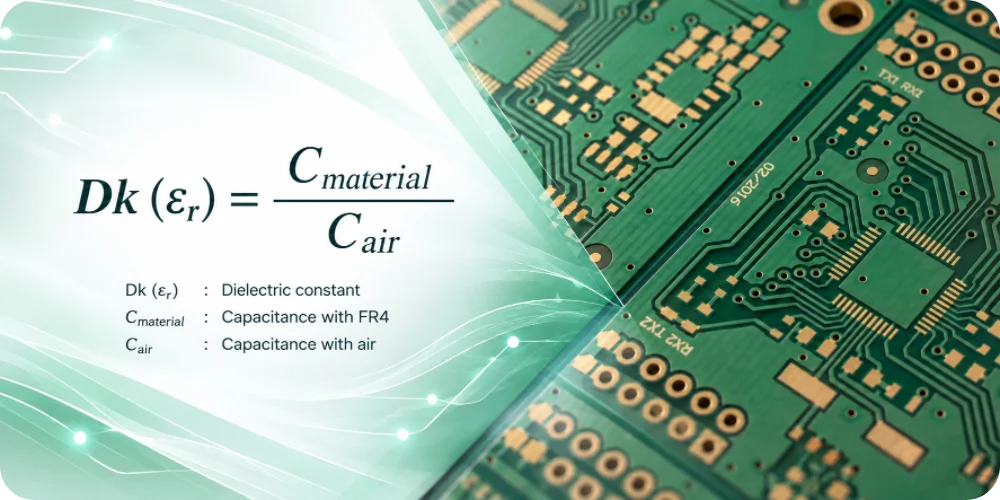
FR4 Dielectric Constant Calculator and PCB Design Guide
How to get a quote for PCBs Let's run DFM/DFA analysis for...

GPS Sports Watch PCB Design: GNSS, RF, Sensors and PCBA Manufacturing
Turning a compact GPS sports watch controller from an...
Cellular Modem PCB: From Module Carriers to PCBA
Need a manufacturer for a cellular modem PCB or a fully...
How to get a quote for PCBs
Let‘s run DFM/DFA analysis for you and get back to you with a report. You can upload your files securely through our website. We require the following information in order to give you a quote:
-
- Gerber, ODB++, or .pcb, spec.
- BOM list if you require assembly
- Quantity
- Turn time
In addition to PCB manufacturing, we offer a comprehensive range of electronic services, including PCB design, PCBA, and turnkey solutions. Whether you need help with prototyping, design verification, component sourcing, or mass production, we provide end-to-end support to ensure your project’s success.
For PCBA services, please provide your BOM (Bill of Materials) and any specific assembly instructions. We also offer DFM/DFA analysis to optimize your designs for manufacturability and assembly, ensuring a smooth production process.