
Understanding Resistor Tolerance: A Critical Factor in PCB Design

Introduction
Resistor tolerance represents one of the most fundamental yet often underestimated parameters in PCB design. Every resistor component carries an inherent manufacturing variation that directly impacts circuit behavior, and understanding these variations is essential for achieving predictable performance.
Engineers who overlook resistor tolerance during the design phase risk encountering voltage regulation issues, timing errors, and thermal management problems that only surface during testing or field deployment.
What is Resistor Tolerance?
Defining Resistor Tolerance
Resistor tolerance indicates the maximum permissible deviation from the nominal resistance value, typically expressed as a percentage. A 10kΩ resistor with ±5% tolerance can measure anywhere between 9.5kΩ and 10.5kΩ while meeting manufacturer specifications. This variance stems from manufacturing process limitations and material properties that define different precision grades.
Common Tolerance Grades and Applications
| Tolerance | Precision Level | Typical Applications |
|---|---|---|
| ±20% | Low precision | General signal routing |
| ±5% | Standard precision | Power distribution, LED circuits |
| ±1% | High precision | Analog circuits, measurement systems |
| ±0.1% | Ultra-high precision | Instrumentation, reference voltage networks |
Tolerance Impact on Circuit Calculations
When designing voltage dividers or current sensing circuits, resistor accuracy directly affects output values. A voltage divider using two 10kΩ resistors with ±5% tolerance could produce output variations of up to 10% from the intended value. This cumulative effect becomes particularly critical in cascaded circuits where multiple resistors interact.

PCB Resistor
How Resistor Tolerance Impacts PCB Performance
Voltage Division Accuracy
Voltage divider networks rely on precise resistance ratios to establish reference voltages for ADC inputs, comparator thresholds, and biasing networks. When resistor tolerance exceeds circuit requirements, downstream components receive incorrect voltage levels that can trigger false logic states or saturate analog stages. A 3.3V reference derived from 5V supply through loose tolerance dividers might fluctuate between 3.1V and 3.5V, potentially violating input specifications of sensitive digital circuits.
Filter Performance and Frequency Deviation
RC filter circuits depend on precise component values to achieve target cutoff frequencies:
- Frequency shift effects – A low-pass filter designed for 1kHz cutoff using ±5% resistors operates between 950Hz and 1050Hz, potentially allowing unwanted noise into analog sections.
- Phase response variation – Resistor tolerance in active filters causes phase shift deviations that affect signal processing accuracy in audio and communication circuits.
- Timing circuit drift – RC time constants in oscillators and delay circuits become unreliable when resistor accuracy specifications prove insufficient for application requirements.
Thermal and Power Distribution Concerns
Current sensing resistors with inadequate tolerance cause power dissipation calculations to deviate from design specifications. This variance affects thermal management strategies and may lead to localized heating that accelerates component aging. In high-current applications, even 1% error in sense resistor value translates to significant power calculation errors impacting system efficiency.
Long-Term Reliability Considerations
Temperature cycling, mechanical stress, and operational aging cause additional resistance drift beyond initial tolerance specifications. Circuits designed with minimal tolerance margin become increasingly susceptible to parameter drift over their operational lifetime. This phenomenon creates intermittent failures that prove difficult to diagnose in production environments, particularly in applications experiencing wide temperature ranges.

PCB Electronic Components Resistors
Choosing the Right Resistor Tolerance for Your Design
Application-Based Selection Strategy
Circuit sensitivity to component variation dictates appropriate resistor tolerance specifications:
- Digital circuits – Logic thresholds provide adequate noise margins for ±5% or ±10% resistor tolerance in pull-up, pull-down, and termination applications.
- Precision analog stages – Measurement instrumentation and reference voltage networks require ±1% or tighter tolerance to maintain specified performance across environmental conditions.
- High-frequency circuits – RF and microwave applications demand tight tolerance to preserve impedance matching and minimize signal reflection.
- Power management – Current sensing and voltage regulation circuits need ±1% accuracy to ensure safe operation and prevent thermal runaway conditions.
Cost-Performance Trade-offs
Precision resistors with ±0.1% tolerance cost significantly more than standard ±5% components, making indiscriminate use economically impractical. Effective PCB design identifies critical resistance values that genuinely require tight tolerance while using standard components elsewhere. This targeted approach optimizes both circuit performance and manufacturing costs.
Design Optimization Techniques
Several strategies allow engineers to achieve required accuracy without specifying high-precision resistors throughout the design. Series-parallel resistor combinations leverage statistical averaging to improve effective tolerance beyond individual component specifications. Trim potentiometers enable post-assembly calibration where initial tolerance proves insufficient. Some designs incorporate software compensation that measures actual resistance during production testing and adjusts parameters accordingly.
Conclusion
Aligning Resistor Tolerance With Real Circuit Requirements
- Performance realism – Resistor tolerance defines the gap between theoretical design values and real-world circuit behavior.
- Application-driven precision – Tolerance must match circuit sensitivity, not arbitrary precision expectations.
- Cost-performance balance – Over-specifying accuracy increases BOM cost without measurable performance gain.
Design Risks of Incorrect Tolerance Selection
- Reliability degradation – Loose tolerances can introduce drift, imbalance, or out-of-range operation over time.
- Scaling impact – Variability compounds across production volume and field lifetimes, especially in analog and sensor circuits.
- Unpredictable circuit behavior – Critical nodes may shift beyond acceptable thresholds when cumulative tolerance errors overlap.
Engineering Strategy for Effective Tolerance Planning
- Worst-case tolerance analysis – Evaluate the maximum deviation across all resistors rather than isolating individual components.
- Node-level sensitivity mapping – Identify which resistor positions truly influence accuracy-critical functions.
- Selective precision investment – Apply tight tolerance only where needed, while using standard grades elsewhere to optimize cost.
At Highleap Electronics, our engineering team brings extensive experience in design-for-manufacturing reviews to help optimize component selection for reliability and cost-effectiveness. Drawing from numerous real-world PCB projects, we guide customers in determining where tight resistor tolerances genuinely improve performance and where standard grades provide the best balance of stability and cost.

Recommended Posts
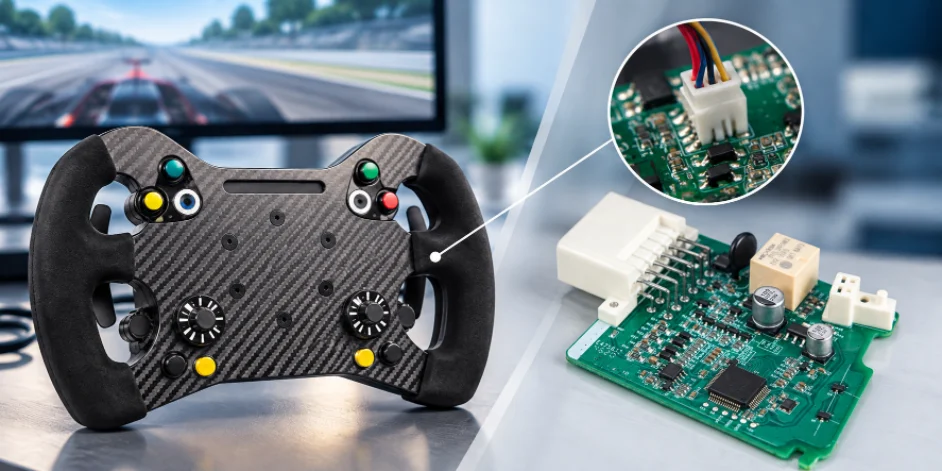
Racing Wheel Controller PCB Manufacturing & Assembly for Force-Feedback and Direct-Drive Gaming Systems
Highleap Electronics provides PCB fabrication and PCBA for...
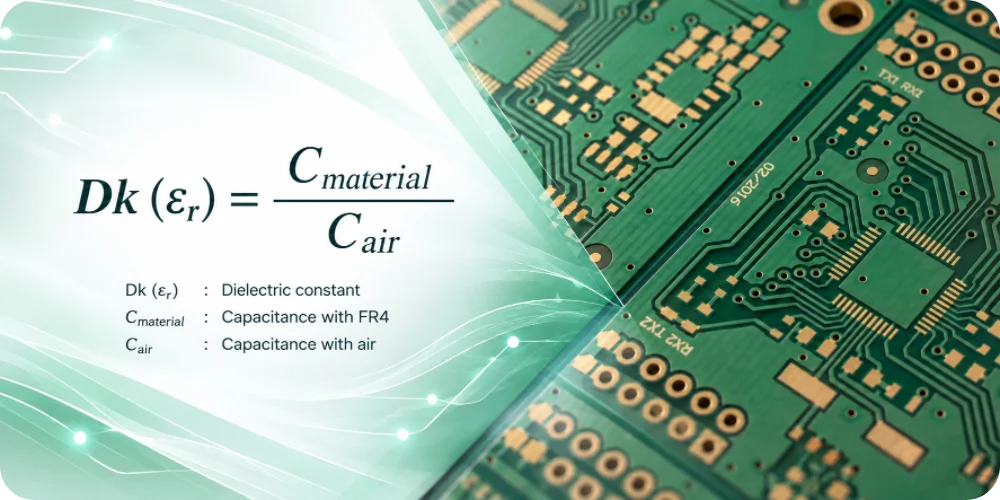
FR4 Dielectric Constant Calculator and PCB Design Guide
How to get a quote for PCBs Let's run DFM/DFA analysis for...

GPS Sports Watch PCB Design: GNSS, RF, Sensors and PCBA Manufacturing
Turning a compact GPS sports watch controller from an...
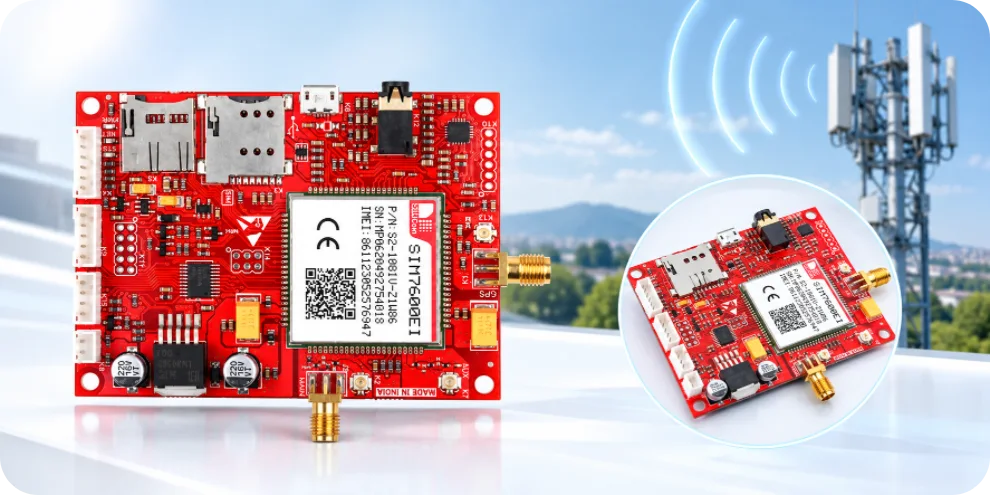
Cellular Modem PCB: From Module Carriers to PCBA
Need a manufacturer for a cellular modem PCB or a fully...
How to get a quote for PCBs
Let‘s run DFM/DFA analysis for you and get back to you with a report. You can upload your files securely through our website. We require the following information in order to give you a quote:
-
- Gerber, ODB++, or .pcb, spec.
- BOM list if you require assembly
- Quantity
- Turn time
In addition to PCB manufacturing, we offer a comprehensive range of electronic services, including PCB design, PCBA, and turnkey solutions. Whether you need help with prototyping, design verification, component sourcing, or mass production, we provide end-to-end support to ensure your project’s success.
For PCBA services, please provide your BOM (Bill of Materials) and any specific assembly instructions. We also offer DFM/DFA analysis to optimize your designs for manufacturability and assembly, ensuring a smooth production process.